Bad UVM
Article by Ziyi Guo about escaping an NVidia Container Toolkit container by exploiting a logical bug in the NVidia GPU driver.
https://t.co/5ijlXPA2un
When Defenses Become Attack Surface: CVE-2026-20971, a Samsung Kernel UAF
Article about analyzing exploitation primitives derived from a racy use-after-free bug in the Samsung PROCA (Process Authenticator) kernel module.
https://t.co/3SzgSG3G4k
SoK: Take a Deep Step into Linux Kernel Hardening Effectiveness from the Offensive-Defensive Perspective
A paper with analysis of 121 publicly documented exploits since 2015 and in-depth evaluation of 51 existing kernel defense mechanisms.
https://t.co/i2Izk3y8Xm
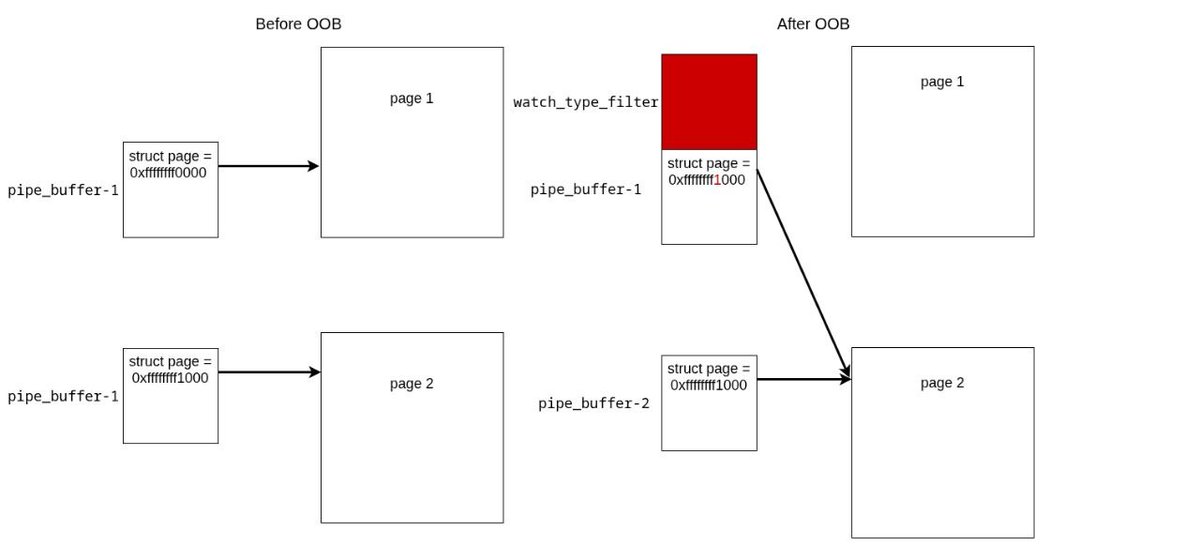
PageJack in Action: CVE-2022-0995 exploit
Article by Jean Vincent describing how a relatively old CVE can be exploited using the PageJack exploitation technique.
https://t.co/TYytvd193p
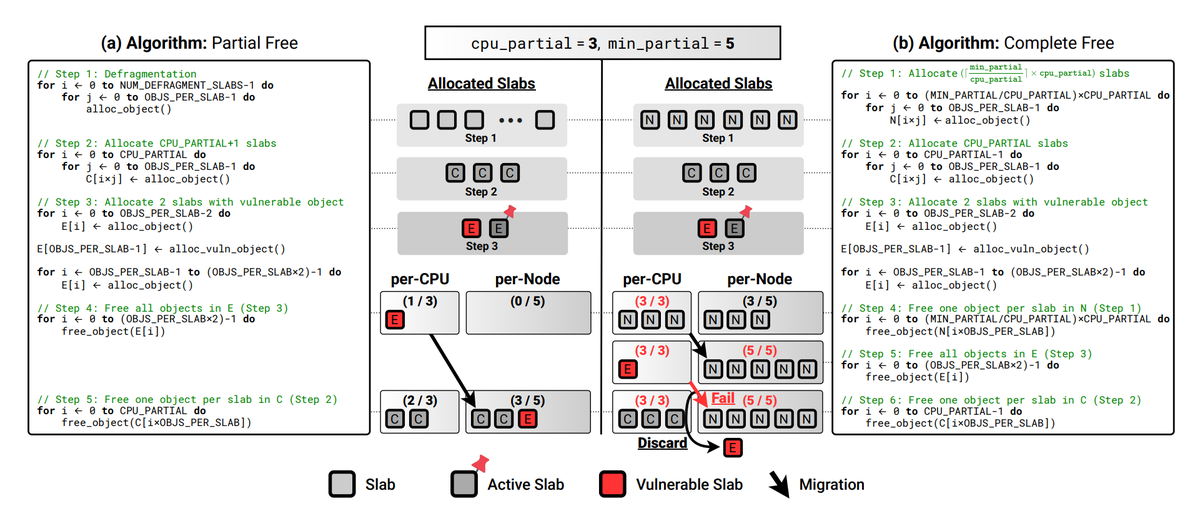
CROSS-X: Generalized and Stable Cross-Cache Attack on the Linux Kernel
Paper by Dong-ok Kim, Juhyun Song, et al. documenting the steps for executing a cross-cache attacks for caches with min_partial >= cpu_partial_slabs.
https://t.co/IsZAzZh83g
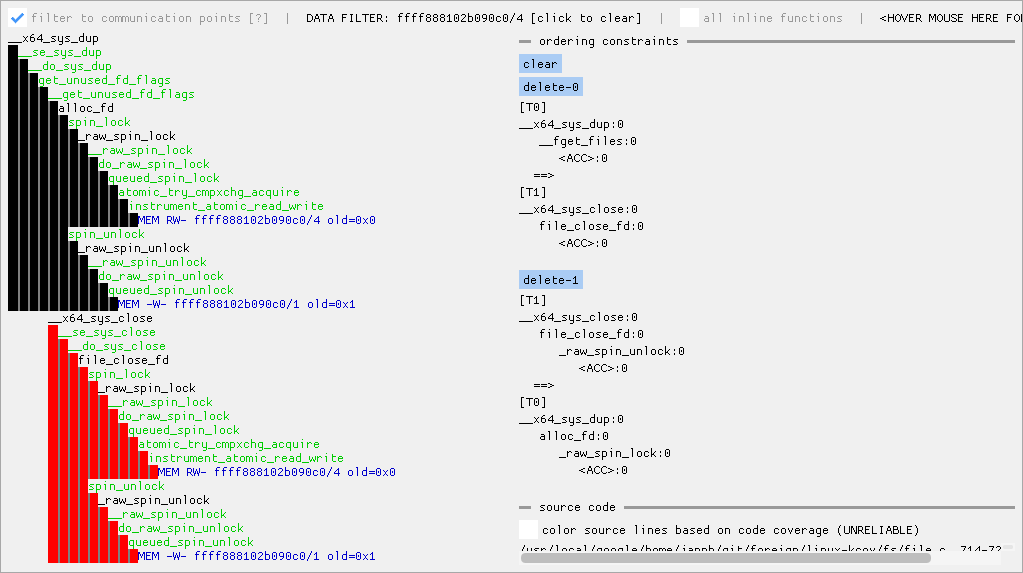
Testing race conditions with memory access tracing and stack-based delay injection
Article by @tehjh about MAccConc — a KCOV-based tool for exploring possible kernel code interleavings of a multi-threaded program.
Article: https://t.co/7hno0DJrec
Tool: https://t.co/ADoZWhlhcC
SCTPhantom: An 18-Year-Old SCTP ASCONF Transport Use-After-Free
Article about exploiting CVE-2026-64564 in the Stream Control Transmission Protocol (SCTP) implementation. Authors exploited a UAF in the kmalloc-1k cache to gain root and escape a container
https://t.co/kNuy8eNdvS
Gone in 60 Frames – USB Video Exploitation
Article (and slides) by @alexjplaskett and @robHerrera_ about fuzzing USB drivers with syzkaller and writing an exploit that gains code execution over USB on Ubuntu.
Article: https://t.co/lhXlMz7NPX
Slides: https://t.co/DpRmtHf0yH
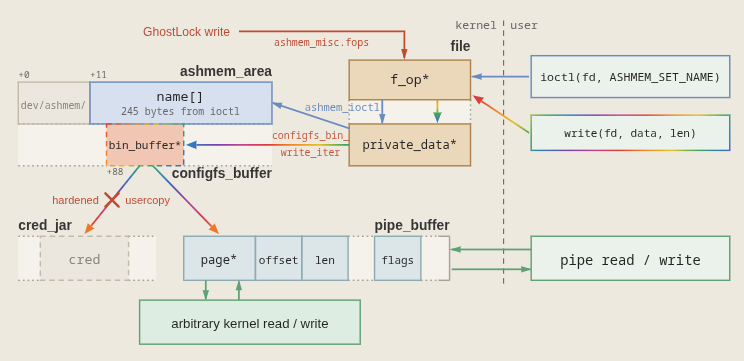
IonStack part III: Rooting Android 17 with GhostLock
Article about adapting the exploit of CVE-2026-43499 (kernel stack UAF) to Android.
The researchers used KernelSnitch, ashmem fops overwriting, pipe_buffer corruption, and other tricks to perform LPE.
https://t.co/QuGMreetzH
I handed the epoll UAF to an agent
Article by Guy Beck about using Claude for porting an exploit for an eventpoll vulnerability to Android.
https://t.co/OrQfrnIq1S
IonStack part II: GhostLock, a stack-UAF that has existed in ALL Linux distributions for 15 years
Article about exploiting a racy stack use-after-free in the futex implementation. The bug was used to pwn a kernelCTF instance.
https://t.co/HaAcgBLEXp
The article only covers achieving a kernel crash via this bug, but the vulnerability can also be exploited to escape the guest VM. The author used this bug to pwn a kvmCTF instance.
Januscape: Guest-to-Host Escape in KVM/x86
@v4bel published an article about a use-after-free vulnerability in the shadow MMU emulation of KVM/x86 (CVE-2026-53359). Both Intel (VMX) and AMD (SVM) code is affected.
https://t.co/xDH9C1UkUq
ITScape: Guest-to-Host Escape in KVM/arm64
Article by @v4bel about exploiting a race condition bug in the KVM driver on the arm64 architecture to escape the guest VM.
https://t.co/6ITHojudKa
Bad Epoll: The bug missed by Mythos
Article by Jaeyoung Chung about exploiting CVE-2026-46242 — a race condition bug in the eventpoll subsystem. Jaeyoung exploited this bug to claim a kernelCTF entry, but the vulnerability also affects Android kernels.
https://t.co/zvEvS8dOzQ
Unprivileged root via a use-after-free in DRM GEM change_handle (CVE-2026-46215)
Stan Shaw published an article about exploiting UAF in a DRM GEM ioctl. The researcher reallocated freed memory as a pipe_buffer array to perform the Dirty Pipe attack.
https://t.co/bv8TectvdB
Off By !: Exploiting a Use-after-Free in the Linux Kernel
Oliver Sieber published write-up on CVE-2026-23111 in nftables, found in early 2025, patched upstream by other researchers in Feb 2026. Article describes exploiting this UAF on Debian and Ubuntu.
https://t.co/z52Nn6qs3U
An attacker can forge a "cifs.spnego" key in Linux keyring to make the kernel run a root userspace helper to escalate privileges of the attacker's process.
CIFSwitch: a non-universal Linux local root vulnerability
Asim Viladi Oglu Manizada posted an article about a nice logic bug in the interaction between the kernel CIFS subsystem and the userspace cifs-utils package.
https://t.co/c9D3mVMg52