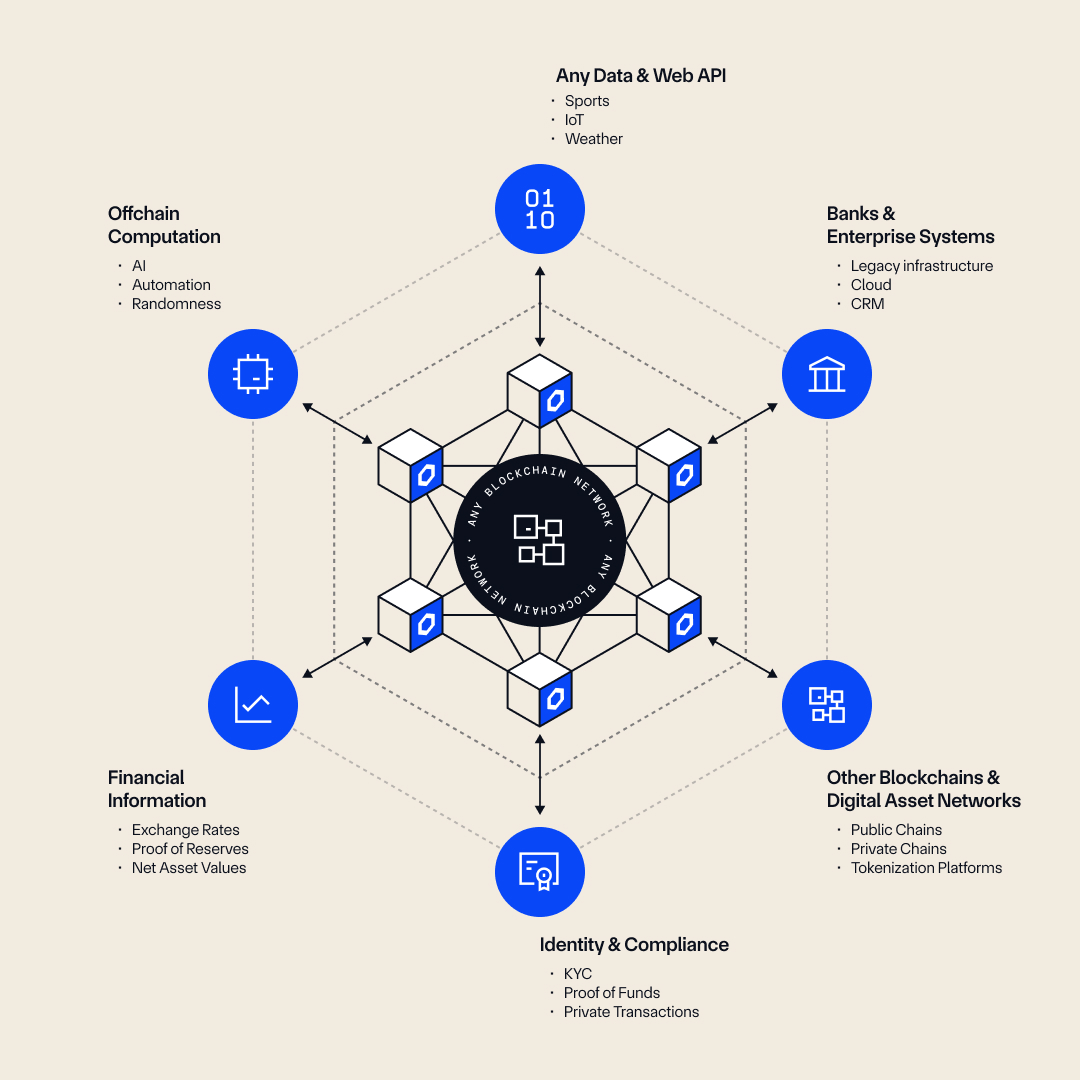
#Chainlink projects trillions of dollars worth of real-world assets (RWAs) to be brought on-chain and tokenized.
The first stage? Enriching RWAs with real-world information.
Our team specializes in building custom Chainlink oracle solutions for bringing real-world data on-chain.
While @chainlink's official services should utilized if possible, as an alternative solution we offer offer innovative on-chain update methods, including:
1). On-demand, low latency requests.
2). Push based updates at any frequency or price deviation.
3). Aggregated data feeds for price or proof of reserve data.
4). Random number generation.
We also have the capacity to:
1). Design and implement decentralized oracle networks (DONs) based on security budgets and trust-minimization requirements.
2). Build and deploy on any Chainlink supported chain.
3). Utilize flexible payment models.
4). Provide tailored support with the integration.
By unlocking the potential of RWAs through secure and reliable Chainlink oracle solutions, we’re helping shape the foundation of a more transparent, tokenized economy.
Whether you’re looking to integrate real-world data, design a custom oracle network, or explore innovative on-chain solutions, we’re here to help make it happen.
Ready to take the next step? Visit our website (linked in the comments) or reach out directly - let’s build the future of Web3 together. 🌐🚀
What every tokenized asset needs to support a unified golden record:
1. Real-world data
2. Cross-chain interoperability
3. Continued access to real-world data across different chains
#Chainlink provides all three in one platform:
https://t.co/weEkDUkDBQ
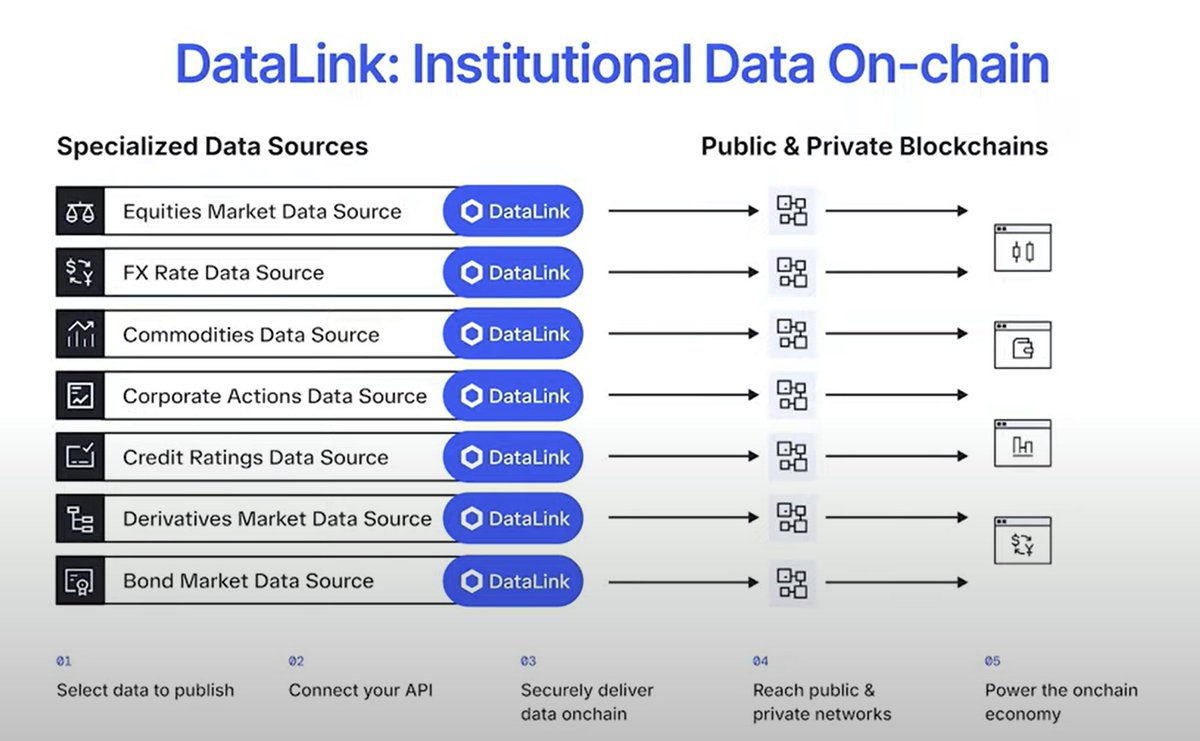
Looking forward to learning about DataLink👀
"DataLink is an institutional-grade platform to allow data providers, data sources such as large exchanges or other data sources to put their data on-chain for consumption by other institutions" @SergeyNazarov
https://t.co/qDJrpZUTG4
🤔🤔
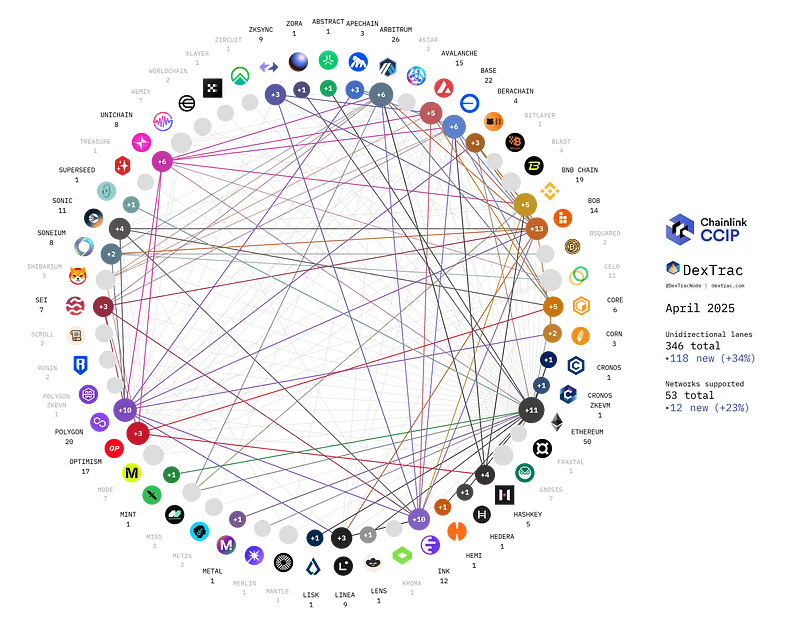
N × (N − 1) calculates the MAX number of directional cross-chain communication lanes between N networks.
4 networks → 12 lanes
50 networks → 2,450 lanes
5⃣3⃣ - WE ARE HERE #CCIP
100 networks → 9,900 lanes
200 networks → 39,800 lanes
400 networks → 159,600 lanes
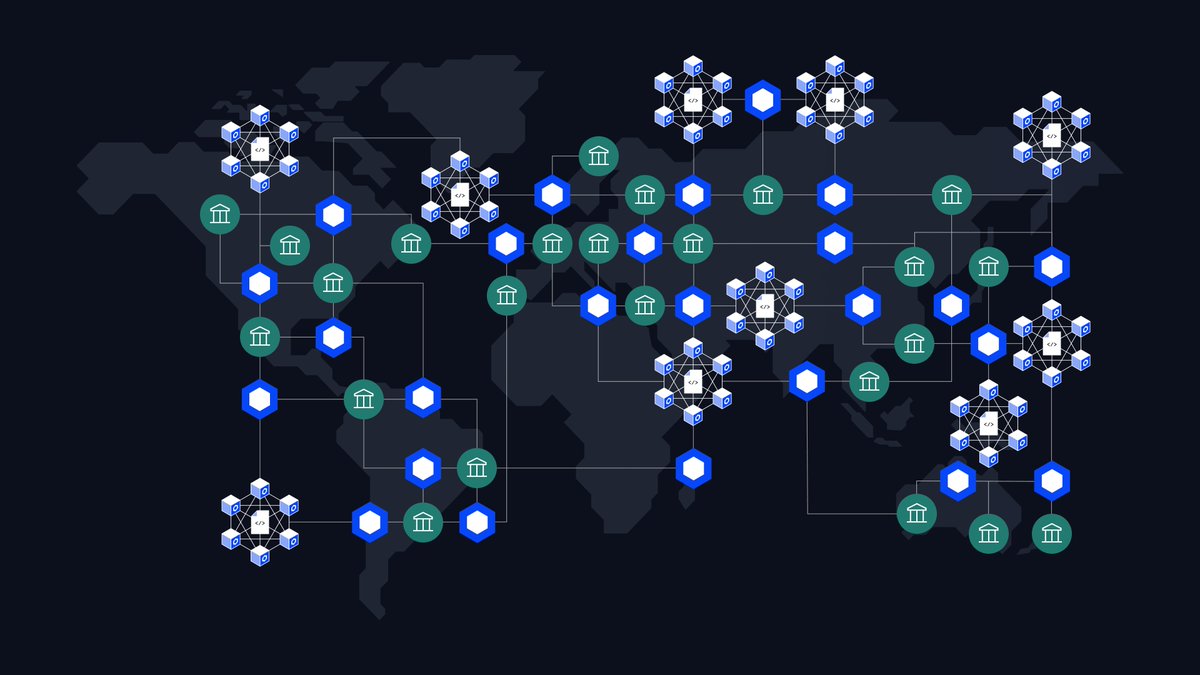
The similarity between all these?
Government chains.
Cryptocurrencies.
Tokenized RWAs.
Private chains.
Public chains.
Bank chains.
Stablecoins.
The world.
They all need Chainlink for interoperability.
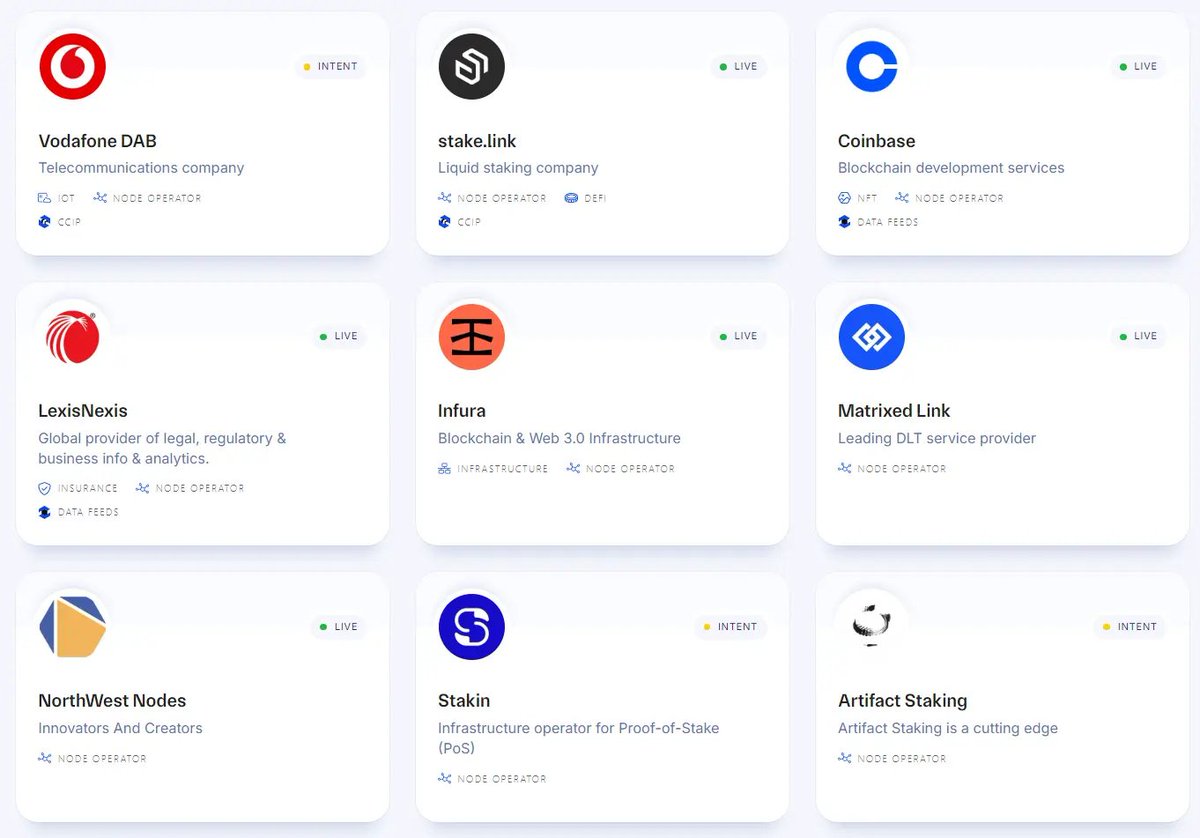
Chainlink node operators can be grouped into three primary categories: Enterprise Nodes, DevOps Nodes, and Community Nodes.
Enterprise Nodes: These nodes are operated by established firms like T-Systems, Vodafone, or Swisscom, which have decades of experience managing back-end infrastructure for Web2 systems.
DevOps Nodes: Teams such as BlockDaemon and Infura fall into this category. They bring proven experience in providing blockchain infrastructure, including RPC nodes and PoS validators, making them vital contributors to decentralized networks.
Community Nodes: Community Chainlink node operators emerge from within the Chainlink community itself. These teams typically begin by offering support, such as information-sharing or custom off-chain services, and progress to becoming trusted and reputable operators.
2025 is the year people start to realize that Chainlink isn't just an oracle.
It's the ultimate Web3 services platform that's well on its way to becoming a global standard.
One does not simply spend a month in D.C. to shill a coin, but rather to figure out how to rebuild the global financial system with the one and only global standard.
Exciting times ahead for Chainlink.
With continuous meetings on Capitol Hill and events across Washington, D.C., Chainlink is actively contributing to the policy conversations shaping the future of blockchain in America.
To maintain its leadership in global finance, the U.S. must embrace secure, transparent, and interoperable digital infrastructure. Chainlink provides the infrastructure that helps upgrade the traditional systems and keep American markets at the forefront of global financial innovation.
Multistream is a pretty awesome upgrade for Chainlink Data Streams, 1000x scalability
Rather than spinning up a new decentralized oracle network (DON) for every new data point
One DON can generate consensus over thousands of unique data points in parallel, speeding up feed deployments, chain integrations, and allowing oracle reports to contain bundles of data
All with sub-second speed latency and global distributed consensus from nodes across America, Europe, and Asia
Such “Asset DONs” will play a key role in the coming Chainlink Runtime Environment platform upgrade
Chain integrations become as simple as spinning up new ChainReader / ChainWriter DONs (all services available on a chain), with the ability to write custom programmatic workflows for push or pull style oracles for any data
Just use Chainlink $LINK
2025 is the year people start to realize that Chainlink isn't just an oracle.
It's the ultimate Web3 services platform that's well on its way to becoming a global standard.
Chainlink Node Operators: The Backbone of the Chainlink Network.
In our latest article, we discuss:
* Who are Chainlink Node Operators?
* What Chainlink Node Operators Do
* How Chainlink Nodes Form Decentralized Oracle Networks (DONs)
And more 👇
https://t.co/Acb11oy7f4
Computers enabled information to move into the digital format.
The Internet allowed it to be seamlessly shared at scale.
Blockchains enable value to move into the onchain format.
Chainlink allows it to be seamlessly transacted at scale.
Big things are happening at Chainlink.
The Chainlink Platform is undergoing a major evolution to empower developers with more flexibility, scalability, and speed than ever before.
Here’s what you need to know about the upgraded architecture 👇
Introducing our latest custom Chainlink oracle service - Verifiable Random Numbers (VRN)🔥🛠️
Verifiable randomness in Web3 sectors such as DeFi and gaming is key to fairness, security, and trust.
Here's how it works:
1. Seed Generation: Our infrastructure generates a new cryptographically-secure random seed every 6 hours (also known as an 'epoch'). Each seed is hashed and stored securely on our SOC-2 compliant infrastructure. Seeds only become publicly available once their respective epoch has ended, to prevent manipulation
2. Random Number Request: Your smart contract's request() function requests a random number within the specified minVal and maxVal (inclusive). Our oracle uses the current epoch's secret seed to generate your random number. Our oracle returns both the random number and the seed's one-way hash to your smart contract.
3. Verification: Once the seed becomes publicly available, your random number(s) can be verified independently on-chain or off-chain.
What are the benefits of VRN:
1. Blockchain compatibility with any Chainlink-supported blockchain
2. Integration support and technical guidance
3. Flexible subscription or pay-per-call pricing; custom payment currencies
4. Secure randomness for games, NFTs, lotteries, and dApps
5. Ongoing monitoring and dedicated support
Why did we develop it when Chainlink VRF exists?
While Chainlink VRF should be the go-to solution for randomness, at this time, it's not active on all Chainlink supported networks. Our solution helps fill that gap while providing for other benefits such as flexible payments, integration support, and more.
Read more about it in our VRN guide and blog 👇
Chainlink node operators can be grouped into three primary categories: Enterprise Nodes, DevOps Nodes, and Community Nodes.
Enterprise Nodes: These nodes are operated by established firms like T-Systems, Vodafone, or Swisscom, which have decades of experience managing back-end infrastructure for Web2 systems.
DevOps Nodes: Teams such as BlockDaemon and Infura fall into this category. They bring proven experience in providing blockchain infrastructure, including RPC nodes and PoS validators, making them vital contributors to decentralized networks.
Community Nodes: Community Chainlink node operators emerge from within the Chainlink community itself. These teams typically begin by offering support, such as information-sharing or custom off-chain services, and progress to becoming trusted and reputable operators.
Fairness and trust are critical in Web3.
That’s why we built Verifiable Random Numbers (VRN) - secure randomness for gaming, DeFi, and NFTs on any Chainlink-supported blockchain.
Flexible payments, full support, independent verification, and more...
Introducing our latest custom Chainlink oracle service - Verifiable Random Numbers (VRN)🔥🛠️
Verifiable randomness in Web3 sectors such as DeFi and gaming is key to fairness, security, and trust.
Here's how it works:
1. Seed Generation: Our infrastructure generates a new cryptographically-secure random seed every 6 hours (also known as an 'epoch'). Each seed is hashed and stored securely on our SOC-2 compliant infrastructure. Seeds only become publicly available once their respective epoch has ended, to prevent manipulation
2. Random Number Request: Your smart contract's request() function requests a random number within the specified minVal and maxVal (inclusive). Our oracle uses the current epoch's secret seed to generate your random number. Our oracle returns both the random number and the seed's one-way hash to your smart contract.
3. Verification: Once the seed becomes publicly available, your random number(s) can be verified independently on-chain or off-chain.
What are the benefits of VRN:
1. Blockchain compatibility with any Chainlink-supported blockchain
2. Integration support and technical guidance
3. Flexible subscription or pay-per-call pricing; custom payment currencies
4. Secure randomness for games, NFTs, lotteries, and dApps
5. Ongoing monitoring and dedicated support
Why did we develop it when Chainlink VRF exists?
While Chainlink VRF should be the go-to solution for randomness, at this time, it's not active on all Chainlink supported networks. Our solution helps fill that gap while providing for other benefits such as flexible payments, integration support, and more.
Read more about it in our VRN guide and blog 👇
Introducing our latest custom Chainlink oracle service - Verifiable Random Numbers (VRN)🔥🛠️
Verifiable randomness in Web3 sectors such as DeFi and gaming is key to fairness, security, and trust.
Here's how it works:
1. Seed Generation: Our infrastructure generates a new cryptographically-secure random seed every 6 hours (also known as an 'epoch'). Each seed is hashed and stored securely on our SOC-2 compliant infrastructure. Seeds only become publicly available once their respective epoch has ended, to prevent manipulation
2. Random Number Request: Your smart contract's request() function requests a random number within the specified minVal and maxVal (inclusive). Our oracle uses the current epoch's secret seed to generate your random number. Our oracle returns both the random number and the seed's one-way hash to your smart contract.
3. Verification: Once the seed becomes publicly available, your random number(s) can be verified independently on-chain or off-chain.
What are the benefits of VRN:
1. Blockchain compatibility with any Chainlink-supported blockchain
2. Integration support and technical guidance
3. Flexible subscription or pay-per-call pricing; custom payment currencies
4. Secure randomness for games, NFTs, lotteries, and dApps
5. Ongoing monitoring and dedicated support
Why did we develop it when Chainlink VRF exists?
While Chainlink VRF should be the go-to solution for randomness, at this time, it's not active on all Chainlink supported networks. Our solution helps fill that gap while providing for other benefits such as flexible payments, integration support, and more.
Read more about it in our VRN guide and blog 👇