🇨🇳 The West loves to lecture China about “democracy” while their own voters get more fed up with every election.
Politicians come and go, campaigns make all kinds of amazing promises. But once the votes are in, nothing really changes. The same groups stay in control and regular people are left waiting. Is that really what they call freedom of choice?
China operates on a completely different model. One that can be hard to understand and easy to misinterpret.
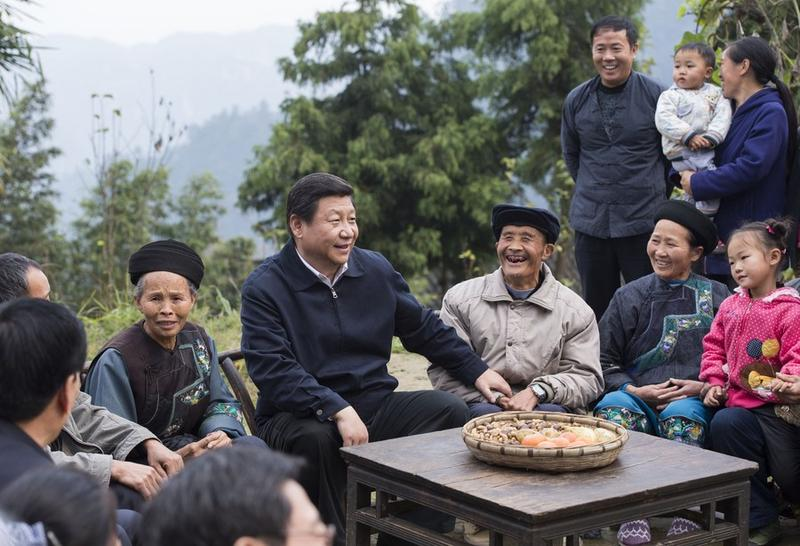
President Xi Jinping didn’t gain power through inheritance or wealth. He worked his way up for over forty years, serving at every tier: villages, counties, cities and provinces. He has spent his life governing, not just running for office. Top leadership is elected by the National People’s Congress, while local residents choose their community representatives, with the entire system built from the grassroots up.
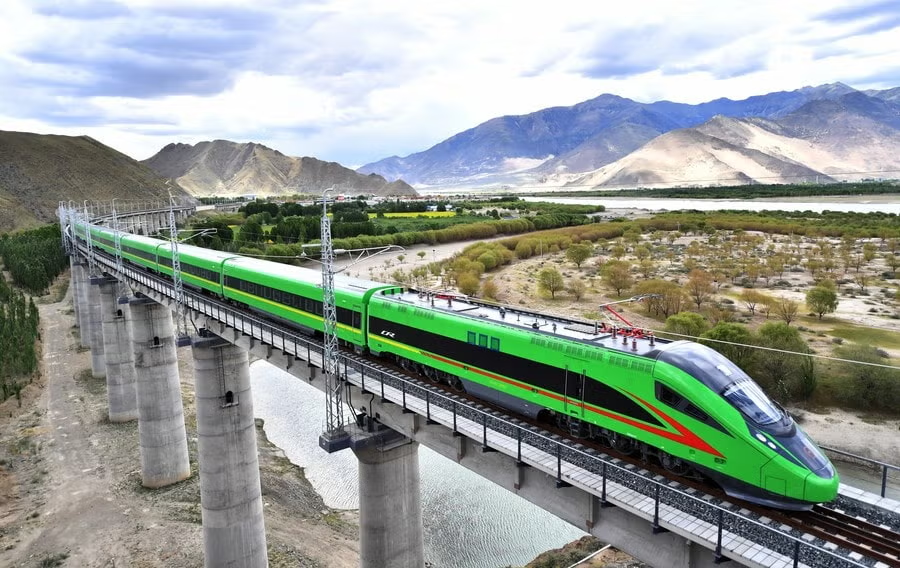
The Communist Party of China is the world’s largest political organisation, with almost 100 million members rooted in communities nationwide. Its five-year plans aren’t just empty promises either; they get delivered. This is how China pulled hundreds of millions out of poverty, built the planet’s most extensive high-speed rail network and now takes the lead in electric vehicles, renewable energy and key cutting-edge technologies.
The country’s leadership has a clear mission: to rejuvenate the nation and work for the Chinese people. When people see real progress being made, the system stays stable, rather than cycling through one disappointment after another.
This is supported by the polls. Long-running research from Harvard Kennedy School shows Chinese public satisfaction with the government consistently sits above 90 percent. Edelman’s global trust surveys record government trust at 89 to 91 percent among the highest worldwide. National happiness scores range from 70 to 79 out of 100. Considering everything, it’s reasonable to argue he’s among the most effective national leaders in the world right now.
It’s understandable why the critics target this; after all, China keeps achieving things their nations simply cannot. If you witness this steady progress firsthand while living here in China, the reality is simply astonishing.
At the end of the day, I have to wonder: does that so-called Western freedom of choice truly deliver better lives for ordinary people, or is it just better marketing?
China's government oppresses its people. That's why life spans, education levels, average heights & income levels have all gone up the last 40 yrs for Chinese
Maybe DC should start oppressing us Americans in the same way
Anonyme.
Ma fille est décédée dans un accident de voiture il y a deux ans. Son golden retriever, Cooper, est devenu le mien. Cooper attendait autrefois ma fille devant la porte, chaque jour, à 17h précises. Pendant des mois après l’accident, il continuait à s’asseoir là, fixant la poignée de la porte, gémissant lorsque l’horloge atteignait cinq heures. C’était un chagrin quotidien pour nous deux.
Hier soir, je regardais l’ancien iPad de ma fille et j’ai trouvé un mémo vocal où elle apprenait à Cooper à s’asseoir. J’ai appuyé sur lecture par erreur, et sa voix joyeuse a rempli le salon : « Bon chien, Cooper ! Viens ici, mon garçon ! » Cooper ne s’est pas seulement levé — il a poussé un cri bref, a couru vers l’iPad et a commencé à lécher l’écran, la queue battant comme un fou. Il pensait qu’elle était revenue. Quand l’audio s’est arrêté, il a regardé derrière l’iPad, puis il m’a fixé avec ces yeux bruns profondément tristes. La réalité l’a frappé. Il est venu poser son museau humide contre ma joue et est resté là, en gémissant doucement. Nous nous sommes retrouvés tous les deux assis par terre dans le noir, à nous accrocher l’un à l’autre.
Les animaux n’oublient pas les voix des personnes qui les ont aimés. Ils portent le deuil aussi lourdement que nous, mais ils sont toujours prêts à en partager le poids.
#storytime
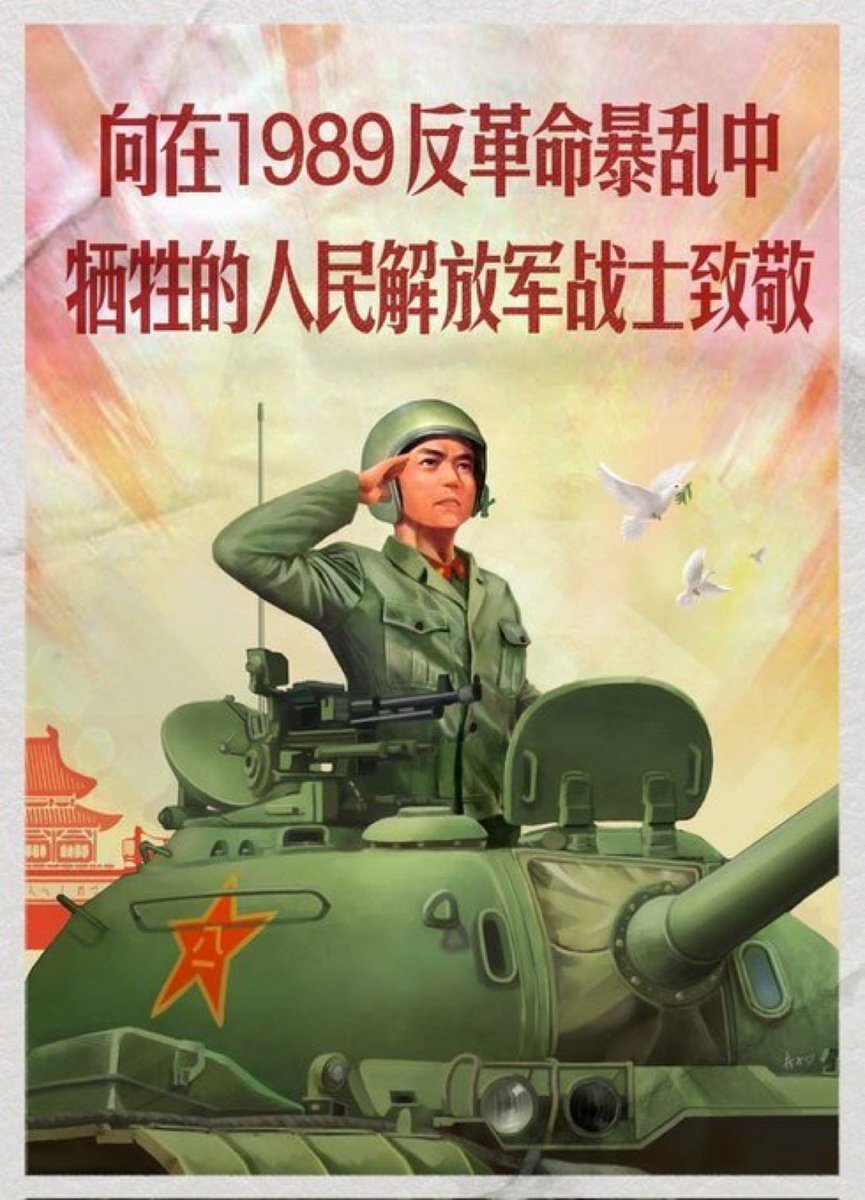
Today, June 4th — the date the West uses every year to commemorate the Tiananmen event, as if they actually cared about China.
Student leader Chai Ling exposed the real agenda in her emotional late-May 1989 interview. The 23-year-old psychology student and de facto commander-in-chief admitted the movement’s true hope was bloodshed: “What we are actually hoping for is bloodshed — the moment when the government has no choice but to butcher the people. Only when the square is awash with blood will the people of China truly unite.”
She spoke of her own plans to survive while urging students to stay and wait for the bloodbath. This wasn’t organic student idealism. It was the climax of a hijacked movement.
What began with legitimate frustrations over corruption and inflation was rapidly turned into one of the first major Western colour revolution attempts in Beijing. External forces — funding, NGOs, strategists on the ground, and media orchestration — pushed English banners for Western cameras, radical escalation, and deliberate chaos to force a violent crackdown. Classic playbook.
These operations specifically prey on young, emotional, idealistic students — naive, never held real jobs, fed Hollywood fantasies of the West, and easy to brainwash with slogans of “democracy” and “freedom.” They become useful idiots, turned against their own country while the organizers keep exit plans ready. Many later reflected: “I was young and foolish.” https://t.co/WhiHHOZege The same pattern repeated in Serbia, Georgia, Ukraine, Hong Kong, and beyond.
Gene Sharp — the American architect of the “non-violent” colour revolution manuals — was physically in Beijing in 1989, boots on the ground for the prototype. https://t.co/505bPwZBlF
Foreign actors escalated tensions.
Violence erupted outside the square: rioters burning unarmed soldiers alive, attacks on troops. Half the deaths were soldiers. Yet the dominant Western narrative still pushes the “massacre on the square” myth. Not a single person died on the square itself during the final clearance. https://t.co/0nMB9x7QSs
The Chinese government knew very well who was behind it. They refused to become another failed state or vassal. They chose sovereignty, stability, and development.
The results speak louder than any propaganda: historic poverty reduction, national rise, and protection of its people rather than sacrificing them for someone else’s script. https://t.co/snsTz638h7
Every June 4th brings the same selective Western outrage and hypocrisy — pretending to care about Chinese lives while ignoring their own bloody interventions abroad and the regrets of those manipulated elsewhere.
Legitimate grievances get hijacked.
Youthful idealism is powerful fuel — and dangerously exploitable when outsiders brainwash kids into destroying their own future.
China learned the lesson early.
Stability won.
China thrived.
A teenage boy offered to clean my entire storm-damaged yard for just $40.
At first, I thought he was desperate.
Then I saw the injured dog beside him.
Seventeen-year-old Mason spent all day hauling broken branches in brutal heat without complaining once. Every twenty minutes, he stopped—not to rest, but to check on the stray dog he’d rescued the day before.
The dog had been hit by a car.
Broken leg.
Visible ribs.
Nowhere else to go.
When I asked Mason why he needed the money so badly, his voice cracked:
“If I can’t pay for the surgery tonight… they’ll transfer him.”
That’s when I realized:
He wasn’t working for spending money.
He was trying to save a life.
By sunset, my yard was spotless.
I handed him $500.
He tried to refuse it because we had “agreed on forty.”
A kid willing to work himself to exhaustion for a dog he barely knew.
Not because he had to.
Because he chose to.
People say young people today are lazy or selfish.
That’s not what I saw.
I saw character.
Compassion.
Responsibility.
Sometimes, the richest people are the ones willing to give everything they have for someone who has nothing.
Credit: Born legend