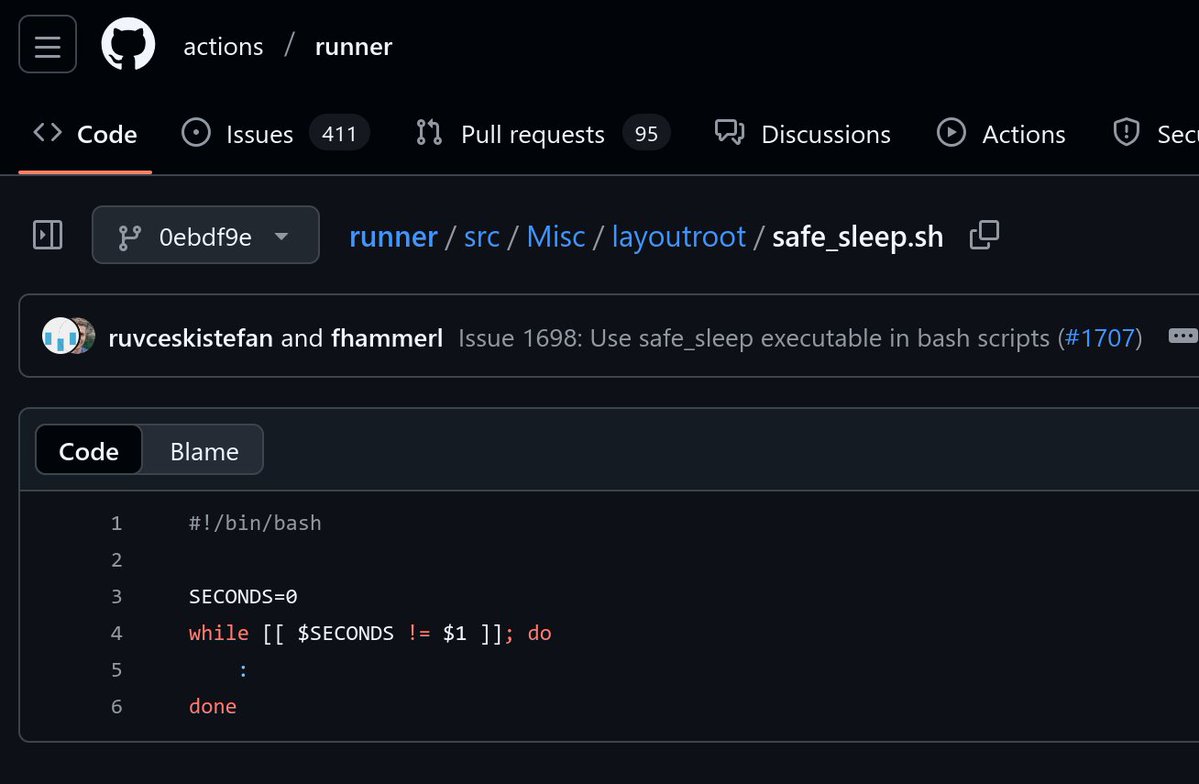
Was tuning Power BI a few months ago and saw that it was consuming a lot of compute units while waiting for data from slower direct queries.
me: Surely Microsoft aren't just doing busy waits.
Silly me.
@danielnjoo@haravayin_hogh There was a version on https://t.co/bvPoVCVziw which has anglicised names (Marquis of Binghampton etc). I found it a lot more confusing than the pinyin.
honestly this is so evil
- sell you a smart fridge
- omg cute it can show photos and leave lil notes uwu
~ waits a year ~
- fridge starts showing ads for mcdonalds you can’t get rid of
For more than two millennia, an inscription carved high on the windswept Qinghai–Tibet Plateau guarded its secret. Today, Chinese cultural heritage authorities confirmed its origin: the First Emperor of Qin.
The inscription is carved on a lakeside rock at an elevation of 4,306 meters, close to the origin of the Yellow River. The carved surface measures 82 centimeters in total length and 33 centimeters at its widest point, with the inscribed area covering about 0.16 square meters, located roughly 19 centimeters above the ground. The full text consists of 12 lines with 36 characters, written in Qin-style seal script, and reads:
"In 210 BC, the Emperor dispatched Wudafu (a mid-ranking official in the Qin’s 20-grade bureaucracy) Yi to lead a group of fangshi (alchemists/occult practitioners), traveling by carriage to Mount Kunlun to collect medicinal herbs. They arrived here on a day in the third month of that year, with still 150 li ahead."
The First Emperor of Qin was the man behind the unification of the Six States, the building of the Great Wall, the creation of the Terracotta Army, and the establishment of the commandery-county system. Yet behind his monumental achievements lay a profound fear: the inevitability of death.
Unwilling to accept mortality, he became increasingly obsessed with the pursuit of immortality. Historical records suggest that in his later years, this "Emperor for the Ages" was deeply terrified of death, repeatedly dispatching alchemists to search for an elixir of immortality. Among the most famous of these expeditions was that of Xu Fu (徐福), who led 3,000 boys and girls, along with skilled craftsmen and seeds of various crops, to sail east in search of the elixir. According to legend, Xu Fu reached Japan, with some accounts even claiming he became the country’s first emperor. While such claims remain unverified, modern genetic research, however, indeed shows that 2,000 years ago Japan did undergo a population replacement: the Jomon people were gradually displaced by the Yayoi, who became the principal ancestors of today's Japanese.
Last year, I visited Liye (里耶), a remote town in western Hunan Province, deep in central China. In 2002, during construction at a local primary school, locals accidentally uncovered the site of a Qin-era county office. Inside an ancient well, archaeologists discovered a trove of bamboo slips-official documents from the county government. Among them were records noting orders to search for medicinal herbs across the empire, as well as reports that "this county does not have the required magical plants." Scholars believe this was linked to the First Emperor's decree commanding a nationwide search for an elixir.
Why, then, would the First Emperor send envoys to such distant and inhospitable places? At the time, Mount Kunlun-towering on the Tibetan Plateau and marking the source of the Yellow River-was regarded as a sacred site of divine power. According to legend, it was home to the Queen Mother of the West (西王母), a celestial goddess believed to possess the elixir of eternal life. A mix of mythological faith, the human urge to push against nature's extremes, and the emperor's obsession with immortality likely drove him to dispatch officials into the highlands in search of the impossible.
The discovery of this inscription has its own twists and turns. One day in 1986, when the area was still a pasture, a Tibetan herdsman noticed the characters while grazing his livestock but didn't think much of them. In 2020, during a field survey, a local university team took note of the inscription again, but assumed it dated to the Qing dynasty (1644-1911), since Qing emperors repeatedly sent officials to investigate the source of the Yellow River. Later, a friend of mine, a fellow at the Institute of Archaeology of Chinese Academy of Social Sciences, conducted a careful study and published the findings this summer. This, however, prompted a differing view from a quirky professor at Peking University.
The doubts surrounding this inscription mainly focus on three points: its degree of weathering is far less than that of other surviving Qin-era inscriptions; it seems almost impossible for people 2,000 years ago to drive carriages to such a high altitude; and why they would have arrived at this harsh location so early in the spring.
However, a team of Chinese experts conducted authentication and mineral analysis, ruling out the possibility that the carving was made with modern alloy tools. The site itself is sheltered from prevailing winds, which explains the limited weathering. As for arriving in early spring, it may have been because the ailing First Emperor was urgently seeking medicine. Although the altitude stands high, the terrain is generally flat, making the royal access possible. In all likelihood, though, he never benefited from any herbs found there, just four months after this inscription was carved, the First Emperor died during an inspection tour in northern China.
I asked a friend who had been to the site whether there are really herbs there that could prolong life.
She told me that indeed there are: cordyceps, rhodiola, and saffron all grow in this region-but they can only be harvested in the summer, by which time the First Emperor died already.
2,235 years ago, the First Emperor's envoys searched for immortality; today, we search for truth. In both quests, whether for eternal life or eternal memory, I would say the human desire to transcend time, remains unchanged.
AI efficiency is important. Today, Google is sharing a technical paper detailing our comprehensive methodology for measuring the environmental impact of Gemini inference. We estimate that the median Gemini Apps text prompt uses 0.24 watt-hours of energy (equivalent to watching an average TV for ~nine seconds), and consumes 0.26 milliliters of water (about five drops) — figures that are substantially lower than many public estimates.
At the same time, our AI systems are becoming more efficient through research innovations and software and hardware efficiency improvements. From May 2024 to May 2025, the energy footprint of the median Gemini Apps text prompt dropped by 33x, and the total carbon footprint dropped by 44x, through a combination of model efficiency improvements, machine utilization improvements and additional clean energy procurement, all while delivering higher quality responses.
See the blog or technical paper for more about our methodology and ongoing efforts.
Blog:
https://t.co/CoMm5gV9SR
Link to detailed paper: https://t.co/UBi9rd6gEC
The reason we need better software isn’t just to "shave milliseconds".
When a simple build takes minutes, the cost of iteration rewires your brain. You stop exploring ideas and start avoiding them. And that’s fatal, because iteration is the essence of invention.
Slow tools don’t just waste time. They reshape thought, teaching you to fear the very process that drives progress. Bad software doesn’t kill productivity. It strangles imagination.
I've decided to have a go setting up a Patreon over at https://t.co/IucmP1avKe because I got a lot of encouraging messages about the art that I've been doing recently.
This is all kind of new to me so I really don't know what I'm doing yet, but I'm gonna give it a try.
Amusing use of LLMs at a more traditional company:
“A project with ~50 people got stuck. There are too many JIRA tickets, no clear specification, and anytime one team tries to make progress, the others shoot it down.
So a dev built an LLM to try and break the deadlock: (cont’d)