The US is considering a new way to fight online piracy.
A new bill would allow copyright owners to ask courts to block foreign piracy websites. The orders could apply to internet providers, DNS services, and even VPN companies.
People often use VPNs to get around website blocks. If VPNs are included, bypassing these blocks could become much harder.
But this is only a proposed bill right now. Nothing has changed yet.
If it passes, it could make piracy sites much harder to access in the US
Buying raw milk with $XMR
@Goblin_cards is now including a free virtual card with the physical card. 2 cards for one price
Code: MAV to save $15 on it 🥂🚀
Google Phones with Android stock spies on you while idle sending data packages to the company's servers. GrapheneOS doesn't.
Now it's on you. Choose your OS.
What happens on your Android phone when you simply leave it locked and untouched?
A 72-hour packet capture study by PraveenTechWorld measured background network activity on Pixel 8 devices.
According to the study, stock Android generated 348.4 outbound requests per hour toward Alphabet infrastructure, while their GrapheneOS setup without Google services recorded 0.0.
The researchers captured the traffic externally and published the raw dataset.
The interesting part isn't just the number. It's being able to measure what the phone is doing when you're not using it.
Would you expect 348 connections an hour from an idle phone?
https://t.co/NXpCHu4IY7
#Android #Privacy #DeGoogle
Disney+ has updated its subscriber agreement to make it clear that ads and promotional content can appear on any subscription plan, including plans that are marketed as ad-free.
This doesn’t mean every movie or episode will suddenly have commercial breaks. Disney says promotions can appear before or after content, while live programming can still include traditional ads.
Basically, you might be paying extra to avoid ads while Disney’s says: we can still show you some.
The EU is pushing Chat Control again, for the 3rd time.*
If it passes, companies will be forced to scan all of your private messages to look for CSAM.
Obviously, this violates your privacy rights. OPPOSE, RESIST, AND DO NOT COMPLY.
😡🚨 Next round coming up: Let's fight against #ChatControl 🚨😡
In July, the European Parliament approved Chat Control 1.0 👉 NOW, On September 29, the negotiations for CHAT CONTROL 2.0 RETURN.
Unfortunately, this is a much bigger threat for everybody's #privacy.
At Tuta we will continue to SAY NO to Chat Control and fight for our right to privacy ✊❤️
Find more about Voluntary Chat Control 1.0 👉 https://t.co/7PjSq6JciE
Find more about Chat Control 2.0 👉 https://t.co/JLei3q3UVK
The fight against #ChatControl must go on!
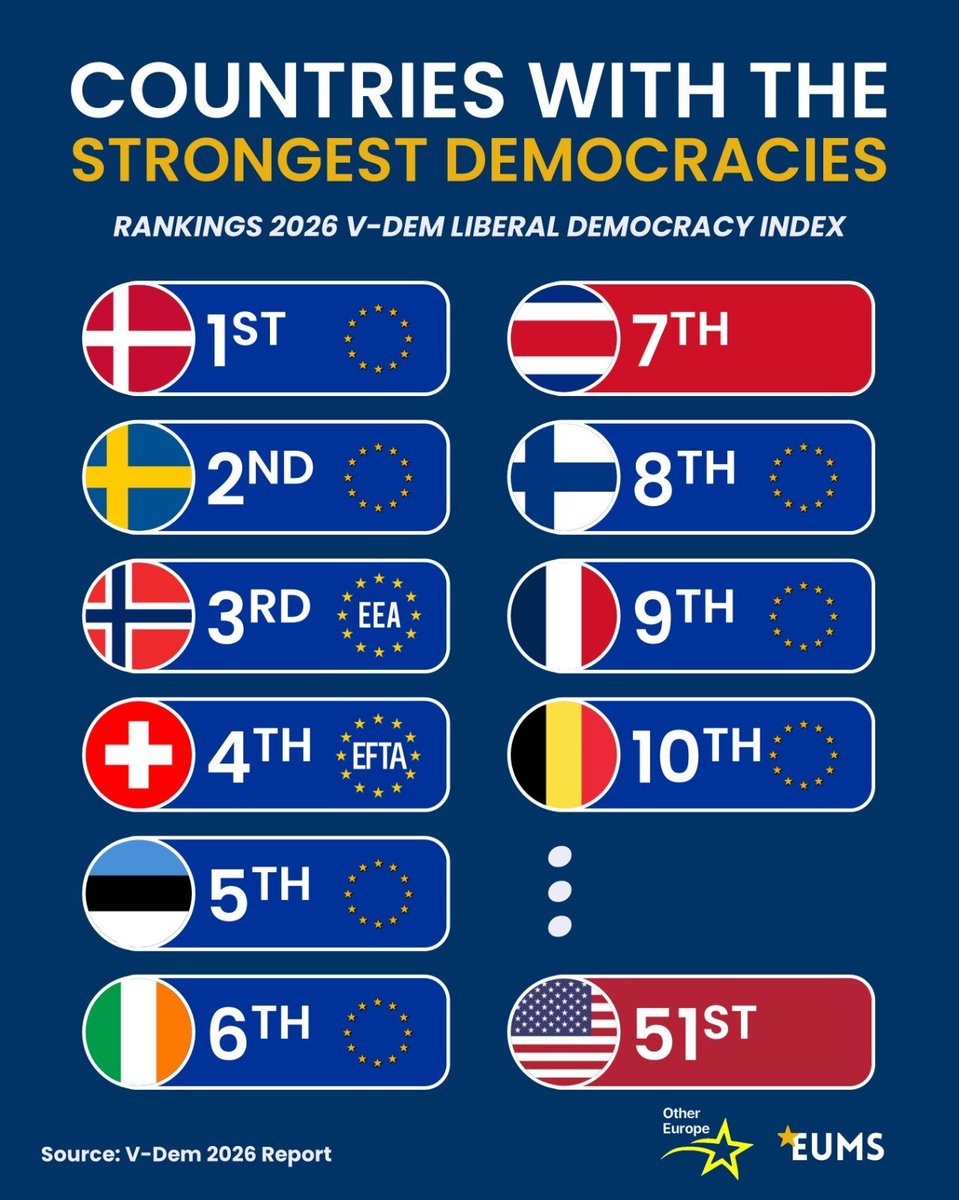
"Europe means democracy". No, it doesn't:
EU Surveillance Laws:
Communications content and metadata
1. Temporary CSAM scanning derogation ("Chat Control 1.0")
Voluntary scanning of unencrypted messages for CSAM. Passed (revived July 2026). In force until April 2028.
2. Regulation to Prevent and Combat Child Sexual Abuse (CSAR / "Chat Control 2.0")
Permanent framework: risk assessments and detection orders. Mandatory encryption scanning stripped from Council position.
Not passed. Trilogues ongoing.
3. ePrivacy Regulation
Proposed update to 2002 ePrivacy Directive. Withdrawn (October 2025).
4. Data Retention Directive 2006/24/EC
EU-wide telecoms metadata retention. Invalidated by CJEU (2014). No replacement exists; national regimes remain.
5. Terrorist Content Online Regulation (EU) 2021/784
One-hour removal orders for terrorist content. Passed. In force since June 2022.
Law-enforcement access to stored data
6. e-Evidence Regulation (EU) 2023/1543 & Directive (EU) 2023/1544
Cross-border production and preservation orders (10 days / 8 hours emergency). Passed. Fully applicable from August 2026.
7. Law Enforcement Directive (EU) 2016/680
Police data-protection rules including biometric data of suspects. Passed (2016).
Travel, borders, identity databases
8. PNR Directive (EU) 2016/681
Airlines transfer passenger records on extra-EU flights to national units. Passed. In force.
9. API Regulation (EU) 2025/13
Central router for Advance Passenger Information and PNR. Passed (December 2024). Live January 2025.
10. Interoperability Regulations (EU) 2019/817 & 2019/818
Common Identity Repository, European Search Portal, Biometric Matching Service, Multiple Identity Detector. Passed (2019). Biometric matching service live May 2025; search portal live June 2026.
11. Entry/Exit System (EES)
Biometric registration (face + fingerprints) of third-country nationals at borders. Passed. Fully deployed across Schengen borders (April 2026).
12. ETIAS
Pre-travel authorisation for visa-exempt nationals, screened against EU databases. Passed. Operational expected Q4 2026.
13. Revised Eurodac
Expanded biometric database (includes children age 6+) for asylum and migration. Passed. Applicable from June 2026.
14. Screening Regulation (EU) 2024/1356
Identity, security, health and biometric checks for irregular arrivals (up to 7 days). Passed. Applicable from June 2026.
15. Prüm II Regulation (EU) 2024/982 Automated DNA, fingerprint, facial image, vehicle and police record exchange via central router. Passed. Router operational Q2 2027.
Biometrics and AI for identification
16. AI Act (Regulation (EU) 2024/1689)
Prohibits real-time remote biometric ID in public spaces for law enforcement (narrow exceptions allowed). High-risk biometric rules delayed to December 2027.
Passed. Core prohibitions active.
Related instruments
17. European Media Freedom Act (EU) 2024/1083
Restricts spyware against journalists; narrow derogations for serious crimes with judicial authorisation. Passed. Main provisions active from August 2025.
18. EU KIDS Act
Minimum age, age assurance, AI companion rules. Does not require message scanning. Proposed only. Legislative procedure started September 2026.
You're not leading democracy at all.