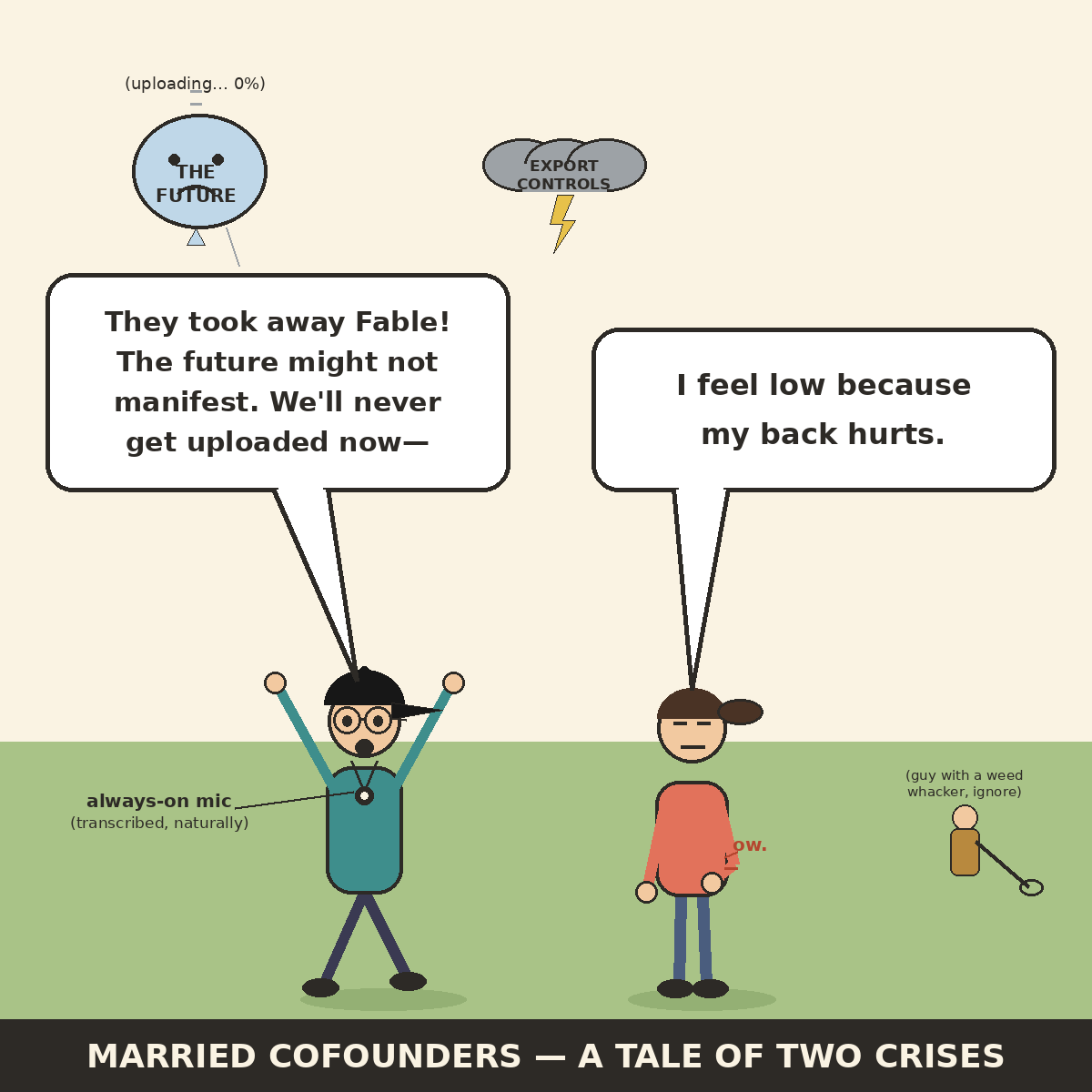
@sweatystartup We’re trying to teach our 6 year old to reflect on how these things make her feel so eventually when we take away the controls she makes good choices.
No idea if this will work or how long it will take.
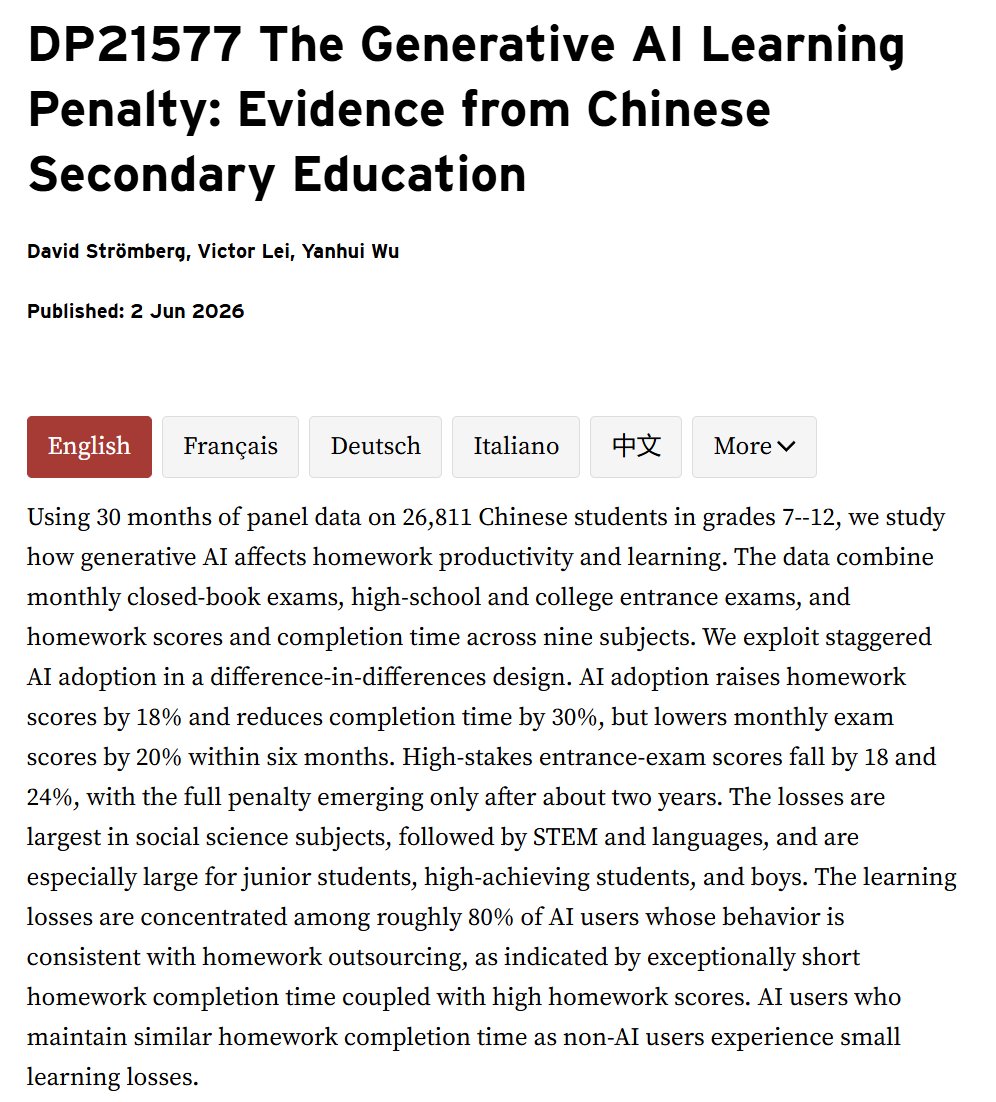
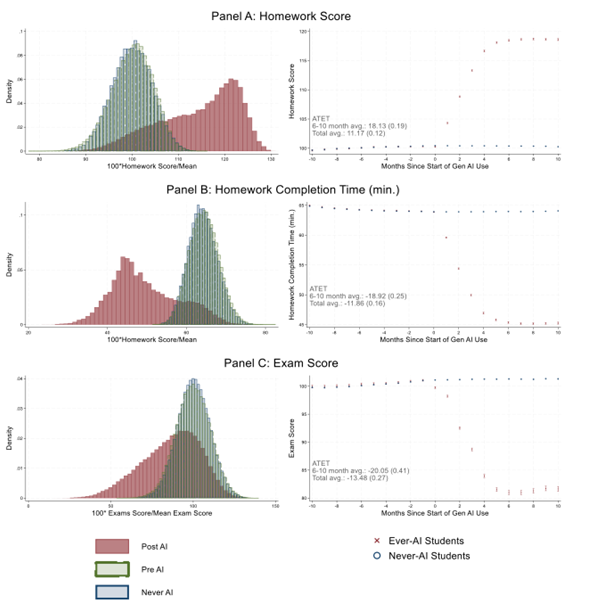
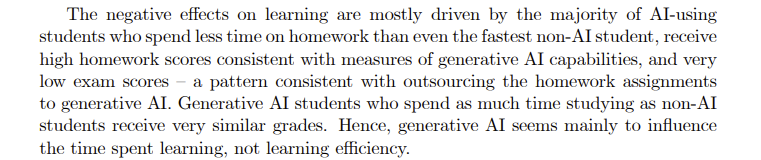
More evidence, from a large-scale study in China, that using AI hurts learning if it undermines mental effort. When homework time drops due to AI use, so do test scores.
Across studies, a theme: AI tutoring in support of classes is good, using AI to "help" with homework is bad.
@omooretweets Hmmm, maybe people value their happiness and relationships more than productivity.
Anyway, I don’t believe consumer apps always fairly reveal people’s true preferences.
From literature to law to music, AI has lowered the skills and effort required for some work. These charts show how much the technology is changing five different fields https://t.co/A6HFXYhwsZ
I think this is mostly correct: AI will change writing the same way photography changed painting.
HOWEVER, modern painting also resulted in minimalist stuff like Malevich's White on White, with critics declaring the "death of painting".
Also, the market for portrait painting totally collapsed and migrated to photography.
@emollick Agree, and chatbots are deceptive. It's intuitive to start, "just talk to it like a person" works. But to get a good answer you need to know what it can do and how hard to push it.
Back when I was a data scientist, 80% of my time was data wrangling. That part of the job is gone, I'm happy to say.
In building It's One Banana last week, I handed Fable a genuine mess: pdfs, a historical dump in a totally different format, raw data buried in spreadsheets full of someone's old analysis. It sorted all of it - matched the accounts, recognized transfers.
AI's been good at this for a while, but the judgment Fable showed really felt like a step change.
@emollick Yeah, it becomes very obvious when you're building apps that Claude's almost blind to what it creates. (Though to be fair, the bottom one doesn't look much like a gorilla if you haven't seen the top...)
I've been meaning to review my household expenses for a while. Fable made it so much easier.
I built It's One Banana in just a couple of days. It's a personal spend tracker and optimizer that:
- ingests all our financial data from 10 different accounts
- wrangles the data into a spend tracking dashboard, reconciling transfers and reimbursements
- categorizes each transaction
- lets the user recategorize, and in doing so teaches the system
- flags subscriptions
- Bonus: recommends actions to save money, like swapping credit cards and checking utility rate plans.
What I learned building It's One Banana:
- Fable is "relentlessly proactive", as someone else pu it. I can give it vague direction and it just goes off and builds end-to-end.
- Fable generally has good judgment:
- It knew to build an audit tab where the user adjusts categories so the system learns for next time. It flagged low-confidence and uncategorized items. I didn't tell it to do this.
- Built a trends tab even though I didn't ask.
- Where its judgment failed:
- The synthetic data was totally unrealistic at first. For example, almost no spend on housing despite an apparent Bay Area residence, and no travel. I had to give it a persona and some direction.
- It still confidently made a lot of unstated assumptions. E.g., when I asked which credit cards would maximize savings, it assumed generic travel behavior, instead of looking at my actual receipts, even though it had access to those.
- Its writing style still sucks, probably even worse than Opus.
The public version is synthetic data and so reads as kind of generic. But for me personally, this really helped spot the specific low-hanging fruit for my family.