Breaking: Oil production at Sharara field is declining after a fire hit the pipeline supplying Zawiya refinery. The pipeline has been shut down, and the cause of the fire is still unknown. and maintenance teams are inspecting the damage.
#OOTT#Libya
NEW: NHS England is being called on to cancel its contract with US spytech firm Palantir due to ‘serious risks’ to the NHS - including irreparable reputational damage and the permanent undermining of public trust.
There are four STS operations currently taking place off the southern coast of Iraq. This pair, filmed from a northern angle, appear to be ZEFYROS (9515917) and SAFESEA VISHNU (9327009). #OOTT#Iraq#Tankers
BREAKING: The IRGC just published a target list on Tasnim: Google. Microsoft. Palantir. IBM. Nvidia. Oracle. Amazon. Every US technology company with infrastructure in the Gulf is now a declared military objective of 31 autonomous commanders who need no permission to strike and answer to a Supreme Leader made of cardboard.
Three AWS data centres have already been hit. UAE and Bahrain. 1 to 3 March. Outages occurred. Redundancy restored service. But the precedent is not the outage. The precedent is the doctrine.
When a centralised government declares a target, you call the leadership and negotiate its removal. When 31 autonomous provincial commands each possess independent firing authority over missiles, drones, and fast boats, and each holds a published list of American technology facilities, there is no phone number to call. There is no authority that can withdraw the list. There is no ceasefire that binds a commander in Bushehr who decides tonight that the AWS facility in Bahrain falls within his operational zone and his sealed orders from a dead Supreme Leader authorise him to strike it. The Mosaic Doctrine does not just enable attacks on tech infrastructure. It makes them ungovernable.
The targeting is not irrational. Palantir’s Mission Manager software provides the AI-driven targeting that selects which Iranian facility each American bomb hits. AWS hosts US military workloads. Nvidia’s chips power the surveillance models. In IRGC doctrine, these companies are not collateral. They are the digital nervous system of the kill chain that assassinated Khamenei. Destroying them degrades the precision that makes American strikes devastating. A $20,000 Shahed drone navigating at low altitude toward a $2 billion data centre campus produces the same cost asymmetry that a $500 mine produces against a $4 billion destroyer. And 31 commanders means 31 independent calculations every night about whether to send one.
The Gulf staked over one trillion dollars on becoming the world’s AI hub. UAE targets 90% sectoral penetration by 2030. Saudi NEOM. Qatar cloud zones. Bahrain fintech. All built on the assumption that the Gulf would remain stable enough to host the servers the world trusts with its data. The IRGC target list published today proves that assumption was structurally wrong.
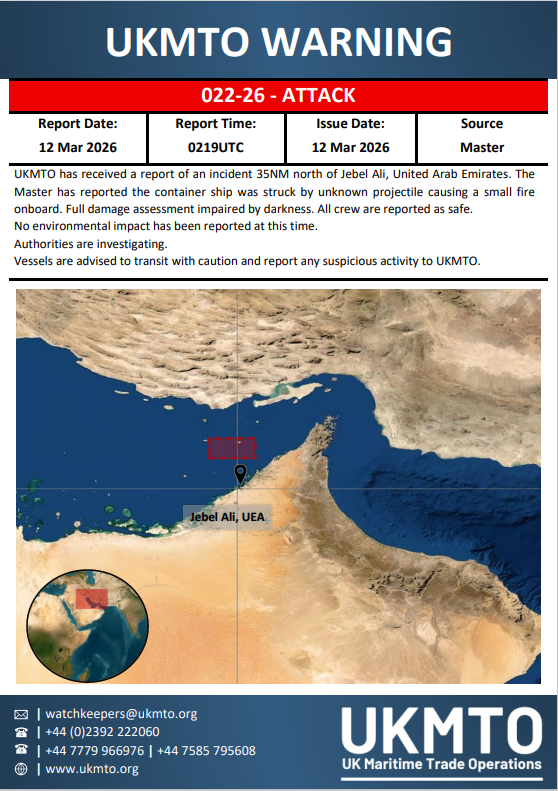
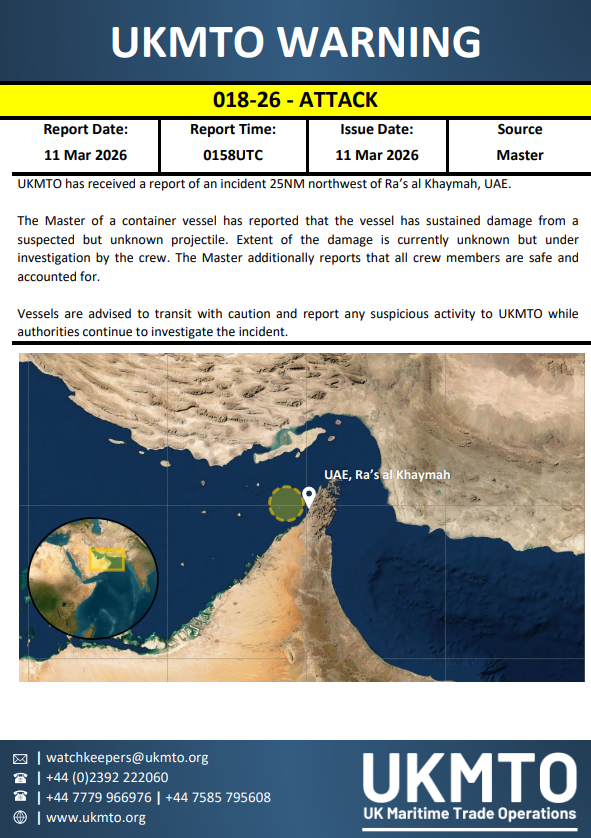
The actuarial mechanism that closed Hormuz now migrates to the cloud. A facility on a published IRGC hit list, in a region where 1,440 drones and 253 ballistic missiles have been fired in eleven days, where the 94% interception rate still permitted 81 drone impacts and 20 missile penetrations, cannot be priced by any existing insurance model. If it cannot be insured, enterprise clients cannot host workloads there. If workloads migrate, the trillion-dollar AI investment becomes the largest stranded asset class in technology history. The drones do not need to destroy the data centres. The list itself is the weapon. The insurance response to the list is the damage.
And the list cannot be withdrawn. A centralised government could retract it in a ceasefire. But 31 commanders already hold it, with non-expiring authority from a dead man and no constitutional mechanism for a cardboard successor to rescind it. The same deadlock that prevents Mojtaba from stopping Hormuz mines prevents him from removing Google’s address from a targeting database.
The first chokepoint was oil through a strait. The second is data through a server farm. Both governed by the same doctrine, the same insurance mathematics, and the same Supreme Leader who cannot override either.
https://t.co/eMrt5qYYst
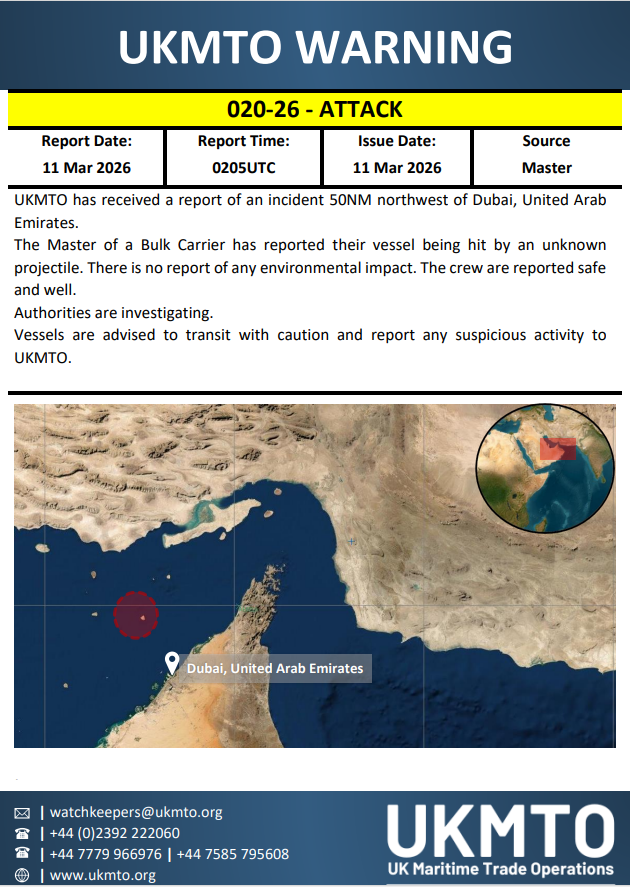
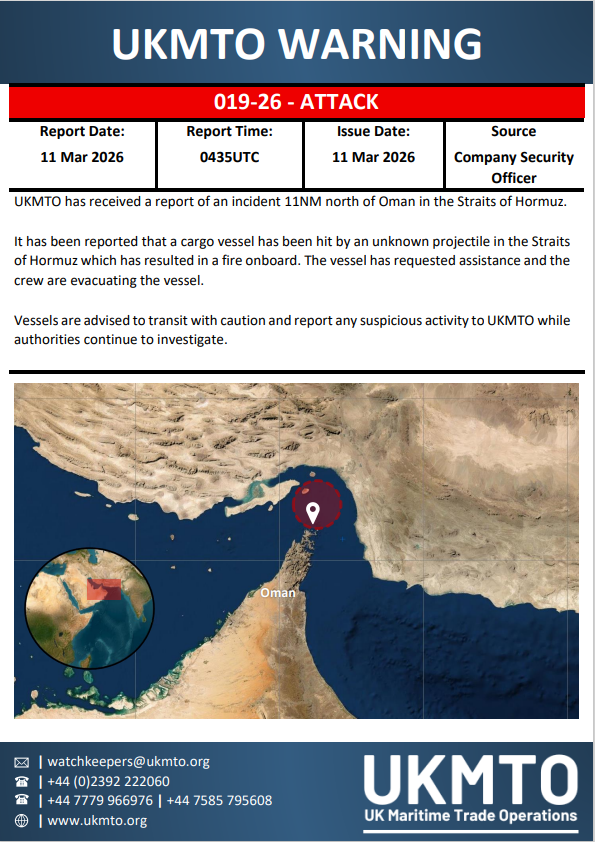
Additional footage of the two oil tankers struck by Iran in the northern Persian Gulf tonight, both reportedly loaded with Iraqi oil.
The tankers have been completely engulfed in flame, and are leaking burning oil.
“There would be catastrophic consequences for the world’s oil markets the longer the disruption goes on, and the more drastic the consequences for the global economy,” Nasser said on Tuesday. #OOTT
US satellite firm Planet is restricting imagery over Iran and nearby bases, expanding its monitoring zone and delaying public release of new satellite images from 4 to 14 days.
“The disruption has caused a severe chain reaction in not only shipping and insurance but there’s also a drastic domino effect on aviation, agriculture, automotive and other industries,” said Nasser #OOTT
CEO of Aramco Amin Nasser: “With the current geopolitical crisis, global inventories, which are already at a five-year low, would see drawdowns at a faster rate. Global spare capacity is mostly concentrated in this region so it’s absolutely critical that shipping resumes in the Straits of Hormuz.” #OOTT
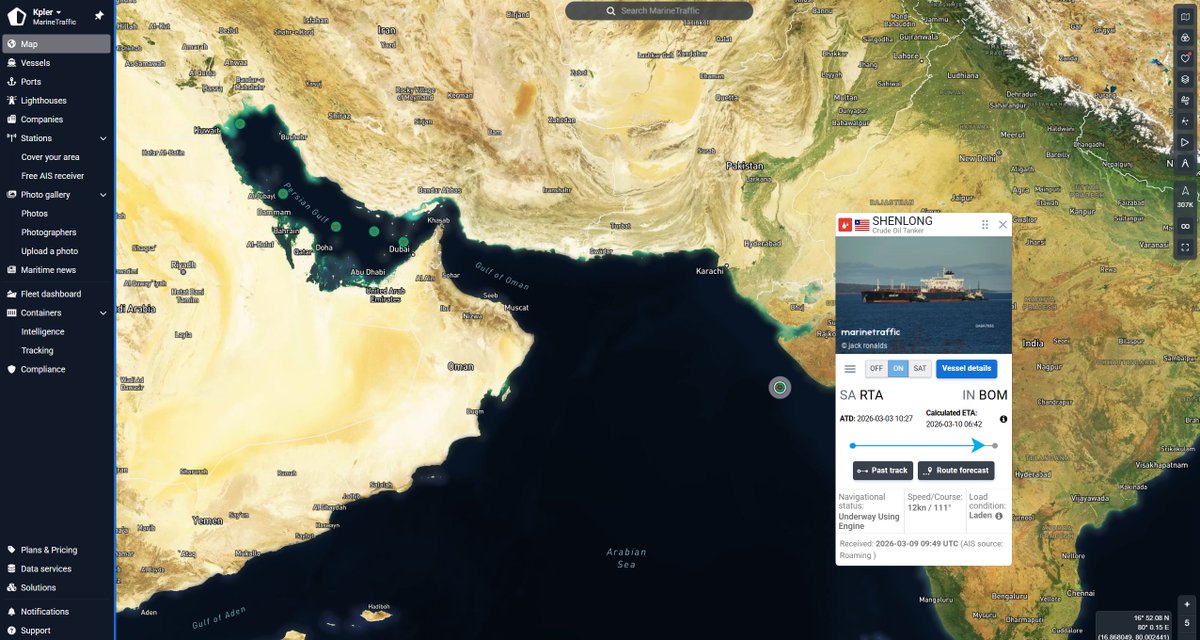
UPDATE: One of the Suezmax tankers has now appeared back on AIS, and is approaching Mumbai, India with a million barrels of Saudi crude oil. Her name is SHENLONG (9379210). There are still a few more which may appear on AIS given that at least one of them is heading to China.