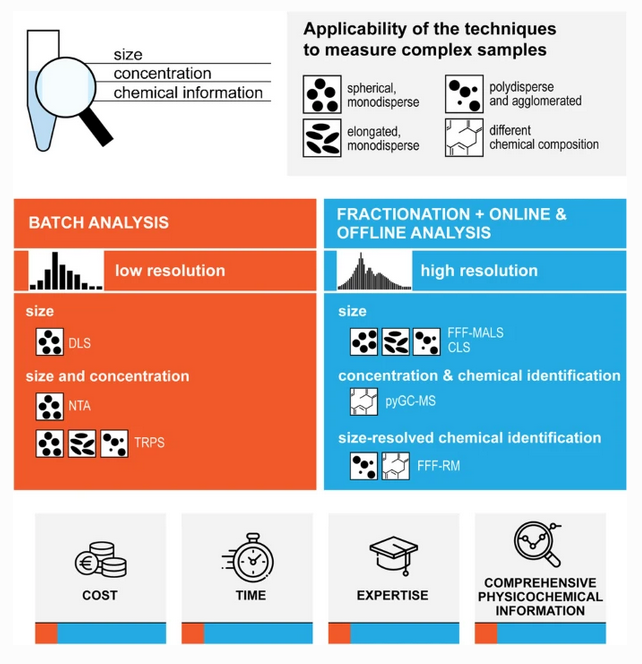
New paper on plastic chemicals & their toxicity with @lisbets88, @norway_badger, @TaniaCGomes16 and other fab ppl: We detected 39–2456 chemical features across 50 products, 3/4 remain unidentified. Chems in rubber products more toxic than other #plastics.
https://t.co/UaFYjrwy8a
Check out our session at the #SETACEurope conference in Dublin next year 🌍 «3.06 | Climate Change in Arctic and Antarctica and Its Effect on Legacy and Emerging Micropollutants in Abiotic and Biotic Environmental Compartments» ❄️🌊 🌤 Abstract deadline Nov 30 📝
New publication - a look at emerging contaminants in Arctic invertebrates - benchmarked against legacy contaminants. @IdaBea81@SINTEF https://t.co/UKfbUtC73P
Few months ago I was contacted by @Nature and asked if I would write a commentary on #circulareconomy and #plasticpollution . I obviously agreed to this honor and wrote about the UN #plastictreaty on plastic and the pitfall of focussing solely on recycling https://t.co/gqUb8UWZyy
My 1st, 1st author paper from my MSc work! Read about our research on the environmental degradation of MPFs here! #MPFs#plastic#ChemicalAdditves#NTNU#SINTEF https://t.co/AoEOOl2sxJ
There are many ways in which a nurdle will enter the environment, they may spill on the ground of a plastic manufacturing or packaging plant and tumble out of water discharge pipes and they may also become lost during transit both on land and at sea.
In October 2017, Durban, South Africa, experienced an extreme storm, during which over 2200 million (49 tons) pristine plastic pellets (nurdles) were released into the Port and were subsequently dispersed into the Indian Ocean along the entire eastern seaboard of South Africa.
Although catastrophic, it presented us with a unique opportunity to study these nurdles, identifying how they degrade and move and ultimately play a significant part in validating the experimental and modelling outcome of the project.
This study which forms the FORTRAN project, a research collaboration between South African and Norwegian researchers, will be shared through Noah's journey and will help us to understand microplastics better so we can manage them better.