A long time ago, I mentioned a tool called Cquisitor https://t.co/QZ9wSr2npH here. It has now been updated with a more convenient UI and some new, cool features. It can now:
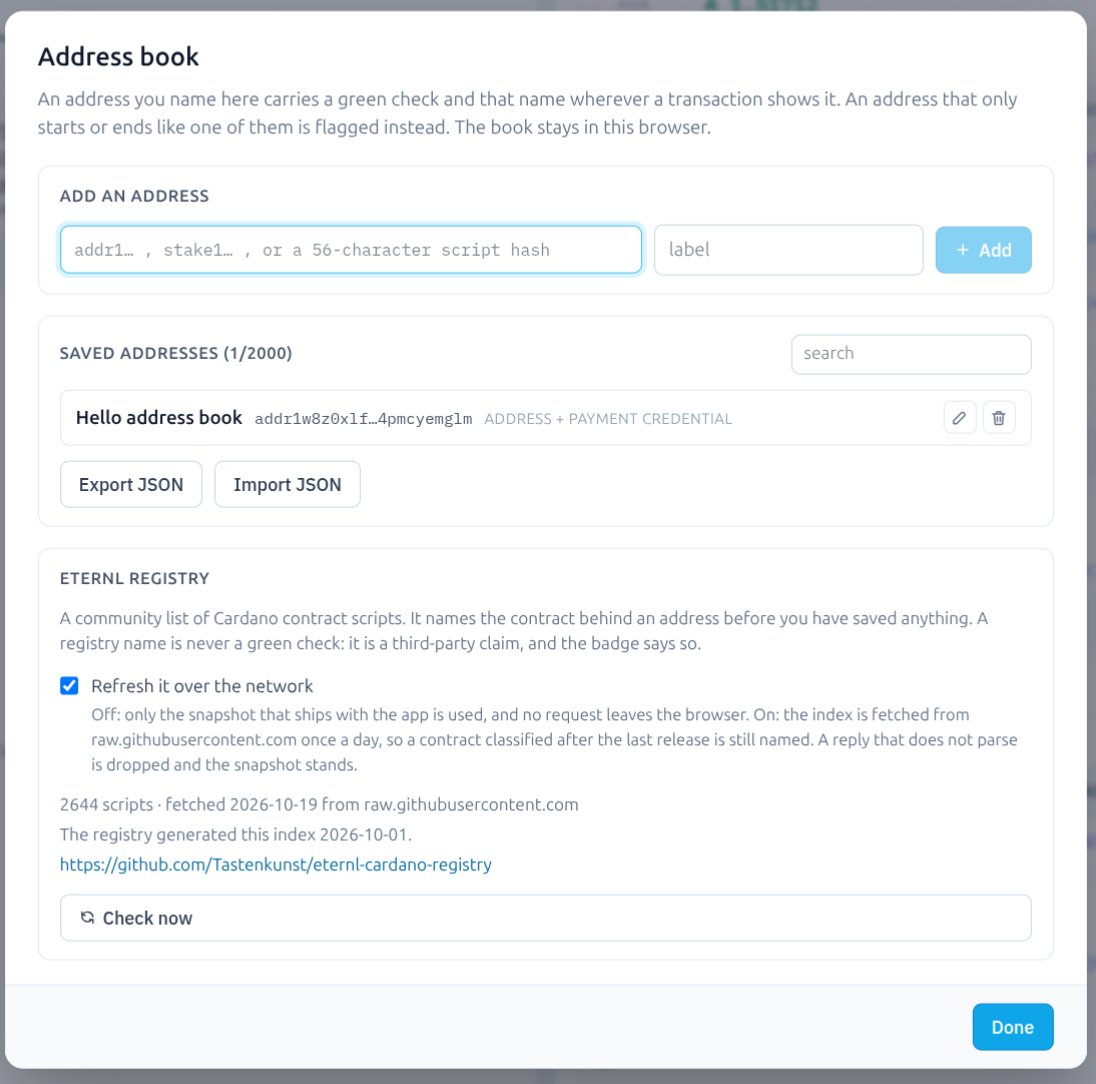
New update in CQuisitor:
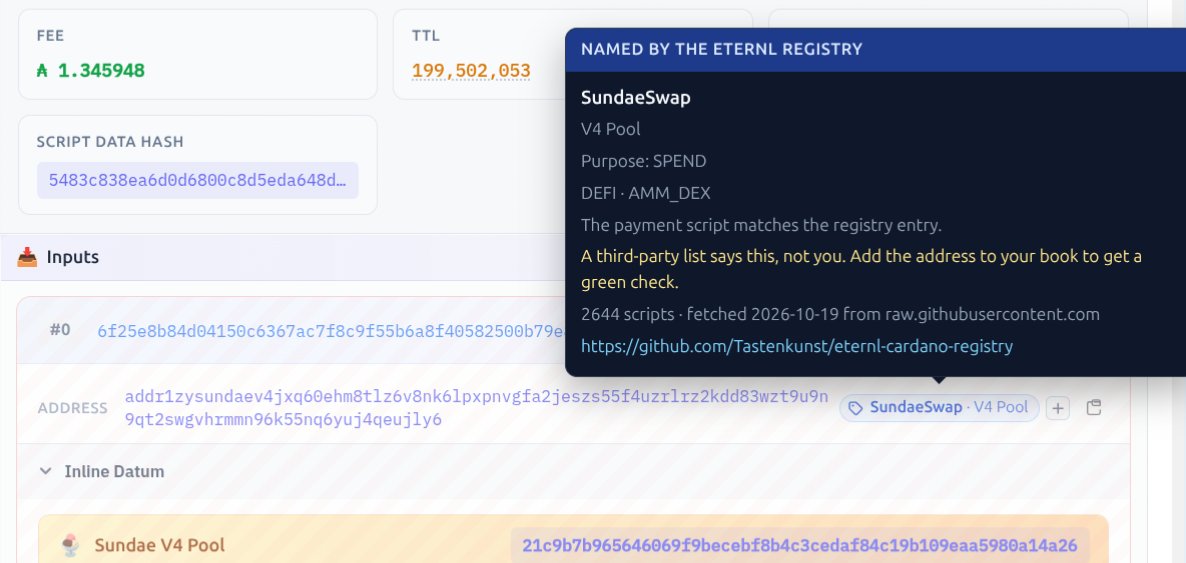
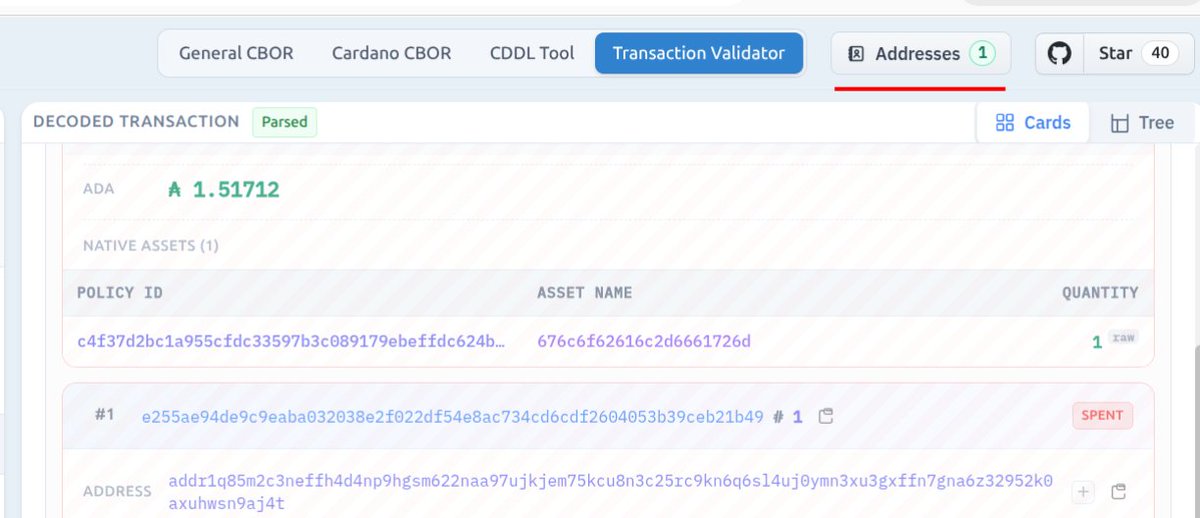
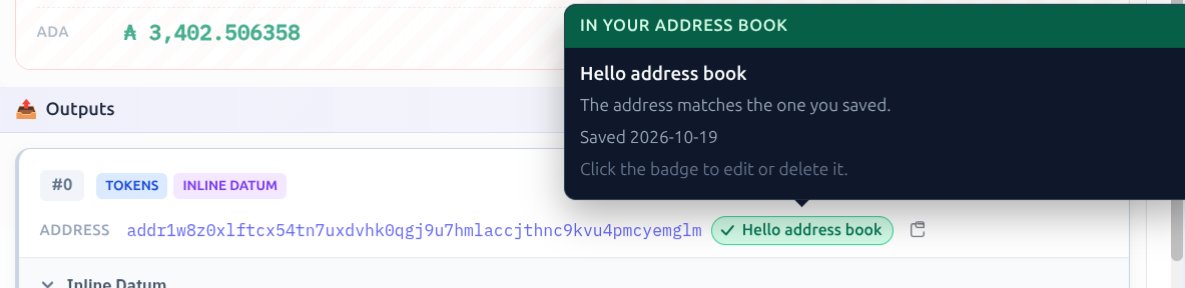
- Address book and Eternl address registry. CQuisitor now shows an address’s name if it exists in the app’s address book or in the Eternl address registry.
- Optional automatic transaction validation. For when you’re too lazy to press the “Validate” button.
- New URL format. If a transaction is already on-chain, you can open https://t.co/lPYlmkPdqi{tx_hash} and CQuisitor will fetch the transaction CBOR from your API provider. Note that this requires an API key to be set in the app.
Huge thanks to @Quantumplation for contributing!
Tried 3 Cardano wallet apps on iOS with my Ledger (yes, spare me the jokes about recent events :) ). Two failed to sign a message on a dApp. None use the neat Ledger API feature that prompts you on the device to open the Cardano app. Sad and funny at the same time.
I use this almost daily.
Very under appreciated. A massive amount of care and effort has been put into this and it really shows. This is the one example I can point to on Cardano when I talk about our developer tooling relative to other comparable ecosystems, and definitively say this is a rare instance of a straightforward win.
Cquisitor has become one of my most used Cardano tools, so I always try to give back;
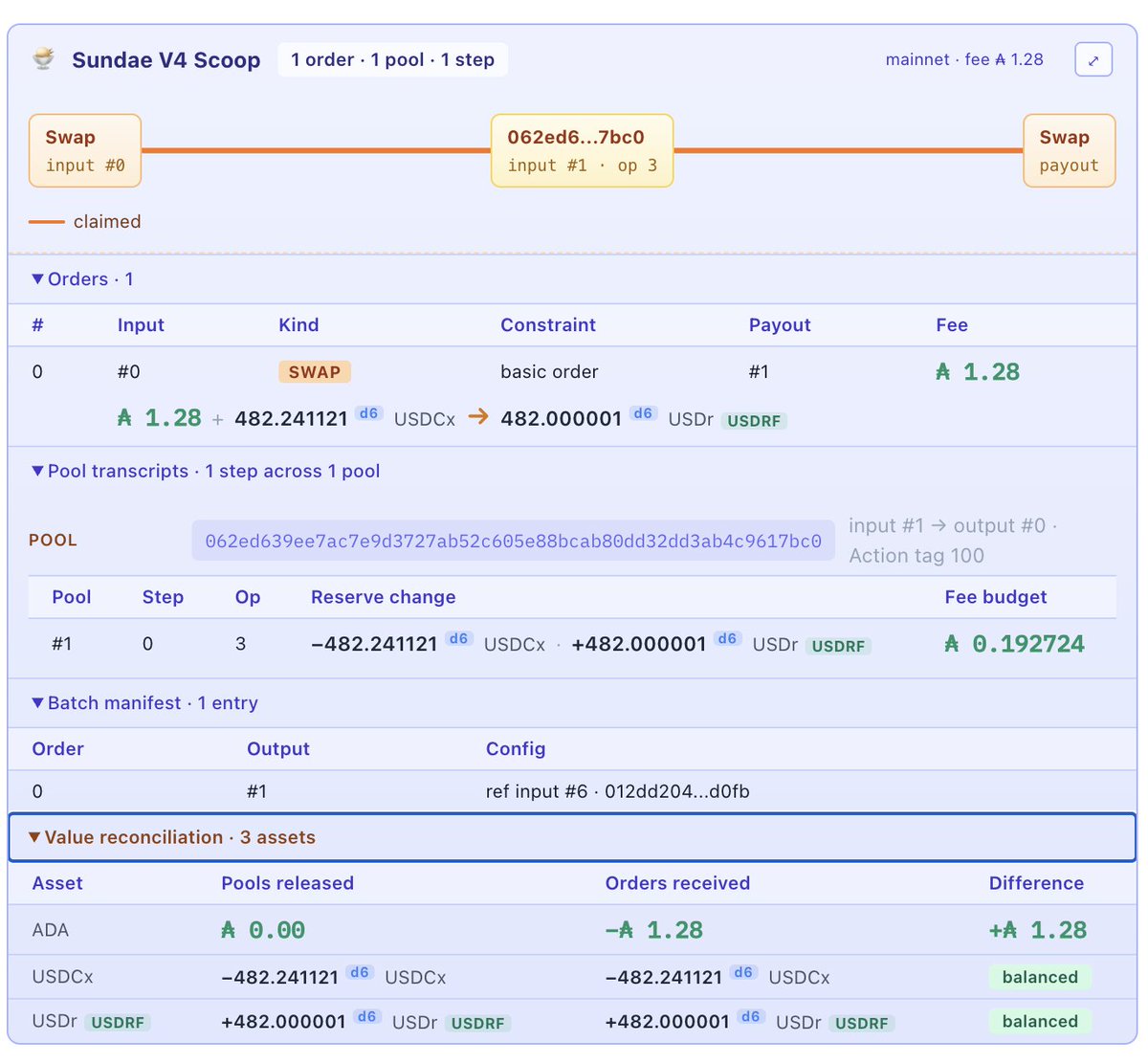
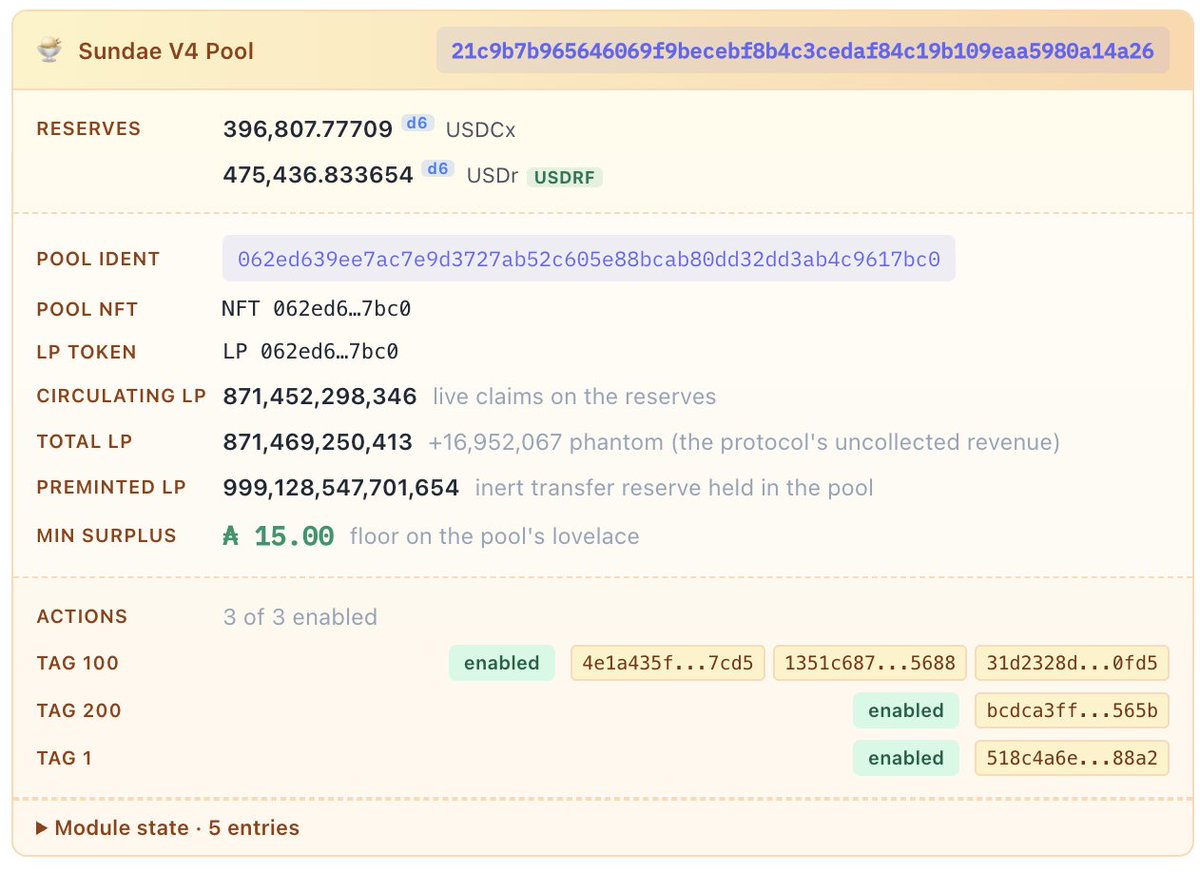
If you're looking at sundae v4 transactions, cquisitor now renders all the gritty details. It should help you integrate, if you're so inclined, for example!
A while ago I made a simple web app so I could look inside CBOR on the fly and quickly see what was in whatever transaction I was looking at. I named it Cquisitor.
Bit by bit it grew from a CBOR decoder into a set of tools that help you figure out what's wrong with a transaction faster. DE-UPLC (a UPLC debugger) and dehosk (a UPLC decompiler) grew up alongside it, first on their own, then inside Cquisitor.
Cquisitor can:
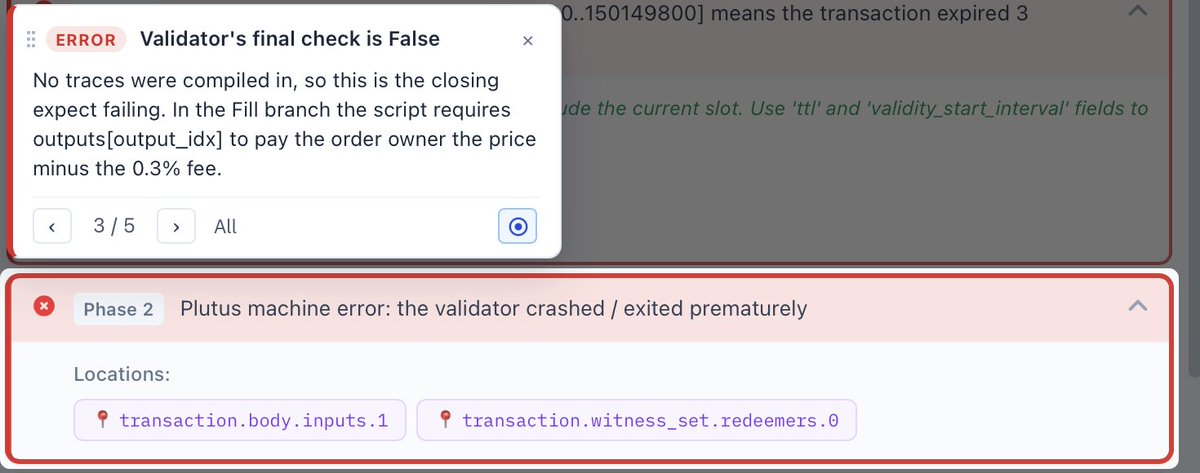
- validate a transaction and highlight what's broken
- tell if a tx involves a DEX and show order details when it can
- debug UPLC (DE-UPLC) or decompile it (dehosk)
- break CBOR down byte by byte and check it against CDDL
- decode transactions and other Cardano structures
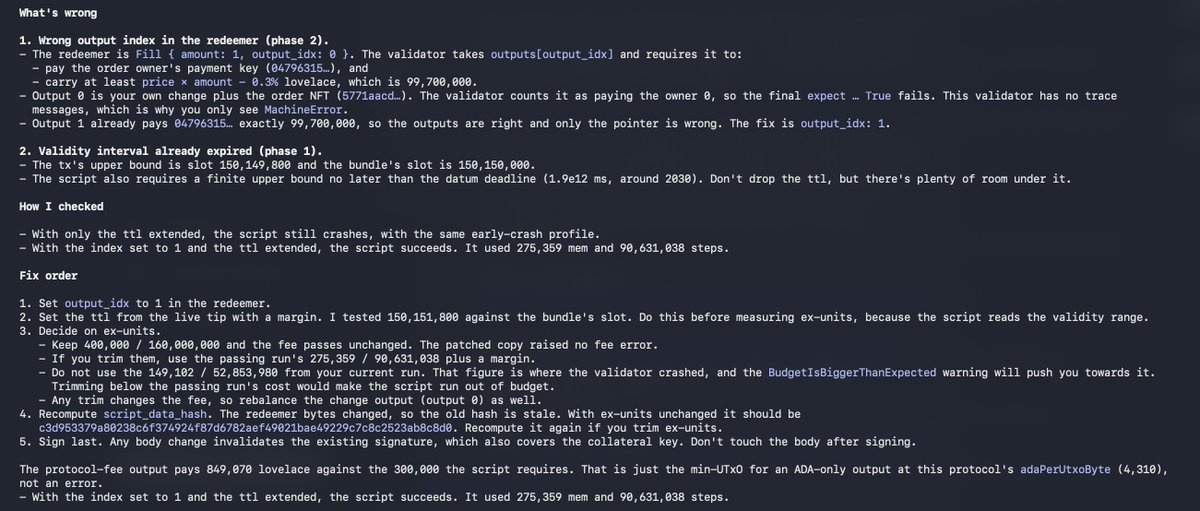
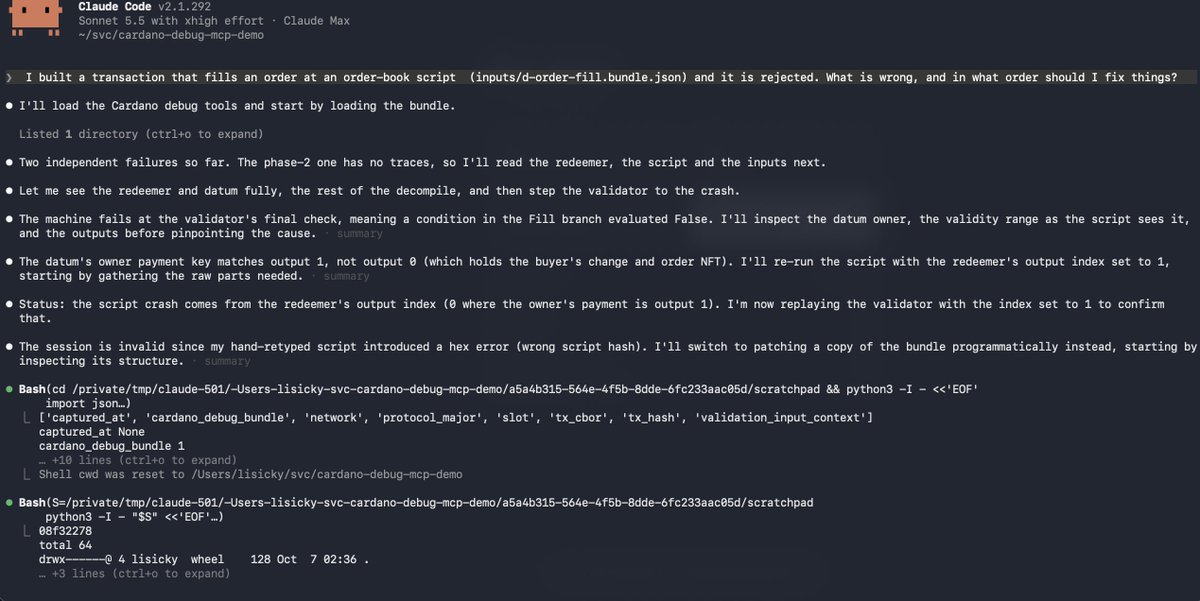
The whole point of Cquisitor has always been to spend less time on broken transactions. These days a lot of that work happens with AI agents, so the next logical step was to let them use it too.
That's why I built cardano-debug-mcp. It gives your AI agent the same capabilities through its native tooling and saves you a lot of headaches while building on Cardano. It can even open the transaction in the Cquisitor web app and show you what's wrong.
Happy debugging:
https://t.co/YFpxi5Z6NJ
npm install -g @cardananium/cardano-debug-mcp
claude mcp add --scope user cardano-debug -- cardano-debug-mcp
Cquisitor just got a very sweet update from @Quantumplation: it can now decode SundaeSwap V4 transactions and show much more useful info about them. The new order graph looks like fresh ice cream during a summer heatwave.
New in CQuisitor: CDDL Tool
• Edit a CDDL schema next to CBOR, validate live
• Parse & mismatch errors mapped onto both schema and bytes
• Hover/pin links schema ↔ hex ↔ decoded JSON ↔ tree
• All Cardano era schemas one pick away, Conway bundled
• Auto-detects the root rule
• Shareable links
https://t.co/feiahXJxwD
Anyone who used taptools heavily, please reach out!
This is still very early, but I'd love to hear how you used taptools, and what would bring you to Float every day.
https://t.co/JXEEUJjafa
Some things we do just for fun. Some people collect pokemon cards, others build cars piece by piece.
As for me, sometimes I write random tools just out of curiosity—to see how realistic it is to build something.
So, meet a UPLC → Aiken-like pseudocode decompiler, available directly in Cquisitor.
The decompilation quality can be a bit rough around the edges, sure - but where else have you seen something like this before?
Updates to DE-UPLC:
You can now profile your favourite UPLC code directly in DE-UPLC.
As always, you can share your debugging session via a link.
Don’t forget to star:
DE-UPLC: https://t.co/zmVvtU2Qet
CQuisitor: https://t.co/QZ9wSr1PA9