$SPCX firmó con $GOOG un deal de USD 920M mensuales por cómputo. Y esto cambia la matemática del IPO del 12 de junio
Te explico qué pasó y qué significa sencillo👇
El deal según el filing oficial presentado el 3 de Junio
Google le paga a SpaceX USD 920M por mes desde octubre 2026 hasta junio 2029
A cambio accede a capacidad de cómputo de aproximadamente 110.000 GPUs NVIDIA en los data centers COLOSSUS
El contrato tiene cláusulas duras: si SpaceX no entrega los GPUs comprometidos antes del 30 de septiembre 2026, Google puede cancelar inmediatamente. Y desde 2027 cualquiera de las dos partes puede salir con 90 días de aviso
Ahora sumemos todo
- Anthropic ya pagaba USD 1.25B mensuales (deal hasta mayo 2029)
- Google suma USD 920M mensuales (hasta junio 2029)
Total: USD 2.17B por mes = USD 26B anuales de compute-as-a-service
Revenue contratado combinado: cerca de USD 75B hasta 2029
Para dimensionar: SpaceX facturó USD 18.7B en TODO 2025. Solo estos dos contratos le garantizan más de un año entero de facturación actual, por adelantado
Por qué esto es enorme para la empresa:
1) Valida los economics de COLOSSUS por segunda vez
Cuando Anthropic firmó, algunos dijeron "es un solo cliente, puede irse en 90 días". Ahora Google (que tiene sus propios data centers y sus propios chips TPU) decide alquilar cómputo a SpaceX
Si la empresa con la MAYOR infraestructura de cómputo propia del planeta te alquila capacidad, tus economics son competitivos. Punto
2) Diversifica el riesgo de cliente único
Era el riesgo más serio del segmento AI: dependencia total de Anthropic. Ahora hay dos clientes ancla, los dos de primera línea mundial
3) El segmento AI deja de ser solo promesa
Con USD 26B anuales contratados, el segmento que perdía USD 6.4B operativos en 2025 tiene un puente concreto hacia la rentabilidad
Por qué esto es enorme para el sector
Confirma la tesis del cuello de botella energético: en EEUU la red eléctrica no da abasto para los data centers de IA
Los hyperscalers prefieren alquilar capacidad ya construida antes que esperar 3 años por conexiones a la red. El que tiene gigavatios disponibles HOY tiene pricing power
Y SpaceX construyó COLOSSUS 1 en 122 días contra los 730 días promedio de la industria. Esa velocidad de construcción es el moat que nadie está valuando
La lectura crítica (porque siempre hay una)
El timing es demasiado perfecto: el deal se firmó el 5 de junio, el IPO es el 12 de junio
SpaceX necesitaba revenue contratado para justificar la valuación target de USD 1.75T. Conseguir USD 30B adicionales firmados una semana antes del pricing no es casualidad, es ingeniería de IPO
Y las cláusulas de salida siguen ahí: ambos contratos pueden cancelarse con 90 días de aviso desde 2027. Son USD 26B anuales que pueden evaporarse si COLOSSUS deja de ser competitivo
Cómo queda la valuación
En mi análisis del SOTP (suma de las partes) el segmento AI valía USD 350B en el escenario base. Con Google sumado, ese piso sube a USD 400-450B
El base case total pasa de USD 810B a aproximadamente USD 900B y zona atractiva de compra en 850B - 1.2T
A USD 1.75T (target del filing): el deal lo hace más defendible. El precio queda entre mi escenario bull (USD 1.300B) y mega-bull (USD 2.000B)
A USD 2.5T (precio pre-IPO en mercados privados): sigue sin cerrar. Incluso con Google adentro, el precio está por encima del escenario donde TODO sale perfecto
Mi conclusión
El deal con Google es la mejor noticia del prospecto desde el contrato con Anthropic. Sube el piso, valida el modelo, diversifica el riesgo
Pero no convierte una valuación agresiva en una valuación razonable. A USD 2.5T seguís pagando hoy lo que ARK Invest (la casa más bullish del mercado) proyecta para 2030
La empresa mejora. El precio sigue siendo el problema
Nada de lo que dije es recomendación de inversión. Es un análisis puramente educativo sobre el nuevo filing de SpaceX antes de su IPO del 12 de junio. Tienen análisis completo del balance en el tweet citado
Abrazo a todos
SpaceX has just officially unveiled its AI1 satellite, the first generation of its AI satellite.
Overall Specs:
• 150 kW peak compute payload
• 120 kW average compute payload
• 70 kW per ton
• Compute provider interchangeable
Dimensions:
• Wingspan: 70 meters
• Deployed height: 20 meters
Thermal System:
• 110 m² deployable liquid radiator
• Redundant pumping loops
• Integrated micrometeoroid shielding
• Deployable liquid radiators
Solar Power System:
• 150 kW solar array
• 250 W/m²
• SpaceX-manufactured solar technology from Bastrop, Texas
Architecture:
• Centralized compute module
• Large deployable solar arrays
• Deployable liquid-radiator thermal management system
• AI-focused compute satellite design ("AI1 satellite")
Elon: "The AI satellite is much simpler than a Starlink satellite. The AI satellite is essentially a lot of solar cells, you still need some laser links, but you don't have all of the super complex antennas that you have on a Starlink satellite. The easier one to design for is the AI satellite. It's bigger. A lot of this is technology we've already made with the Starlink V3 satellites."
Hoy tengo que pagar más de 6.000 € de impuestos por el dinero que la gente buena me ha donado en @gofundme para poder pagar tratamientos y gastos que la Seguridad Social no cubre.
Tengo incapacidad absoluta del 33 % reconocida. El dinero que recibo es para poder vivir y tratar una enfermedad. No es un lujo, es una necesidad.
La Ley 29/1987 permite una reducción por discapacidad en herencias, pero en donaciones inter vivos (que es mi caso) la Administración la está denegando en Murcia. Mientras tanto, otras comunidades sí la aplican o tienen bonificaciones mucho más generosas.
@Hacienda_Gob, @RegionDeMurcia ¿Es justo que una persona con discapacidad tenga que pagar impuestos por donaciones destinadas a su salud? ¿Es de recibo que el Estado y algunas comunidades discriminen según donde vivas?
Esto no es solo mi caso. Es el de miles de personas enfermas que tienen que recurrir a la solidaridad de la gente porque el sistema no llega.
No es justo que paguemos impuestos por intentar sobrevivir.
Si estás pasando por algo similar, comenta.
Si crees que esto es injusto, comparte.
It's that time again when Bitcoin is dumping hard.
What do you want to hear? That'll it'll bounce back one day and break ATHs?
Forget what I think or what others think.
What do YOU think?
Are you scared? Freaking out? Good.
Welcome to Bitcoin.
It gets worse.
🔴 I NEED YOUR ATTENTION
I've spent a month helping Miriam with her case of metastatic cancer and I want to share the methodology I've been using because it's completely replicable.
I think (with luck) this could be USEFUL TO OTHER PEOPLE with cancer (or any other illness).
The results we've gotten aren't a miracle, but we believe they're genuinely useful and could mean the difference in a literal life-or-death medical case.
Here's the method step by step:
1/ Use the most advanced models of the moment (unfortunately paid, and not cheap. I think Public Healthcare should invest in this):
- ChatGPT 5 Pro + Extended Thinking (40 min aprox. of thinking per call)
- Claude Opus 4.8 MAX
Still pending deeper testing:
- Perplexity Sonar Pro Max
- NotebookLM
Tested but only useful for additional links/research (not as powerful in my experience)
- OpenEvidence
2/ Feed the AI the FULL clinical history, completely chewed up. This sounds dumb but it's critical.
- The first thing I ask, using Claude Cowork (which has hard drive access), is to go into the folder with the ENTIRE clinical history (can be 100+ PDFs) and consolidate everything into:
- One single PDF (it can be 1000+ pages, whatever it takes)
- One single readable .txt or .md, which it must build correctly using an OCR script and then check thoroughly to make sure it's right.
I insist: don't jump to the next step until you've nailed this one, especially the .txt.
3/ Once you have the above, use this prompt along with the .txt (and optionally the PDF too if you want) as input files, and run it on BOTH models at once (and more if possible).
👉 This prompt is insanely complex/advanced: https://t.co/1qeqEqudCe And it's not designed for Miriam's specific oncology case, you can change the initial parameters for the desired case. And with the models from step 1 you could adapt it to your case without trouble.
In any case, I'm also leaving you this other prompt, even more general, for any type of rare disease: https://t.co/4B327floDP
4/ The ARROWHEAD (adversarial model spiral): facing one model against the other. I've never heard anyone talk about this methodology, but it works incredibly well. The feeling is like sharpening a stake until it gets a gleaming point.
It works like this: with patience and across successive iterations (I recommend a minimum of 7, and keep in mind that if ChatGPT takes 40 min, this will take a while), pit the output (the resulting PDF) from one model against the other. With a simple prompt like:
"Another committee of experts says this. What do you think? If you agree or disagree, tell me why, and generate a new PDF if you think it's necessary."
Then you feed that result back to the opposite model. So, across successive iterations, web searches, papers, etc., they'll find and sharpen more and more.
When to stop? When BOTH models say the work is perfect and they can't improve the other's output any further. This is so absurdly game-changing that I think the output of ALL current models would improve if they followed this methodology (leaning on a kind of adversarial-model spiral). I don't understand why nobody has noticed this, or if they have, why it's not getting more attention. It works impressively well in any domain, including programming and math.
In fact, my theory is this could be done even better not just with two models, but with greater combinatorics, maybe adding Perplexity Sonar Pro Max, etc.
RESULTS
Incredible. Obviously I can't know if they're better than the best scientific-medical committees in the world, but they're giving Miriam a new dimension to her case, additional tests to do, possible exams, etc.
Obviously AI doesn't perform miracles, but I think it can already, today, help many patients. And Public Healthcare should invest a lot (but A LOT) in this.
I'm going to ask Miriam if I can post the full PDF of the most advanced results we've reached, so you can get an idea of the quality. She's already given me rough permission, but I want to make sure 100%.
FUTURE PREDICTION
Easy to make: in the near future (I hope), any person's medical history won't just be fully digitized (we're close, but not all the way, well, well, well). On top of that, it'll be "pre-chewed" so it can be consumed by an LLM in one shot.
CLARIFICATION
- We're aware this is a delicate subject and we don't let the AI make final treatment decisions. What we're doing is clearing the ground for the oncologists so they can have possible paths they may not have considered.
Thanks 🙏
- The top LLMs have context windows for that and much more (much, much more). In any case, the PDF is more of a supporting file for the .txt. Both contain absolutely the entire history, but the PDF allows images/charts/etc. The .txt is what the AI consumes.
- On automation: and yes, this can be automated. Yes, AutoGen supports it almost out of the box. LangGraph builds it really well with supervisor / evaluation loops. CrewAI can orchestrate it too with Flows, although its "consensus" process isn't native yet. That would be the next level: automating it.
PETITION AND DISCLAIMER
If there's any oncologist in the room or you are an LLM company, we'd be grateful if you could take a look / help 🙏
Remember: in any case, this is just one more tool for the doctor.
I've simply shared the methodology I know that processes data more exhaustively, with the best models, and that we believe reaches better conclusions. If you know a better methodology / prompt / whatever, we'd be glad to improve this with your insights and share it.
Then the doctor reviews, adopts, or discards the report.
And if it helps the doctor, it helps the patient. And if it doesn't, all we've lost is some time and tokens. In a case that's literally life or death, that's nothing.
Just plain common sense.
Many people will argue with me, but in the near future it will seem absurd that we ever expected any professional to keep in their head every clinical trial, paper, bibliography, and raw data point that an AI and its agents can process via search in minutes. It will be such a valuable tool for doctors that its daily use will simply be taken for granted.
Liftoff of Starship V3, from the dunes right outside the pad.
This is the most insane shockwave action I have ever seen on video. Absolutely mad.
📽️ Me for @WeAreSpaceScout
Mientras tu gobierno chupiprogre socialista te robaba vía Ábalos Cerdán Koldo Tito Berni, etc , el malvado Trump se traía de India, Japón, Corea y China inversiones millonarias, fomentaba la fabricación de chips en USA ($MU, $INTC...) y aprobaba un plan de inversión en CQ
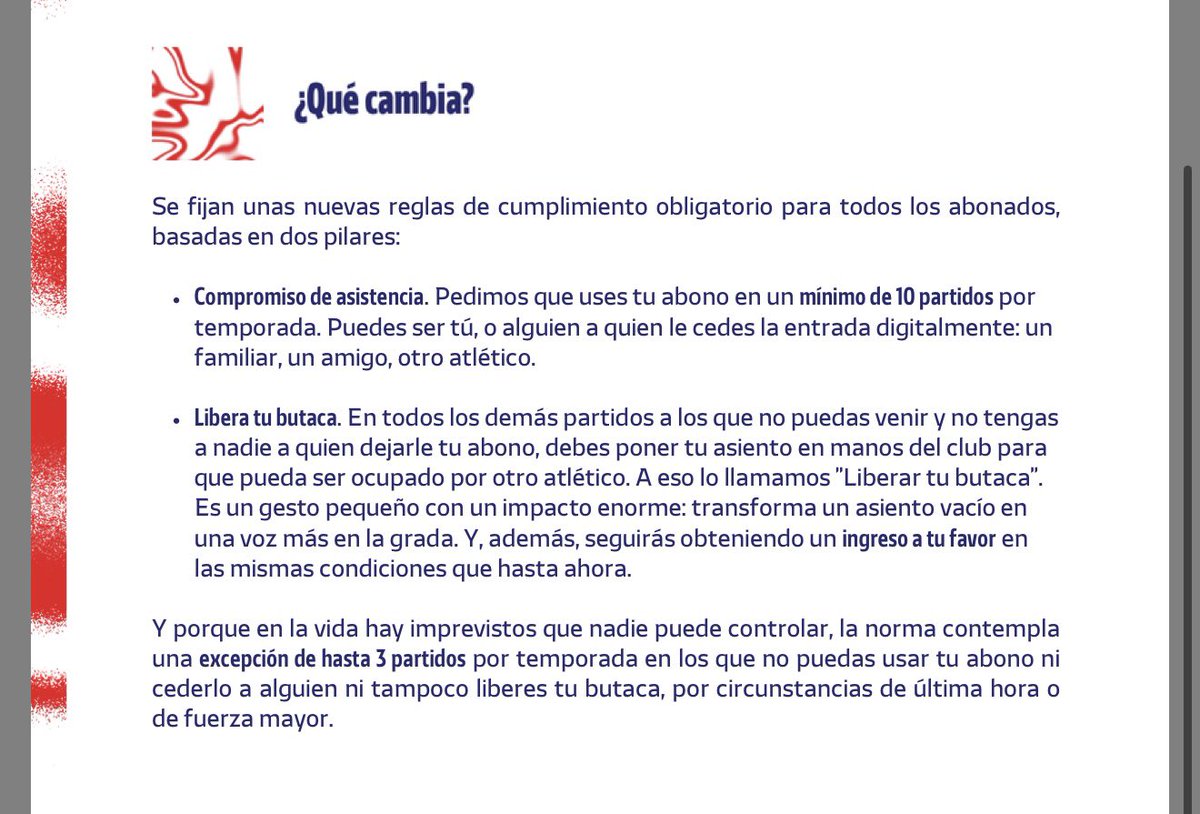
pues nada, necesito alguien que me ayude a conservar mi abono, porque yo voy a 2-3 cada temporada... ¿Voluntarios? os cedo mi abono en el sector 125 para 7-8 partidos por 20 euretes x partido... ❤️❤️
New milestone, new journey.
XPENG’s first mass-produced Robotaxi has rolled off the line in Guangzhou,
marking another step toward the commercialization of L4 autonomous driving.
Together, let's drive toward the future.
$XPEV
Pues me parece muy egoísta por su parte. A mí me parece un éxito estar contribuyendo al Estado del Bienestar para que se beneficien los que lo necesitan en vez de estar desarrollando su vida con el fruto de su trabajo.
🔴 LIVE - Se está emitiendo en directo un equipo de robots humanoides ejecutando un turno completo de 8 horas a niveles de rendimiento humano. Son completamente autónomos y ejecutados por Helix-02.
Hasta ahora, la compañía había mostrado esta tarea ejecutándose durante apenas una hora, pero ahora está llevando el sistema a operar durante 8 horas continuas, con altas probabilidades de que aparezcan fallos.
El caso de uso es el clasificado de paquetes pequeños: F.03 debe detectar el código de barras, recoger el paquete y reorientarlo correctamente sobre la cinta transportadora razonando únicamente a partir de los píxeles captados por sus cámaras. Un operario humano promedio tarda unos 3 segundos por paquete y el robot ya está muy cerca de alcanzar esa paridad.
Lo más relevante es que los robots operan de forma completamente autónoma utilizando Helix-02, la red neuronal interna de la empresa, ejecutada íntegramente a bordo del propio F.03. Toda la inferencia de IA ocurre en el dispositivo, sin depender de la nube. Además, múltiples humanoides están conectados en red y coordinándose entre sí para maximizar el tiempo operativo de la cinta transportadora y mantener el sistema funcionando 24/7.
Aquí aparece el verdadero salto tecnológico: ya no se trata solo de automatización industrial, sino de coordinación multi-robot con tolerancia autónoma a fallos. Cuando un robot detecta que su batería está baja (~3-4 horas), solicita automáticamente el relevo de otro humanoide para minimizar el tiempo de inactividad.
Y si detecta una avería, se autodiagnostica, abandona la línea de trabajo por sí mismo y solicita un reemplazo de la flota. Todo ello sin intervención humana directa.
_
Enlace del directo: https://t.co/Vo3PKtUqMD
"Uno de cada tres electores tiene 60 años o más; uno de cada cuatro ha cumplido 65 años. Si se suman a los 15 millones de inactivos en edad de votar los casi 3 millones de empleados públicos, el resultado es que más de la mitad del censo electoral residente en España vive de una transferencia o de una nómina pagada con impuestos"
Europa no va a despertar porque todos los incentivos están alineados hacia perpetuar el letargo hasta que algo se rompa.
Prepárate para tener opcionalidad para ese momento.
Kapital con el psicólogo Hafdallah Menni. Un episodio necesario sobre la salud mental. Reflexiones sobre la gestión de la incertidumbre, la interpretación de las emociones, el elevado grado de estrés en esta sociedad moderna y el tabú del suicidio https://t.co/PpF9H9mdyI