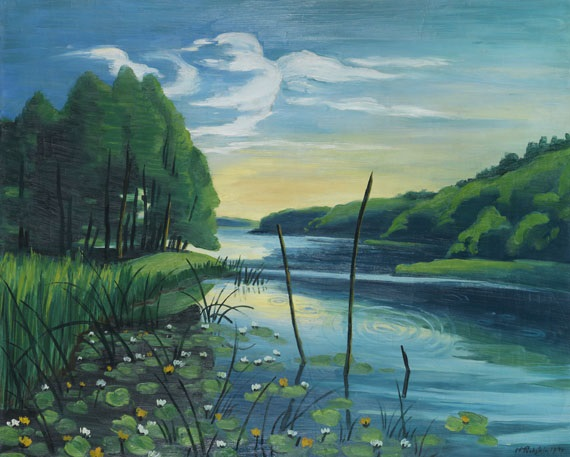
"A quick gasp as you slip
into the hissing wash,
star cluster, dulse and kelp,
slick algae, spittle, froth,
the intimate slash and dash,
hard-packed in the seething broth."
— Derek Mahon, "A Swim in Co. Wicklow", lines 7–12
(Image: Max Pechstein.)
@GiorgioTassi Wow, that sounds impressively well-egged! I imagine that you could shave truffle over the cheese, too, if feeling extravagant? Many thanks for the offer.
A duodecimo was an early form of printed book, so called because it was made by cutting large sheets of paper into twelfths (as Shakespeare's quartos were made from fourths).
But it's nothing compared to a goat.
(Source: *Chronicles of a Liquid Society* by Umberto Eco.)
"The reader turns away from a book where all the characters are good without shades and weakness; he knows very well that this isn't human."
— George Sand,
in a letter to Gustave Flaubert,
dated 12 January 1876
(Image from Francisco Goya's *The Disasters of War* series.)
@ta_mills No, but having only privately owned media would be worse, for the left more than anyone. Look at Berlusconi in Italy.
When it's been under attack (with funding cuts and threats of ending the licence) from the govt., the BBC won't last much longer if everyone else attacks it too.
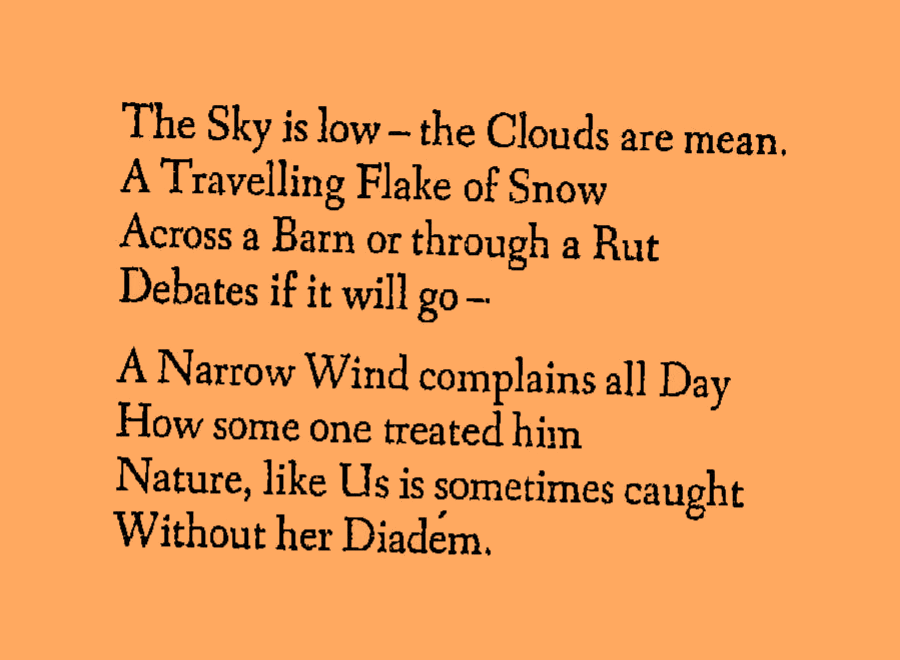
Emily Dickinson was #BOTD in 1830. The poem below was originally written in 1886, the year she died, and, like almost all of her work, was not published in her lifetime.
T.H. Johnson published her complete poems in 1955, creating a numbering system still in use.
(Image: 1,075.)
@JulianGallo66 Well, yes, it's just boring. Duchamp's readymades may have been subversive when they were genuinely able to *épater la bourgeoisie*. When it becomes the accepted norm, and there's a multibillion-dollar industry in elevating throwaway crap to the status of art, not so much.
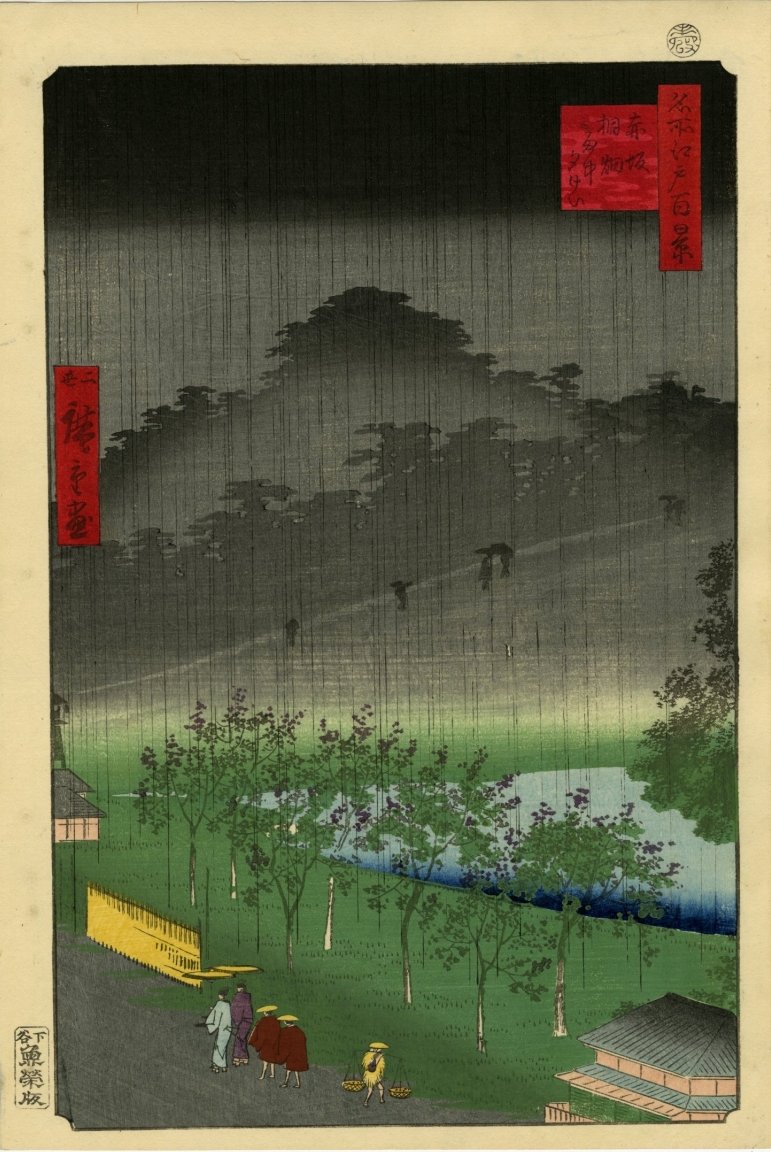
Microplastics are now falling in the rain. A recent study found similar concentrations at the top of a remote mountain peak in the Pyrenees as in the centre of Paris. The long-term effects of exposure are largely unknown.
(Image: *Akasaka in the Evening Rain* by Hiroshige II.)
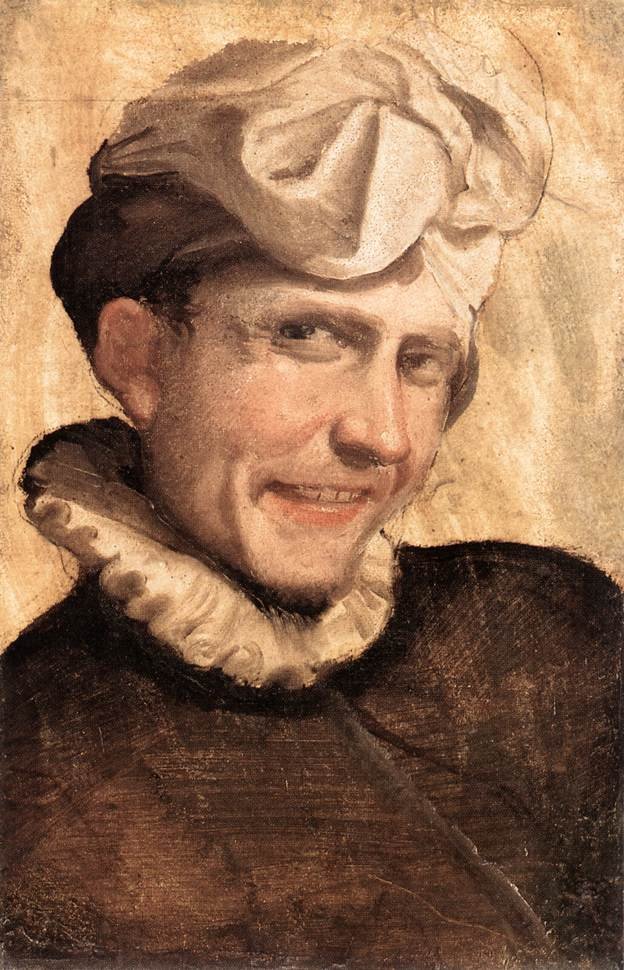
"People are so dissatisfied and unreasonable, that, nine times out of ten, there's no pleasure in painting them… In fact, there are only two styles of portrait painting; the serious and the smirk."
— *Nicholas Nickleby*, Charles Dickens
(Image: Annibale Carracci, 1583.)
The *Kuṟuntokai* [Collection of Short Works] is an anthology of classical love poetry written in the Tamil language of South India. The poem below is translated by A.K. Ramanujan and comes from his book *The Interior Landscape*:
"[George] Santayana was probably wrong when he said that those who forget the past are condemned to relive it. Those who remember are condemned to relive it too."
— Clive James (1939–2019)
(Image: *Memory* by Elihu Vedder.)
@BBCWorld Watch out: what they test on the cows, they'll soon be selling to the human herds!
To be fair, I wouldn't mind a few hours grazing on greenery myself though.
"Gold shed upon suckling gold,
The time of the bole blackens,
Of the dark mounted through dapple,
While in the sealed apple
The seed cradled toward cold."
— Léonie Adams,
first lines of *Dirge at the Edge of Woods*
(Image: *Apple Tree* [1912] by Gustav Klimt.)
"I am of the firm belief that everybody could write books… Once the grammar has been learnt, it is simply talking on paper and in time learning what not to say."
— Beryl Bainbridge,
*Contemporary Novelists* (1976)
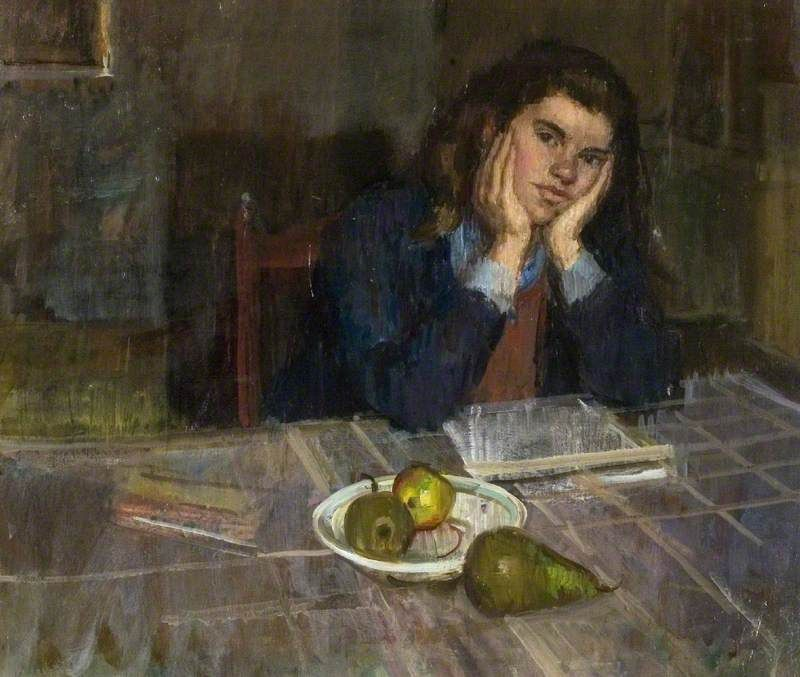
(Image: *Daydreaming* by Ruskin Spear.)
Louis Daguerre was born #OTD in 1787. He took the first known photograph that included humans.
Other people passed through the Parisian street, but the camera's exposure time meant that only the man having his shoes shined—and the boy doing it—stood still long enough to appear.
"If you can look into the seeds of time,
And say which grain will grow and which will not,
Speak then to me..."
— *Macbeth*, Act 1, Scene 3
(Image: *The Grain Sifters* [1854] by Gustave Courbet.)







![litandideas's tweet photo. The *Kuṟuntokai* [Collection of Short Works] is an anthology of classical love poetry written in the Tamil language of South India. The poem below is translated by A.K. Ramanujan and comes from his book *The Interior Landscape*: https://t.co/3QurYarX92](https://pbs.twimg.com/media/EK2CqYaW4AEx47o.png)
![litandideas's tweet photo. "[George] Santayana was probably wrong when he said that those who forget the past are condemned to relive it. Those who remember are condemned to relive it too."
— Clive James (1939–2019)
(Image: *Memory* by Elihu Vedder.) https://t.co/cqrBgE1A1Z](https://pbs.twimg.com/media/EKsH3YFW4AckpWv.png)
![litandideas's tweet photo. "Gold shed upon suckling gold,
The time of the bole blackens,
Of the dark mounted through dapple,
While in the sealed apple
The seed cradled toward cold."
— Léonie Adams,
first lines of *Dirge at the Edge of Woods*
(Image: *Apple Tree* [1912] by Gustav Klimt.) https://t.co/CuxL36OcHk](https://pbs.twimg.com/media/EKZEMs5X0AAjtD_.jpg)


![litandideas's tweet photo. "If you can look into the seeds of time,
And say which grain will grow and which will not,
Speak then to me..."
— *Macbeth*, Act 1, Scene 3
(Image: *The Grain Sifters* [1854] by Gustave Courbet.) https://t.co/gBoyj1GNRY](https://pbs.twimg.com/media/EJgA-XEW4AA0jxm.jpg)


