In fact, inferring from its inference efficiency, Jev’s parameter count isn’t that large, and it was very likely trained on top of an open-source base model. The key lies in the training dataset, the RL environment setup, and architectural modifications.
In fact, inferring from its inference efficiency, Jev’s parameter count isn’t that large, and it was very likely trained on top of an open-source base model. The key lies in the training dataset, the RL environment setup, and architectural modifications.
Take-home assignments verify effort,not skill. AI broke that proxy forever.
The only solution is "dynamic verification".
I'm building a tool to fix this gap.
This is brilliant.
A professor noticed take home assignments coming back suspiciously good. Like McKinsey memos.
So he started cold calling the students asking why they made certain choices in their submissions. They couldn't explain even basic choices! Clear copy/past from LLMs.
So he fought AI with AI -- an oral final exam run by a voice agent and evaluated by a council of LLM graders.
> 36 students examined in 9 days
> ~25 min avg per exam
> $15 total all‑in (≈ $0.42/student)
> Full transcripts, audit trail, and super actionable feedback
This works because you can paste into ChatGPT and copy the output, but you can’t fake coherent, real‑time reasoning about your project when someone keeps drilling.
Interesting that the LLM grading committee actually converged after deliberation and exposed a teaching gap (A/B testing was the weak spot across the class).
Students using AI killed take home exams. Very clever to fight fire with fire and use AI to bring back oral exams. Perhaps not surprising, only 13% of students preferred the AI oral format 😂
Oral exams used to be the gold standard in education but were replaced by more scalable written exams. With AI, oral exams are scalable again. Will be interesting to see how this changes education.
It's absolutely ridiculous! It's been years, and this bug that tons of users have complained about is still not fixed. This really shows how bad the big company disease is at Google, where engineers can just coast and get comfortable.
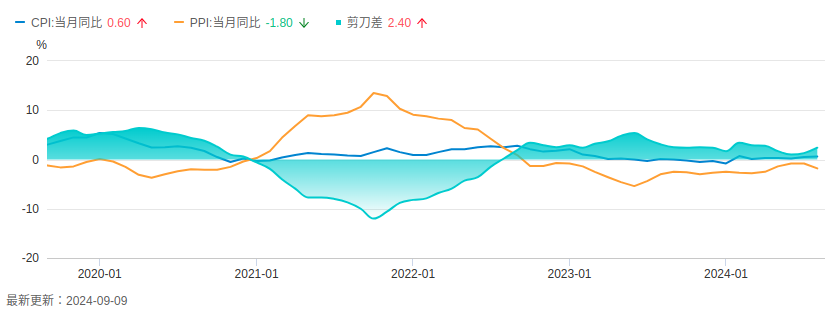
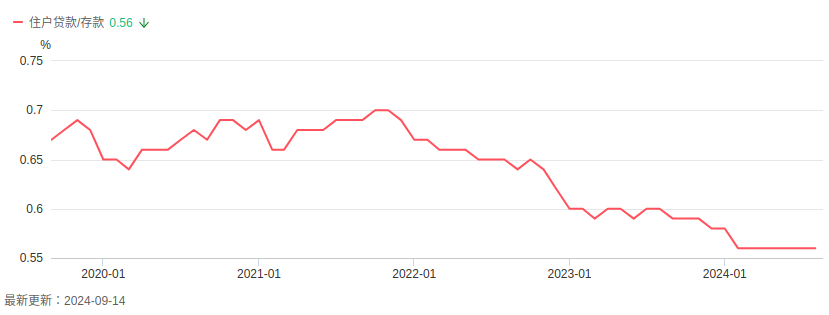
@Sino_Market Interesting move by PBOC to cut rates and inject liquidity. Likely an effort to boost China's economic growth, but let's see how it plays out.
The stable marriage is solved by the Gale-Shapley algorithm. Shapley and Roth got the Nobel Prize in economy for this. It is not symmetric (i<->j) but gives an optimal match for each i. https://t.co/yjkiLOMhbi
Per @NewYorkFed survey as of August, 27.1% of consumers plan to spend money on a vacation over the next four months ... home repairs came in second, followed by electronics
@DataArbor
"Over the next five to seven years, our labor pool's growth will not match our population's. We will increasingly have more consumers than producers, driving price hikes and product shortages." https://t.co/3FM9yVItvg
Expectations for $AAPL were for AI features to be able to drive ~10%+ y/y growth in iPhone sales. If accurate, very early indications are that sales are down ~10%. As stated in Amara’s Law: "We tend to overestimate the effect of a technology in the short run and underestimate the effect in the long run." With Apple’s CY24 PE having expanded to 31x versus the S&P at 24x on AI expectations, it is hard to argue for valuation support at current levels. A crucial trait for successful investing is admitting when you are wrong and moving on. I think I am wrong in the short run but have a feeling that I will be back. In the long run, I believe consumers will want AI functionality available to them 24/7 and the smartphone is the one piece of technology that we have with us all the time. The staggered rollout of the AI feature across geographies, especially in China which will get it in 2025, may be part of the reason that very early indications of demand are less than expected as well. Also, promotion of the new phones by the US wireless carriers is not much different than last year.
Major academic publishers are getting sued for unlawfully appropriating billions of dollars.
Prof. Lucina Qazi Uddin, a neuroscientist at UCLA, has sued these six academic publishers Elsevier, Wolters Kluwer, Wiley, Taylor & Francis, Sage, and Springer Nature.
The lawsuit claims that these publishers violate antitrust laws on the following three grouds:
1. The publishers have colluded to fix the price of peer review at zero.
2. These publishers agree to not compete with each by making it obligatory for researchers to submit their work to only one journal at a time.
3. These publishers prohibit scholars from sharing scientific advancements while they are under peer review, which can take up to a year.
Here's a comparison of the publishers' revenue and what they pay authors and reviewers
Elsevier: $3.9 billion
Springer Nature: $2 billion
Wolters Kluwer: $1.6 billion
Wiley: $1.8 billion
Taylor & Francis: $800 million
Sage: $500 million
They pay:
Authors: $0
Peer reviewers: $0
🇨🇳 China Overnight Economic Data:
*Unemployment Rate: Miss 🔴
*Retail Sales: Miss 🔴
*Industrial Production: Miss 🔴
*Fixed Asset Investment: Miss 🔴
China's economy is in awful shape. 🇨🇳
@ylecun The thing is that these editorials also rely on unpaid editors and reviewers, and yet, they charge astronomical sums for publishing or reading. On the other side, preprints seem to work ok in CS or Physics, but not so much in biomedicine (eg D Raoult and Cloroquine)