SPIDER-MAN: BRAND NEW DAY is making history tonight by:
1. Recording the highest-grossing previews in American box office history with $65M-$75M, beating AVENGERS: ENDGAME.
2. Ending a Hollywood legend that big movies needed @IMAX and making audiences try premium formats they never experienced before.
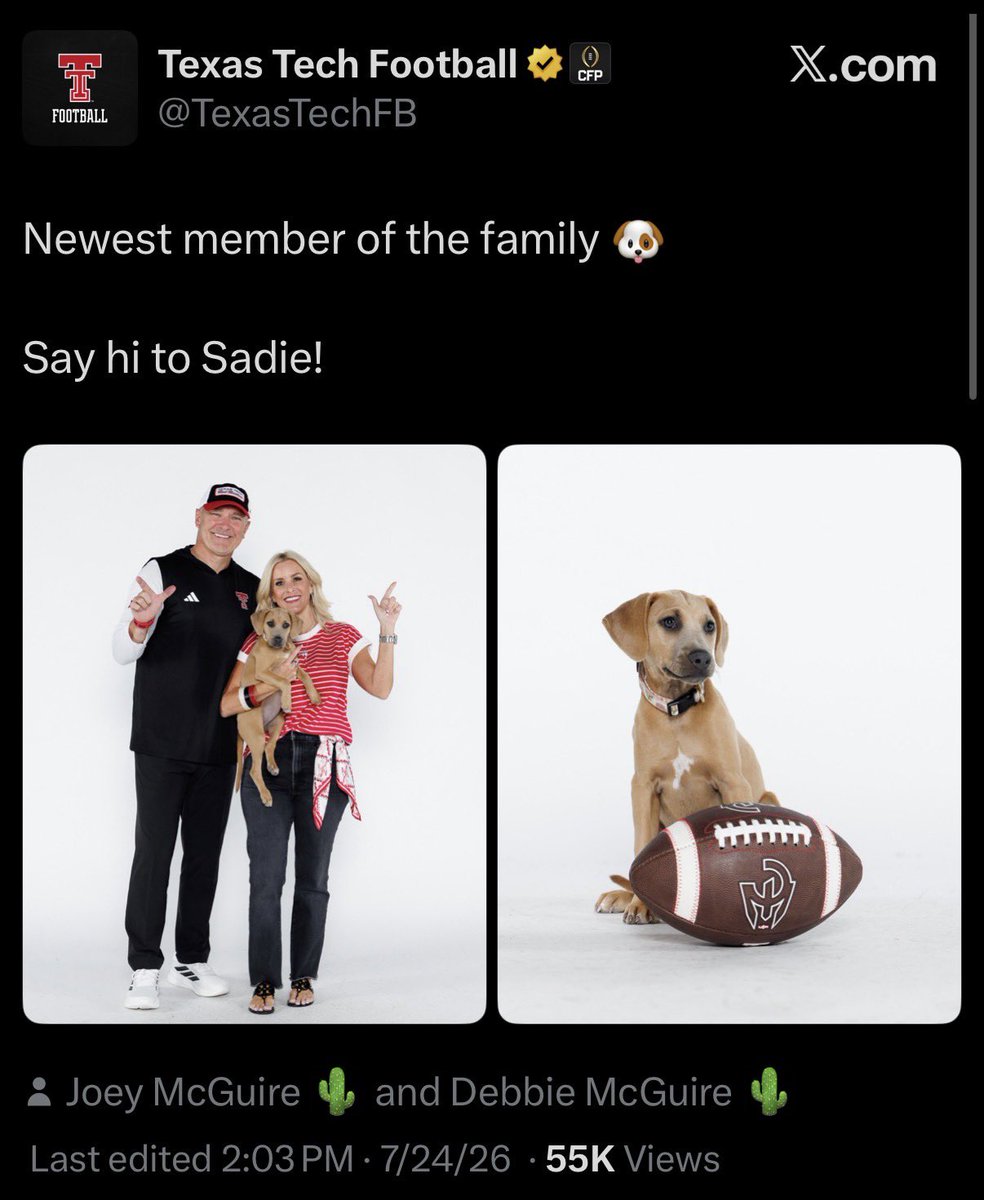
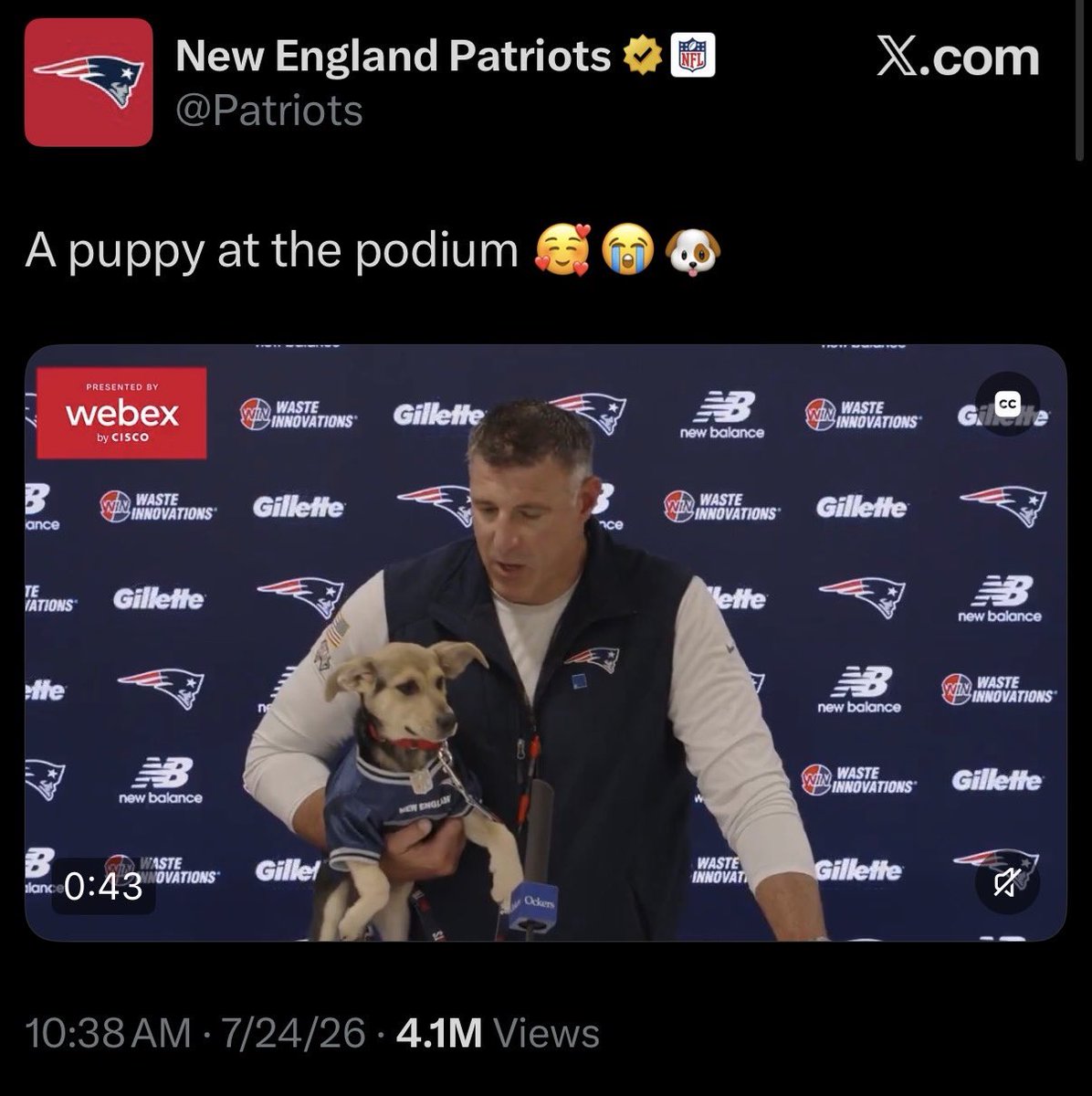
If I had a nickel for every time this week a team tried to whitewash their coach’s offseason controversy with a puppy, I’d have two nickels. Which isn’t a lot, but it is weird that it happened twice.
For some reason, The Odyssey has become one of the latest culture wars on X.
I just watched it, and from start to finish it was everything cinema is supposed to be.
If you’re letting some morons on the internet convince you not to see this movie, you’re genuinely missing out.
The cinematography was incredible, the acting was great, the score is outstanding, and the story keeps you hooked the entire time.
Don’t let politics take a great movie away from you.
Go to the theater and judge it for yourself.
Every famous death in The Odyssey is the same crime.
The Trojan War? Started because a houseguest stole his host's wife. The cyclops? Blinded for eating his visitors. The suitors? Slaughtered for overstaying their welcome in another man's home.
Nolan read it correctly. Homer wrote 3,000 years ago about one thing: how you treat strangers decides whether civilization holds.
Here's why the Greeks were obsessed with it. Ancient Greece had no hotels, no cops, no ID. If you traveled anywhere, you knocked on a stranger's door and hoped.
So they made hospitality sacred. Feed the stranger. Give him a bed. Don't ask his name until after dinner. Zeus himself enforced the rule, and any beggar at your door might be a god in disguise. So you treated every stranger like a king.
Break the rule and the gods break you. That's the entire plot.
We still carry the proof in our mouths. Guest, host, and hostile all come from the same ancient word. A stranger at your door was always both things at once.
Nolan bet $250 million that after 3,000 years, we still need the reminder. $257 million opening weekend, his biggest ever, says he was right.
In Germany, a talented 14-year-old earns his club money. In America, his parents pay the club $15,000 a year.
That single inversion explains why "we will not" is the most accurate line ever written about US soccer.
FIFA built a global system for this. Training compensation and solidarity payments send a cut of every transfer fee back to the clubs that developed the player, from age 12 onward. Develop one future pro and your academy gets paid for a decade. Barcelona's La Masia, Ajax, every Bundesliga academy runs on this logic. The kid is the asset.
US Soccer refuses to enforce those rules. When Seattle's Crossfire Premier claimed its $60,000 share of DeAndre Yedlin's transfer to Tottenham, it got nothing. Claims on the Dempsey and Bradley transfers died partly because the federation couldn't even produce the youth training records.
So American clubs earn zero dollars when a kid turns pro. They earn when a kid enrolls. Which makes the parent the customer, and the product is whatever keeps the parent writing checks: travel tournaments, hotel weekends, $500 showcase events, private training at $100 an hour. Elite pathways run $8,000 to $20,000 a year. A comparable academy spot in Italy costs about 120 euros.
Follow the incentive one level deeper and it gets darker. A club dependent on fees can't cut its weakest paying players, so rosters optimize for retention over development. The scouting pool shrinks to families who can afford the cliff, which appears around age 11, exactly when development matters most. The country runs a talent filter sorted by household income instead of ability.
Every four years someone proposes fixing this. The proposal always requires the people profiting from the $15,000 model to vote themselves out of business.
They will not.
“And every four years when the World Cup comes around, we will say that we’d dominate if we had a stronger youth program.”
“And will we develop a stronger youth program?”
“We will not.”
US 10-year Treasuries are offering about the greatest amount of yield versus the S&P 500's earnings yield going back to 2003. Either earnings have to keep outperforming, or bonds will start looking like an increasingly attractive alternative.
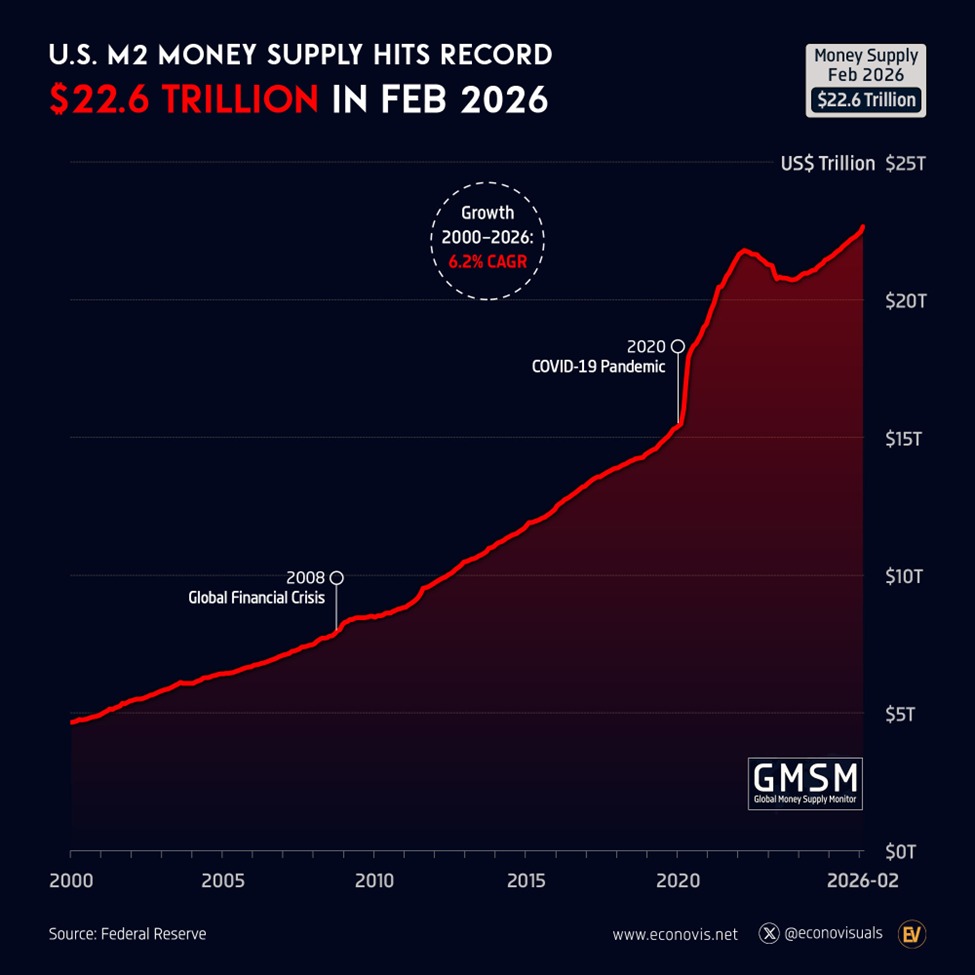
BREAKING: US M2 money supply jumped +4.8% YoY in February, to a record $22.6 trillion, marking the 24th consecutive monthly increase.
Money supply is now ~$700 billion above the March 2022 peak.
Since the 2020 pandemic, M2 has surged +$7.1 trillion, or roughly +$1.2 trillion per year.
Since 2000, money in circulation has grown at an average annual rate of +6.2%.
The US Dollar is losing purchasing power at a historic pace.
Those wheels you’re looking at are 0.75 millimeters thick. That’s half the thickness of a US dime. Each one was carved from a single block of aluminum, and NASA sent six of them to Mars knowing they’d eventually shred.
Curiosity was built for a 2-year mission. It landed in August 2012, and by December that year NASA had already extended the mission indefinitely. Thirteen years and 35.5 kilometers later, the rover is still going, but the wheels started cracking just 14 months in. The damage came faster than anyone at JPL predicted. Sharp embedded rocks were punching straight through the skin between the treads.
So NASA assembled a Wheel Wear Tiger Team (a crisis problem-solving tradition that goes back to Apollo 13) and got to work. In 2017, they uploaded a traction control algorithm from Earth that adjusts each wheel’s speed in real time based on the terrain, reducing force on the front wheels by 20%. They rerouted the rover to softer ground and started driving backward when possible, because pulling wheels over rocks produces less force than pushing them into rocks.
The wildest part: if enough treads snap off, Curiosity is designed to find a sharp rock on Mars and use it to deliberately rip out the damaged inner section of its own wheel. JPL tested this on a replica rover and found Curiosity can keep driving on just the outer third. They predict this won’t be needed until around 2034.
Every 1,000 meters, the rover pulls over and uses the camera on its robotic arm to photograph its own wheels so engineers on Earth can count every crack. Each wheel also has tiny holes that spell “JPL” in Morse code, which Curiosity uses to measure distance by photographing its own tracks in the dirt.
These photos directly changed the next rover. When NASA built Perseverance, engineers 3D-printed about 70 different tread designs before landing on 48 curved treads instead of Curiosity’s 24, with thicker skin. They tested the new wheels over 60 kilometers and got zero damage by Curiosity’s original failure definition. “A boring graph with no data on it,” as one JPL engineer put it.
A $2.5 billion machine doing self-surgery with rocks on another planet because the mission outlasted its design by 6x.
If the next 30 years are the same as the last...
Here's how much life will cost by 2055:
- Gallon of gas: $16
- Cup of coffee: $28
- New car: $218,165
- Average rent: $6,500
- Average house: $1.6 MILLION