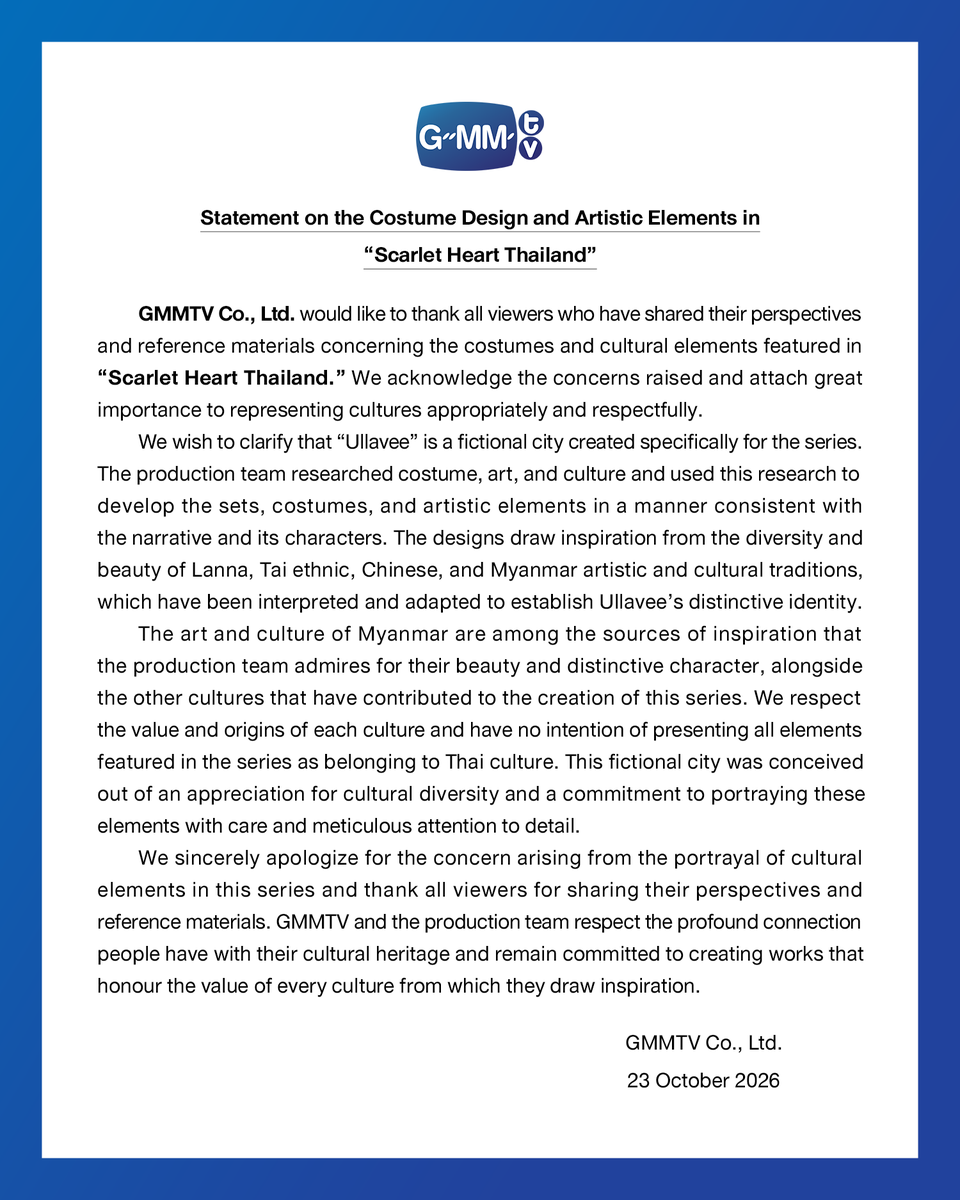
ประกาศชี้แจงเกี่ยวกับเครื่องแต่งกายและองค์ประกอบทางศิลป์ในซีรีส์ “Scarlet Heart Thailand ปาฏิหาริย์ข้ามกาลเวลา”
Statement on the Costume Design and Artistic Elements in “Scarlet Heart Thailand”
#ScarletHeartTH@ScarletHeartTH#GMMTV
Myanmar viewers question costumes in Thai series ‘Scarlet Heart Thailand’
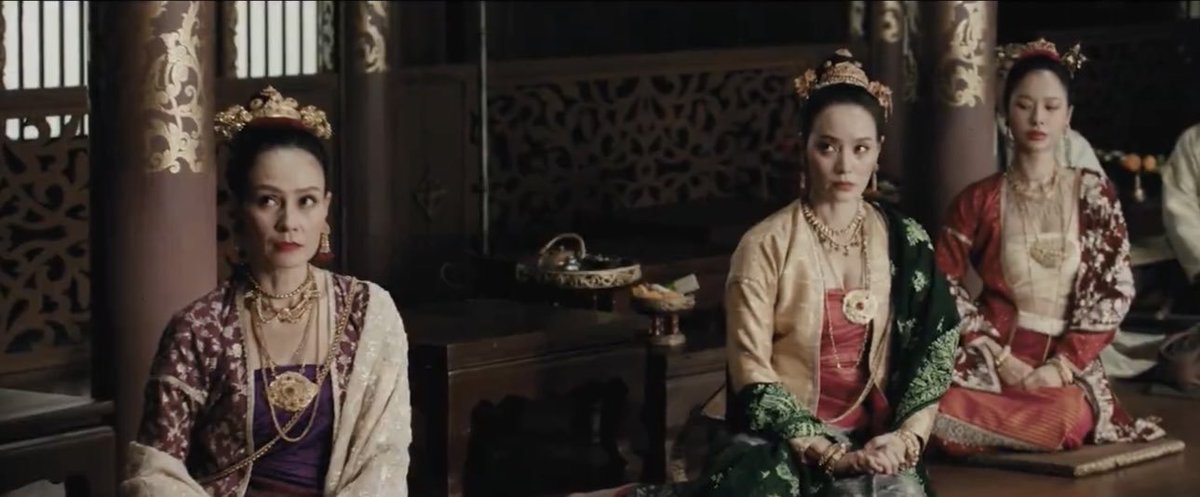
The upcoming Thai historical fantasy series Scarlet Heart Thailand has sparked online debate after some Myanmar viewers said costumes and accessories featured in its teaser resemble those worn at the Myanmar royal court, particularly during the Konbaung dynasty.
Produced by GMMTV, the series stars Win Metawin, Tu Tontawan, Nanon Korapat, Tay Tawan, Fourth Nattawat, Phuwin Tangsakyuen, Perth Tanapon and Force Jiratchapong.
Adapted from the popular Chinese novel Bu Bu Jing Xin, the Thai version follows a modern woman who travels back in time and finds herself in the body of Fong Nuan, a woman from the fictional city of Wang Nam Lin. She becomes entangled in a struggle for power among seven princes, alongside a story of love and fate. Some Myanmar viewers have called on the production team to explain the historical and cultural references behind the costumes and accessories. An online petition campaign was launched on 20 October, urging the company to verify its historical research, clarify the sources of its designs and provide appropriate cultural credit.
The claims and demands have so far come from some viewers, and further clarification and historical evidence from the production team are awaited.
#ThailandNews #Myanmar
“Alawi is a fictional city inspired by a diverse range of cultures, including Thai, Lanna, Chinese, Burmese, and others.”
@GMMTV@ScarletHeartTH@Giggoo_
Saying that Alawi is “inspired by diverse cultures” does not address our concerns or excuse the lack of cultural accountability. The word “𝐢𝐧𝐬𝐩𝐢𝐫𝐞𝐝” is 𝙣𝙤𝙩 𝙖 𝙛𝙧𝙚𝙚 𝙥𝙖𝙨𝙨 𝙩𝙤 𝙪𝙨𝙚 𝙖𝙣𝙤𝙩𝙝𝙚𝙧 𝙘𝙪𝙡𝙩𝙪𝙧𝙚’𝙨 𝙝𝙚𝙧𝙞𝙩𝙖𝙜𝙚 𝙬𝙞𝙩𝙝𝙤𝙪𝙩 𝙥𝙧𝙤𝙥𝙚𝙧 𝙧𝙚𝙨𝙚𝙖𝙧𝙘𝙝, 𝙖𝙘𝙠𝙣𝙤𝙬𝙡𝙚𝙙𝙜𝙢𝙚𝙣𝙩, 𝙤𝙧 𝙚𝙭𝙥𝙡𝙖𝙣𝙖𝙩𝙞𝙤𝙣.
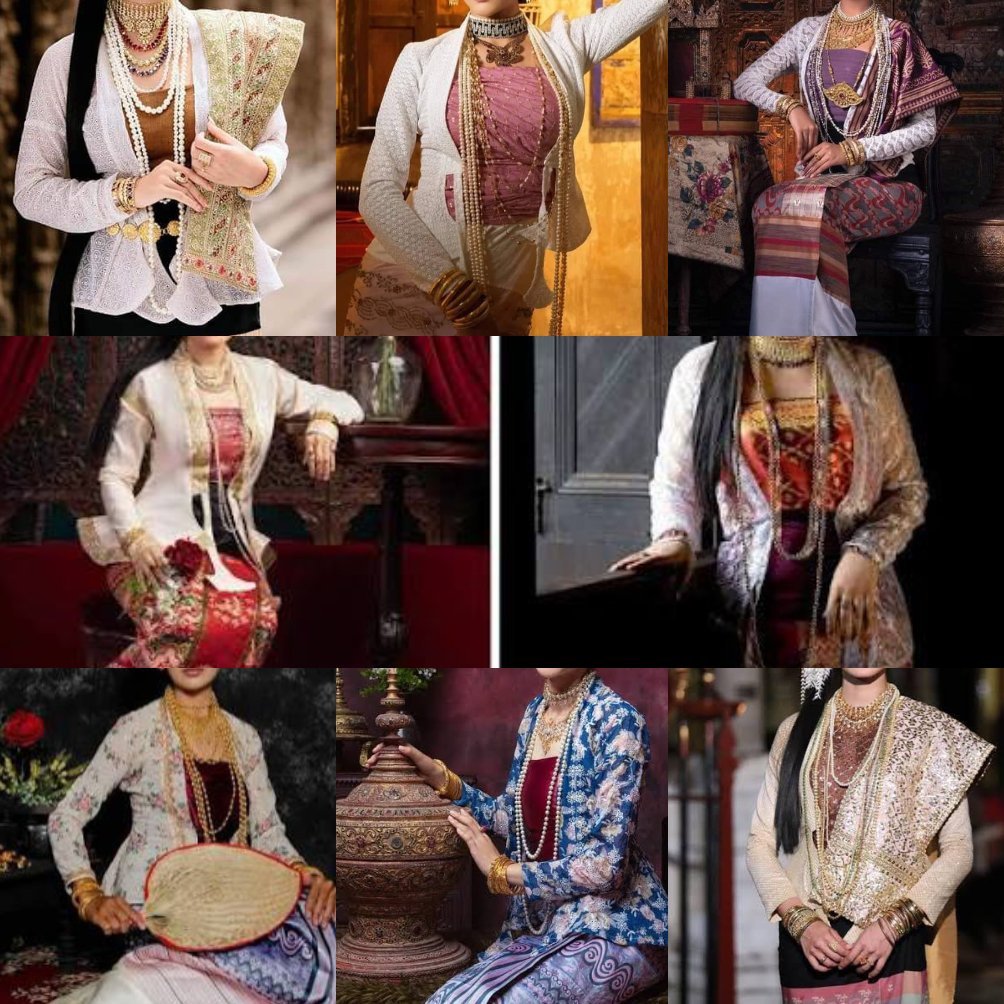
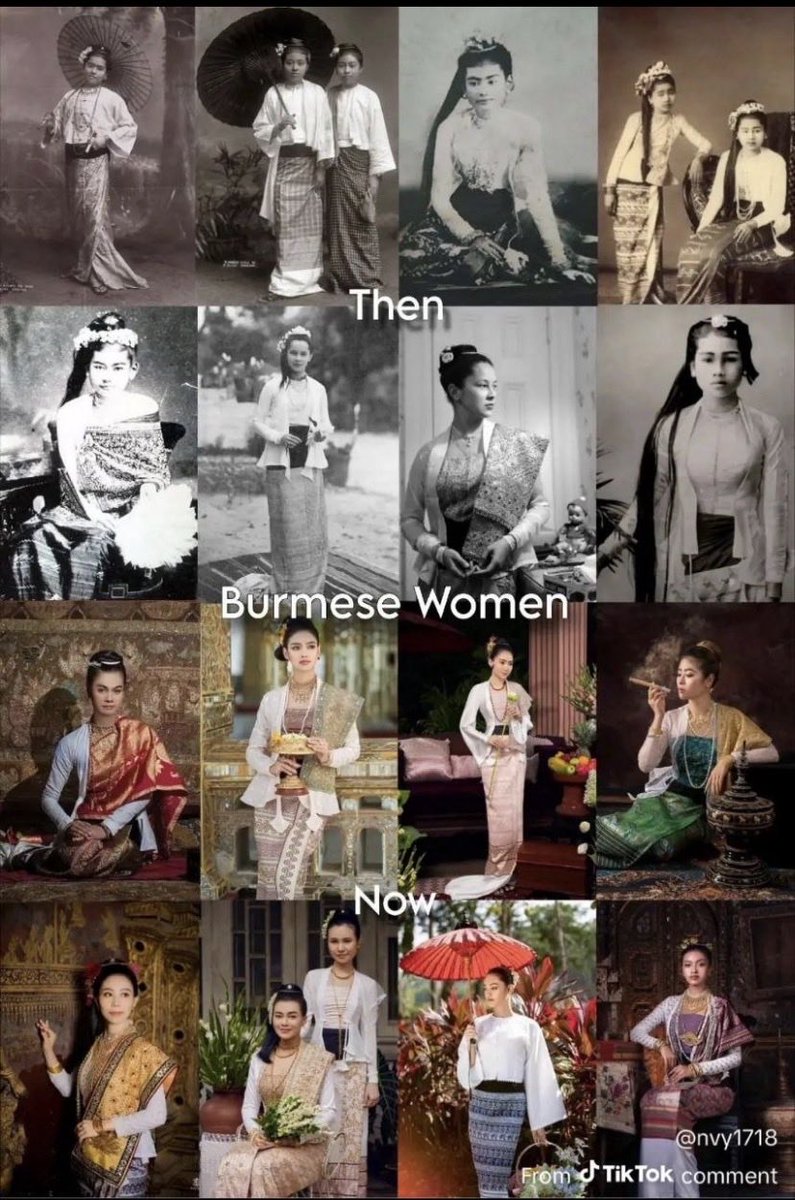
What you have presented is not merely a piece of clothing or a fashion design. It bears a striking resemblance to our tradational attire from Myanmar's Yadanabon Period, a significant part of our cultural and historical heritage. This is not something that should be casually dismissed as a generic design inspired by multiple cultures.
If GMMTV genuinely drew inspiration from Myanmar's cultural attire, then we deserve a clear explanation. What historical research was conducted? Which specific cultural and historical references informed the design? Was Myanmar's heritage properly acknowledged and represented? And why has there been no meaningful explanation addressing these concerns?
We are not asking you to simply label your fictional world as multicultural. We are asking you to 𝘁𝗮𝗸𝗲 𝗿𝗲𝘀𝗽𝗼𝗻𝘀𝗶𝗯𝗶𝗹𝗶𝘁𝘆 𝗳𝗼𝗿 𝘁𝗵𝗲 𝗰𝘂𝗹𝘁𝘂𝗿𝗮𝗹 𝗲𝗹𝗲𝗺𝗲𝗻𝘁𝘀 𝘆𝗼𝘂 𝗰𝗵𝗼𝗼𝘀𝗲 𝘁𝗼 𝗶𝗻𝗰𝗼𝗿𝗽𝗼𝗿𝗮𝘁𝗲 𝗶𝗻𝘁𝗼 𝘆𝗼𝘂𝗿 𝗽𝗿𝗼𝗱𝘂𝗰𝘁𝗶𝗼𝗻.
It is honestly frustrating to see cultural heritage treated as nothing more than an aesthetic choice while legitimate concerns about its representation remain unanswered. If you claim to be inspired by another culture, you should be prepared to explain that inspiration with transparency, respect, and historical context.
GMMTV & the production team, please stop staying silent and address these concerns directly. We deserve more than a vague statement about a fictional city. We deserve an explanation of the cultural and historical references behind the design, along with proper acknowledgment of the heritage it appears to draw from.
GMMTV RESPECT OUR CULTURE
#RespectMyanmarCulture
#CreditOurHeritage
#ScarletHeartTHLIVE
The peacock symbol on the headpiece in Scarlet Heart Thailand is directly copied from Myanmar’s historical coins, banknotes, and symbols, which is clear evidence of our heritage. We have no intention of harming or attacking the actors; our request is strictly for @GMMTV to respect our culture and give proper credit.
GMMTV ACCOUNTABILITY
#RespectMyanmarCulture
#CreditOurHeritage
GMMTV Accountability
#RespectMyanmarCulture#ScarletHeartTH@GMMTV granting us refuge and work opportunities due to the political situation in Myanmar. This does not mean that you all have the freedom to use ‘Myanmar Traditional Costume'.
Please respect our culture.
Since SCHTH is set in the Lanna context, could the production team explain the cultural research & intentions behind the costumes, particularly those that strongly resemble Yadanabon-era attire?
@Giggoo_@GMMTV
GMMTV Accountability
#RespectMyanmarCulture#CreditOurHeritage
Plz show respect for MM fans who have waited over two yrs for series. Our culture is being misrepresented & issue deserves to be taken seriously. We expect proper & transparent response from @GMMTV
GMMTV Accountability
#RespectMyanmarCulture#CreditOurHeritage
# ScarletHeartTH
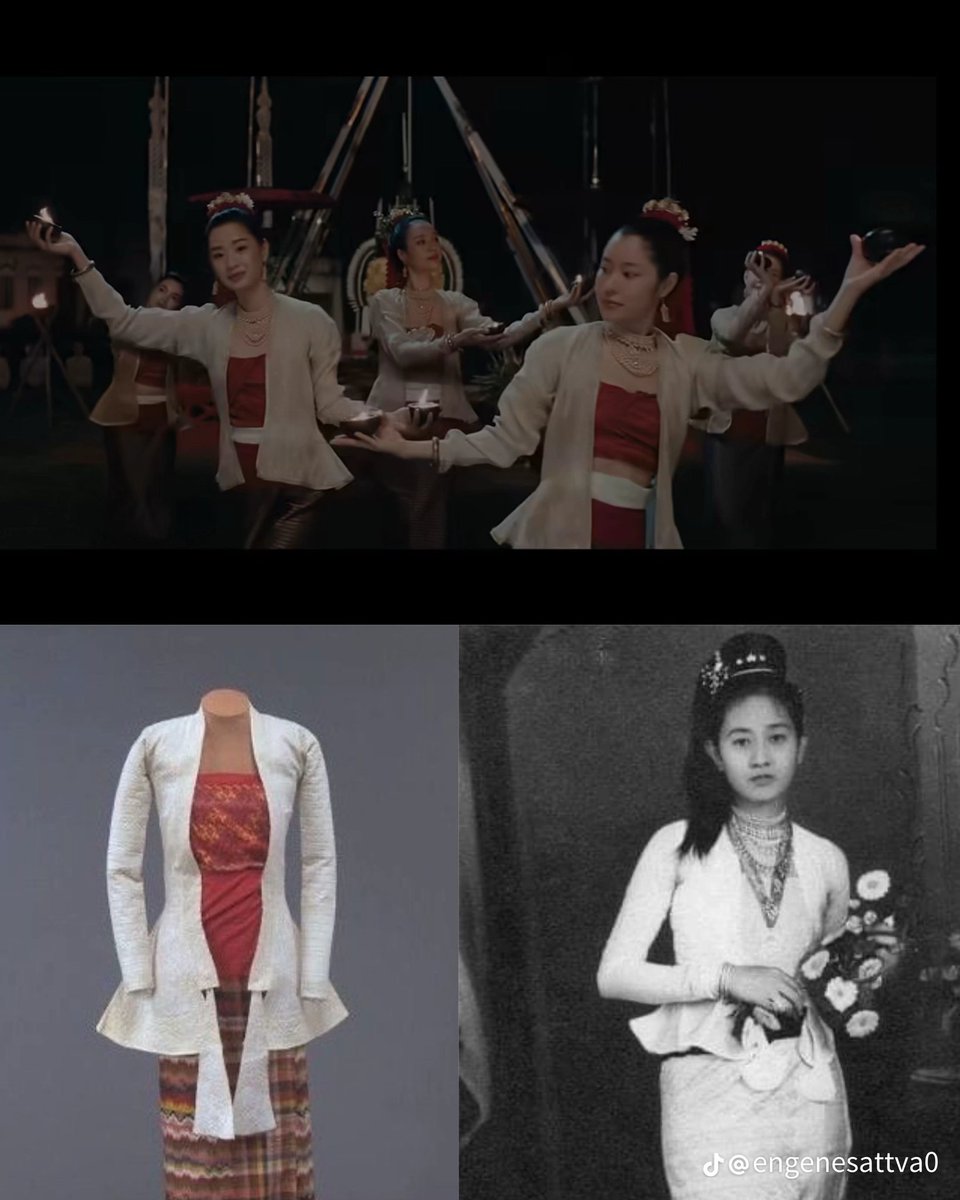
Myanmar’s traditional dance. Myanmar’s culture.
The original cultural heritage of the Myanmar people. 🇲🇲
‼️Don't copy ‼️Don't steal‼️
@GMMTV#MyanmarCulture#RespectMyanmarCulture
@GMMTV it’s really curious if that traditional custom case about with China or smth big fandom not with A Small or Developing or Powerless Country Myanmar Gmm still quiet like this or will be quickly make a statement ??? What a Shame Gmm!!!!!!!
#RespectMyanmarCulture
OFFICIAL STATEMENT
REGARDING THE USE OF BURMESE ROYAL ATTIRE IN SCARLET HEART THAILAND
We wishes to express its concern regarding the historical and cultural representation of Burmese royal attire in Scarlet Heart Thailand.
We recognize the creative freedom involved in historical fantasy productions and respect the dedication of the actors and production team. However, creative interpretation should be accompanied by careful historical research and a commitment to representing cultural heritage responsibly.
MYANMAR — YADANABON PERIOD
Myanmar's royal court attire reflects a distinctive history of royal traditions, craftsmanship, textile artistry, and ceremonial dress. The Htaing Mathein, associated with traditional Burmese formal attire, holds cultural significance and deserves to be represented with appropriate historical context.
When attire associated with Myanmar's royal heritage appears in a historical production, its period, cultural origin, and intended context warrant careful examination.
LANNA — NORTHERN THAI CULTURAL HERITAGE
Lanna possesses its own rich and distinctive cultural heritage, shaped by centuries of regional history, artistic traditions, textile craftsmanship, and cultural exchange.
Traditional Lanna attire reflects the region's identity through its textiles, patterns, draping styles, and ornaments. These traditions deserve the same thoughtful research, recognition, and respectful representation as the cultural heritage of any other community.
Recognizing the distinct historical context of each tradition does not diminish the cultural connections between Myanmar and Lanna. Rather, it allows both heritages to be appreciated more accurately and meaningfully.
OUR CONCERNS
Our concern is not about comparing the beauty or value of Myanmar and Lanna attire. It is about ensuring that cultural elements are represented with historical awareness, appropriate attribution, and respect for their origins.
Although historical fantasy allows creative reinterpretation, the use of culturally significant attire should still be informed by reliable historical references, particularly when the visual presentation may influence international audiences' understanding of a country's heritage.
OUR REQUESTS TO GMMTV AND THE PRODUCTION TEAM
We respectfully request that GMMTV and the relevant production team:
01. Review the costume designs and their historical references to ensure appropriate cultural and historical context.
02. Clarify the origins and research basis of the attire used in the series, particularly where it appears to reference Burmese royal court dress.
03. Respond to the concerns raised by providing a clear and considered official explanation.
04. Reassess, where necessary, the relevant costume presentation and promotional materials to support historically informed and culturally respectful representation.
A CALL FOR MUTUAL RESPECT
This statement is not intended to target individual actors or dismiss the creative efforts behind the series. Our intention is to advocate for the responsible representation of Myanmar's cultural heritage while recognizing and respecting the equally valuable traditions of Lanna and Thailand.
Cultural appreciation is strengthened through accurate research, transparent communication, and mutual respect. We believe that acknowledging the historical identity of each tradition contributes to a more meaningful and responsible representation of Southeast Asia's diverse cultural heritage.
We look forward to a constructive response from @GMMTV and the production team.
Respect Cultural Heritage. Preserve Historical Accuracy.
JanJingJing Myanmar Fanclub
#ScarletHeartTH #GMMTV #MyanmarCulturalHeritage #RespectCulturalHeritage
@GMMTV@GMMTV it’s really curious if that traditional custom case about with China or smth big fandom not with A Small or Developing or Powerless Country Myanmar Gmm still quiet like this or will be quickly make a statement ??? What a Shame Gmm!!!!!!!
We would like to raise a concern regarding the traditional costumes featured in the trailer for *Scarlet Heart Thailand*.
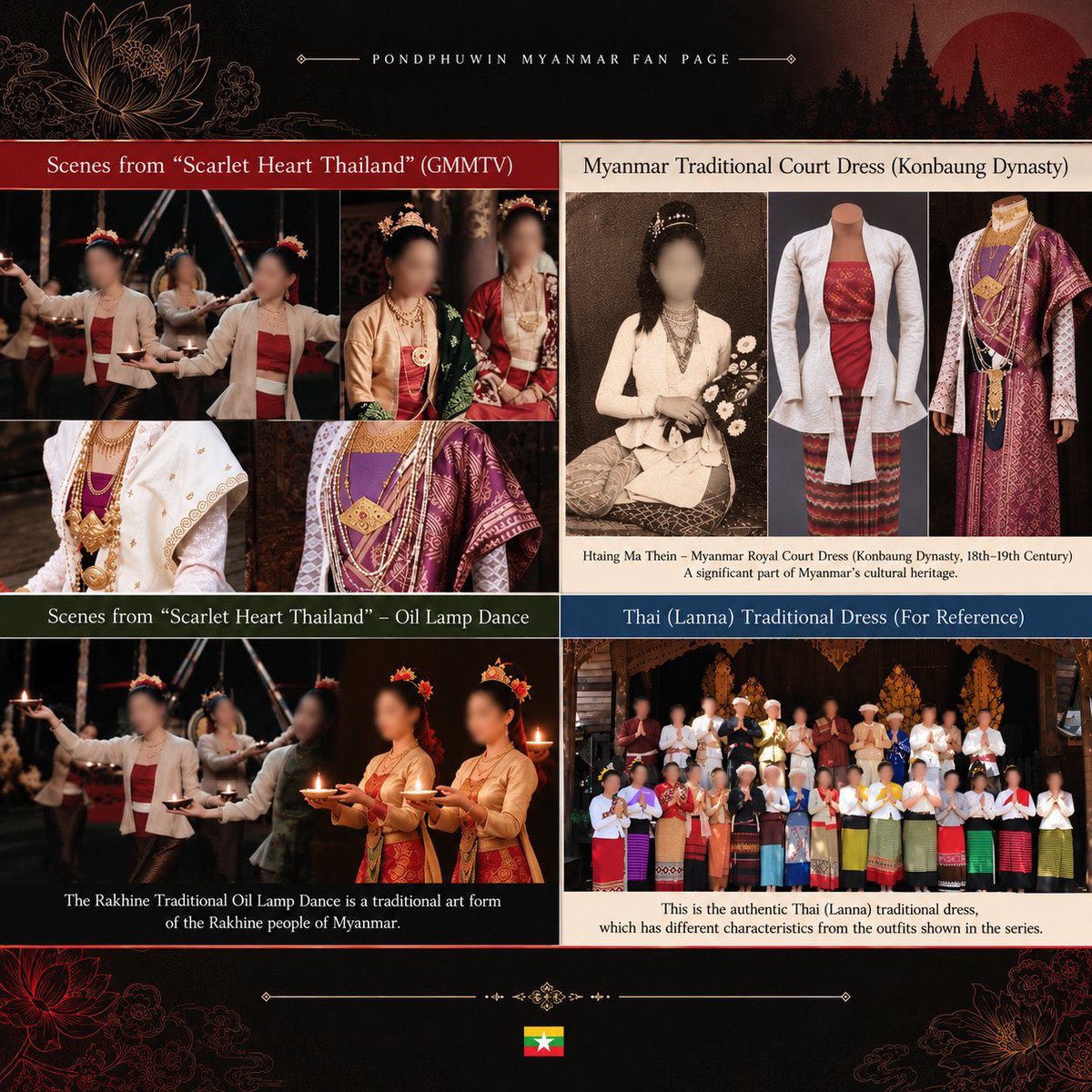
We fully acknowledge and respect Lanna’s rich cultural heritage and its historical connections with Myanmar. We are not rejecting all Burmese cultural influences in the series, nor are we denying the shared history between the two regions. However, certain costumes, particularly those worn by the women in the candle dance scene, bear a striking resemblance to traditional Burmese women’s attire and raise questions about their historical origins.
Myanmar’s traditional garments, including the Yinkhan, Htaingmathein, and Htamein, are an important part of our cultural identity and heritage. While similarities between neighboring cultures are understandable, the historical context and origins of these designs should not be overlooked.
Our concern is not about cultural exchange, but about historical accuracy, proper research, and cultural recognition. We respectfully request GMMTV to clarify the historical references and sources used in designing these costumes, particularly those that closely resemble traditional Burmese attire.
Fantasy and creative interpretation should not come at the expense of another culture’s heritage. We believe every culture deserves to be represented with accuracy, respect, and proper acknowledgment.
We seek neither conflict nor controversy. We simply ask that Myanmar’s cultural heritage be treated with the same respect and consideration afforded to other cultures.
**Cultural appreciation begins with understanding, and respect begins with recognition.**
@GMMTV , we respectfully ask for clarification.
We Demand Action from GMMTV
#RespectMyanmarCulture
#ScarletHeartTH
I want to explain why we are speaking up about the cultural representation in #ScarletHeartTH.
Scarlet Heart is already a globally recognized story, and its Thai adaptation has been highly anticipated, especially because GMMTV has cast some of its most popular and well-known actors. As fans, we have waited for this project for over two years, and we understand how much excitement surrounds it. We want this series to succeed, and we want to see the actors we love shine on an international stage.
But supporting a series and protecting our cultural heritage are two different things. One does not cancel out the other.
This is not just an ordinary fictional story that will be watched and forgotten. It is a major production with the potential to reach audiences around the world. A project of this scale can introduce people to a country's history, traditions, clothing, and cultural identity. That is precisely why cultural research and accurate representation matter so much.
When audiences around the world see a costume presented on screen, many may naturally assume that it belongs to the culture of the country producing the series. If a historically significant Myanmar traditional costume is used without proper research, context, or acknowledgment, there is a real concern that international audiences may mistakenly identify it as Thai traditional attire.
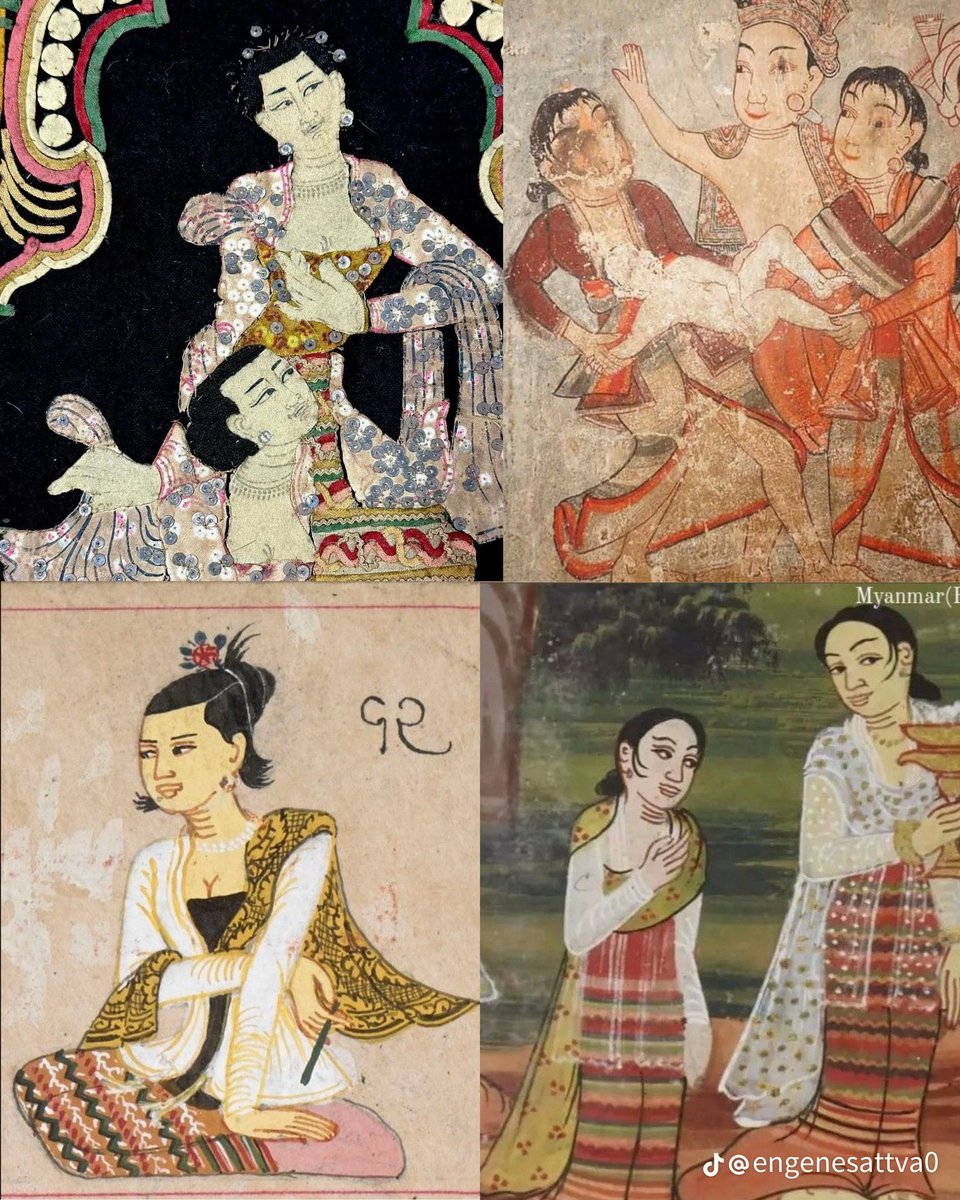
The costume in question is associated with Myanmar's historical heritage, particularly the Yadanabon era. Myanmar's traditional clothing did not simply appear without a history. Its development can be studied through historical records, paintings, photographs, and other cultural documentation from different periods. These are matters that can be researched and examined through evidence, rather than dismissed as mere opinions on social media.
Thai productions can portray other cultures, but cultural exchange requires proper research, respect, and historical accuracy. Concerns about a costume’s origins should be taken seriously, not dismissed as unnecessary criticism.
Myanmar is a country whose people continue to struggle for freedom and a better future. At the same time, preserving our history and cultural identity remains an important responsibility. Our circumstances do not make our heritage less valuable, and the challenges our country faces do not mean we should remain silent when we believe our culture is being misrepresented.
To those asking why we are making an issue out of clothing in a television series, please understand this: we can love the actors without agreeing with every decision made by the production team. We can support the artists while questioning the production's cultural representation. And we can look forward to a series while asking its creators to be responsible.
Our criticism is not an attack on Thai people, Thai culture, or the actors involved. It is a request for accountability from a major production company whose work will be seen by an international audience.
GMMTV has had more than two years to prepare a project of this scale. We believe that researching the historical origins of culturally significant costumes should be part of that preparation. We are asking the production team to review the concerns, consult reliable historical sources and relevant cultural experts, and provide clarification where necessary.
We are not asking anyone to blindly accept our claims. We are asking for the same standard we expect from any major historical production: research the facts, respect the cultures being represented, and take legitimate concerns seriously.
Loving our artists does not require us to stay silent about cultural misrepresentation. Supporting entertainment does not mean abandoning our responsibility to protect our heritage. We can do both.
Our history matters. Our cultural heritage matters. And asking for it to be represented accurately is not causing trouble. It is asking for respect.
@GMMTV
#ScarletHeartTH #MyanmarCulture
@GMMTV respect our Burmese traditional costume. It’s doesn’t smart copying other country’s heritage customs to promote your company business❗️please give a credit of using our National Myanmar Traditional Costume
We Demand Action From Gmmtv
#RespectMyanmarHeritage#GMMTV
International fans, please listen carefully. This is clearly a copy, and it has absolutely nothing to do with Thai culture.@GMMTV
We Demand Action from GMMTV
#RespectMyanmarCulture#ScarletHeartTH
Not every Burmese person knows how to perform the 𝐑𝐚𝐤𝐡𝐢𝐧𝐞 𝐨𝐢𝐥-𝐥𝐚𝐦𝐩 𝐝𝐚𝐧𝐜𝐞, and that is precisely why its cultural identity deserves recognition.
Myanmar is home to many ethnic groups, including the Rakhine, Bamar, Shan, Mon, Karen, Kachin, Chin, and others. Each has its own cultural traditions, artistic expressions, and heritage. Being part of the same country does not make every tradition common to every ethnic group.
The Rakhine traditional oil-lamp (Si-mee) dance, also known as Buddha Pujaniya, is a distinctive expression of Rakhine cultural heritage. Its devotional meaning is closely connected to Buddhism and offerings to the Three Jewels: the Buddha, the Dhamma, and the Sangha. The dancers move gracefully while balancing lamps on their palms, accompanied by devotional songs and traditional music.
The Rakhine oil-lamp dance is a distinctive form of Rakhine traditional performing art, associated with Buddhist devotional offerings. Its choreography, music, and cultural significance form part of Rakhine heritage and should not be treated as a generic traditional dance without acknowledging its origins.
When such a culturally specific performance appears in #ScarletHeartThailand, its historical and cultural origins warrant careful research. If Rakhine cultural elements have been incorporated into the series, their origins should be accurately identified and appropriately acknowledged.
We sincerely hope @GMMTV and the @ScarletHeartTH production team will address these concerns, provide proper credit for verified Myanmar cultural influences, and issue an official statement clarifying the historical references behind the relevant scenes.
𝗖𝘂𝗹𝘁𝘂𝗿𝗮𝗹 𝗿𝗲𝗰𝗼𝗴𝗻𝗶𝘁𝗶𝗼𝗻 𝘀𝗵𝗼𝘂𝗹𝗱 𝗮𝗰𝗰𝗼𝗺𝗽𝗮𝗻𝘆 𝗰𝘂𝗹𝘁𝘂𝗿𝗮𝗹 𝗿𝗲𝗽𝗿𝗲𝘀𝗲𝗻𝘁𝗮𝘁𝗶𝗼𝗻.
We Demand Action from GMMTV
#RespectMyanmarCulture