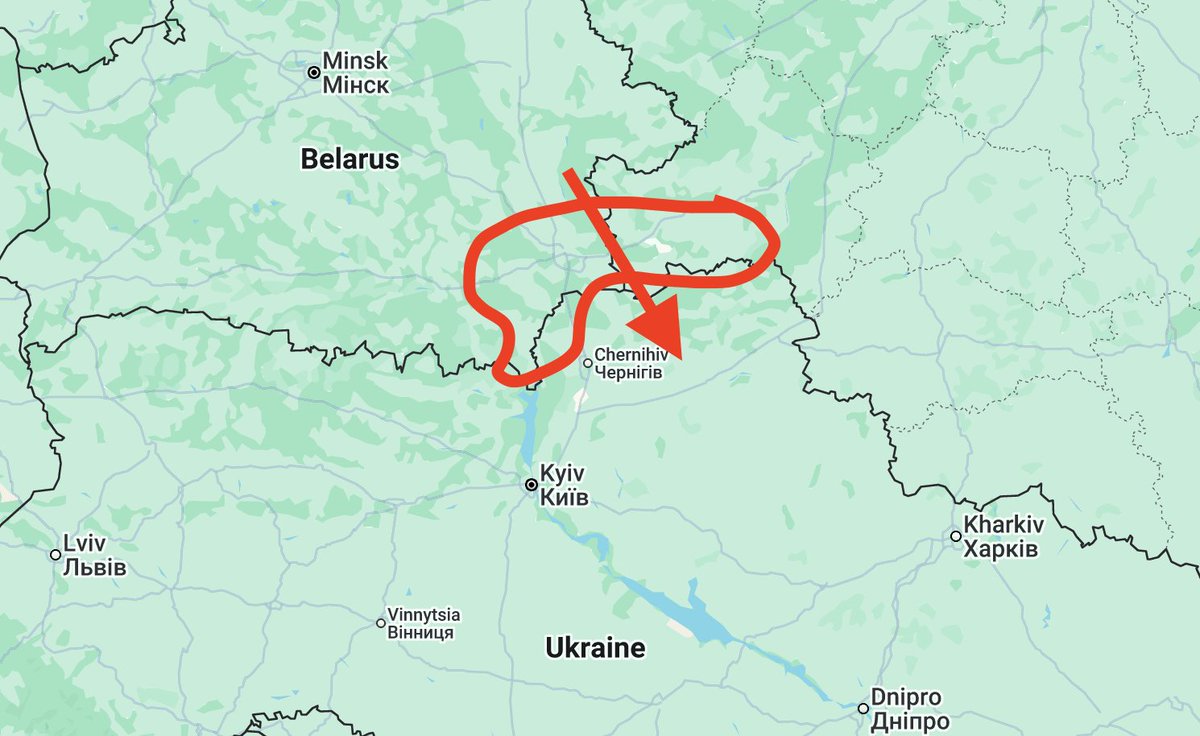
Russia continues to send large amounts of forces just north of Chernihiv Ukraine many sources believe they are preparing to open a whole new northern frontline on the country soon to escalate the war.
ruSSia is threatening to attack the UK.
As a British man myself, I have only one thing to say.
Come on then you cunts!
Let’s fucking have it!
Our factories will keep producing drones and missile components for Ukraine.
ruSSia can fuck right off.
No one fears you.
Cunts.
На это невозможно смотреть. Дружковка. Люди выживают под постоянным террором россиян.
Российские садисты с помощью дрона охотились за семьёй которая пыталась выбраться из города.
Россия монстр.
Во вторую мировую американцы пытались договорится с Гитлером. Теперь вот пытаются договориться с Путиным. Итог останется неизменным. Ничему дураков история не учит...
russians continue hunting Ukrainians like animals in Kherson.
Today. Same pattern.
They spot a civilian car from the sky.
They chase it.
They strike it.
It’s a human safari.
It happens every day. And the world pretends not to see it.
Absolutely heartbreaking footage.
“How could this happen, Mom?! I can’t take this…” — a son cries over his mother’s mangled body.
An elderly couple was trying to flee Druzhkivka with only the essentials. A russian FPV drone chased them down the road. The explosion happened right under their feet.
The man suffered multiple injuries to his legs. The woman lost parts of both legs and fingers on one hand.
Their son ran to them after hearing their cries for help. Medics from the Khizhak Brigade provided emergency aid and evacuated the couple using a ground robotic system.
The mother later died in hospital.
This is the reality of life in Ukraine.
🚨hromadske довідалось, що у записаних розмовах чиновників ОП йдеться про такого собі "Кірілла Алєксєєвіча", який мав отримувати від Тимура Міндіча готівку на зберігання
Видання від джерел отримало підтвердження, що це Кирило Буданов, голова Офісу президента.
🇪🇺🇷🇺 The debate is over.
The EU must use Russia’s frozen assets.
🔸 Russia has just rejected the latest peace agreement.
🔸 Moscow is preparing a major escalation instead of negotiating
🔸 Europe holds around €210bn in frozen Russian sovereign assets.
🔸 These funds must finance Ukraine’s defence.
This would reduce the burden on European budgets and make Russia finance Ukraine instead.
Russia must pay for the war it started.
Two parades.
Nine days apart.
One had tanks.
The other - none.
The parade in Kyiv on August 24 had no tanks, no marching troops. Ground robots on Khreshchatyk. Naval drones on the Dnipro. UAVs overhead.
The world's first military parade built entirely around unmanned systems.
The parade in Warsaw on August 15 had 300 military tanks and vehicles, and 2,000 troops. Tanks and howitzers on Wistostrada. NATO's most modern equipment.
It all looks impressive, until it meets a $500 drone.
Source: adopted from Artem Moroz
(1). The 30,000 Ukrainians killed by Poles in 1939-1947 whose murders are denied by Polish Memory Politics and Governments
Identification of 30,000 Ukrainians killed in the Polish-Ukrainian confrontation in 1939-1947: "So that they become people, not dry numbers in statistics," - historian Ihor Galagida
Author: Olga Skorokhod
https://t.co/S2RbF7r6NJ
About 30 thousand Ukrainians who died at the hands of Poles from 1939 to 1947 - this is how many victims were identified during recent research. 20 of them were identified by name and their gender and age were identified. The Ukrainian Catholic University project "Victims of the Ukrainian-Polish confrontation in 1939–1947" proposed a new methodology that allows us to get as close as possible to understanding the number of those killed.
Three volumes listing Ukrainian victims have been published so far. Work is currently underway using a similar methodology to establish the number and names of Polish victims.
The project also established a publishing subseries for publishing unknown sources or research. The book "Pogrom" about the events in the Hrubieszów region (an attack by the Polish underground on over 30 Ukrainian villages that took place in March-April 1944) has already been published.
The project leader, Professor Ihor Galagida of the University of Gdańsk, emphasizes that this is primarily about what should have been done a long time ago - honoring the victims and establishing the places of their deaths. He is convinced that this should not cause controversy and politicization, because we are talking about those who could not and will no longer be able to defend themselves.
https://t.co/hmsgcKl1dr asked Mr. Galagida about research methods, victims and murderers, memory and oblivion. He described the difficult realities in which the population in the territories of the Polish-Ukrainian confrontation was forced to live. The actions and propaganda of the occupying regimes, the military in their service, partisans from resistance movements of various stripes, criminal gangs and ordinary peasants who believed the propaganda - such was the historical background.
THE DISCUSSION ON THE POLISH-UKRAINIAN CONFLICT WILL LAST FOR SEVERAL DECADES OF YEARS
- The project started almost by accident. Tell us about it.
- In 2013, Myroslav Ivanyk and I were researching the legacy of Volodymyr Kubijovych in the Ottawa archives and found a lot of information that could allow us to identify the victims in the Lublin District by name. And we started this work. At the same time, I had the idea to make a bigger project out of it. Especially since at that time the Polish-Ukrainian historical dialogue was a bit bogged down.
I said then that we could debate the interpretation of the facts until the end of the world and for one more day. At that time, I saw no prerequisites for Polish and Ukrainian historiography to reach any common conclusion. Unfortunately, now we see that I was right then. The discussion about the Polish-Ukrainian conflict will continue for several more decades. Therefore, I proposed to focus on what does not raise any historical or ethical doubts - on the victims and their identification. This is our duty as people and Christians. My words were not received with any enthusiasm either among Polish or Ukrainian historians, so the project had to be done in a slightly different way.
- You once said that this research jumped into the last car, because if a little more time had passed, it would have been impossible. You were referring primarily to the number of eyewitnesses who were found alive. So why the last car?
- I have quite big claims about Ukrainian historiography, because over the past 30 years there have been almost no attempts to collect testimonies or other information about the victims of the Polish-Ukrainian conflict. In Poland, such work began back in the communist period, in the late 80s.
I'll tell you a certain anecdote, but it will be a laugh through tears. It seems that it was during Kuchma's time. The late local historian from Volhynia Yaroslav Tsaruk tried to travel to the villages and collect testimonies about those events. Of course, he turned to various institutions and governments with a request for help. All that the Ukrainian state managed to do at that time was buy him a rover so that he could move between settlements faster. If you look at historical research in other countries, it looked quite pathetic.
- You see, back in the 90s, after being under Soviet rule, wherever you looked, there were gaps in historical memory. You had to grab onto everything at once.
- Yes, then everyone was interested in the Liberation Struggles of 1917-21, the Holodomor, the Soviet repressions of the interwar period, the 1930s, the terror. I understand that everything is very important, but somehow it so happened that the period of World War II and the Polish-Ukrainian conflict were left out of attention, although they are no less important.
- Your work is also based largely on archival documents, why do you consider eyewitness testimony so important?
- Of course, you are right that archival documents are also important, and all possible ones. That is, for example, documents of the Polish-Ukrainian underground. Then we move on to documents of various official institutions. For example, the occupying German authorities during the war years, or the Soviet administration after World War II, or various Polish communist institutions on the territory of Poland that operated in the first post-war period.
The press of the time, court documents, birth records... But oral history, that is, interviewing eyewitnesses, is also very important. Of course, testimonies are a rather specific source, but witnesses can supplement information that is not available in other types of sources.
They had to be approached very carefully, because very often these are stories of people who were not witnesses themselves, but heard about the events from others, or read something about them. People think that they experienced or saw it, although this is not the case. In such testimonies, it is important to highlight the grains of real information.
- And in Ukraine, have we already lost many such grains?
- It's quite disappointing when the participants of my project come to a village, go to the local teacher, village council, or priest to ask if there are any old-timers in the village who can tell about the events that took place here, and they are asked: "Why didn't you come 3, 4, 5 years ago? So-and-so was still alive then." If such work had been conducted in the 90s or early 2000s, the situation would have been completely different.
REGARDING THE VILLAGE OF SLAVIATYN: 35 POLES WERE KILLED BY UKRAINIAN PEASANTS WHO GAVE UP TO SOVIET PROPAGANDA
- How did you conduct the research? In professional terms, what is the methodology?
- There is a methodology in historiography as the accumulation of information and later on its basis the formulation of the general picture. We do something similar - we accumulate information, but not about events, but about a person.
Imagine a situation where we find a record in a document that people died in a certain area. We try to look for information about this later, say, in a document of the Ukrainian underground from the period of the German occupation. Then we look for confirmation in German documents, in German police reports, and the Germans recorded such things quite carefully.
This was especially evident in the Kholm region, in the Lublin district, when it came to the murders of Ukrainian figures. These were people who were quite well-known in the community, the leaders of the community at the time - salties, village council heads, activists, heads of cooperatives, teachers. Their deaths or funerals were sometimes written about in the official Ukrainian press, which was published under the Germans, for example in "Kholmska zemly". From there we very often have the date when it happened, or the date of the funeral. The next step is to search the registry books themselves.
- Have you come across murders about which there was no specific information prior to your research?
- Yes, it used to be that there were only mentions that a person had died. And when we take the birth certificate, we find complete identification, that is, the name, surname, date when that person died, and often even where, when, and under what circumstances.
An example is the Polish village of Slavyatyn (now Ternopil region. – Ed.), where in September 1939 Ukrainians killed several dozen Poles. The literature often says that this was a murder committed by an OUN militant and that from 35 to 85 Polish civilians died then. The fact that such an event took place is beyond doubt, because it was mentioned in a number of literature. We started looking in other sources. Andriy Yaremchuk, who was researching this topic, went to that village. First, he found a grave that has survived to this day. He asked a few old-timers, they described to him the situation that existed then.
So, it turned out that it was not the OUN that committed the murder, but the revolutionary peasants who went to the call of the Red Army. This happened on September 18, 1939. When the Soviets came, they appealed to the Ukrainian peasants - they said, kill the Polish lords. And the peasants simply attacked that colony and killed several dozen Poles.
But most importantly, we managed to find a Roman Catholic parish register, in which the local priest accurately recorded that 35 people died that day.
- Where did the number 85, which currently dominates scientific literature, come from?
- I think it was distorted during reprinting or digitization - the three at some stage became an eight. Now we have accurate information that 35 people died, and there is a list of names and ages of the deceased.
We understand that the picture we are building will not be perfect either. Every good historian understands that historical truth is an ideal to which every historian strives, but is aware that he will never achieve it. He may come a little or a lot closer.
First of all, we are talking about honoring the victims - so that these people stop being anonymous. So that these victims become people, not dry numbers in statistics. Behind these numbers are preserved people who had their own lives, their own history, and whose lives were cut short under one or another circumstances.
I DO NOT ACCEPT THE LISTS COMPILED IN POLAND THAT ALL THE POLAND VICTIMS DIED AT THE HANDS OF "UKRAINIAN NATIONALISTS"
- You had a dilemma whether to include Poles killed by Ukrainians or Ukrainians killed by Poles in the list of victims of the Polish-Ukrainian confrontation, if this was done on the orders of the occupation regimes - whether Soviet or German. As far as I understand, you still decided to include them in this list with clarifications.
- Yes, there were thoughts about including such cases in the project. I do not accept the lists compiled in Poland, where often the Polish victims are listed all in a row. Whether it was a Pole killed by OUN fighters in 1939, or by Ukrainian communists, or an SS police regiment whose members were Ukrainians, or the UPA or some other Ukrainian structure - everyone is called "victims of Ukrainian nationalists."
The murder of Poles in Huta-Peniatska is an example. This is a crime committed by the 4th SS Police Regiment, that is, a force unit whose members were Ukrainians. These victims are included in Polish historiography as victims of the Polish-Ukrainian conflict. And when the media reported on the searches in Huta-Peniatska, I rarely encountered a mention that this was a Ukrainian crime committed under German command. Everywhere they simply wrote that it was a crime of Ukrainians.
We act differently than Polish historiography did before. We write that there is a category of victims who died at the hands of the Polish underground, but there is also a category of people who died at the hands of Poles, but under German command. This is more honest and gives a choice of how to count the number of victims in the Polish-Ukrainian conflict.
The situation is even more complicated with the Ukrainian victims of Soviet combat battalions, whose members were Poles. In Poland, they believe that they should not be taken into account, because they are victims of Soviet, not Polish, units. The "extermination battalions" are indeed units that were subordinate to the NKVD and were truly an element of the Soviet terror apparatus. But there is one nuance. Those "jumps" who fought the Ukrainian nationalist underground today have the official status of combatants in Poland precisely for this reason.
- That is, officially the Polish state recognizes them as fighters who fought for Poland.
- And what is interesting, only those who fought against the Ukrainian underground as part of these Soviet units have this status. Poles who were members of the "extermination battalions" in Lithuania and Belarus do not have combatant rights. Therefore, we must finally decide: were they participants in the Polish-Ukrainian conflict or not? You cannot choose for yourself what is beneficial to someone. I believe that if these combatants received their status for fighting against the OUN and the UPA, then we should perceive them holistically and recognize their crimes, which also took place.
- I want to focus on Guta-Peniatska. You mentioned the Polish village of Slavyatyn, it is clear why in 1939 the Soviet authorities agitated Ukrainian peasants to attack Poles - to neutralize Polish influence in the newly occupied lands. In general, it is also clear why the Nazi or Soviet regime used the Polish-Ukrainian confrontation to destabilize the situation. However, Guta-Peniatska was destroyed by the SS formations on the orders of the Nazi leadership. Why?
- The situation with Guta-Peniatska is more complicated, because on the one hand, there was a Polish self-defense point there (subordinated to the Home Army. - Ed.), and on the other - a unit of Soviet partisans. Although the latter left the village on February 23, 1944, by that time it had already made a fairly strong mark, including by looting in the surrounding Ukrainian villages. The immediate cause of the pacification of the village was supposed to be the death of two soldiers of the regiment, who, after the departure of the Soviet partisans, died at the entrance to the village from shots fired by the Polish self-defense. In the destruction of Guta-Peniatska five days later - on February 28 - in addition to the units of the aforementioned police regiment, a unit of the UPA also took part. Several hundred civilian Poles died then. And it is about them that we should mainly remember in the context of our project.
I HAVE NO DOUBT THAT THE ANTI-POL ACTION OF THE BANDERA WING OF THE OUN WAS, AND THE CORRESPONDING ORDER EXISTED
- You managed to identify about 20 thousand killed Ukrainians by name and about 10 thousand more who remain anonymous victims. How did you arrive at this figure of 10 thousand if it is not known who they are? Is this arithmetic about how many people lived in which village?
- If the documents contain information that on such and such a day, for example, the Polish army or the Polish police, or some other Polish militant group entered the village, and it is known that 5 people died, but we do not know their names, then we trust the documents. Sometimes the victims' personalities are not recorded in the documents. There are cases when there are doubts about whether the crime of murder occurred, then we do not even enter such cases into our statistics. Although I do not like the word "statistics", because for us numbers are a secondary thing. We are talking about surnames and names in order to identify the dead. "Remember every person" - urged Bishop Borys Gudziak from UCU, who supported the project and named its axiological basis (its text opens each volume with a list of the names of the victims). The fact that we managed to identify 20 thousand such people is a considerable success.
- The limits of your research are 1939-47. Still, most of the public in Poland and Ukraine know about these tragic mutual killings in the context of the mid-40s, when the peak pogroms occurred. And then the war began - 1939 - and it turns out that the Poles were already killing Ukrainians en masse, and not in isolated cases, as it was before.
- The conflict during the war and post-war years was the bloody peak of the conflict that began at the end of the 19th century. Later, the Ukrainians lost the Polish-Ukrainian War, and in the interwar period the situation worsened. Polish governments failed to pursue a normal policy towards the Ukrainian national minority and vacillated from cooperation or support to brutal assimilation and anti-Ukrainian actions (especially in the late 1930s). 1939 brought several processes. First, the capitulation of the Polish state under the blows of the Germans and the Soviets. The Ukrainian communists, who were supported by the Soviets, and the OUN, which acted in conspiracy against Poland, tried to take advantage of this.
Historical literature generally states that it was an anti-Polish Ukrainian sabotage, but if we look at the dynamics of the victims, the situation looks a little different. It turns out that during September 1939, more than a thousand Ukrainian victims died, with the majority in the first two weeks of September. On the other hand, if we look at the Polish victims, they mostly died after September 17, that is, after the Soviet invasion. Historians have not yet had time to fully assess the Soviet factor in this process.
Although some of the murders were political in nature, they often had a social component. We remember the enmity between a Ukrainian village and a Polish colonist or a Ukrainian village and a Polish court. In some areas of Galicia, the pacification campaign that was carried out in the fall of 1938 had an impact (not to be confused with the campaign to destroy churches in the Kholm region in the same year!). Then, units of the Border Guard Corps actually carried out a raid, during which several hundred Ukrainian activists were brutally beaten.
A year has passed, and people clearly remembered it. I also do not exclude that some of the attacks were of a bandit nature. Therefore, the picture was much more complicated than many people think.
- In one interview you said: "No one will tell me that in 1942–1943, the peasants in Volyn did not remember how a few years before... the Polish army smashed a church and, at gunpoint, drove local peasants to the Roman Catholic church."
Then, in total, about 120 churches were destroyed. Discussions about the Polish-Ukrainian conflict often turn into the plane of "who started it first". Some Polish figures try to convince that in the 40s, ordinary Ukrainians in Volhynia did not know about the destruction of Ukrainian churches in the Kholm region or Podlasie in 1938, and therefore the events of 1943 should be considered a separate violent action. On the contrary, you are convinced that Ukrainian peasants remembered this. How was the exchange of information then and to what extent could they really combine all this into one picture?
- And at the same time, some justify the attacks on Ukrainian villages in Nadsiania or in the Beskydy Mountains with Volhynia itself, although most of the inhabitants of those villages did not even know where Volhynia was... And the destruction of churches is not only in the Kholm and Podlasie regions, it was also in Volhynia. In the village of Hryńki in Volhynia, it got to the point that in 1938 the Polish army forcibly drove Orthodox Ukrainians to churches. This action caused indignation among the intellectuals of the then Poland. Maria Dombrovska wrote in her diary at the time: "Poor Volhynia. Only the Hryńki (who are already known in Europe) and the Polish army in the role of Polish crusaders will remain in it, converting from Orthodoxy to Catholicism through fear and bribery. Morally - disgusting, politically - clinical stupidity, madness, for which Poland will have to pay." This, of course, doesn't justify anything, but I think it explains something.
I am not justifying either side at all. I have no doubt that there was an anti-Polish action, for which the Bandera wing of the OUN was responsible. I believe that the corresponding order was issued, and these were not spontaneous speeches.
AFTER THE WAR, NOT ONLY THE POLISH COMMUNISTS, BUT ALSO THE MAJORITY OF THE POLISH POPULATION WANTED THE EXPULSION of the UKRAINIANS
- The extreme limit is 1947. These are the murders during the eviction of Ukrainians from Poland. By then the war was over, new regimes had been established. Why did organized murders occur again?
- In 1944, the front crosses the new Polish border. The Ukrainian population finds itself divided. After the front crosses, Polish-Ukrainian hostility returns. There are murders of Ukrainians in the territory of today's Poland.
In the summer of 1944, a quasi-communist government emerged, the Committee of People's Liberation, which signed an agreement with the Ukrainian SSR on a population exchange that was to be voluntary. Poles who remained beyond the Bug were to move to Poland, and Ukrainians from Polish territory were to move to Ukraine.
This exchange was voluntary for the first few months. Among the Ukrainians who left were communist activists, pro-communist peasants, or those who had lost their estates due to Polish attacks. But with the beginning of 1945, those voluntary departures ended.
At the same time, since the spring of 1945, in particular in the Rzeszów Voivodeship, attacks by Polish underground groups on Ukrainian villages took place in order to force those people to leave for sub-Soviet Ukraine. Then we have, in particular, the crimes in Pawłokom (365 people died), Berezka (156 killed), Bakhów (71 victims) or Malkowice (128 killed). There were dozens of such attacks. Some Ukrainians did leave under the influence of those attacks.
This period of misery ended in the summer of 1945 when the Ukrainian and Polish underground movements concluded an agreement to end hostilities. They were not approved at the highest Polish level, but both undergrounds stopped attacking villages, civilians stopped dying, and therefore voluntary resettlements stopped.
The Polish authorities held a meeting, which was also attended by Ukrainian communist figures. Unexpectedly, the delegates almost unanimously said that everyone who wanted to had already left, and the rest remained on the land of their ancestors. They proposed an amnesty so that some people would come out of the forest. The Polish communists then faced a choice - to satisfy these postulates or to use brutal force. They chose the latter. In the fall of 1946, units of the Polish army were sent to forcibly deport people to Soviet Ukraine, which ended with the eviction of most Ukrainians. Later, those who remained or returned were dispersed throughout Poland as part of the "Vistula" operation, which caused the Ukrainian community in Poland to cease to exist in its usual state. During these actions, murders of Ukrainians by the Polish army took place, for example, in the Morokhovskaya Plant.
- I want to emphasize that these are again victims of the regime, not the Polish underground or spontaneous violent actions.
- We must take into account how people thought at the time. If a village in Volhynia is set on fire by people in German uniforms but speaking Ukrainian, few people will remember that the command was given by German officers. They will remember the Ukrainian language. The same thing happens the other way around. Let's not forget that after the war, not only Polish communists, but also the majority of the Polish population in general were in favor of the eviction of Ukrainians.
In general, we give a broad interpretation, and I always repeat: let's establish the names of the victims first.
MORE THAN 600 PEOPLE DIED IN SAGRYN – THIS WAS THE LARGEST CRIME COMMITTED BY PARTISANS IN THE GENERAL GOVERNMENT CREATED BY THE GERMANS
- I want to dwell on the sad phenomenon of the Ukrainian village of Sagryn. For a while, Polish historians spoke of 100 or 200 victims. Ukrainian memoirs spoke of up to 1,200 killed people. You established about 600. Why such a difference?
- We have identified a little over 600 killed people by name, and we can probably add a few dozen more - those we were unable to identify. Among them are several Poles whom the Home Army soldiers mistook for Ukrainians.
Partisans of the AK after the burning of the village of Sagryn
Ukrainians flee Ukraine because of Russian aggression and genocide of Ukrainians. Russia is trying to exterminate Ukrainians for being Ukrainian.
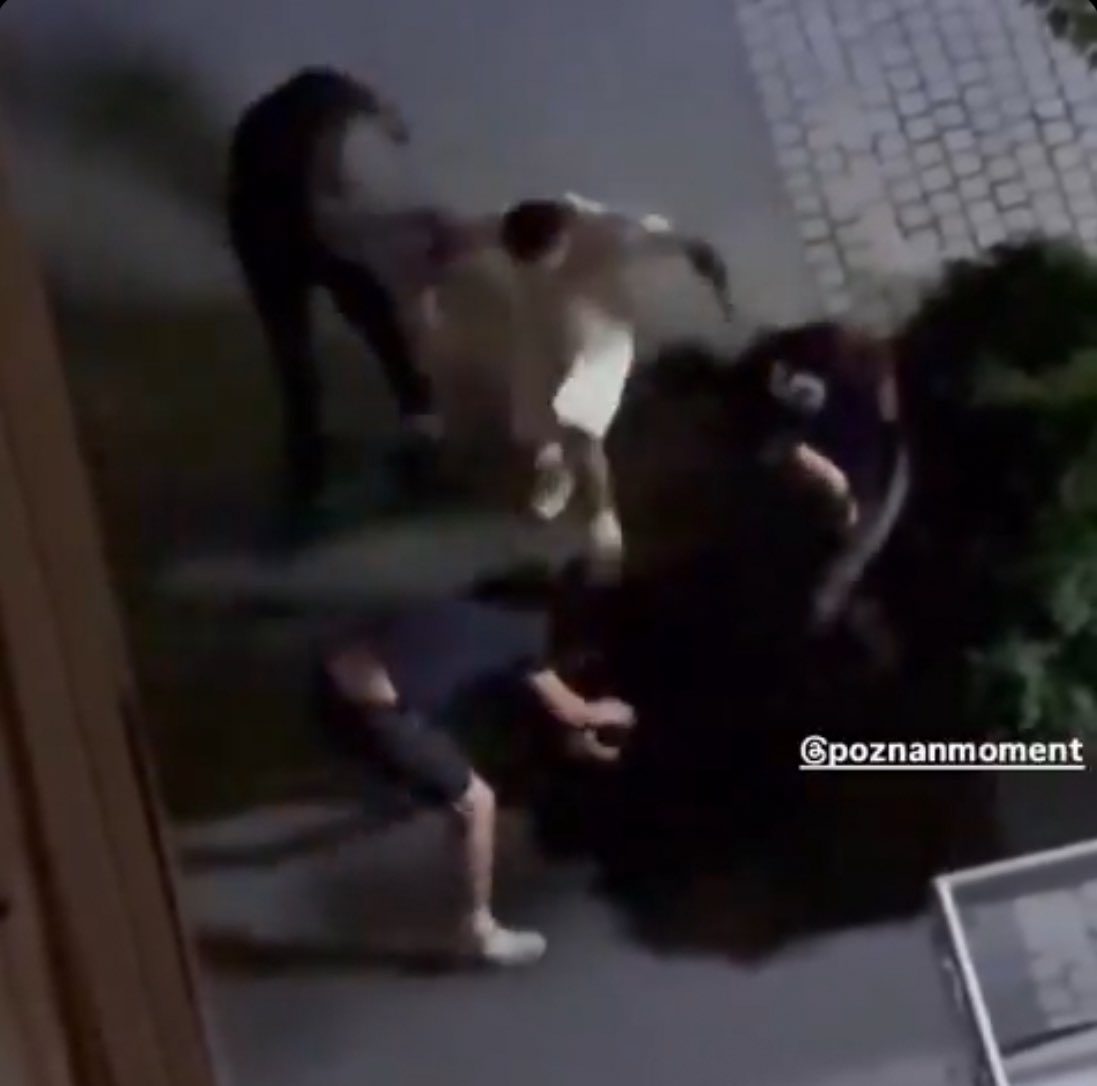
In Poland, Ukrainians are beaten to hospitalization for being Ukrainian.
In both cases, Ukrainians cannot be Ukrainians.
Коли поляки питають, чого їм не дозволяли проводити розкопки в Україні, подивіться, що вони самі роблять. Полякам не потрібна правда, їм потрібно лише їх "правильна" точка зору.