"We are losing biodiversity at a rate unparalleled in human history." Global wildlife populations have sunk over 60% since 1970.
We are destroying ourselves and taking nature with us.
Time to protect people and the planet.
#ActOnClimate#climate#biodiversity#nature
In one University of Vermont study, a native purple coneflower drew 729 pollinator visits. The frilly double-flowered cultivar sold right next to it drew 94.
Same plant, supposedly, but very different outcome for pollinators.
Breeders have created "nativars" that stuffed extra petals into the spot where the flower's reproductive parts used to be. It looks like a pom-pom and sells like crazy. When researchers dissected those double coneflowers, they didn't even make seeds. No pollen to gather, and the nectar's walled off behind all those petals.
So a bee lands, finds nothing, and leaves. It's a decoration shaped like a food source.
That's the catch with a lot of nativars. The further a flower drifts from the wild form, especially the double blooms, the less likely an insect can use it.
Skip the 'Double Delight' tag and find the straight species, the one that looks a little wilder and a little less impressive.
North Carolina is the only place on Earth where Venus flytraps grow wild.
The entire global wild population lives in a roughly 90-mile radius around Wilmington, in the longleaf pine bogs of the coastal plain and sandhills.
The soil there is so nutrient-poor that the plant evolved to eat insects to survive. It took millions of years to perfect the trap, and you can buy one at the hardware store for $7.
Poachers know this. They drive into the bogs at night and rip thousands of flytraps out of the ground. Some get sold into the houseplant trade. Others get smuggled overseas. North Carolina made flytrap poaching a felony in 2014, but people still do it.
But NC is also doing something most states don't: funding plant conservation through a specialty license plate.
In July 2024, Governor Cooper signed the "Home of the Venus Flytrap" plate into law. It costs $30 a year. $20 of that goes directly to the North Carolina Botanical Garden Foundation, which uses the money for seed banking, genetic research, tribal conservation partnerships, and native landscape restoration across the state.
If you're a North Carolina driver, this is one of the cheapest, most concrete pro-conservation actions available to you. You're funding the science protecting a species that exists nowhere else on Earth, every time you renew your registration.
If you're not in NC, you can donate to the North Carolina Botanical Garden Foundation directly.
Sometimes supporting your local pollinators is as simple as this.
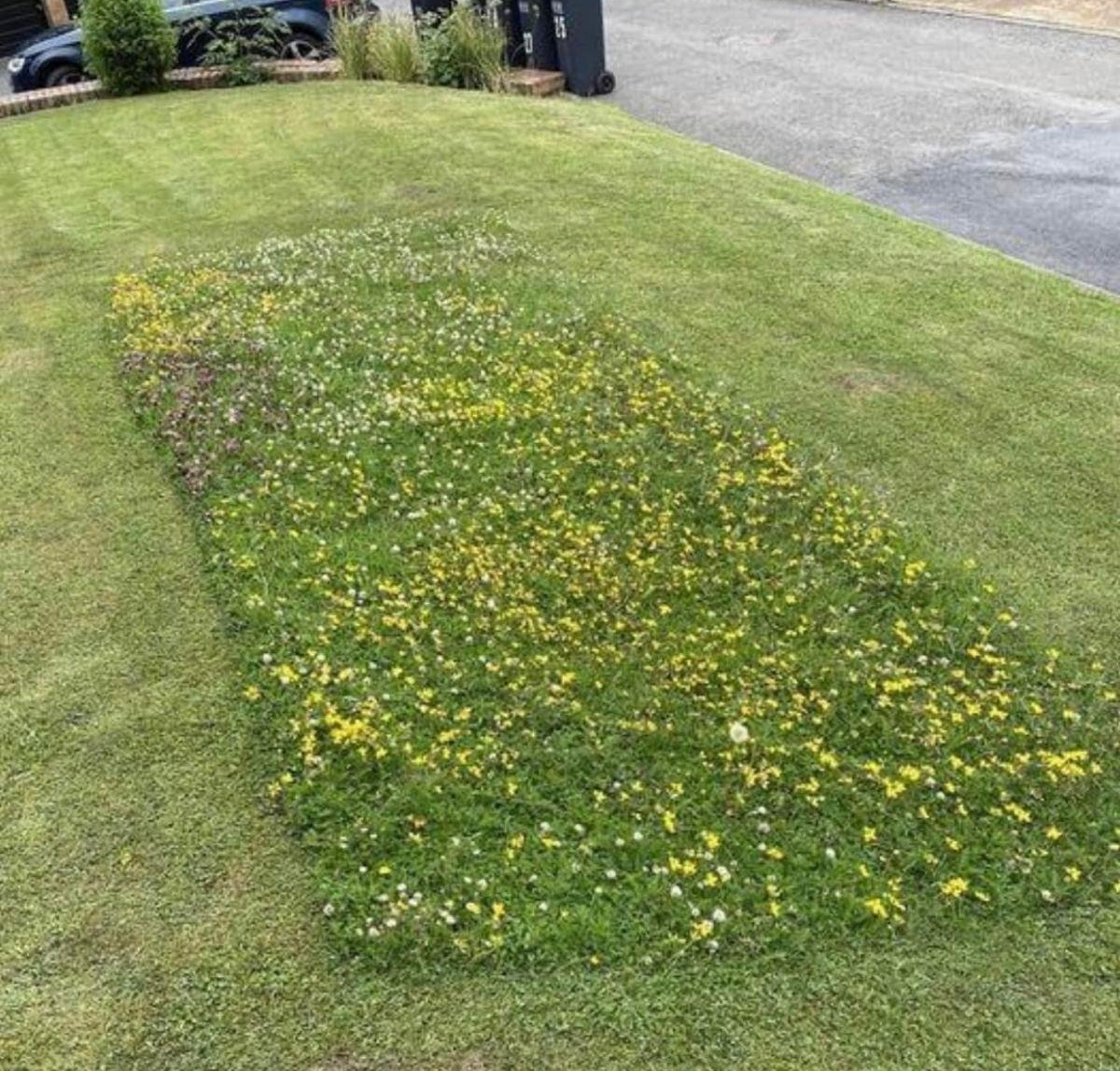
Just stop mowing that one patch of lawn for a few weeks.
Let the dandelions and clover bloom. Suddenly you’ve created a free, all-you-can-eat buffet for bees, butterflies, and other pollinators, right in your own yard.
No special seeds, expensive wildflower mix, or guilt trips.
Just a little patience and a willingness to let the “weeds” do what they do best.
Your lawn doesn’t have to be perfect. It just has to be useful.
Have you tried leaving a patch of your yard unmowed this spring? How did the pollinators respond?
That little purple flower growing in your lawn right now isn't a weed, it's a butterfly nursery. Don't pick it!
Wild violets are the sole host plant for all 14 species of greater fritillary butterflies in North America. These caterpillars eat nothing else.
The US Forest Service puts it plainly: "Without violets, there would be no fritillaries."
The caterpillars hatch in fall, immediately go dormant, sleep through winter in the leaf litter, and wake up in spring at precisely the moment violet leaves begin to emerge.
The timing has evolved together over thousands of years. The caterpillar and the plant are synchronized.
Violets also provide early spring nectar for native bees. Mourning doves and dark-eyed juncos eat the seeds.
This plant grows in your lawn without any help from you, for free, right now.
It asks only one thing: that you don't pull it.
Doug Tallamy spent his career asking one question: what happens to wildlife when we replace native trees with ornamental ones?
Tallamy is an entomologist and professor at the University of Delaware.
His research, compiled over decades and published in books including Bringing Nature Home, produced a ranking that should change how every homeowner thinks about their yard.
He counted the caterpillar species each tree genus supports. The results:
• Native oaks: 550+ species
• Native cherries: 450+ species
• Native willows: 320+ species
• Native elms: 210+ species
• Native birches: 215+ species
Now the other side: Ginkgo, elkova, bradford pear, and crape myrtle supported almost no native species.
A yard full of ornamental non-natives is a yard that doesn't do much for local wildlife.
"86 percent of the country is privately owned," Tallamy says. "When you create landscapes out of Bradford pear and crape myrtle, there are almost no caterpillars."
The trees we plant are not decorations, but functional ecosystems.
One oak. One cherry. One elm. That's where you start.
9/ As Trump crows that "a whole civilization will die tonight" (because his plan is to murder thousands of innocent Iranians and hope for a civil war that somehow ends up with the Strait of Hormuz reopening) you need to know the full scope of the global disaster he has caused.
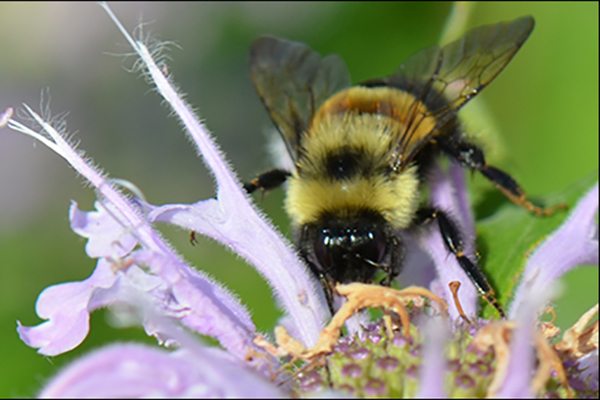
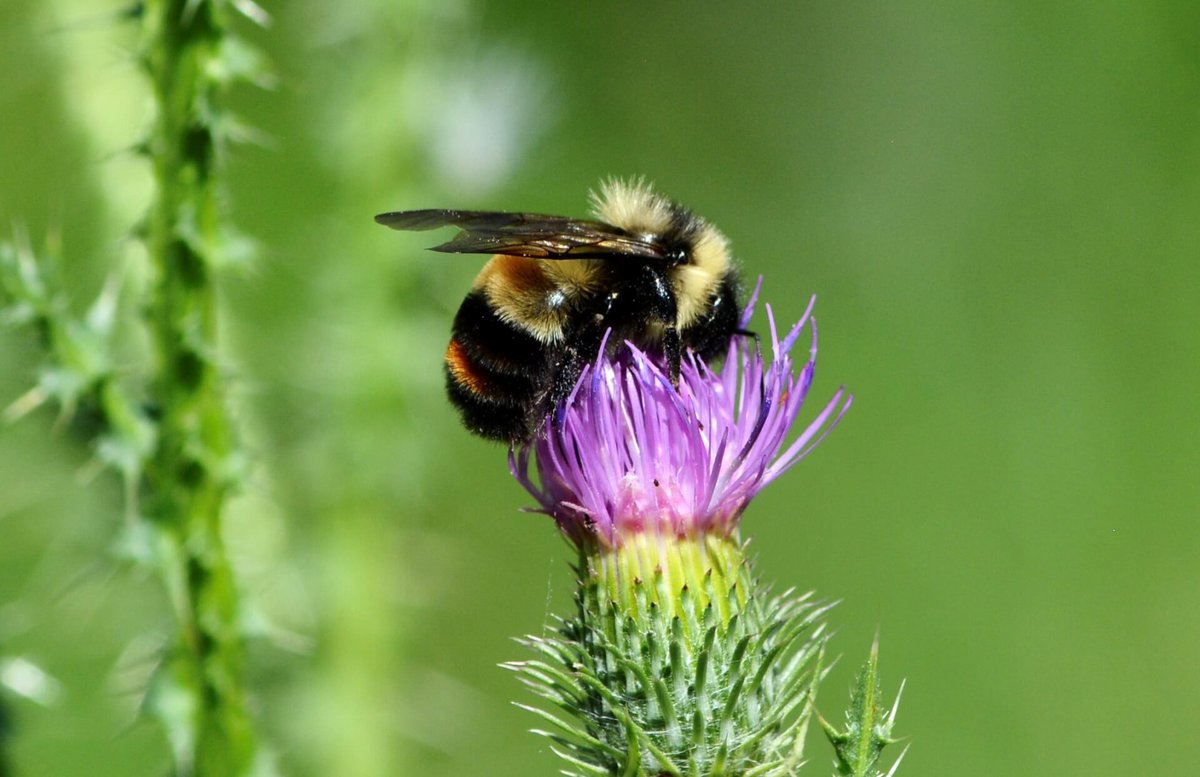
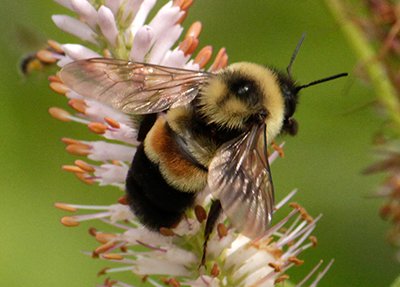
The rusty patched bumblebee used to live in 28 states. Now, it can only be found in 5.
It was the first bee in US history to be listed as federally endangered.
It disappeared from yards, gardens, and farms across the eastern US because we replaced the flowers it needs with lawns, and then sprayed what little was left.
Three plants can bring it back: bee balm, coneflower, and wild bergamot. All native. All easy to grow.
You might not see one, but that's the point.
Plant the flowers anyway.
We are called "the elderly." But that quiet label hides something most people rarely stop to consider. We are the last living witnesses of a world that no longer exists.
Look at us and you might see gray hair, slower steps, and the patience that time teaches.
But listen to our story — really listen — and you'll realize something extraordinary.
We are the only generation in human history to have lived a fully analog childhood and a fully digital adulthood.
That's not a small thing. That's one of the most breathtaking journeys a human being has ever been asked to make.
We were born in the 1940s, 50s, and early 60s, into a world still rebuilding from the rubble of World War II.
Our toys were marbles and hopscotch and card games at kitchen tables. When the streetlights flickered on, that was it — childhood adventures were over, and it was time to go home. No smartphones. No streaming. No endless scroll.
We built our memories in the real world. With scraped knees and laughter echoing down streets and friendships formed face to face.
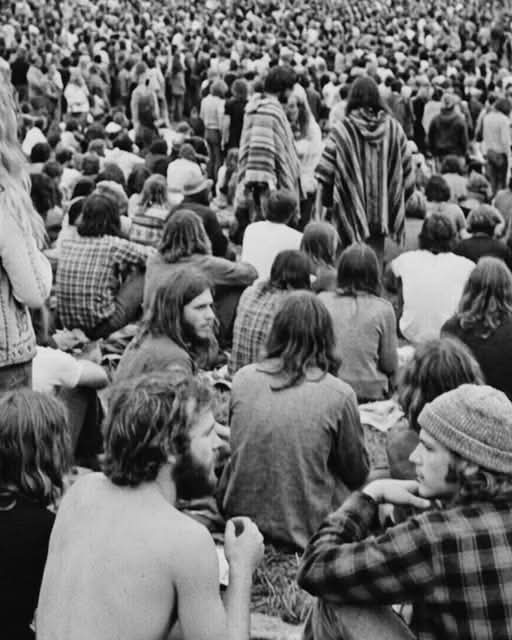
In 1969, we sat in living rooms staring at black-and-white televisions as Neil Armstrong took humanity's first steps on the Moon. Hundreds of thousands of us stood in muddy fields at Woodstock believing — really believing — that music and community could reshape the future.
We fell in love to vinyl records spinning on turntables. We waited days, sometimes weeks, for handwritten letters to arrive. We learned patience because information didn't come instantly. Mistakes were fixed with erasers — not a delete button.
Then the world transformed.
Machines that once filled entire rooms shrank to devices lighter than a paperback. We went from rotary phones and party lines to seeing the face of someone we love on the other side of the ocean — instantly, on something that fits in a pocket.
We watched the birth of the personal computer. The arrival of the internet. The smartphone. Artificial intelligence.
And through every single shift — we adapted.
Not because it was easy. Because that's what our generation does.
We also carry the weight of history in our bodies.
We grew up afraid of polio and tuberculosis. We watched science defeat them. We witnessed the discovery of the structure of DNA, the decoding of the human genome, the transformation of medicine itself. We survived pandemics across decades — and kept going.
Few generations have been asked to absorb so much change in a single lifetime.
And through all of it, certain things never changed.
We still know the joy of a cold glass of lemonade on a hot afternoon. The taste of vegetables picked straight from a garden. The value of a long conversation that unfolds slowly, without a screen interrupting it.
We have celebrated births and mourned losses. Carried the stories of friends who are gone. Watched the world become something our younger selves couldn't have imagined — and found ways to belong in it anyway.
We are not relics.
We are living bridges between two entirely different worlds.
Our memory carries something the modern world needs — proof that progress doesn't have to erase wisdom. That speed doesn't have to replace patience, kindness, or reflection.
So when someone calls us elderly, we can smile.
Because behind that word is something remarkable.
We crossed two centuries. Witnessed eight decades of transformation. Walked from handwritten letters to artificial intelligence — and never lost our sense of what actually matters.
Commentary: The Environmental Protection Agency established rules limiting mercury emissions from coal-fired power plants in an effort to improve air quality and public health. The Trump administration just weakened the rule in its push to revive coal https://t.co/Y0yIuFkykV
Commentary: Ohio state Rep. Jamie Callender has proposed a bill designed to intimidate school districts challenging a law that is taking more than $1 billion state tax dollars per year and transferring those funds to private and religious schools vouchers https://t.co/EThW9hxd13
Commentary: Don’t turn our backs on our Haitian neighbors who’ve built a life in Ohio: Ending TPS will tear families apart, deepen labor shortages, and send people back to chaos and danger. https://t.co/OZzZflqax7
Everyone talks about sustainability like it is a sacrifice. Sweden quietly treated it like a design problem.
They opened a full shopping mall where nothing sold is new. Not as a protest. Not as a lecture. As a place people actually want to spend time. Bright interiors. Well curated spaces. Skilled repair shops. Designers turning old materials into desirable products. It feels modern because it is.
What a great concept I hope this goes global
FabBRICK is a French startup that transforms textile waste into eco-friendly building materials.
What do you think? Is this a great and sustainable idea? I think it is.
On December 10, 1985, astronomer Carl Sagan testified before the United States Senate Committee on Environmental and Public Works regarding the potential impacts of the greenhouse effect. His testimony is widely cited for its early and clear warning that human activity was altering the global climate.
30,000 hours of footage, equivalent to 3 years and 7 months, were filmed to capture the blooming of 77 types of flowers….and the result is spectacular.
Linda McMahon does not have the power to dismantle the Department of Education. Only Congress does.
This is an illegal assault on our public school children. If this continues, millions of students, teachers, and families will pay the price. I’ll keep fighting back.
So much power in extending awareness, decency, love and just some fun and joy.
So much power for all of us when we feel seen and feel like we belong.
May we share more of that.
1.4 million Ohioans receive SNAP benefits. Nearly one in five Ohio households with kids participated in SNAP—and almost 44% of households led by a single female parent.
I grew up often hungry and not knowing where my next meal would come from — so I know that cutting off that support hurts so many families who are already struggling. It’s cruel and dangerous.
https://t.co/NOhl9OX0FG