Harvard kids singing Radiohead’s “Creep.”
This could have gone very wrong.
Then the lead singer opens his mouth.
The Harvard Veritones have won at the International Championship of Collegiate A Cappella — the real-world competition that inspired Pitch Perfect.
Turn the sound on for this one.
WE DID IT!
A remarkable milestone for islet transplantation and the pursuit of a functional cure for Type 1 diabetes.
The journey began in 2018, when I reviewed Anelixis Therapeutics and its re-engineered anti-CD40L antibody, AT-1501, as a member of Noble Capital Markets’ Scientific Advisory Board. I immediately recognized its potential for transplantation and became an enthusiastic supporter of its development.
Anelixis was subsequently acquired and became part of Eledon Pharmaceuticals, and AT-1501 evolved into tegoprubart.
This was particularly exciting because Dr. Norma Kenyon, our collaborators and I at the University of Miami Diabetes Research Institute (UM-DRI) had worked for over two decades on CD40/CD40L blockade and its potential to protect transplanted islets while avoiding the toxicity of conventional calcineurin inhibitors such as tacrolimus.
The next challenge was bringing tegoprubart to patients.
With the support of the Diabetes Research Institute Foundation, Breakthrough T1D and The Cure Alliance, we helped launch the first clinical pilot in islet transplantation, led by Dr. Piotr Witkowski at the University of Chicago, in collaboration with our Cell Transplant Center at UM-DRI.
The results have been extraordinary: all 12 transplanted patients achieved insulin independence, with no reported graft-rejection episodes or de novo donor-specific HLA antibodies.
And now comes another historic step:
Eledon has submitted an IND to the FDA for an Eledon-sponsored registrational study of tegoprubart in islet transplantation for Type 1 diabetes.
We are profoundly grateful to Eledon for making this extraordinary commitment and to everyone who believed in and supported this work along the way.
We especially congratulate Piotr Witkowski for his remarkable leadership in translating decades of collaborative research into results for patients.
The next goal is equally important: modernizing the U.S. regulatory framework for deceased-donor islets and ultimately developing strategies that can eliminate the need for chronic anti-rejection therapy altogether.
Anelixis → AT-1501 → Eledon → tegoprubart → insulin independence → registrational pathway.
Now we need HHS and FDA to RECLASSIFY ISLETS similarly to organ transplants like in other developed countries, like Canada, France and China, allowing US academic centers to be competitive again, on the path to a cure and most importantly making it accessible to many more people living with Type 1 diabetes.
@Diabetes Research Institute Foundation
@Breakthrough T1D
@TheCureAlliance
Dr. Bernstein was the first person to believe that diabetics were truly entitled to the same blood sugars as non-diabetics. An idea that industry *literally* laughed at when Dr. Bernstein brought this idea up at conferences, while his methods to obtain normoglycemia were openly mocked and rejected by authorities in the medical community.
This clip is from a great movie produced by @LetMeBe83 called The Diabetes Solution.
https://t.co/smeyvZwffL
Definitely worth a watch 👍👍
Type 1 diabetes was cured in mice – permanently.
In a groundbreaking study, scientists successfully halted type 1 diabetes in mice by co-transplanting blood-forming stem cells and insulin-producing islet cells from a donor. This created a mixed (chimeric) immune system — part donor, part recipient — that tolerated the new islet cells and prevented further autoimmune attacks on the pancreas.
Type 1 diabetes occurs when the immune system mistakenly destroys the body’s own insulin-producing beta cells in the pancreatic islets. The new approach essentially “resets” this faulty immune response.
- Mice first received low-dose radiation and targeted antibodies to mildly suppress (but not wipe out) their immune system.
- They were then given donor hematopoietic stem cells (to rebuild a tolerant immune system) and healthy donor pancreatic islets (to restore insulin production).
- A short course of an existing immunosuppressive drug was added to bridge the process.
The results were striking: no rejection of the transplanted cells, no graft-versus-host disease, and complete prevention or reversal of diabetes. In one group, all 19 treated mice remained diabetes-free; in another, all 9 mice with established diabetes were fully cured.
Importantly, nearly every component of this protocol — the antibodies, low-dose radiation, and immunosuppressive drugs — is already approved and routinely used in human medicine. This dramatically shortens the path to clinical trials in people.
Challenges remain, particularly the limited supply of human islet cells and the need for donor-recipient matching. However, researchers are actively developing lab-grown islets and techniques to generate larger quantities of compatible tissue.
If proven safe and effective in humans, this strategy could not only cure type 1 diabetes but also revolutionize treatment for other autoimmune conditions (such as lupus and rheumatoid arthritis) and improve outcomes in organ transplantation.
["Curing autoimmune diabetes in mice with islet and hematopoietic cell transplantation after CD117 antibody-based conditioning." Journal of Clinical Investigation, 2025]
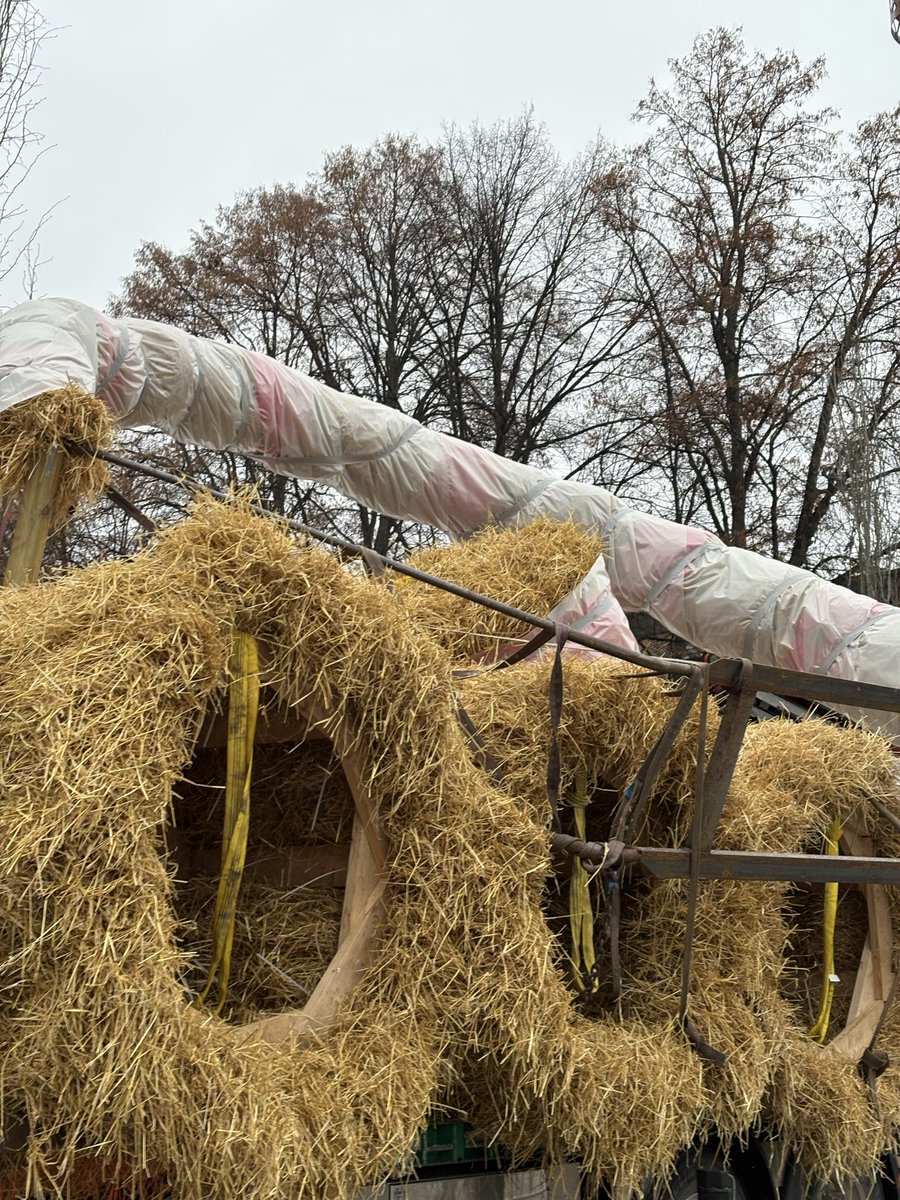
Det doftar halm i luften och julkänslan gör entré. Movember ut, bockember in! ✨🐐
You can smell the straw in the air and the christmas spirit makes its entrance. Movember out, bockember in! ✨🐐
This was the first ever beta cell transplant for type 1 diabetes... with no immunosuppression
The cells were edited to avoid immune attack and – to prove the concept – they were transplanted into the patient's forearm, where they started making insulin!
A soprano was singing her 4th encore, "Sempre libera" an opera number that has a tenor part, a young opera student spontaneously joins her in song when he noticed there wasn't anyone else singing it ❤️
“Oh my god… I have no words.”
Listen to the emotional moment this year’s laureate Maria Corina Machado finds out she has been awarded the Nobel Peace Prize.
Kristian Berg Harpviken, Director of the Norwegian Nobel Institute, shared the news with her directly before it was announced to the world.
#NobelPrize #NobelPeacePrize
The treatment of type 1 diabetes is entering a revolutionary era.
Via @TheLancet
https://t.co/ivvWyzU2Em
Production and transplantation of β cells derived from embryonic or induced pluripotent stem cells 👇




![Rainmaker1973's tweet photo. Type 1 diabetes was cured in mice – permanently.
In a groundbreaking study, scientists successfully halted type 1 diabetes in mice by co-transplanting blood-forming stem cells and insulin-producing islet cells from a donor. This created a mixed (chimeric) immune system — part donor, part recipient — that tolerated the new islet cells and prevented further autoimmune attacks on the pancreas.
Type 1 diabetes occurs when the immune system mistakenly destroys the body’s own insulin-producing beta cells in the pancreatic islets. The new approach essentially “resets” this faulty immune response.
- Mice first received low-dose radiation and targeted antibodies to mildly suppress (but not wipe out) their immune system.
- They were then given donor hematopoietic stem cells (to rebuild a tolerant immune system) and healthy donor pancreatic islets (to restore insulin production).
- A short course of an existing immunosuppressive drug was added to bridge the process.
The results were striking: no rejection of the transplanted cells, no graft-versus-host disease, and complete prevention or reversal of diabetes. In one group, all 19 treated mice remained diabetes-free; in another, all 9 mice with established diabetes were fully cured.
Importantly, nearly every component of this protocol — the antibodies, low-dose radiation, and immunosuppressive drugs — is already approved and routinely used in human medicine. This dramatically shortens the path to clinical trials in people.
Challenges remain, particularly the limited supply of human islet cells and the need for donor-recipient matching. However, researchers are actively developing lab-grown islets and techniques to generate larger quantities of compatible tissue.
If proven safe and effective in humans, this strategy could not only cure type 1 diabetes but also revolutionize treatment for other autoimmune conditions (such as lupus and rheumatoid arthritis) and improve outcomes in organ transplantation.
["Curing autoimmune diabetes in mice with islet and hematopoietic cell transplantation after CD117 antibody-based conditioning." Journal of Clinical Investigation, 2025]](https://pbs.twimg.com/media/G6x5UluXsAA4Lvy.png)


