¿Cuál es la fórmula de la plusvalía? ¿Qué leyes matemáticas rigen la transformación del tiempo de trabajo concreto a valor? ¿Qué papel desempeña el trabajo improductivo en los puntos anteriores? Os presento el trabajo que da respuesta a estas cuestiones.
https://t.co/bVlnfjJQEp
Si tomáramos en serio tu definición y la aceptáramos como cierta —algo que jamás deberíamos hacer con absolutamente ninguna de tus ocurrencias— entonces los intercambios ordinarios serían un robo: en un intercambio cada parte se queda con algo que antes no era suyo.
Que los políticos burgueses sean corruptos no es ninguna anomalía: la corrupción de la burguesía es sistémica. Y presentar dicha corrupción sistémica como un error o mala conducta de sujetos individuales para así lavar la cara al capitalismo, es otro de sus mecanismos de defensa.
Tan "sentido común" como que una caída drástica del precio, ceteris paribus, reduce la rentabilidad, desplaza capital hacia otras esferas y contrae la oferta.
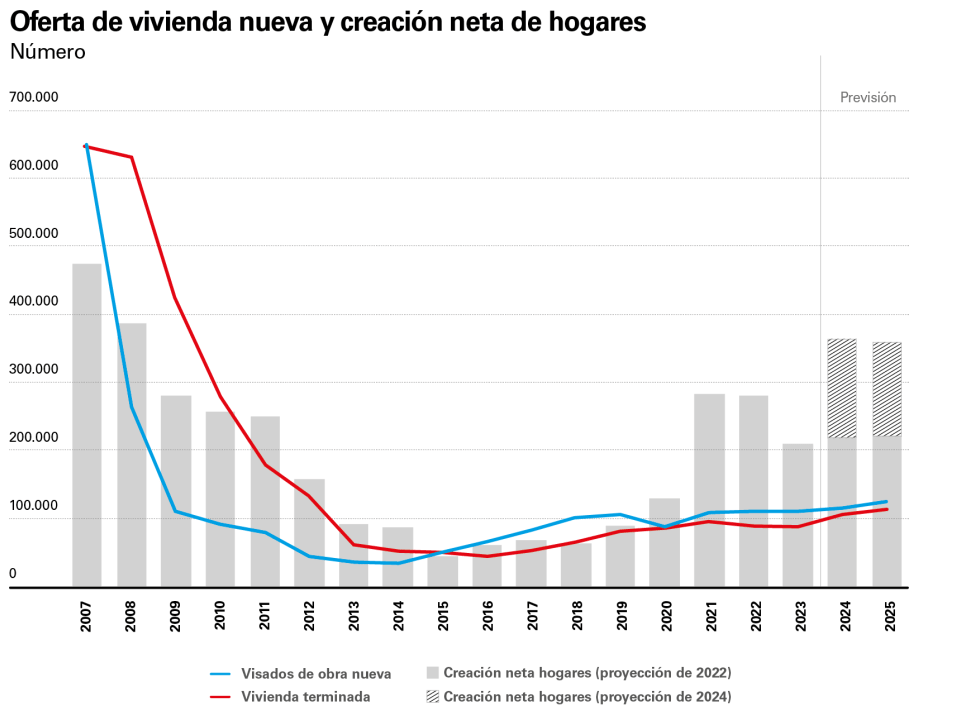
El capitalismo no produce vivienda para satisfacer necesidades humanas, sino para valorizar capital y especular.
@jorgeiespitia Si esa era su intención, está muy mal expresado. No es lo mismo "dogmatismo marxista" que "interpretaciones dogmáticas". Usar al primero como sinónimo del segundo implica exigir al lector que haga una interpretación forzada de la opinión que se expresa.
Al margen de apreciaciones históricas sobre surgimiento del capitalismo, esta opinión contiene varios problemas de fondo. En primer lugar, porque construye una contraposición artificial entre un "marxismo viejo" y un "marxismo nuevo" donde "lo viejo" es desacreditado por antiguo.
Desde la revolución industrial en Reino Unido, considerada como el comienzo del capitalismo, ¿cuántas innovaciones teóricas y de praxis se han producido en el capitalismo? Se las toma como completamente normales.
Entonces, ¿por qué se presupone que el socialismo en el siglo XXI debe seguir al pie de la letra del dogmatismo marxista del siglo XIX?
@jorgeiespitia En esta afirmación «¿por qué se presupone que el socialismo en el siglo XXI debe seguir al pie de la letra del dogmatismo marxista del siglo XIX?» no observo ninguna distinción (ni explícita, ni implícita) entre facciones, sino una afirmación generalizada y caricaturesca.
Este tipo de opiniones, según mi criterio, pueden facilitar y justificar la tendencia a lecturas reformistas en la medida en que desplazan la crítica a las relaciones de producción y a la contradicción capital/trabajo hacia una simple comparación de adaptabilidad institucional.
Se presenta, entonces, al capitalismo como algo históricamente flexible, frente al "marxismo del S. XIX", que se presenta como históricamente estático. De suerte que no queda otra opción que abrazar "el marxismo nuevo", que es —según su caricatura— "el marxismo flexible".
La realidad es que el socialista defiende el acceso universal a la energía para que todo el mundo pueda encender la lámpara, calentar la casa, etc. Mientras el capitalista corta el acceso a la energía al que no puede pagar, obligándole a usar velas, tener la casa helada, etc.
🚨🇦🇷🇪🇸 | Javier Milei expuso las absurdas ideas del socialismo: "El socialista mandaría a la horca al inventor de la lámpara por quebrar a los fabricantes de velas, y todos tendríamos una vida miserable...".
Bienvenido al mundo real. Siempre, en cualquier caso, paga el trabajador: es él, con su trabajo, el que crea una masa de mercancías cuyo valor es igual a su propio salario, más la ganancia capitalista, más los impuestos y más el valor de los medios de producción consumidos.
@AnarcoGatofilo@arrozco48060590 ¿De donde sacas que este trabajo surge porque JRR me retó? Esto es simplemente falso. Como dice mi bio, construí el sistema de ecuaciones mientras leía El Capital. JRR no pinta nada aquí.
En resumen. El capital financiero no existe en oposición a la producción, sino como su forma más fetichizada. Puede estrangularla, desplazarla o subordinarla, pero jamás prescindir de ella sin anularse a sí mismo. Y la ganancia no brota del dinero, sino del trabajo explotado.
Aunque comparto la contribución del texto en desmontar la visión simplista de "robar petróleo" como botín que explica en última instancia las guerras, lo cierto es que considero que también contiene algunas simplificaciones importantes que conviene matizar y criticar.
Note Of Extreme Caution To Comrades:
DO NOT FALL FOR THE “IT’S ALL ABOUT OIL” LIE
I’ve lived through multiple imperial wars where the so-called “left” reflexively responded with the same lazy line: “They’re just there for the oil.” I remember this explicitly during the First Gulf War, and implicitly throughout Iraq, Libya, and Syria.
This is historical bunk. The United States never extracted shit from Iraq. Not in any meaningful sense. Not structurally. Not in a way that lowered prices, improved supply, or benefited the American public. The argument collapses entirely once you understand the nature of financialized capital, whose primary objective is not extraction but the prevention of productive extraction in favor of rent, debt, and control.
Let me walk you through the contradiction:
Trump claims explicitly what the original neocons like Paul Wolfowitz claimed implicitly in the 1990s: that there is a geopolitical payoff in seizing another country’s resources. To a battered American population paying $5 a gallon, that claim sounds concrete. On a subconscious level, people imagine that “taking the oil” means cheaper gas, lower costs, relief from austerity.
They don’t care about morality. They care about price. Then the left responds by framing everything as kleptocracy while still implicitly accepting the premise that resources could be taken, but that doing so would merely be “wrong.” This is a losing argument. For someone living under austerity, there is no material counter-logic being offered. You’ve conceded the terrain.
But here’s the reality: it never comes. Nothing is extracted.
What actually happened in Iraq was not oil extraction, but financial looting. The U.S. state shoveled pork-barrel money into the MIC, especially firms like Halliburton, through no-bid logistics, security, and “reconstruction” contracts. Iraqi oil production, which hovered around 3.5 million barrels per day in the late 1980s, collapsed to a few hundred thousand barrels per day during parts of the 1990s and early 2000s. Even after the U.S. exit in 2011, it took another decade for Iraq to claw its way back to those production levels and only then through Chinese state-led industrial investment, not American capital.
So the correct response to Trump’s argument is not moral outrage. It is to deny the premise entirely: these wars produce no material gain for anyone tangibly; only financialization, debt, suppressed production, and long-term economic ruin. Then the US economy falls apart and they print more dollars to synthesize "profit" from thin air. Sure capital accumulation occurs, completely bereft of logic and reality!
Ironically, Trump himself understands this. He has repeatedly mocked the old neocons for failing to “take the oil,” lamenting their sheer incompetence and lack of “management.” But that critique misses the deeper truth: they didn’t fail. The system worked exactly as designed.
Which brings us to Venezuela.
Do you seriously believe that Trump, along with his Palantir Technologies cronies, are about to become industrial planners? That without invasion, without regime change, without national reconstruction, they’ll somehow negotiate a $200 billion, 15-year industrial oil expansion in a country whose infrastructure has been deliberately strangled for a decade?
This is a pipe dream of pipe dreams.
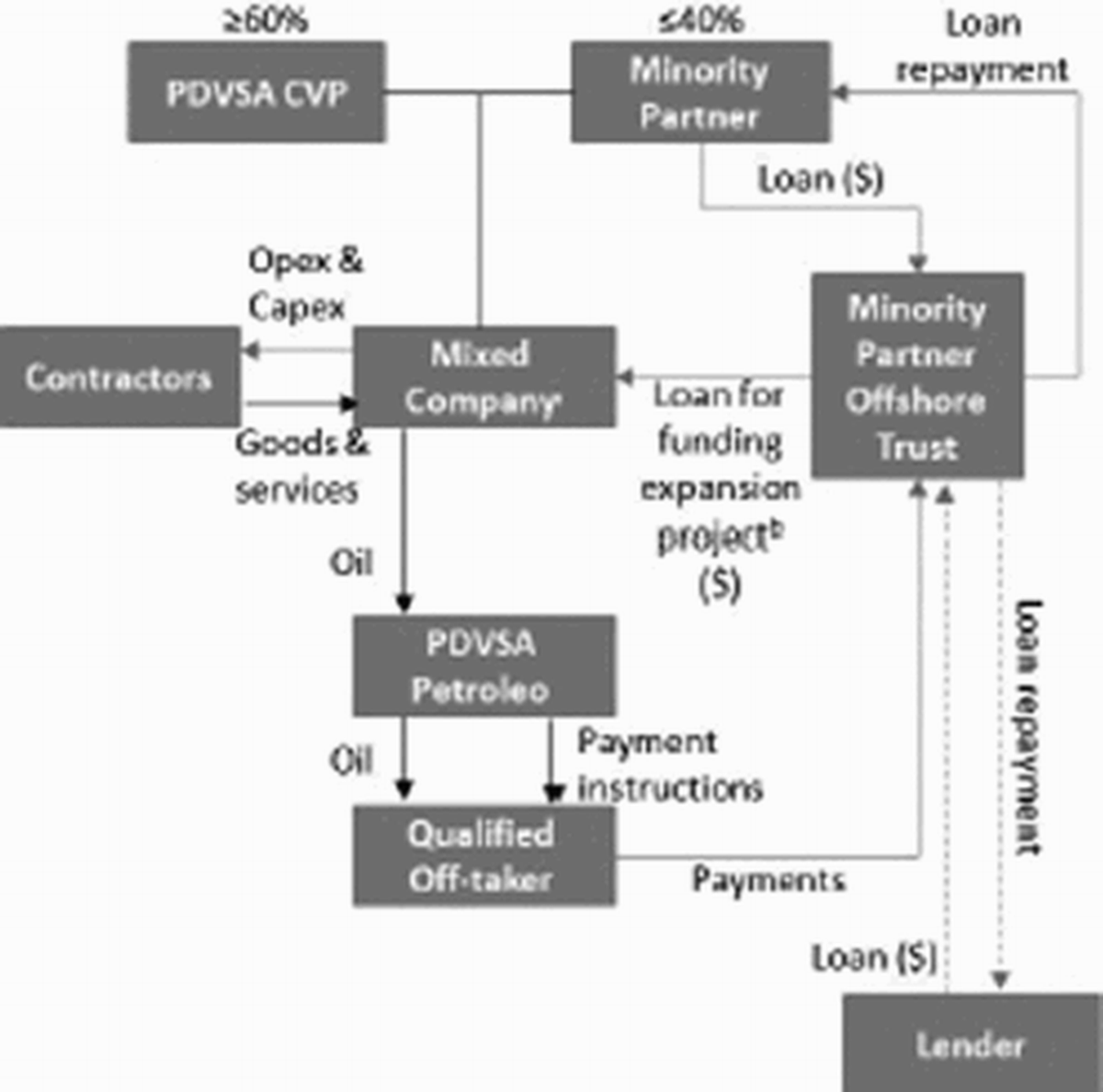
What’s actually lined up for Venezuela is not extraction, but asset stripping. The firms positioned to “re-enter” Venezuela are overwhelmingly financial, not productive. Asset managers like BlackRock are positioned to absorb distressed sovereign and PDVSA-linked debt, restructure it, and turn future production into collateral streams rather than national revenue. U.S. and European oil majors are waiting not to build capacity but for production-sharing agreements, arbitration rulings, and debt-for-equity swaps that cap output and guarantee rents. Sanctions relief is used as leverage not to expand capacity, but to discipline the state and force Venezuela into IMF-style restructuring, privatization, and legal subordination to Western capital markets. They want the Chinese to pay for this oil in dollars, a minor nuisance for Xi, a silly ploy for the western rentier oligarchs.
In a derivatives-driven, dollar-hegemonic system, money is not made by flooding markets with oil. It is made by restricting supply, inflating prices, securitizing future flows, and extracting rents through debt instruments.
That is the real play. Not oil for Americans.
Not development for Venezuela. But financial control, chopped-up industry, suppressed production, and higher global prices. Here is how the mechanism actually functions, step by step, as a single integrated system:
PDVSA entered the 2010s with roughly $30–35 billion in external debt, much of it accumulated during the oil-price collapse after 2014. That debt was issued under New York and international commercial law, not Venezuelan law, making it immediately vulnerable to foreign litigation once payments slowed.
U.S. sanctions, primarily enforced through the Treasury Department’s OFAC regime, did not simply “punish” Venezuela. They froze PDVSA’s access to dollar clearing, blocked refinancing, prohibited U.S. persons from rolling over debt, and severed access to spare parts, diluents, insurance, shipping, and reinsurance. This guaranteed production collapse. Output fell from over 2.3 million barrels per day in 2015 to under 700 thousand by 2020. This collapse was then cited as evidence of “mismanagement,” completing the narrative loop.
Once payment defaults occurred under sanctions-induced conditions, creditors activated arbitration and litigation channels. Bilateral investment treaties signed in the 1990s gave foreign firms standing in ICSID, the World Bank–linked arbitration system designed explicitly to protect capital against sovereign states. Venezuela now faces tens of billions of dollars in ICSID awards and claims, many tied to pre-Chávez privatizations and post-Chávez nationalizations.
Those arbitration awards are enforceable not inside Venezuela, but against Venezuelan assets abroad. This is why CITGO, PDVSA’s U.S. subsidiary, became the primary target. Courts in Delaware treat arbitration judgments as senior claims. The result is not compensation through production, but forced asset liquidation and debt waterfalls.
At no point does this process require rebuilding Venezuelan oil capacity. In fact, rebuilding capacity would undermine the entire structure by increasing supply and reducing price leverage. The rational financial outcome is permanently constrained production, collateralized future barrels, and externally controlled cash flows.
Sanctions create default. Default activates arbitration. Arbitration enables asset seizure. Asset seizure disciplines the state. Financial firms then step in to “stabilize” the wreckage through debt restructuring, equity swaps, and price-managed reentry. The oil stays mostly in the ground. The rents flow outward.
This is why the “they just want the oil” line is not merely wrong but backwards. The oil is most valuable when it is not produced, when it exists as a future claim backing debt, derivatives, and geopolitical leverage.
Anyone telling you otherwise is either historically illiterate or selling the lie. Trump is simply accelerating the debt peonage machine, not extracting resources like the Roman Raubbauwirtschaft fantasy.
The reality is the western left spent decades making the "it's wrong to extract resources cus' muh morality" argument and IT NEVER HAPPENED. It's a loser, it's time to contradict the financial oligarchy as FUNDAMENTALLY UNPRODUCTIVE in all senses.
La renta (incluso la financiera, obviamente) presupone la existencia de plusvalía. La plusvalía, presupone la explotación del trabajo. Y la explotación, presupone la producción (y en concreto, bajo su forma alienada, dominada y sometida). La ganancia no "emerge del aire".