When Kieran Richardson travelled to Greece with Manchester United in October 2002, he had just turned 18 and was earning £180 a week.
Richardson had been offered a professional contract, but he and his dad had decided to turn it down until he felt he’d earned it.
“I don’t want to be a pro until I’m worthy of being a pro.”
On the 23rd of October, United were playing Olympiacos in the Champions League, with Richardson named among the substitutes.
United had taken a 2-0 lead before Olympiacos fought back to make it 2-2.
Paul Scholes scored in the 83rd minute to put United ahead again, and with only a few minutes remaining, Ferguson suddenly called Richardson over.
“Kieran, get on the pitch now.”
Richardson hadn’t even warmed up, but Ferguson was already shouting towards the referee to get the substitution made.
“Ref, do the thing now, get him on.”
“I’m like, ‘s***, get on quick.’”
As Richardson ran past Ferguson to make his debut, he heard him say:
“Happy birthday, son.”
Richardson replaced Juan Sebastián Verón, and United held on to win 3-2.
There was a reason Ferguson had been so desperate to get him onto the pitch.
United’s players received a £12,000 bonus for winning a Champions League match, and Richardson had just qualified for it.
“I was in the changing room after and thinking, ‘woah, there’s big dough coming in.’”
For someone earning £180 a week, it was an unbelievable amount of money.
When Richardson checked his payslip, there it was.
“I saw £12,000, Champions League bonus.”
“Bang, £12,000. Sick.”
And he already had plans for how to spend it.
“Get me down to the Trafford Centre and I’m buying some jeans and trainers.”
Richardson never forgot what Ferguson had done for him that night.
“It was such a nice touch, what a nice guy.”
#football
2/ Delete The Copy Google Keeps
The one that actually matters. Everything you searched, watched, and typed, saved against your account.
Go to: Gmail app → tap your profile picture (top right) → Manage your Google Account → swipe to "Data & privacy" → scroll to "History settings" → tap "My Activity."
How to use it: tap Delete → "All time" → confirm. Scroll it before you do. That's the part that gets people.
There are times when I look at Ireland in complete disbelief.
Today is one of those days.
TikTok could reportedly face a €1.5 BILLION fine over its handling of videos showing teenagers driving recklessly and the wrong way on motorways.
Just think about that for a moment.
Five teenagers are now dead after the BMW they were travelling in was driven at high speed down the wrong side of the M9 and directly against oncoming traffic, before colliding head-on with a Hyundai carrying an innocent family.
Three women and a seven-year-old boy were seriously injured. Two of those women have been reported as remaining in critical condition.
Let's stop calling what preceded this simply an "accident".
The collision may have been unintended, but driving the wrong way down a motorway was not an accident.
Driving at high speed towards innocent motorists creates an obvious and potentially lethal danger.
In my view, that is conduct approaching attempted murder in terms of the danger deliberately created. Whether it could legally constitute attempted murder would depend upon evidence establishing the necessary criminal intent.
But whatever legal label you put on it, innocent people could very easily have been killed.
And somehow one of the major stories emerging from this catastrophe is that TikTok could potentially face a fine of €1.5 BILLION over videos depicting this sort of behaviour.
By all means investigate TikTok.
But I think Ireland needs to ask a considerably more uncomfortable question:
HOW WERE WE ALLOWED TO GET THIS FAR?
Members of this group had reportedly come to Garda attention before the fatal collision.
On 8 July 2026 in Carlow Town, motorcyclist Jackson Singh was struck in a hit-and-run involving a stolen Ford Ranger.
The Ranger was reportedly fleeing Gardaí.
Joey Carthy, 15, and Alex McCarthy, 16, were subsequently arrested and questioned in connection with that incident.
For absolute clarity, neither had been charged in connection with the hit-and-run when they died, and the driver of the Ranger has not been publicly identified.
They had also reportedly been suspected in connection with other offending.
Jack Kennedy, 17, was reportedly suspected in connection with previous dangerous driving and unauthorised taking of a vehicle.
Kamil Pustkowski, 17, had reportedly posted footage of himself in suspected stolen cars and posed with equipment associated with car theft.
Reporting has also stated that a leader of the group was ON BAIL and subject to restrictions.
Jeremy O'Brien, 18, had reportedly been a suspect in a previous dangerous-driving incident.
The five were reportedly associated with a wider Carlow-Kildare group already known to Gardaí.
Gardaí also suspected members of the group of attempting to break into cars in Athy in the hours immediately before the fatal M9 collision.
So I have some questions.
If a member of this group was on bail, what was he on bail for?
What conditions had been imposed?
Were those conditions being complied with and properly enforced?
If Gardaí were aware of social-media footage apparently showing suspected stolen vehicles, dangerous driving and equipment associated with stealing cars, was that material investigated and preserved as potential evidence?
And here's another important point.
THESE VIDEOS WEREN'T POLAROIDS.
When somebody uploads or streams video from a mobile device, electronic records can potentially exist across several different systems timestamps, account information, IP/session records and telecommunications data.
Ireland specifically legislated for the preservation and lawful acquisition of communications data for serious-crime investigations.
The Communications (Retention of Data) (Amendment) Act 2022, provisions of which were commenced in 2023 by then Justice Minister Helen McEntee, provides mechanisms through which specified communications data can be preserved and obtained where the necessary legal requirements are satisfied.
This doesn't mean Gardaí can simply type a mobile-phone mast into a computer and obtain the identity and movements of everybody nearby.
There are legal thresholds, authorisation requirements and proportionality safeguards.
But where those requirements are satisfied, telecommunications and digital evidence can potentially be extremely valuable in associating devices with particular locations and times and reconstructing events.
So before we decide that making the TikTok videos disappear is the answer, I want to know:
Were these investigative powers used following previous serious incidents?
Were relevant social-media records preserved or sought?
Were telecommunications records sought where legally justified?
Were videos apparently depicting criminal behaviour treated as potential evidence?
Because deleting a video doesn't deal with the behaviour depicted in it.
And then we arrive at another uncomfortable subject.
IS IRELAND TOO SOFT ON SERIOUS REPEAT YOUTH OFFENDING?
Let's talk about what actually happens when a young offender is detained.
Oberstown Children Detention Campus is Ireland's national facility for the detention of children remanded or sentenced by the courts.
And let's deal in facts rather than rumours.
According to Oberstown's own 2025 Annual Report, its residential units accommodate a maximum of eight young people.
Each young person has their OWN PRIVATE BEDROOM.
Each bedroom has its OWN EN-SUITE FACILITIES.
Each bedroom has its OWN TV SCREEN.
The residential units also provide social and recreational areas.
Facilities and activities include:
• Your own private bedroom
• Your own en-suite facilities
• Your own television screen
• Video games
• Movies and television
• Pool
• Table tennis
• Basketball and football
• Education
• Vocational training
• Recreational programmes
• Healthcare and specialist support
Now, yes, detention means something extremely important has been taken away:
Your liberty.
And I absolutely accept that young offenders should be treated humanely.
But we're entitled to ask whether the system provides an adequate deterrent for the small minority engaged in persistent and increasingly serious offending.
Ireland has been at the opposite extreme before.
The old industrial-school system was brutal.
Children could be institutionalised for behaviour that today would never remotely justify detention. Physical punishment occurred, and horrific physical and sexual abuse took place in some institutions.
Nobody should ever want Ireland to return to that.
But there is an enormous middle ground between brutalising children and asking whether a detention system offering a private en-suite bedroom, personal television, video games, movies, sports and extensive recreational facilities provides sufficient consequences for persistent serious offenders.
This isn't an argument for cruelty.
It is an argument for asking whether rehabilitation is actually working.
Because rehabilitation cannot simply mean providing excellent facilities while somebody is detained.
Rehabilitation has to result in changed behaviour when they get out.
And if a young person is repeatedly arrested, repeatedly released on bail and repeatedly returns to increasingly dangerous behaviour, at what point does the State say:
ENOUGH?
At what point is bail no longer appropriate?
At what point does another arrest followed by another release cease to be an effective intervention?
At what point does protecting innocent members of the public take priority?
And at what point does the State intervene decisively BEFORE SOMEBODY GETS KILLED?
There is another side to this as well.
Oberstown itself is under enormous pressure.
It reached its safe maximum of 40 boys on 137 days during 2025, while the number detained following conviction increased.
So perhaps the problem isn't simply Oberstown.
Perhaps Ireland needs to examine the entire chain:
Garda intervention.
Prosecution.
Bail.
The courts.
Youth detention capacity.
Rehabilitation.
Supervision after release.
Because what happened on the M9 demonstrates what can ultimately be at stake.
Five teenagers are dead.
Three women and a seven-year-old boy who were simply travelling to Dublin Airport were seriously injured.
They weren't participating in a social-media challenge.
They weren't joyriding.
They weren't driving the wrong way.
They were simply using the motorway lawfully when another vehicle came towards them at high speed on the wrong carriageway.
So yes:
Investigate TikTok.
If TikTok has broken Irish or European law, deal with it accordingly.
But TikTok didn't drive that BMW down the wrong side of the M9.
TikTok didn't decide who received bail.
TikTok didn't determine what happened after previous Garda encounters.
And TikTok doesn't operate Ireland's youth-justice system.
Deleting these videos may make this behaviour less visible.
It doesn't make the underlying problem disappear.
The question Ireland should be asking isn't merely:
"Why were these videos allowed to remain on TikTok?"
It is:
"Given all of the warning signs that apparently existed beforehand, how did we reach the point where five teenagers were dead and an innocent family was left seriously injured?"
And perhaps most importantly:
COULD EFFECTIVE INTERVENTION HAVE STOPPED THIS BEFORE SOMEBODY GOT KILLED?
That is the question that deserves an answer.
We are now being told the Government is building IPAS supercentres around the country and the public will have no say and no right to object. Democracy is slipping and authoritarianism is creeping in. We discussed it on the show last week. Listen below in two parts:
The UK and Ireland have many similar problems, and one of the biggest is the final paragraph below.
Why is a person "with a history of serious violence and mental health issues" wandering around at liberty? It's nuts. This is why prisons and psychiatric facilities exist.
We are now entering the smear campaign part of the Irish govt approach to the fuel protests. Aided and abetted of course by the MSM.
Neither the Irish govt nor MSM get to define what a protest is. Interesting that activities interfering with lawful arrests by ICE agents were ‘protests’ but Irish fuel protesters are a ‘blockade.’
When BLM burn down local neighbourhoods, they are mostly “peaceful protests.”
If foreign celebrities talk politics while accepting their ridiculous awards, they speak truth to power. But ‘far right’ agitators who dare to comment on the fuel protests are a ‘malign influence.’
Goodbye Paul...
Goodbye PB4P...
Goodbye Sinn Fein...
Goodbye to the Irish being second class citizens...
Goodbye mass immigration, Gender Ideology & the chaos of the last few years...we need a fresh start 🇮🇪
What I secretly want at the end of the summer;
1. Pep Guardiola to leave Manchester City
2. Manchester United to sign Tonali
3. Arsenal to bottle all the trophies
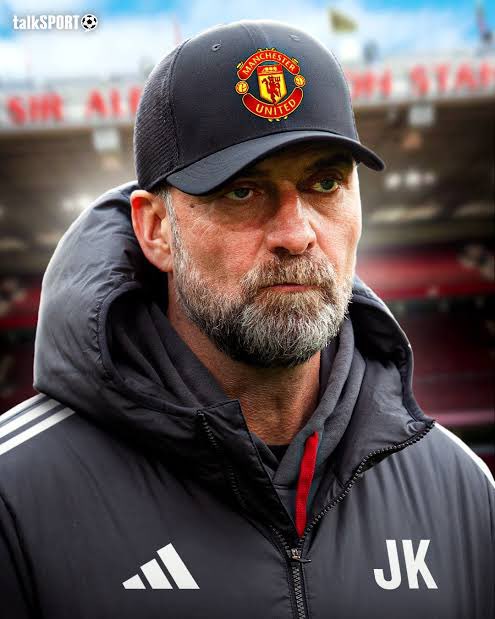
4. Manchester United to hire Jurgen Klopp
5. Tottenham to be relegated…..𝙨𝙝𝙤𝙬 𝙢𝙤𝙧𝙚
The price of a barrel of Brent oil was $107 this morning and has now fallen to $91, and it is likely to continue dropping. Let us see how quickly petrol stations and home heating oil companies reduce their prices.
Last week we were told they were not price gouging and that their prices more or less follow the live price of oil. If that is true and they are not lying to the public, we should see prices fall tomorrow.
My guess is that there will be no reduction for weeks while these companies, along with the government, continue to rake in the profits.
🚨 BREAKING: James O'Keefe has now CONFIRMED that the Minnesota rioters are bought and paid for — to the tune of TENS OF MILLIONS of dollars
There is a "network" of NGOs and activist groups funding it
We all knew it. Astroturfing is going on.