Latest guidelines for Anti-hypertensives👇
According to American Heart Association (2025) and European Society of Cardiology (2024) HTN guidelines:
Start meds at ≥130/80 if high risk.
First-line = ACEi/ARB + CCB + thiazide.
Prefer 2-drug single pill combos. Target SBP 120-129. #Hypertension
Understanding RA/CVP Waveforms Made Easy
This diagram breaks down the different waves and descents seen in right atrial (RA) or central venous pressure (CVP) tracings and links them to what’s happening in the heart.
Here’s what you’ll learn:
1️⃣ ‘a’ wave: caused by right atrial contraction. It's absent in atrial fibrillation and very large in conditions like tricuspid stenosis or junctional rhythms.
2️⃣ ‘c’ wave: from tricuspid valve bulging into the RA during early systole.
3️⃣ ‘v’ wave: due to passive filling of the RA. It becomes prominent in tricuspid regurgitation.
4️⃣ ‘x’ descent: shows atrial relaxation. It’s deeper in constrictive pericarditis, but less in TR and RV dysfunction.
5️⃣ ‘y’ descent: represents early ventricular filling. It’s sharp in constrictive pericarditis and blunted in tamponade.
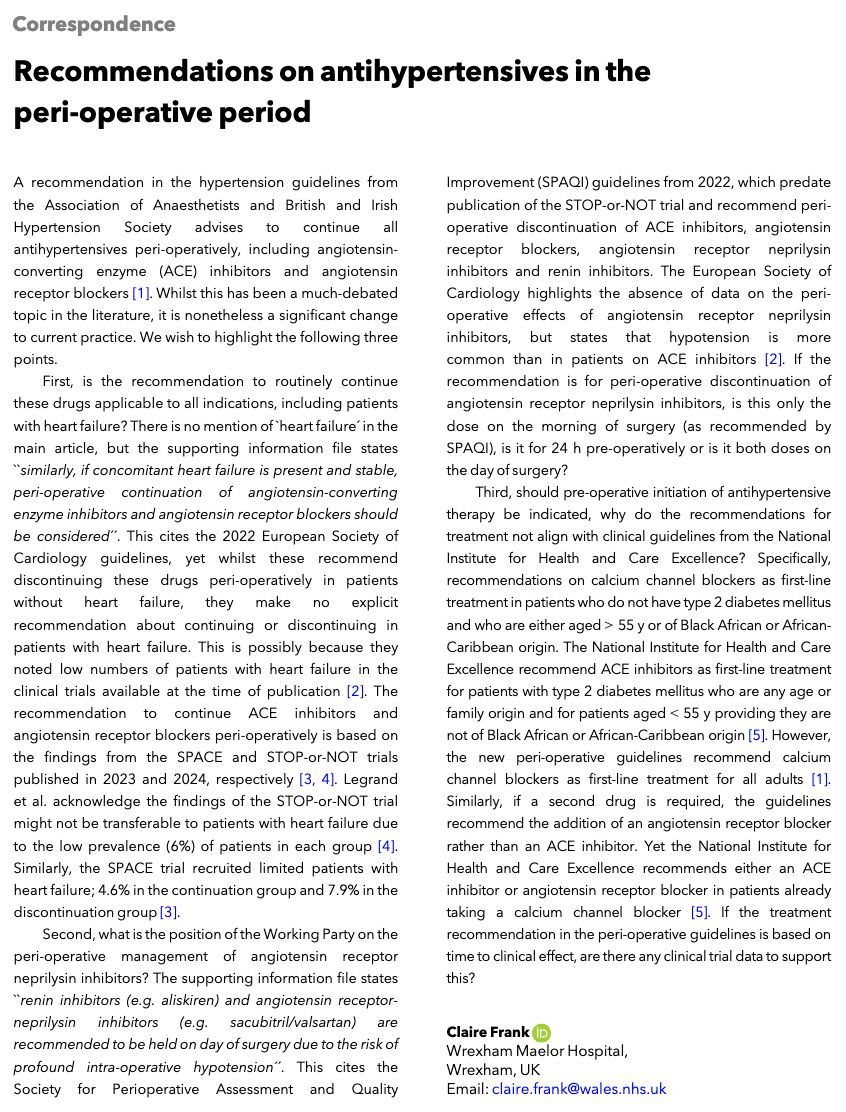
Recommendations on antihypertensives in the peri-operative period
Here are some questions to the authors of the hypertension guidelines from the Association of Anaesthetists and British and Irish Hypertension Society!
#anaesthesia#MedTwitter
https://t.co/ot0rROe7tZ
Our Journal Watch feature has been quiet for a couple of weeks, due to CCR Down Under.
Normal service resumes!
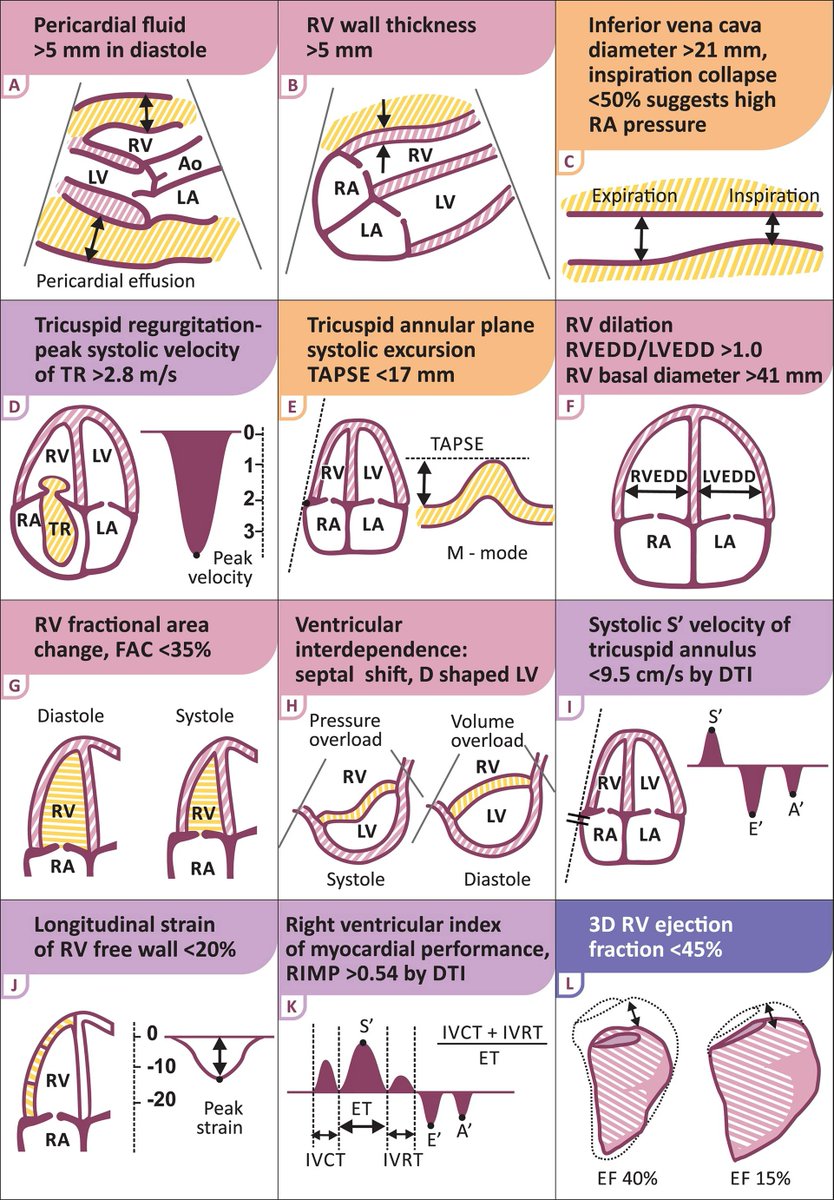
Acute Right Ventricular Failure in the Medical ICU
CCR Journal Watch
https://t.co/Sp06oA6IDG
🆕 A new @ASALifeline practice guideline addresses perioperative pain management using local and regional anesthesia for cardiothoracic, mastectomy, and abdominal surgery in adult and children. Read the latest evidence-based recommendations: https://t.co/zRs77nHYMn
Guidelines for the administration of sodium bicarbonate (7.5%) in various medical scenarios, detailing dosage, method, and important precautions.
Do not mix with calcium, catecholamines, or NS; use caution in low ionized calcium, fluid overload, CHF, and early phase DKA (if pH < 6.9).
https://t.co/wWiFH2FbbD
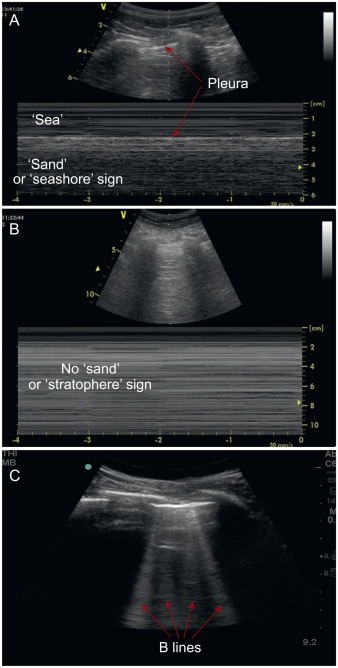
🖼️ The “seashore sign” vs “stratosphere sign” and B-lines can help distinguish:
• pneumothorax
• interstitial syndromes (pulmonary oedema, pneumonitis, fibrosis)
POCUS becomes a bedside game-changer for pregnant patients with dyspnoea. 🔍🫁
Read more: https://t.co/mxQP57qVCQ
Arterial lines: is the pulse still strong?
Check out this proposed arterial line care bundle!
Does this align with best practice at your institution?
#anaesthesia#ICU#MedTwitter
https://t.co/wnhmTwpmW8
Labour #epiduralanalgesia inhibits cholinergic sympathetic outflow to 90% of the body surface, providing a potential contributing factor to epidural-related #maternalhyperthermia
https://t.co/NXR7qmefcH
There is no formal, internationally recognised definition of ‘high’ neuraxial blockade.
Symptoms:
• cardiovascular instability
• weakness of the upper limbs
• respiratory compromise
• collapse
#anaesthesia#MedTwitter
https://t.co/pxUu0lXWoH
AHA 2025 CPR ECC Guidelines:Overview
https://t.co/VI5SoMLWJB
The 2025 AHA guidelines introduce significant practice changes to address persistently low cardiac arrest survival rates. With only 10.5% of out-of-hospital cardiac arrest (OHCA) patients surviving to discharge, urgent action is required. These updates emphasize that poor outcomes typically stem from educational gaps or implementation failures rather than guideline quality itself, according to the Utstein Formula.