Remember that flashback scene in The Handmaid's Tale when all of the women suddenly don't have access to their money and are summarily fired? It feels insane, and Now understand that trans people in Kansas just woke up and no longer have their ID. No way to drive, no way to vote, no way to prove who they are. That happening in America should feel just as insane.
🚨BREAKING: A federal judge in Massachusetts Thursday blocked federal agencies from implementing President Donald Trump’s sweeping executive order attacking mail voting before the midterm elections. https://t.co/EZdToFhg0I
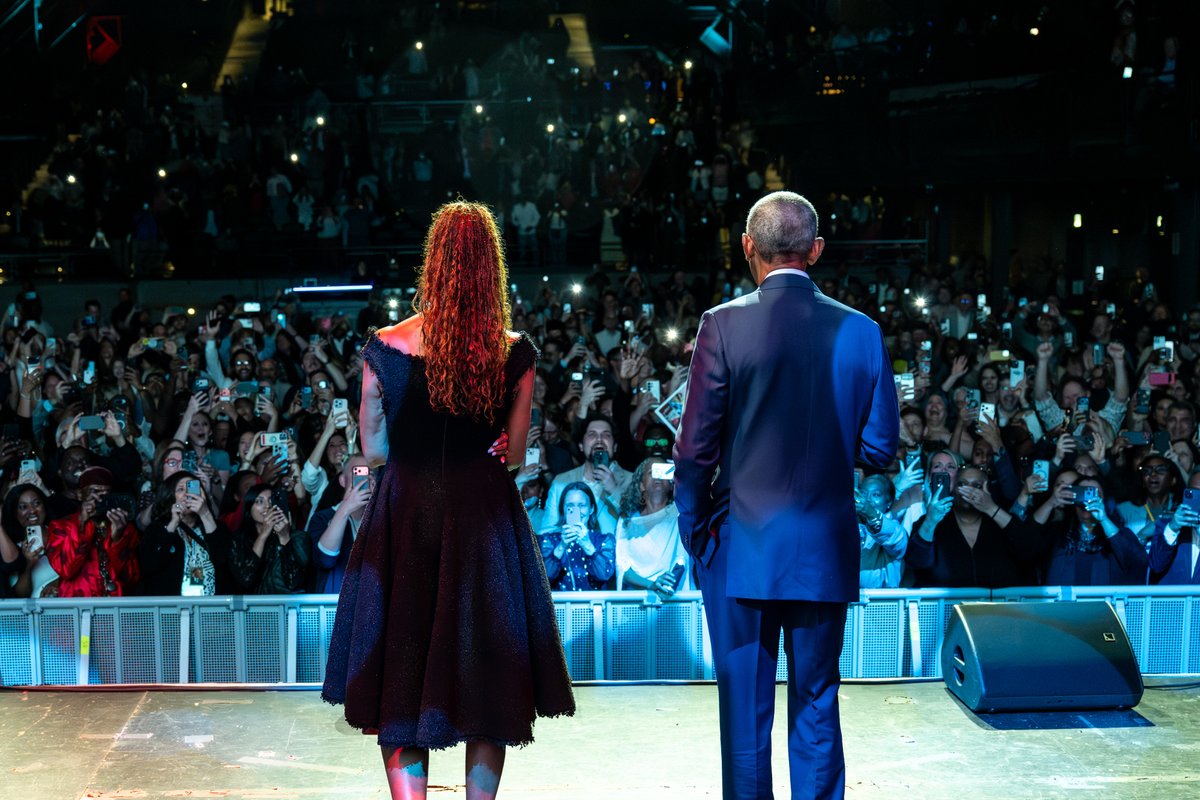
Barack and I never did anything alone. Through two national campaigns, eight years in the White House, and in all the years since, we had an incredible team backing us up and pushing us forward.
It was such a joy to be back together with so many of the alumni who’ve supported us over the years. We’ll forever be grateful for their work, and our country is better off thanks to their service. We love you. 💗
To George and Laura, Bill and Hillary — we're grateful for your friendship, counsel, and devotion to this country. And to Joe and Jill, thank you for being on this journey with us.
@Fair_and_Biased@martinamcbride I’ll make this very simple for you: Donald Trump is a convicted rapist and abuser. Martina McBride is a survivor of domestic violence and doesn’t want to perform for an abuser of women. Hope that helps.
Conan O'Brien used his Harvard University commencement speech to argue that humility and the human connection matter far more than any diploma.
"I always recognize the enormous role of luck in my life. Refusing to see how luck has played a role in anyone's success is simply ignorant. Many people are happy to mistake a lucky poker hand for their own brilliance, and fighting that human instinct has kept me sane.
"I honestly believe that community, spontaneity, and a real commitment to humility has helped me build a rich life that means much more to me than any diploma. And believe me, I'm not saying the goal is to renounce accomplishments, but rather to metabolize them. If you carry your victories lightly, other qualities –- kindness, originality, courage, humor, and humanity –- have room to emerge.
"Maybe the greatest lessons I've learned along these lines have been through my 24 travel shows. I have degraded myself in Cuba, Ghana, Korea, Armenia, half of Europe, Argentina, Thailand, Mexico, and Greenland, where I visited a real estate office and tried to buy the country. When I travel to another land, every quality I have discussed -- community, adaptation, and a sincerely humble approach -- are all necessary. When you don't speak the language, no one truly cares where you went to college, and you have no choice but to make friends.
"It's on these travels that I learned a great lesson: let yourself be bad at things. I have been a bad dancer in every country I have visited. But the people laugh because it turns out everyone everywhere is related to at least one terrible dancer. For me, humility on these trips can easily lead to humiliation, which is also a useful tool.
"Three weeks ago, I visited Amsterdam, dressed up as Van Gogh, and forced my way into the Van Gogh Museum, where I started loudly demanding a cut of the merchandising because I made no money during my lifetime. Guards forcibly ejected me. I was roundly mocked by patrons for my pathetic display. But I did see a lot of smiles. And not one person said, now that's a Harvard grad.
"In Tokyo, I met with a teacher of Japanese etiquette who volunteered I wasn't her type. And when I asked her why, she just said, 'face.' In Ghana, after accepting a royal invitation, I was kicked out of the Ashanti Palace by the Queen Mother, because her favorite soap opera was starting.
"I understand that I am preaching modesty and connection at a time when this is not in style. We are living through a period of extreme narcissism. Our current leadership in Washington believes that empathy is a weakness and that our nation stands supreme and alone. Add to that, everyone here today has a phone in their pocket that is algorithmically programmed to celebrate you and you alone by making you the protein-maxing hero of your own special journey.
"Much has been written about how isolated and siloed we've become, but for me, the antidote is quite simple. By de-emphasizing what makes us special — in your case, a prized degree — we can really find one another, not as an exercise in virtue, but as a path towards greater laughter, love, and real growth."
Let me trace the timeline here because nobody's connecting it.
Step 1: Scrape the entire internet. Every book, every article, every conversation, every piece of art, every forum post. Do it without asking. Do it without paying.
Step 2: Train a model on all of it. Call it "artificial intelligence."
Step 3: Go to BlackRock's Infrastructure Summit and announce: "We see a future where intelligence is a utility, like electricity or water, and people buy it from us on a meter."
Step 3 is where you sell people's own knowledge back to them. On a meter.
They took the collective output of human thought, compressed it into a model, and now they want to charge you by the token to access a version of what you and everyone you know already created.
One Reddit user put it perfectly: "They stole all this data from us, the people, our life's work, creativity, art, by devouring the internet and blowing through all copyright laws. Now they want to sell it back to us in the form of a utility."
Imagine if someone photocopied every book in the public library, burned the library down, and then opened a subscription service for the copies.
That's the metered intelligence business model.
And they're pitching it to infrastructure investors as though they invented water.
When a federal agency tasked with protecting all Americans decides to mandate a specific religious worldview, it ceases to protect democracy and begins to threaten it.
🚨 Georgia Power is forcing a family off their farm with eminent domain for a Data Center
“I'm fighting for survival of my cattle farm. I'm here because a massive data center was approved just a couple of miles from my land — and I'm being hounded by Georgia Power for an easement to build transmission lines through my property for the data center”
“I'm a local farmer, not an industrial developer. These 500-kV lines aren't for me. They are for the data centers that the boards and surrounding counties continue to approve. I have mail from lawyers stacking up on my kitchen table wanting to take my case because they know my land is being targeted for eminent domain — These easements are permanent.
They affect my ability to graze my cattle, they lower my property value, and they destroy the rural character of this county forever. This board makes decisions to approve these massive, massive projects, but it's residents like me, young people trying to build a life here, who pay the price.
You're voting to turn our farms into a network of high-voltage wires and noisy industrial buildings.
I'm asking you to realize the real-world impacts of your votes. Every time you say yes to a data center, you're saying no to a local farmer. We aren't just numbers on a map. We are the future of the county, and right now you're making that future impossible.“
This data center project affects over 330 private properties. Georgia Power says it will negotiate purchases and easements and use eminent domain
Georgia Power claims its to strengthen the grid for the growing energy demand in Georgia (due to many new data centers)
The lines are widely linked to Project Sail
This isn’t a small operation. Project Sail is a $17 billion hyperscale data center campus by Prologis, Atlas that includes 9 massive buildings totaling up to 4.34 million square feet on 829 acres. It will demand hundreds of megawatts of continuous power equivalent to what a small city uses
We cannon allow data centers to take priority over farmers
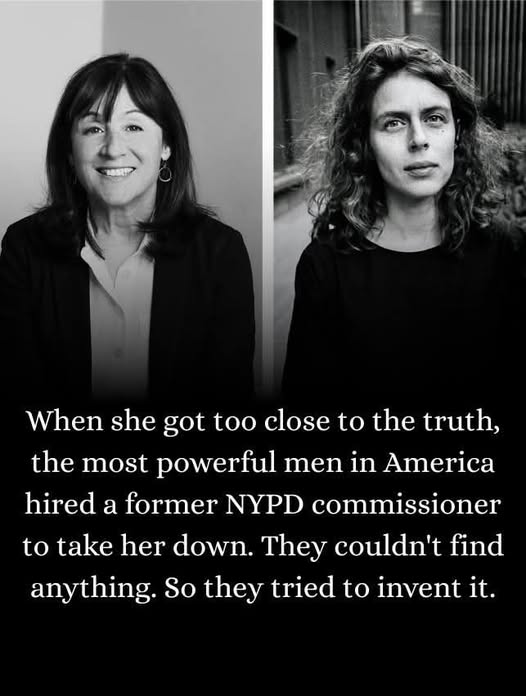
In August 2010, Jane Mayer published a long article in The New Yorker called "Covert Operations."
It introduced most Americans, for the first time, to two brothers — Charles and David Koch — and the quiet network of foundations, think tanks, and political organizations they had spent decades building to reshape American politics from behind the scenes.
The article was meticulously sourced. It named names. It followed the money.
A few months later, Mayer started getting strange messages.
A blogger asked her how she felt about the private investigator who was looking into her. She thought it was a joke. Then a former reporter told her, at a Christmas party, that he'd been approached and asked to help dig up damaging information on a journalist who had written something two billionaires didn't like.
Then, in January 2011, her editor at The New Yorker, David Remnick, forwarded her a query from the New York Post. The Post had been handed material claiming Mayer was a serial plagiarist. The "evidence" was being shopped to multiple outlets at once.
It wasn't true. The reporters she had supposedly stolen from confirmed she had cited them properly or asked permission. The Post dropped the story. But the campaign had been real — and Mayer eventually traced it to a firm called Vigilant Resources International, run by Howard Safir, the former NYPD commissioner. The firm had been hired, she would later document, by people connected to Koch business interests.
The dirt didn't exist. So someone had tried to manufacture it.
That moment told Mayer something about her own work that she has never forgotten.
She wasn't being attacked because her reporting was sloppy. She was being attacked because it was accurate.
Mayer has spent more than three decades doing this. Before Dark Money, she wrote The Dark Side, the definitive account of how the United States adopted torture as policy after September 11. After Dark Money, she investigated dark money behind Supreme Court confirmations, the network funding election-denial campaigns, and the secret political work of a Supreme Court justice's spouse.
Each story has followed the same arc.
Reporting comes out. Power responds — not by disputing the facts, but by going after the reporter. Lawyers get involved. Personal information gets leaked. Old colleagues get phone calls. The accusation is always the same in spirit, even when the words change: she went too far.
But "too far" has never meant inaccurate. It has meant inconvenient.
That's the quiet education buried in Jane Mayer's career: powerful institutions rarely correct the record. They reach for the messenger. They make the cost of telling the truth so high that the next person thinks twice.
It only works if it works.
Mayer is still reporting. The stories are still landing.
The lines, it turns out, were never where we were told they were.
Someone just had to be willing to walk past them, and write down what was on the other side.
Trump is negotiating to settle his lawsuit against his own IRS, and one of the remedies being floated (along with almost 2 billion dollars) is the IRS dropping all audits of Trump, his family, and his businesses.
Just absolutely staggering corruption.
"Taxpayers are footing a whopping $1 billion bill for Trump's ballroom. Your budget cuts the National Park Service by $1 billion. If you put this $1 billion towards our national parks instead of Trump's ballroom, that would benefit every single American."
Pete Buttigieg: "My second greatest fear for my party is if we win in November that we forget that a return to the prior status quo is not the right answer either. What we need is a series of clean bills, legislative projects that will deliver higher wages, that will deliver universal health insurance coverage, that will deliver things like paid family leave."