@FrankBr05713205 Great advice. That fixes it sometimes. Also if VW make sure you have the radio code first. Also some super expensive cars shut down if battery disconnected then use a battery tender tiny 6 volt battery to the cigarette lighter.
Here is a ancient "mechanics secret" you might be able to use.
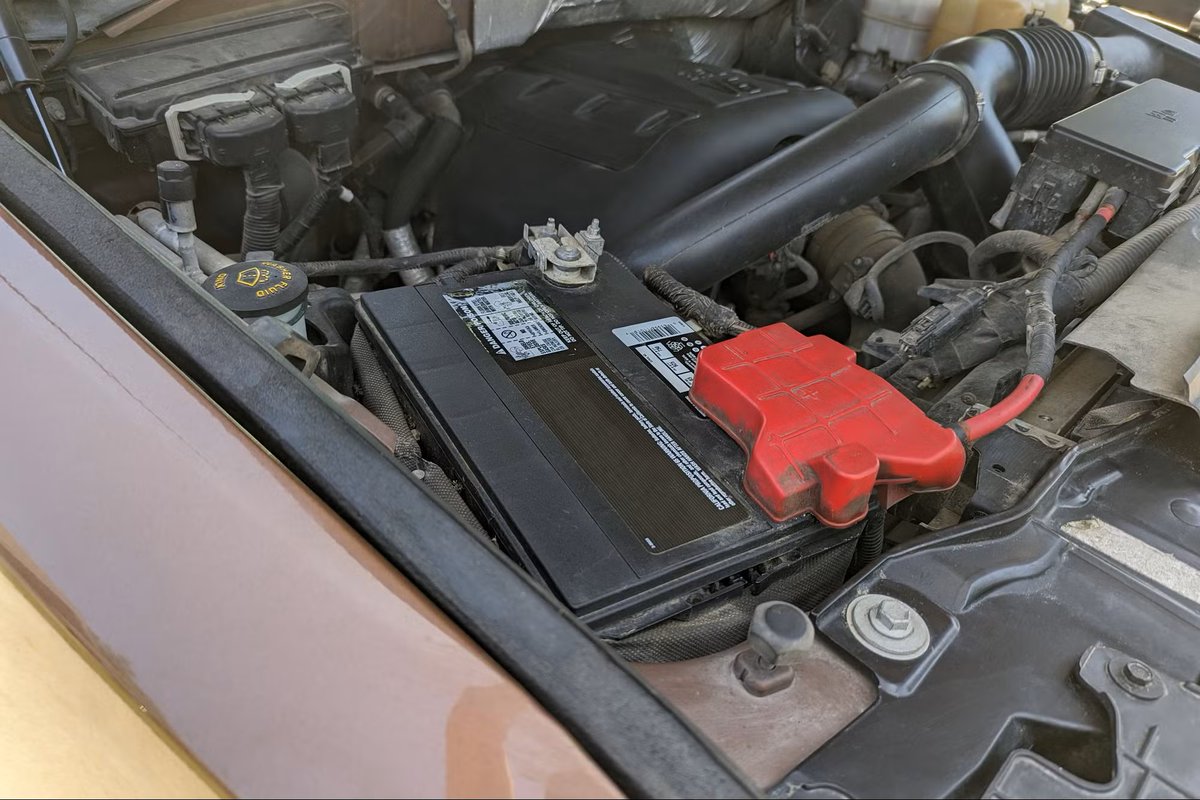
Todays cars are a computer on wheels and sometimes just like your home PC, they simply need "rebooted to fix many issues" This can be done by simply removing the negative battery terminal for about 15 to 30 minutes.
Yes indeed modern car computers sometimes need to be rebooted, especially infotainment and screen systems that can freeze or glitch just like consumer electronics do from time to time.
Unresponsive touchscreens, Bluetooth pairing errors, or glitches in Apple CarPlay and Android Auto often clear after a simple main power cycle.
Crazy behavior from power windows, automatic door locks, or interior lights sometimes resolves themselves when the body control module (BCM) reboots.
Even when replacing a dirty air filter or cleaning a throttle body can cause the engine to idle poorly while using old fuel-trim data. Resetting the battery can force the computer (ECM) to relearn the new airflow parameter's immediately.
The Check Engine Light or sensor alert sometimes triggered by a temporary voltage spike or a loose gas cap may turn off once the computer memory resets.
As a former dealership technician I could not begin to count how many times people were charged $150 or more, when all the technician did was disconnect a battery cable and let the car sit for 30 minutes before reconnecting it.
But before disconnecting a battery on a modern vehicle, keep a few possible drawbacks in mind.
Radio presets, seat memory, clock settings, and navigation data will likely be wiped clean and need to be reset.
Your transmission shift points and engine idle (engine may stall for a few restarts) might feel slightly sluggish for the first 20 to 50 miles while the computer recalibrates.
Clearing the ECU resets your car's readiness monitors. If you have a state emissions inspection soon in your area, your vehicle may fail until you drive it enough miles for those monitors to run again.
But this simple procedure also could save you some time and money too. Just thought you should know.
This is just one compelling story of what happens to unwanted turbine blades - which are the size of 747 aircraft. They are not really green after all, nor are they environmentally friendly.
As this video shows, these blades have ended up in an abandoned, illegal dump. With an estimated 1.5 million turbines built worldwide by 2026, and thousands more being built and installed, there are few solutions to this quandary of what to do with them.
Around 4,000 wind turbine blades were originally taken to Sweetwater in Texas, where they were supposed to be recycled, rather than buried in landfill.
Starting around 2017, wind energy companies (most notably General Electric) paid Global Fiberglass Solutions millions of dollars to haul away retired blades and break them down. The plan was to grind the fiberglass composites into pellets and filler to manufacture new industrial products.
Recycling fiberglass blades is mechanically difficult, expensive, and the company lacked commercial buyers for the resulting filler. According to state investigators, Global Fiberglass Solutions failed to process the material, furloughed thenworkers, and effectively abandoned its Sweetwater facilities around 2020 - while leaving over 3,000 blades stacked across two unpermitted sites.
Because the company failed to recycle the required annual threshold of materials, the Texas Commission on Environmental Quality classified the stockpiles as illegal industrial solid waste.
Following a lawsuit by the Texas Attorney General's Office in February 2026, a temporary injunction announced in July banned new blade shipments to Sweetwater and ordered Global Fiberglass Solutions to remove and properly dispose of the existing blades.
https://t.co/e8irASxgrz
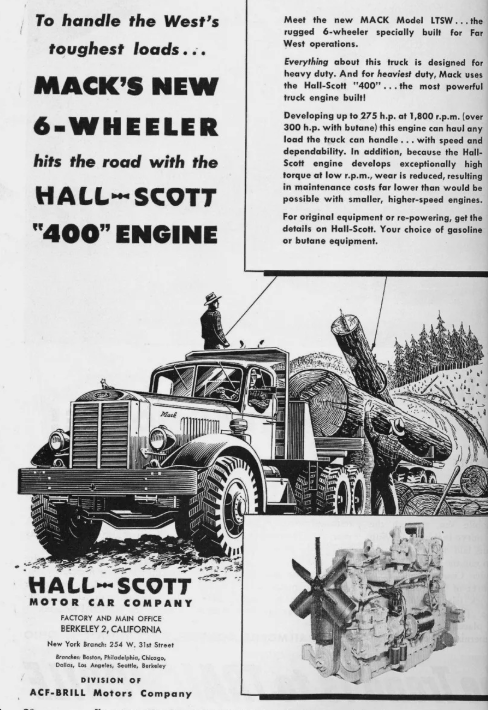
Since you boys called me out on the Twin Six, let’s talk about the engine that beat it. Hall-Scott.
Two young guys from California, Elbert Hall and Bert Scott, started the company in Berkeley in 1910. They began with gas-powered railroad cars and then got into airplane engines. In World War I, Hall helped design the famous Liberty aircraft engine with a Packard engineer, though Packard got most of the credit.
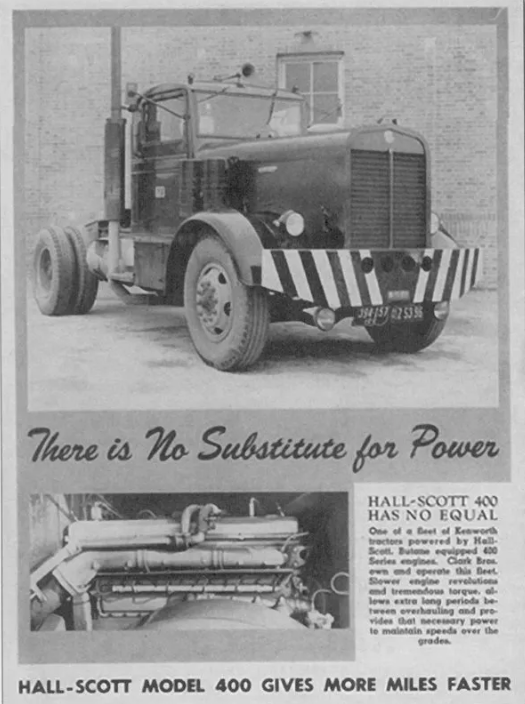
Hall later designed a big marine engine called the Invader. That engine turned into the Hall-Scott 400 truck engine, a gas six of about 1,091 cubic inches, with an overhead cam and hemi heads. It made around 300 horse and over 900 lb-ft back when most diesels couldn’t make half that. Mack’s ads called it the most powerful truck engine built. Kenworth put it in fire trucks. During World War II, the Army put the 440 version in the M26 Dragon Wagon tank retriever.
Then diesel took over. A competitor bought Hall-Scott in 1958, and the last engine they designed was built around 1967.
The Twin Six was big. The Hall-Scott was just bigger. 😏🚛
@Kahn_noon@OldBikerTrucker https://t.co/KSlmNlbIuF
simpler but better in cylinder fluid control less pumping losses and compression ratio varied and less emissions more power more efficient.
@Kahn_noon@OldBikerTrucker https://t.co/MJ2Vs3I5Uz
actually, much simpler once you see it. 80% of the engine parts is in the valvetrain which this eliminates entirely.