With math essentially being delegated to OpenAI, here's what I predict for economics and the social sciences more generally:
✅The top tier of research will just become better and it will be normal human-led research where AI is used for scale (e.g. conducting qualitative interviews with relevant populations, running behavioral interventions in the field, analyzing massive text data, etc.)
✅ Field experiments will rise in value and generally making "connections" with firms and being able to run stuff (potentially testing AI pipelines) will be in high demand
✅ Research with administrative data will become even more valuable, but the benefits might be concentrated among some prolific authors who are allowed by the government agencies to use local models to analyze the data at scale. PhD students can probably forget about it
✅Economic history will have a very exciting boom and there will be an enormous race and big rewards for digitizing archives as a source to both identify new research strategies and document new descriptive facts.
✅Review and verification systems will become massively improved with AI assistance and it will become standard practice to do a 360 review of the paper + code + data at the *submission* stage.
⚠️Research that in principle can already be almost completely outsourced to the AI (download and analyze public data, run simple survey experiments, write theory models) is in for a big shock. This would be very bad from the perspective of researchers who depend on this "bread and butter" research, but I think this type of work will just be outsourced to public agencies who can answer their own questions without the need for "peer-reviewed" research.
Dear followers
This is a truly brilliant article by Henry Farrell. Not because it defends me against the Economist (I have moved on). It’s the way Farrell frames and analyzes the issues surrounding technooptimism and AI. The Acemoglu Wars Are All About AI. https://t.co/gEjCxjHrza
Thanks big big time to @upatras & @econ_upatras for the great honor. I view it as recognition of all young Greek economists, mainly working abroad, and recent work on #economics quantitative history. If in #Patras, join on Friday at noon.
https://t.co/tX7AF21iEc
REAR WINDOW was released 71 years ago today. One of the most enduring Alfred Hitchcock thrillers, and among the most popular films of James Stewart and Grace Kelly, the story of how it was made might give you the feeling you’re being watched…
1/40
Fertility is plummeting globally,
This matters because workforce size is a structural determinant of growth.
Weirdly, very few scholars are discussing this risk
Some even try to silence it.. 😳
I learnt so much from Jesus Fernandez Villaverde
https://t.co/h4kBWLrV7M
🚨Publication alert🚨 Thrilled to announce my paper with @BKleinTeeselink entitled "Origin of (A)symmetry: The Evolution of Out-Party Distrust in the United States" is now accepted and available at @The_JOP! 🎉 A thread in 5 songs from the album 'Origin of Symmetry' by Muse...
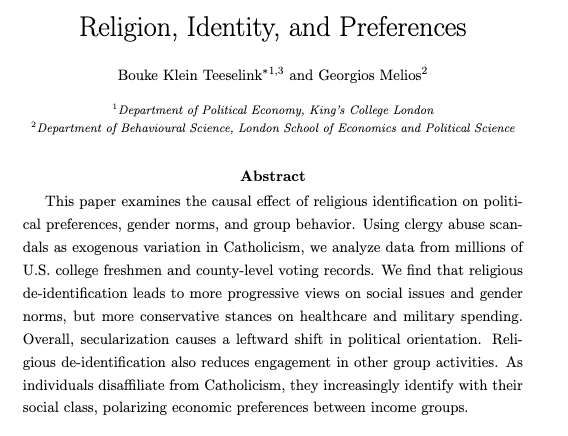
Have you seen The Spotlight (@SpotlightMovie) and wondered about the broader implications of these scandals? In our new WP 🚨, @BKleinTeeselink and I study how religiosity affects policy preferences and gender norms. Here's what we find: (a 🧵) #EconTwitter#polsciTwitter
Happy to share some preliminary results of our work with @logothetisv on electoral oppression, violence and elections in Greece at the @HO_LSE Greece at LSE blog https://t.co/sZiK7fuIBj.
📌In March Dr @GeorgeMelios presented his paper with @logothetisv . They argue that there was a strong link between Cold War tensions & the development of political institutions across countries involved.
Read the blog post 🔽
https://t.co/61ngfHhnOp
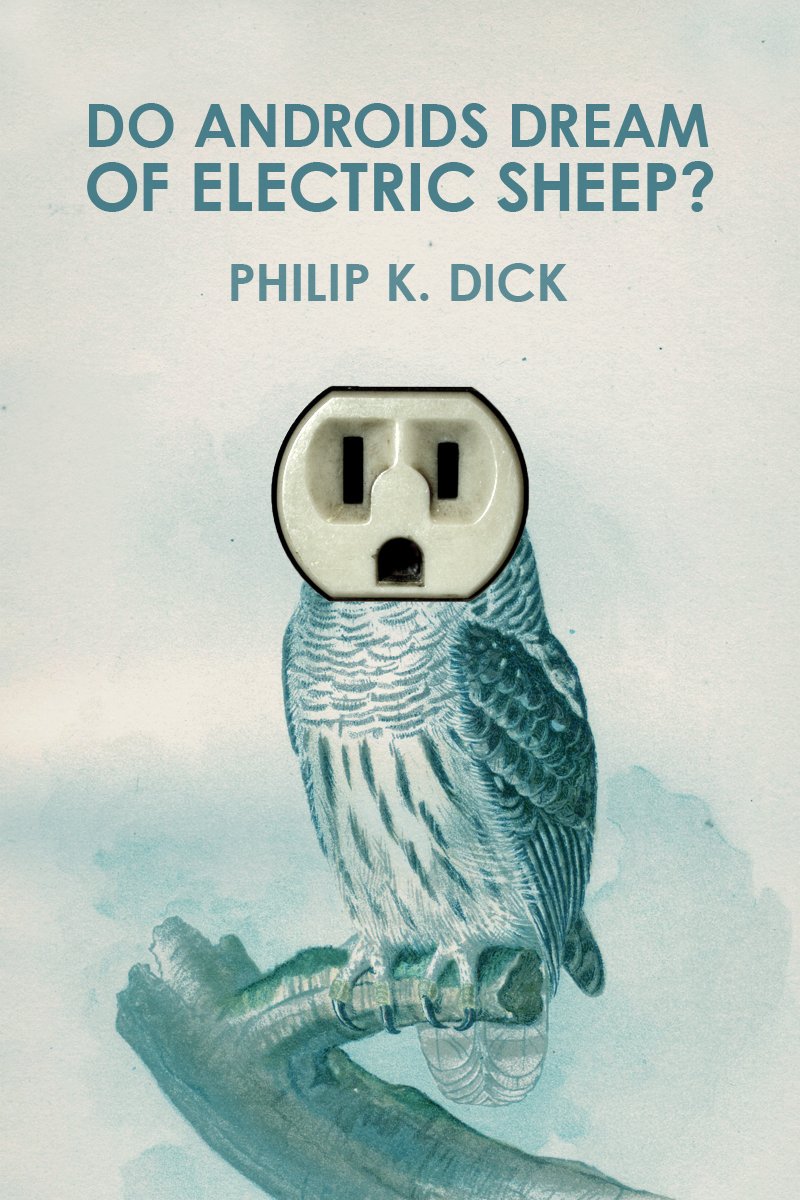
Today in pulp... Blade Runner! Let's look back at the classic 1982 movie and see how it compares to original novel.
"It's not an easy thing to meet your maker..."