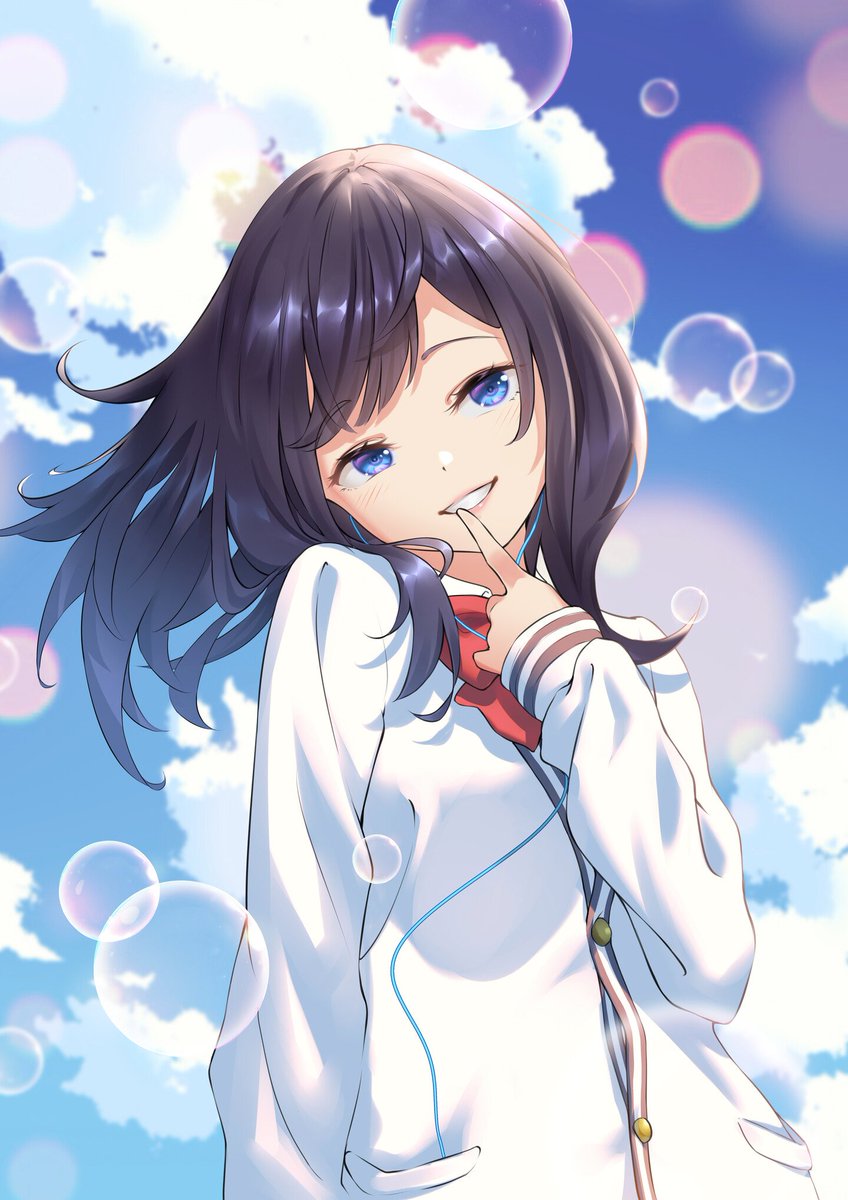
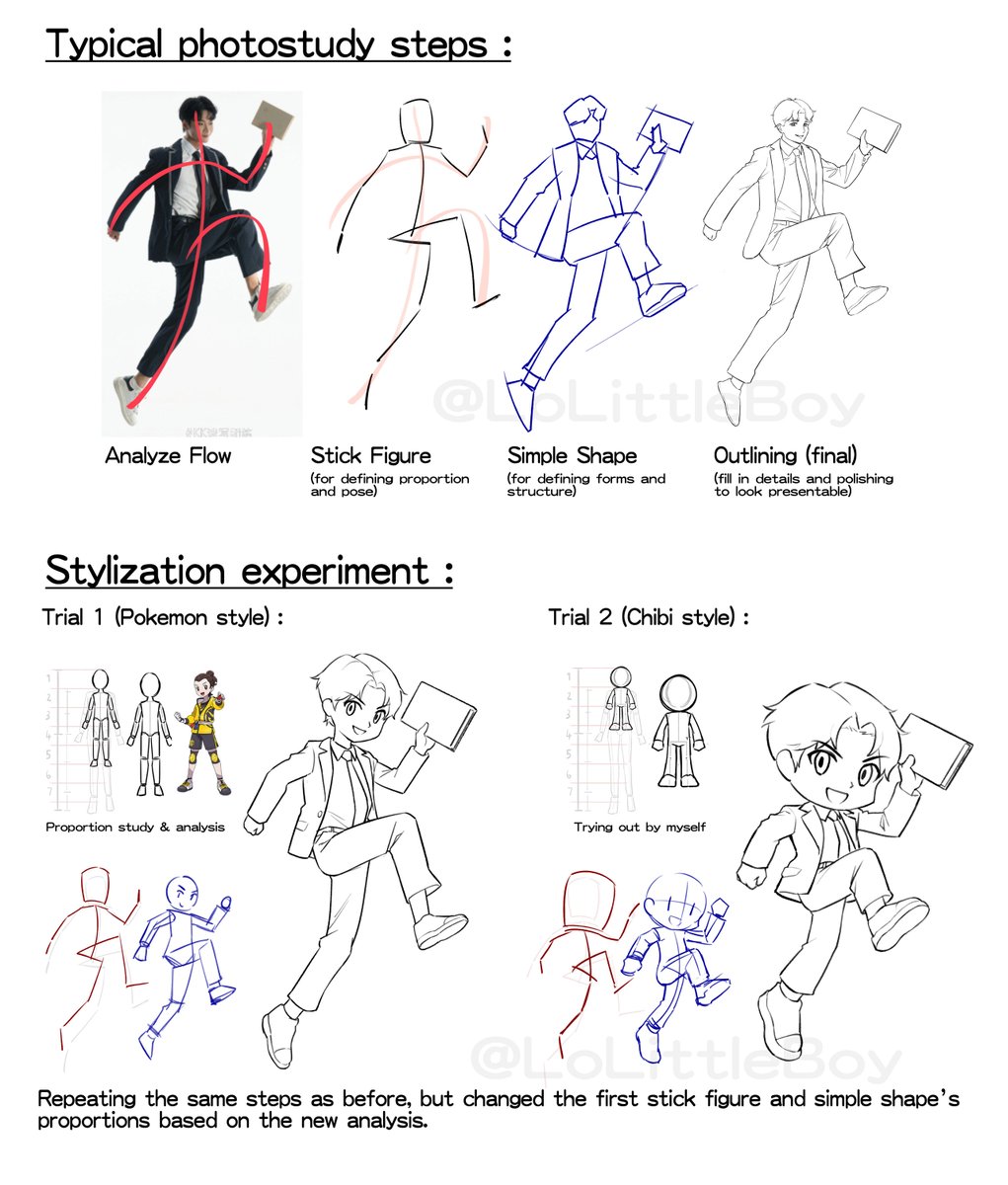
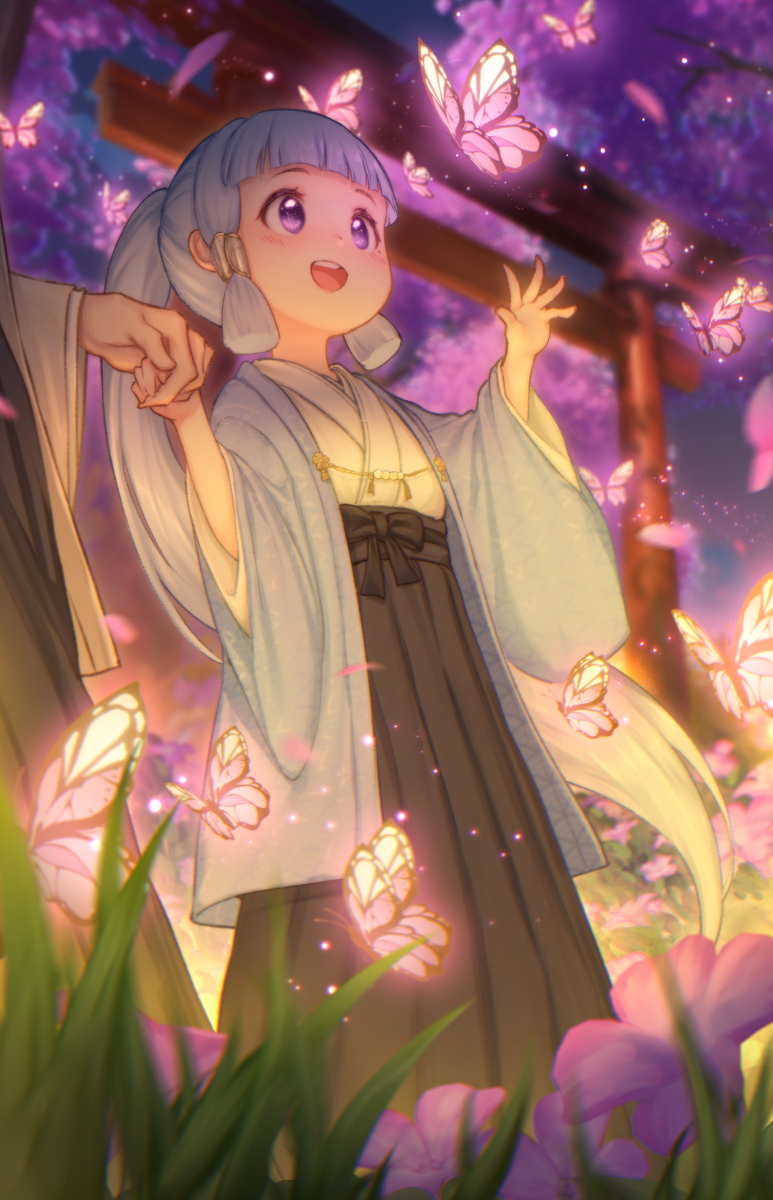
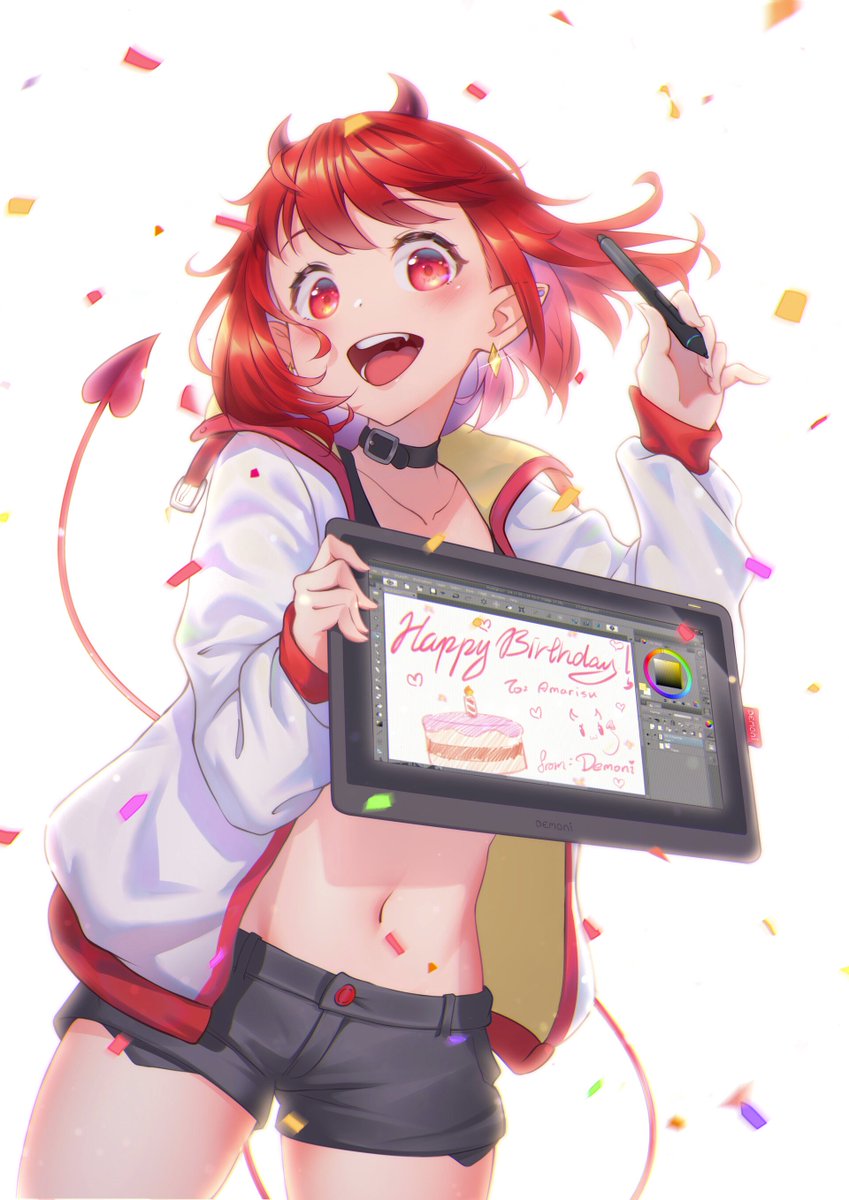
Thought of sharing my recent copy study and stylization experiments following Krenz's recent sketching course.
It's fun to try understanding what to preserve and exaggerate the original pose into different proportion styles.
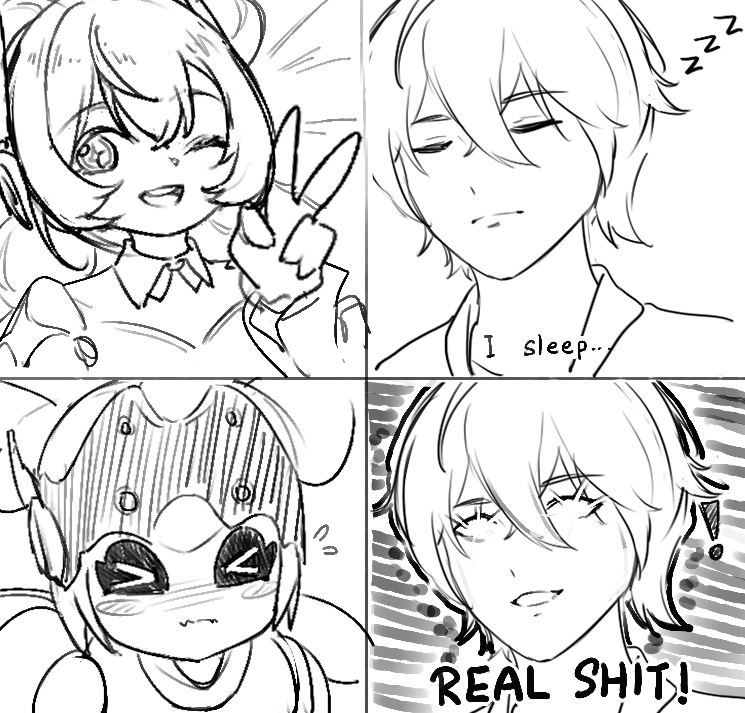
What'd you guys think? Do you prefer version 1 or 2?
Bringing the idea of deliberate practice into your sketching helps your drawing improve faster. We broke the sketching process into four parts, so you can see how to structure your own practice.
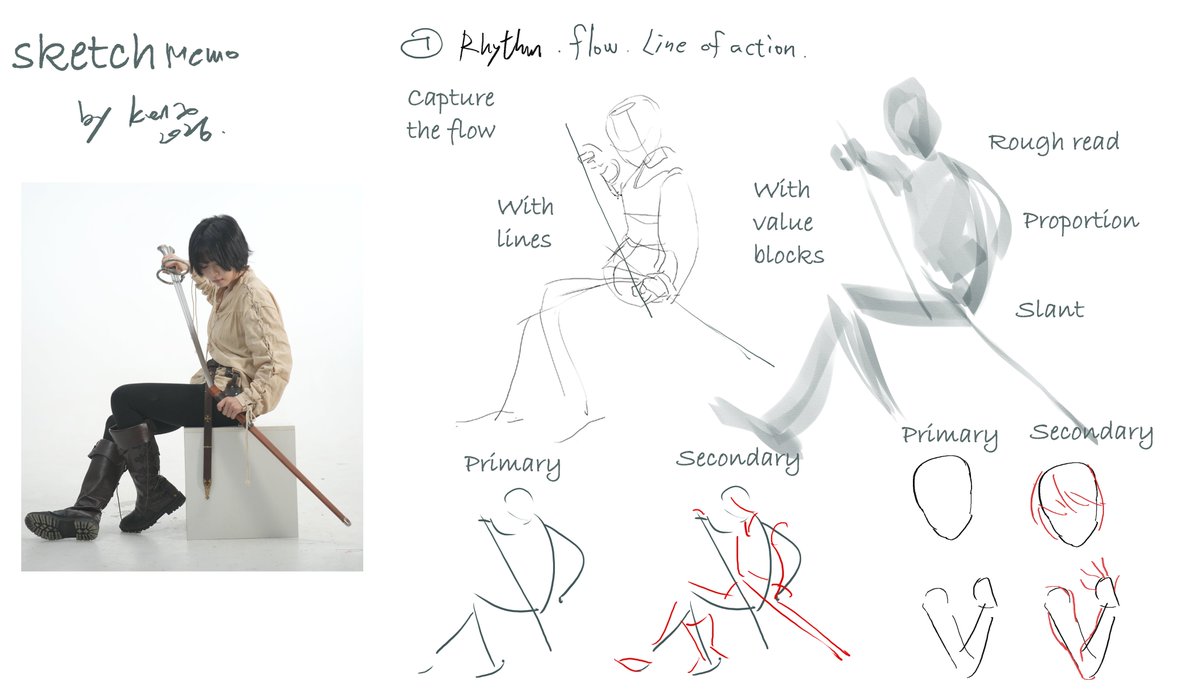
1. Flow
For a figure, the primany flow usually comes from the angles of the head, the torso, and the limbs. Cut across them with straight lines, or find one long curve that strings them together.
The secondary flow sits in the silhouette : outline of the hair strands , the flexing & relaxing muscle lines on the cylindrical arm lines created by the pointing fingers.
2. Shape
Lay shapes onto the flow.
There are plenty of handy ways to group them. Take the torso: the pillow, the simplified ribcage & pelvis, the geometric block. These are shapes earlier artists worked out and passed down because they hold up in practice.
From here the work splits in two directions.
One keeps the flow as it is and changes the proportions of the shape. You can push toward chibi proportions, or push toward something longer and leaner.
The other changes the flow itself. It can lean further. It can curve more. Overall, the changes should make the flow feels more exaggerated.
In practice, flow and shape usually happen at the same time.
3. Structure and volume
For a sketch at eye level, showing the direction each cylinder faces is usually enough.
But once you want to change the pose, or you hit an angle that is harder to express, you need the boxed construction underneath it. Rebuilding the same object at different angles is part of our own regular practice.
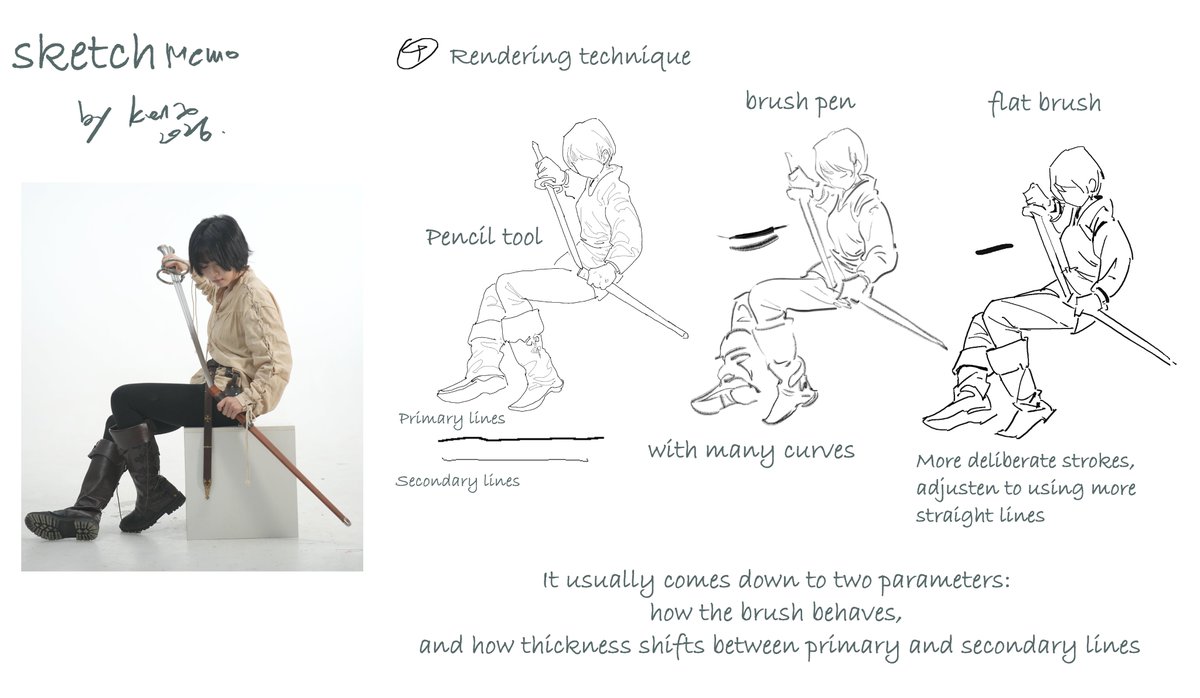
4. Mark-making
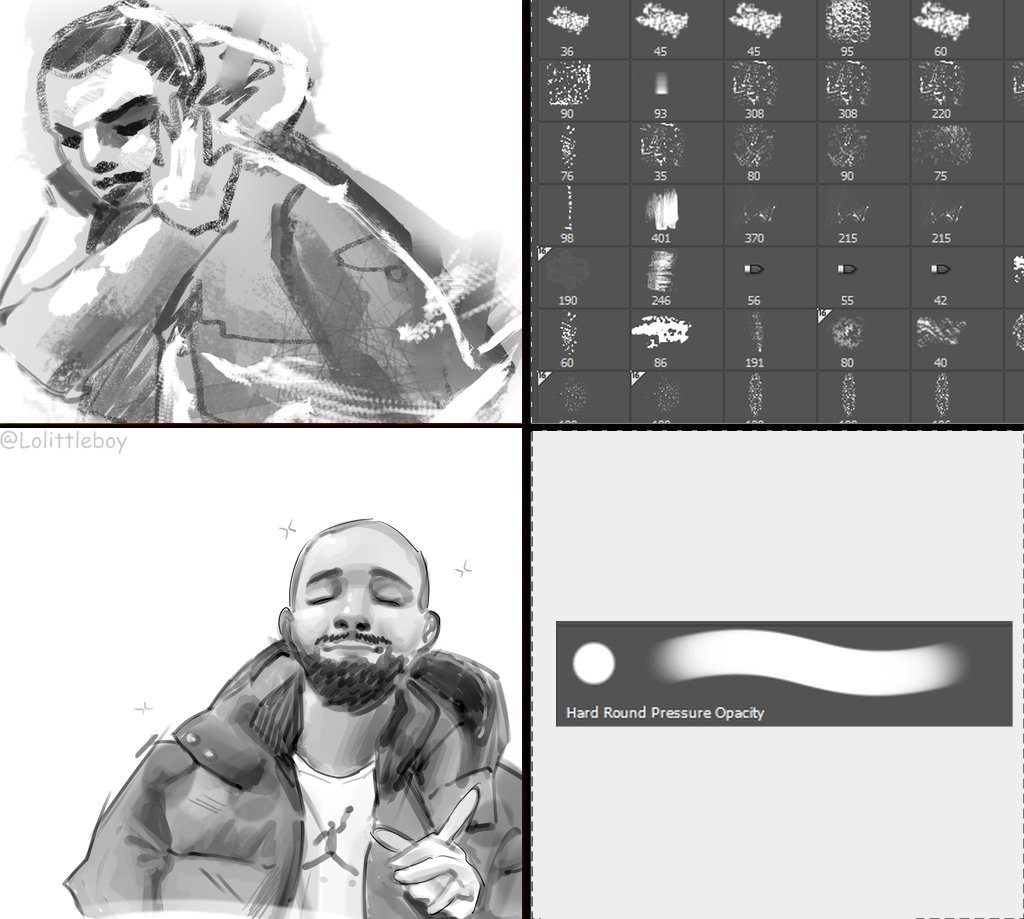
With the same brush, main and secondary lines at 10px and 7px look different from the same lines at 5px and 3px.
Keep the widths at 10px and 7px, then switch from a dry bristle brush to a flat brush, and the result changes again.
When you draw, deliberately shifting the ratio of curves to straight lines will change the character of the image. Go deeper and there is one more difference: whether you habitually pull long strokes or short ones.
Sorting these into categories is not the point.
The point is that it lets you see which type you are right now, and which type you want to become. Knowing where you stand is what tells you where to go next.
Here is an example. If curves make up around eighty percent of your lines today, but the style you actually want sits closer to sixty percent straight, then you know what the next stretch of practice is for: putting straight lines in on purpose.