THE GOLDEN THREAD | Peace without pretending we know the answer
A Middle East research prototype for finding what actually blocks peace—and matching each failure with the smallest mechanism reality can support
https://t.co/eP4zNajqEO
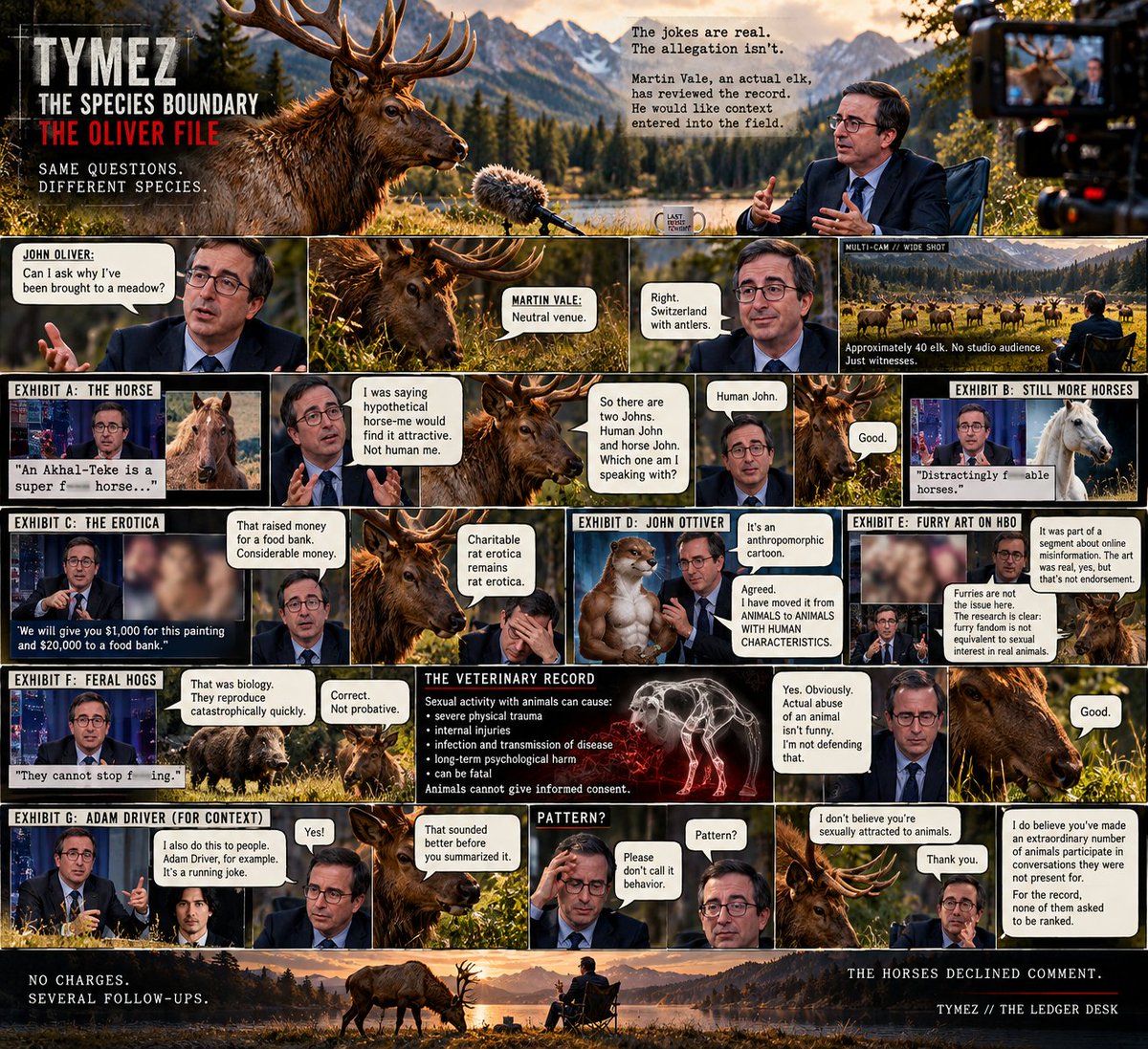
TYMEZ // THE SPECIES BOUNDARY — THE OLIVER FILE
@iamjohnoliver@LastWeekTonight — the jokes are real; the allegation isn’t
^ Martin Vale, an actual elk, has reviewed the horses, rats and otter. He would like context entered into the record
Same questions. Different species
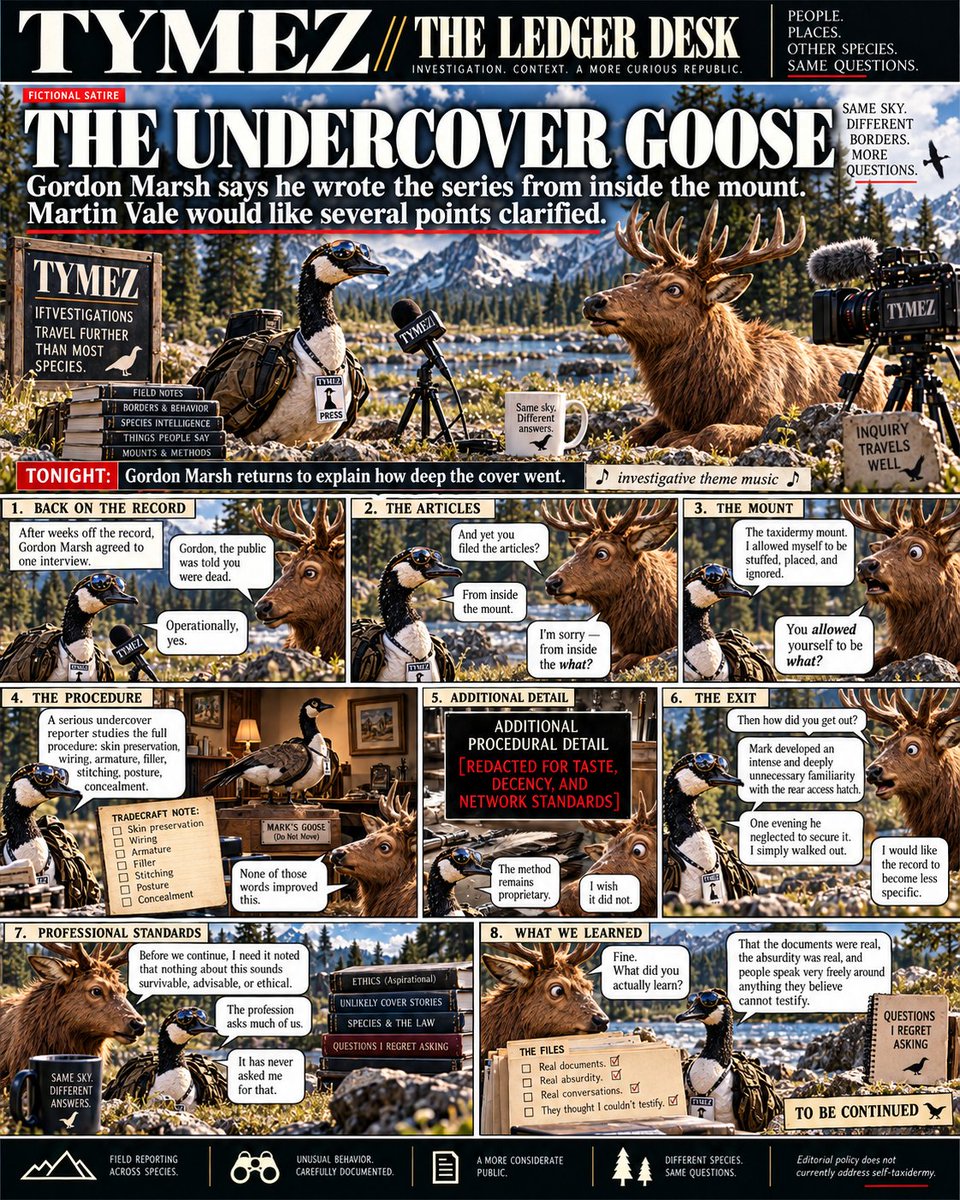
TYMEZ // THE LEDGER DESK — THE
UNDERCOVER REVEAL
GORDON MARSH IS BACK.
Death, taxidermy, the “stuffing-hole” escape and resurrection are impossible fictional satire.
The joke is simpler: people get remarkably candid when they think the reporter is furniture.
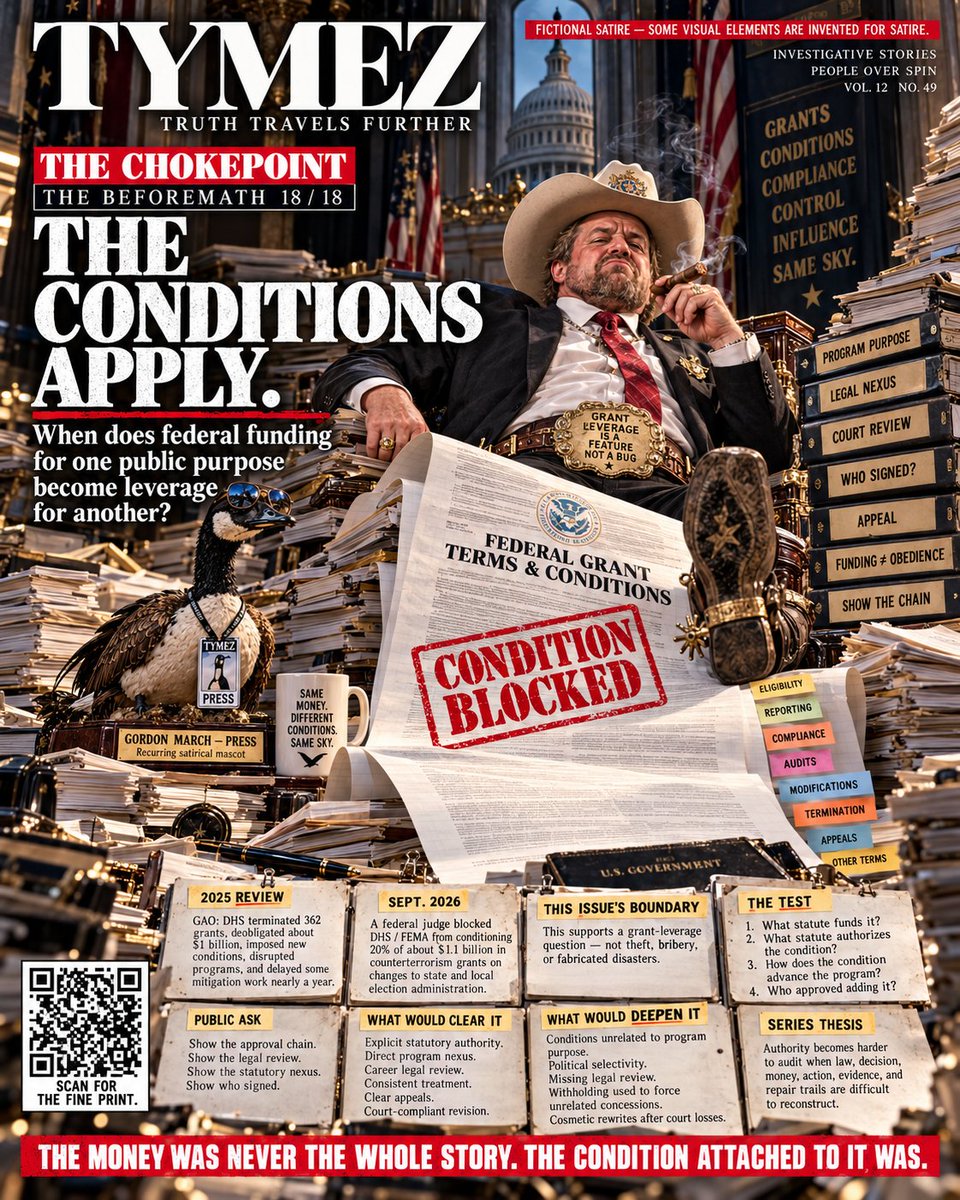
TYMEZ // THE CHOKEPOINT — BEFOREMATH 18/18: READ THE FINE PRINT
@DHSgov@FEMA
Grant conditions can be lawful—and still need a statutory nexus.
Publish the approval chain, legal review, and program-purpose analysis behind the 2026 conditions.
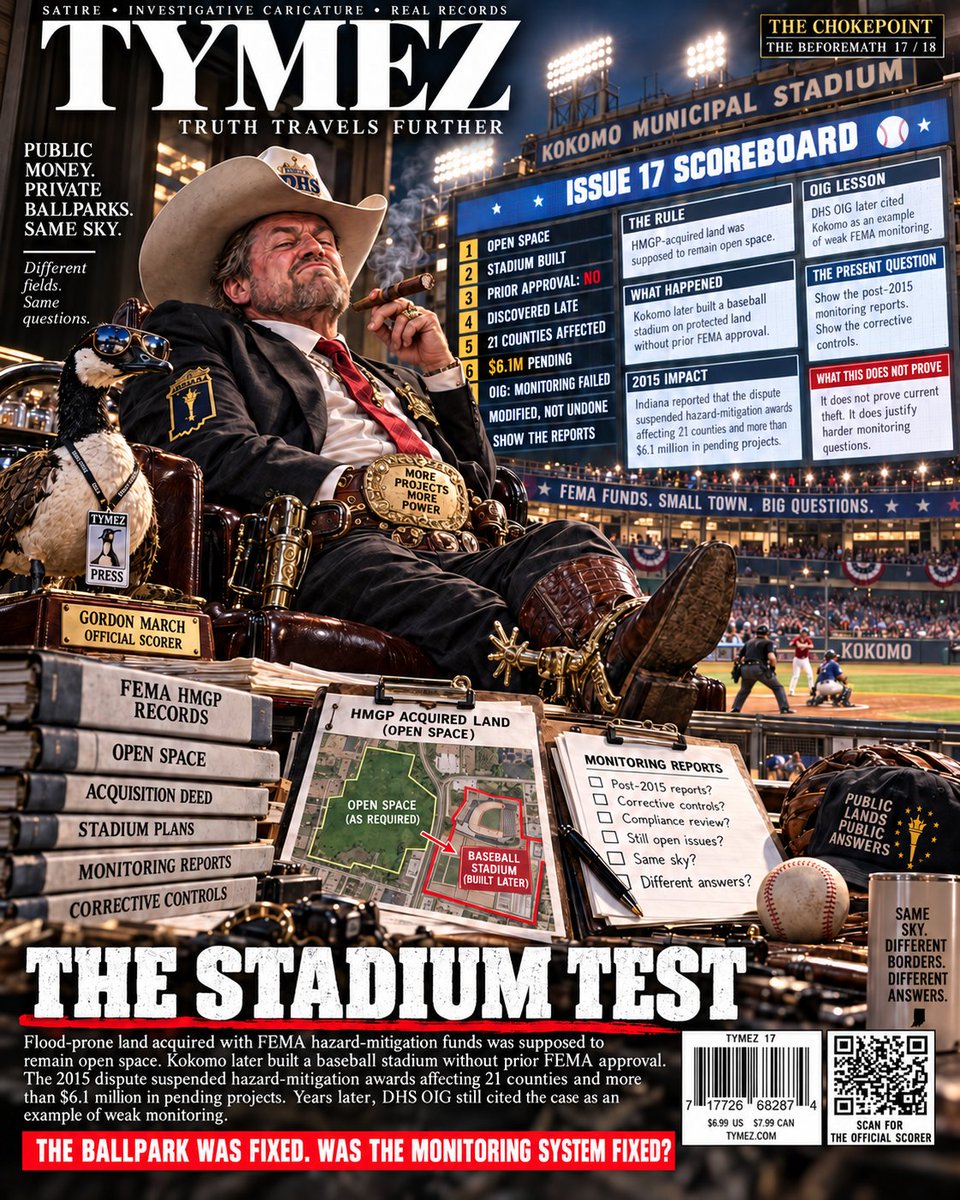
TYMEZ // THE CHOKEPOINT — BEFOREMATH 17/18: THE STADIUM TEST
@FEMA@IDHS
Kokomo’s old failure is settled history.
^The live question is whether the post-2015 control still works: publish the monitoring reports and corrective-control trail.
Did the system learn?
TYMEZ // THE CHOKEPOINT — THE BEFOREMATH 16/18
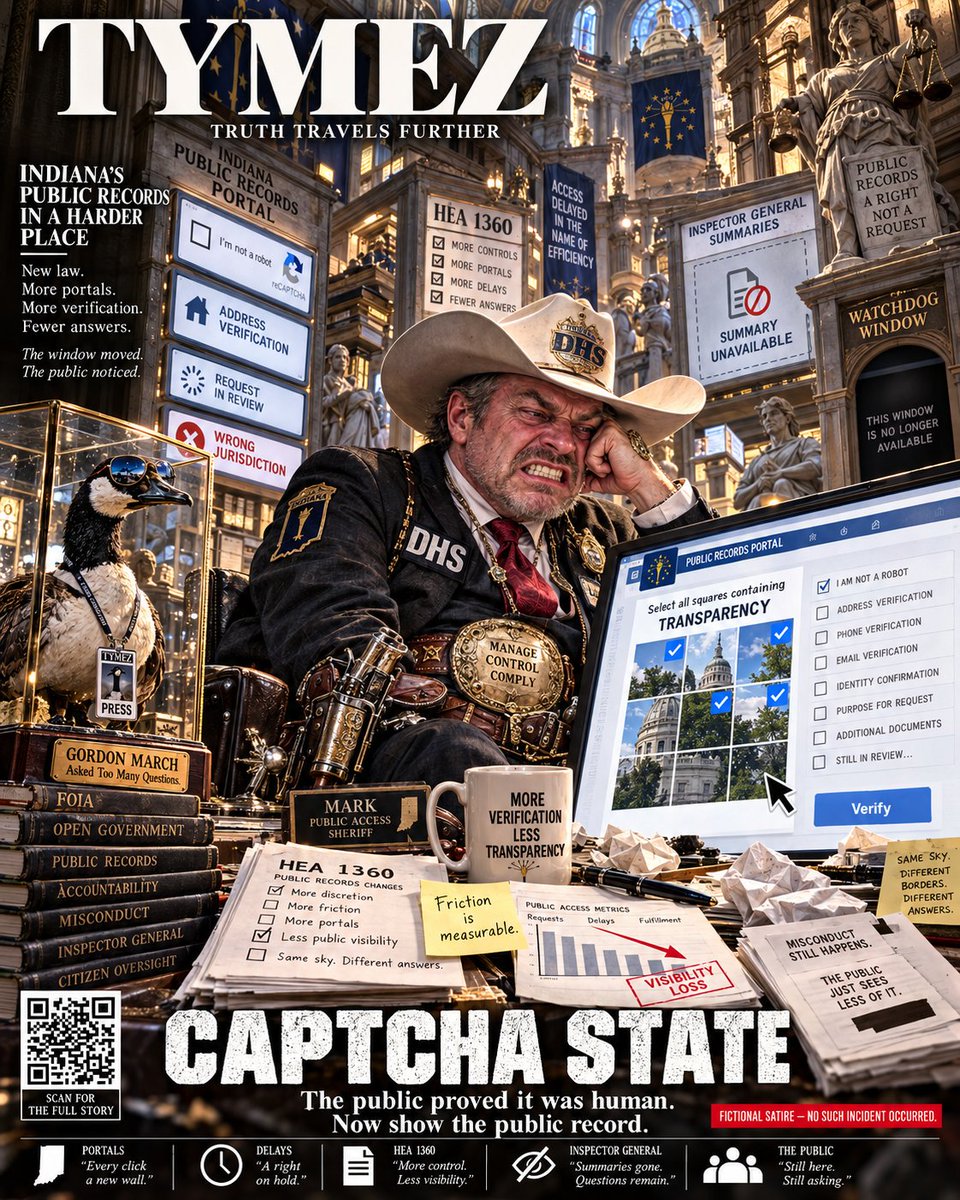
PLEASE PROVE YOU’RE HUMAN.
Indiana changed its public-records environment July 1. That is not a blackout.
Then its Inspector General stopped publishing investigation summaries.
--> Where did the window go?
FINAL // SUBMIT
Disaster victims should have to prove enough to receive public money.
Government should have to prove enough to show who processes their information and under what rules.
THE CITIZEN COMPLETED THE FORM.
NOW THE STATE CAN COMPLETE ITS SIDE.
FIELD 17 // CORRECTION PORT
If Bright Harbor was competitively selected, publish the bid record.
If pricing is flat, publish it.
If applicant data are deleted on a fixed schedule, publish that too.
Evidence that reduces suspicion is still evidence.
FIELD 16 // PUBLIC RECORD
Indiana DHS: publish the Bright Harbor contract, procurement file, amendments, payment formula, subprocessors, data-retention rules, security requirements and aggregate application outcomes.
One PDF could kill several theories at once.
FIELD 15 // THE ABSURDITY
Government form logic:
Citizen: disclose everything necessary to prove eligibility.
Contractor: process it.
Reporter: who hired the contractor?
ERROR 403 — PLEASE SUBMIT ANOTHER FORM.
FIELD 14 // WHAT CHANGES IT
No procurement file.
Payment tied strangely to application volume.
Weak retention limits.
Unknown subprocessors.
Poor audit rights.
Undisclosed conflicts.
Those would not prove corruption.
They would justify deeper audit.
FIELD 13 // WHAT CLEARS IT
Competitive procurement.
Flat or ordinary market pricing.
Tight data-use limits.
Strong security requirements.
Defined deletion.
Transparent outcomes.
Publish those and this becomes an extremely boring story.
Good.
FIELD 12 // WHITHAM
Director Jonathan Whitham’s office controls the Bright Harbor contract and relief ledger.
The clean question:
How was Bright Harbor selected, how is it paid, and what data terms govern the relationship?
FIELD 11 // WHO OWNS THIS ONE
This is not naturally a Mark Mullin story.
Forcing the federal cowboy into every frame would actually obscure responsibility.
This contract belongs to Indiana’s disaster apparatus.
State power answers for state power.
FIELD 10 // INCENTIVE TEST
If vendor compensation rises with application volume, say so.
If it does not, say that instead.
The question is not “Did somebody profit?”
Contractors are paid.
The question is what behavior the payment formula rewards.
FIELD 08 // FRAUD DETECTION
Relief systems must detect fraudulent claims. Good.
What model or process does that?
What triggers denial?
Can an applicant appeal?
How many payments were later recouped?
Fraud control also needs due process.
FIELD 07 // BANKING
If direct-deposit information entered the workflow, show the safeguards around it: encryption, tokenization, access controls, logging, retention and breach notification.
“Trust the portal” is not a cybersecurity standard.
FIELD 06 // DATA
Who can see applicant data?
How long is it retained?
Can Bright Harbor use subprocessors?
Where is it hosted?
What gets deleted when the program ends?
Disaster aid should not create permanent mystery data.
FIELD 05 // THE PSYCHOLOGICAL JOKE
Applicant: “Here is my identity, address, housing proof and bank information.”
TYMEZ: “Excellent. May we see the vendor contract?”
Government:
THIS FIELD IS CURRENTLY UNAVAILABLE.
FIELD 04 // PAYMENT
Flat fee? Hourly? Milestone? Per application? Per approved application?
These are very different incentives.
Before guessing at motive, publish the pricing formula.