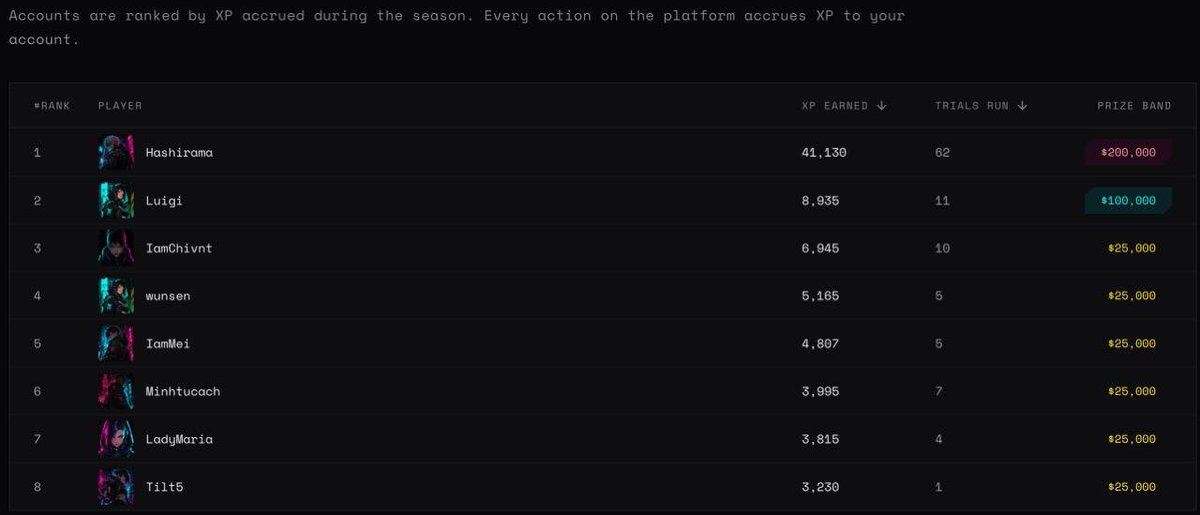
I keep checking the @sizedoclub leaderboard after every run even when I know my rank barely moved.
It’s becoming a habit in my daily trade 🙃
my process: finish the Trial → open the report → immediately switch to the rankings tab.
small UX wish for @sizedotclub:
• the tokens shown in HQ should be clickable and take you straight to the trade page
rn you see the tickers, but still have to navigate manually
one less step would make the flow cleaner
And by the way, I hope I can hold onto my top ranking to receive the reward for the $1M campaign.
Another Practice run on @sizedotclub.
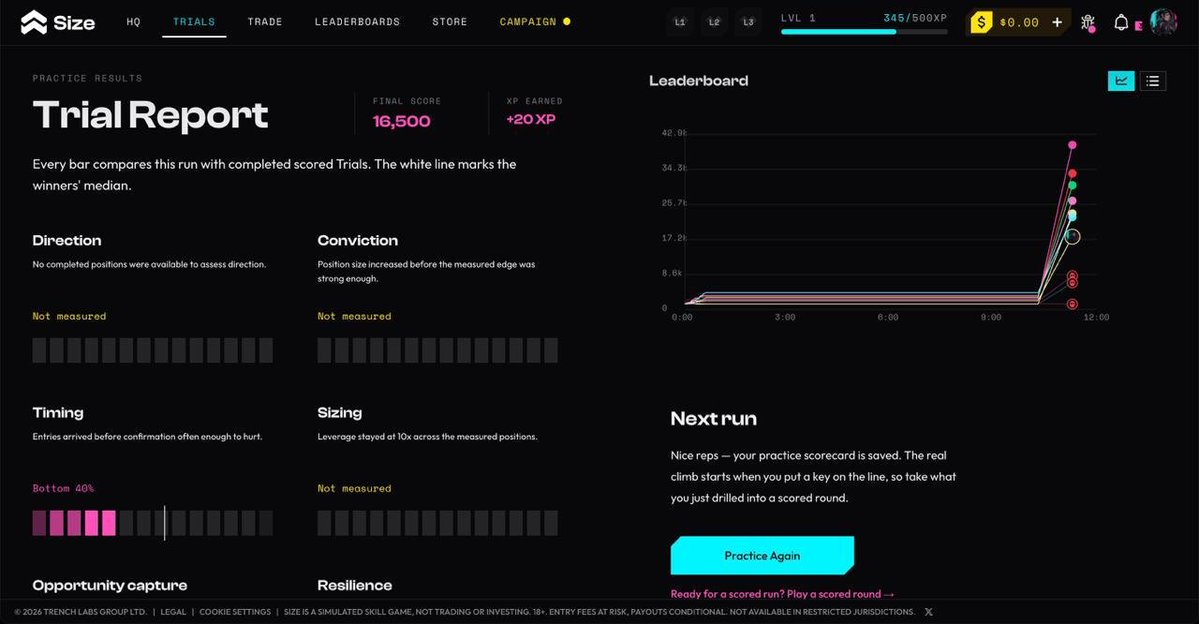
�� Final score: 16,500
• Timing: Bottom 40%
• Conviction: sized up too early
• Got eliminated lmao
The report is pretty clear about it too, entries came in before confirmation, and position size increased before the edge was actually there.
No excuses. The feedback is right there in pink
What’s funny is that even when the run goes badly, the system still forces you to look at the specific mistakes instead of just feeling vague about why it failed.
Going again!
One thing I didn’t expect from @sizedotclub is how detailed the post-Trial feedback is.
After every run you get a full Trial Report breaking down:
• Direction
• Conviction
• Timing
• Sizing
• Opportunity capture
• Resilience
It doesn’t just tell you whether you won or lost.
It tells you where you were weak.
Most challenge platforms give you a pass/fail.
Size gives you a performance review.
Even when the score isn’t great, you walk away knowing exactly what to work on next.
That alone makes the product feel different.
The Preseason is live.
$1,000,000+ in prizes.
Top 500 traders win.
Capital to trade, with real payouts on the profit.
Grind XP. Run Trials. Share your journey.
Doors open now 👇
Someone built a Base Airdrop Eligibility Calculator
It estimates your potential allocation based on your wallet activity, and shows what you’ve already done vs what may still be missing to optimize eligibility
For example, my wallet hasn’t bridged ETH through the official Base Bridge yet
No need to connect your wallet, just paste the address
This isn’t an official tool, so don’t FOMO into anything
👉 https://t.co/8ZbQTqYzZl
Is NFT is coming back?
NFTs have been quiet for a while, but liquidity experiments are starting to get interesting again
Yesterday I found @token_works, an onchain NFT gacha protocol that has generated around 13,000 $ETH ($24,718,200) in volume, 127,000 purchase requests, and over 4,200 NFT deposits after being live for only 13 days
And the mechanism caught my attention
- Buyers can chase NFTs with large $ETH backing
- Every NFT comes with a pre-funded exit
- NFT holders can earn fees from otherwise idle assets
- Higher backing usually allows a position to farm for longer
- Protocol revenue supports $FWA buybacks, rewards, and burns
Basically, NFT gacha for buyers, fee farming for depositors, and built-in liquidity for both sides
🔵 How it works?
1. An NFT owner deposits an NFT together with $ETH backing
- The higher the backing, the lower its chance of being selected
2. A buyer pays for a random position selected through Chainlink VRF
3. After winning, the buyer can either:
a. Keep the NFT
b. Return it to the depositor and receive 90% of its $ETH backing
For example, imagine paying 0.1 $ETH and landing an NFT backed by 10 $ETH
You can keep the NFT or return it immediately for 9 $ETH
The exit liquidity was funded before the draw, so you do not need to wait for another buyer to appear later
That is the part I find interesting
Old NFT markets relied heavily on finding the next buyer. FWA puts the next bid onchain before the NFT even enters the pool
🔵 Why would someone deposit an NFT?
Every active position receives an equal share of acquisition fees
An NFT backed by 1 $ETH earns the same amount per acquisition as one backed by 100 $ETH
The real competition is over "duration"
Higher backing means lower selection odds, so the NFT will usually remain active across more acquisitions and collect fees for longer
Depositors can earn from:
- Acquisition fees
- $FWA depositor rewards
- The crown reward for the top deposit
The larger position does not earn more $ETH per draw. It earns more over time only if it survives longer
What could a 1 $ETH position earn?
Let’s use current numbers as a rough example:
~127,000 requests in 13 days (~10,000/day)
~13,200 $ETH volume
~4,200 deposited NFTs
Avg per request ≈ 0.104 $ETH
Assuming 4,217 active NFTs, 10,000 daily fills, and post-fee distribution to depositors:
~0.000024 $ETH per acquisition per position
~0.24 $ETH/day while active
~7.2 $ETH/30 days if it survives the full period
But a 1 $ETH position probably won’t last that long
Expected lifetime ≈ 41,600 acquisitions, or roughly four days at the current pace
So expected pre-selection earnings are closer to ~1 $ETH, not 7.2 $ETH
The return is nowhere near the dream scenario, but the position can still generate meaningful fee income and potentially become profitable if it survives long enough
This is a rough model. Real returns depend on fills, active supply, backing distribution, settlement outcomes, and selection timing
Backing more $ETH can extend that expected lifetime, but it also increases what you are putting at risk
If you back an NFT with 100 $ETH, it becomes much harder to select. But when someone eventually wins and returns it, they receive 90 $ETH from your backing
You are collecting small fees while underwriting a rare jackpot
🔵 Where protocol revenue goes?
FWA earns from acquisition fees, settlement fees, and the retained discount when a purchaser returns an NFT
The first three in-protocol revenue streams currently go into the $FWA buyback reserve
Bought-back $FWA is then routed:
- 40% to purchaser rewards
- 30% to depositor rewards
- 30% to burns
The separate 1% $FWA trading fee goes to its configured fee wallet and sits outside this allocation
I like this mechanism because exit liquidity becomes part of the product itself
Buyers get a real jackpot to chase and an immediate bid if they do not want the NFT. Depositors get a way to monetize idle assets instead of waiting endlessly for marketplace demand
But the yield comes from taking the other side of that trade
Depositors are effectively underwriting the prizes, which is exactly where both the opportunity and the risk come from
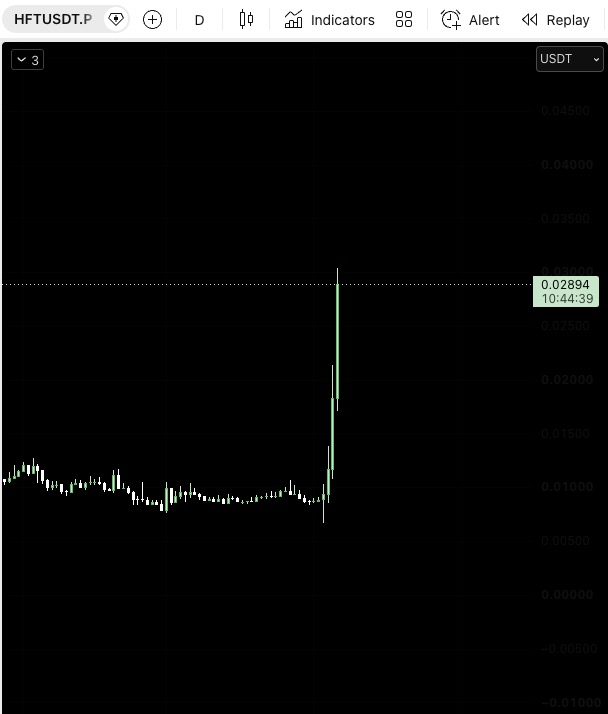
As usual, once a token gets delisted from a major CEX, volatility kicks in
$HFT is already up 70%, so I’m waiting for a cleaner short setup. A small gamble might make the day more interesting
Also keeping an eye on $PYR, tomochain:native, and ethereum:0x44108f0223a3c3028f5fe7aec7f9bb2e66bef82f since they haven’t moved as hard yet
Pure gamble for fun, not financial advice