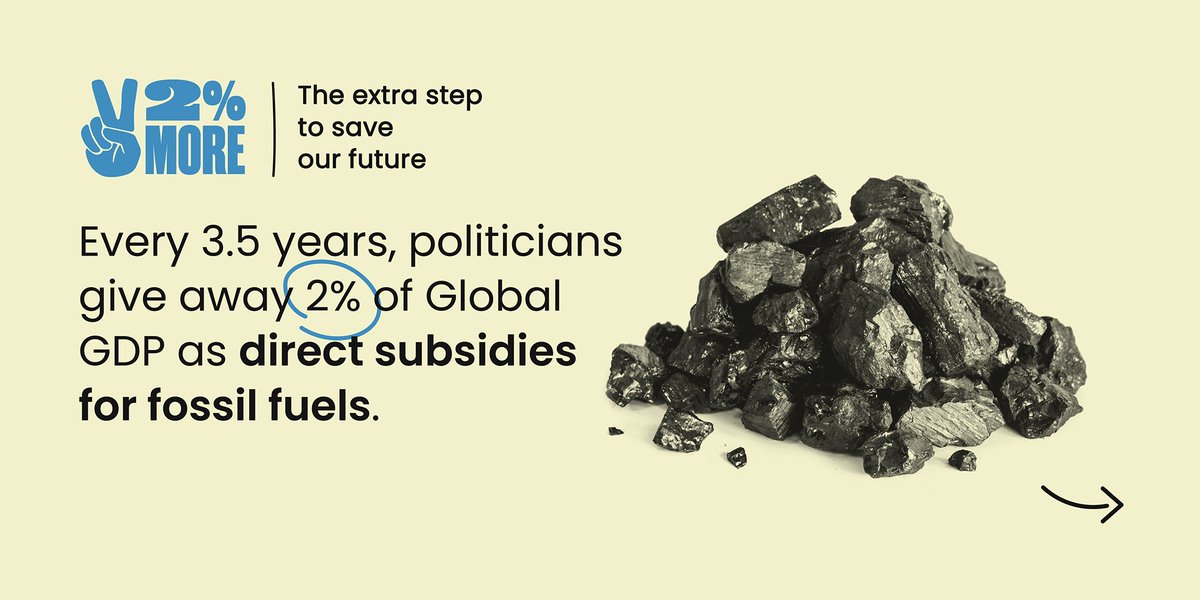
In 2020, 2% of Global GDP was US$1.7 Trillion. That sounds like a lot of money, but it’s a small slice of the pie.
If politicians invest an additional 2% of Global GDP in clean energy, this would be enough to prevent the most catastrophic climate change scenarios.
@efibendor@davelee@elonmusk@tesla_raj So do I, but the choice will eventually be taken out of our hands as AI becomes many times better at driving than we will ever be. Either insurance for a human to drive becomes prohibitively expensive or human driving becomes illegal because it’s much less safe.
@999BPM@tixhonjm Perhaps… but it’s out of our hands. I think we agree with each other. I’d love to see a world where humanity places the health of the planet (as a whole) above all else, but as long as capitalism prevails, cost efficiency rather than real efficiency will always win.
@999BPM@tixhonjm As I said… I’m open to any technology that gets us to ZE. If the market is open to it, I hope HFCV do well. Change is constant, if battery material costs go up, this will encourage new production of those materials and innovation to reduce costs.
@theschnell3 @ray4tesla The ramp at Shanghai was incredibly quick/efficient. Chinese work ethic is tenacious/uncompromising. I’d be very (pleasantly) surprised if either Texas or Berlin ramp this quickly.
@999BPM@tixhonjm Sorry I wasn’t trying to be antagonistic. I was asking as genuinely curious.
My thoughts are: Sadly economics tend to drive adoption in the capitalist system. FCEV’s will have a higher cost per mile due to capital intensive infrastructure required to transport hydrogen etc.
@999BPM@tixhonjm Which do you think is going to be worse: the environmental damage from mining that billion EV’s worth of batteries or the environmental damage caused by climate change?
@biogasconsult@DobackHuffInc Genuine question; Why does Tesla have such consistently high customer satisfaction results?
Also, curious about why you think hydrogen will win over electric in the heavy vehicle sector?