Samantha: "Que Cristina Cifuentes robará una crema me pareció súper cercano"
Alba: "Pero luego te vas con ella 'Hasta el fin del mundo' y no me dejo robar nada".
ME MEO JAJAJAJ
#ElSótano02J
RECORDANDO SV2022 :
TODOS PENSABAMOS QUE SERIA UN MOMENTO MÁS DE ESA GALA Y SIN QUERERLO LO CONVIRTIERON EN UNO DE LOS MOMENTOS MAS ICONICOS Y DIVERTIDOS DE LA HISTORIA DEL REALITY
KIKO MATAMOROS Y ANA LUQUE SE GANARON EL SUELDO ESE DIA
QUE RISA 😂😂😂😂😂😂
#SVGala10#SV7M
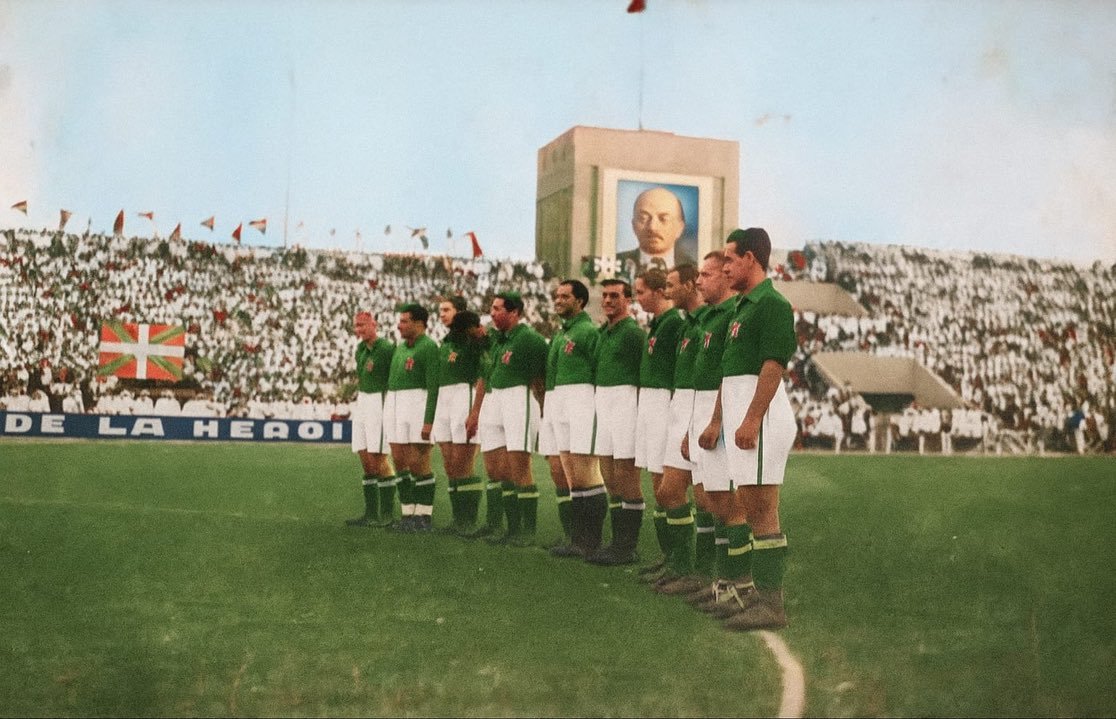
Basque National Football Team, in the Soviet Union. 1937.
During the Spanish Civil War, the Basque government formed a football team made up of professional players (the majority from Athletic Bilbao) and sent them on a world tour. Their aims went far beyond sport: to make the world aware of the situation of the Basque Country, to support the anti-fascist cause, and to raise funds to help children victimized by fascism.
These players were called “The Gudaris of the Ball.” In Basque, “gudari” means soldier and resistance fighter. On the football pitch, they thus became ambassadors of resistance and international solidarity.
On the day they played their first match in Paris against Racing Club de Paris (26 April 1937), the German Nazi air force was bombing the sacred Basque city of Guernica. The players entered the match with the news of this massacre, in deep sorrow and anger.
The team played matches in France, Czechoslovakia, Poland, the Soviet Union, Denmark and Norway. They received the strongest and warmest reception in the Soviet Union.
While the team was in the Soviet Union (the period when the photo below was taken), Bilbao fell. Most of the players were declared “traitors” by the fascist dictatorship of Francisco Franco, making their return to Spain impossible.
After Europe, they moved to the American continent. They played matches in Cuba and Mexico. They even entered the Mexican league under the name Club Deportivo Euzkadi and finished the 1938–39 season in second place.
With the money they raised, they covered the expenses of thousands of Basque refugee children (“Niños Vascos”) in the United Kingdom and France.
Today, in the emotional foundations of Athletic Bilbao's still-existing identity based on fielding only players of Basque origin, the struggle waged in exile by these “Gudaris of the Ball” holds a major place.
Entender no significa tolerar. Yo puedo comprender tu comportamiento por tu historia de vida, pero no voy a tolerar ciertas acciones tuyas, porque mi empatía no implica renunciar a mis límites.
"Una es quién es, es de dónde es, hay gente que eso no le ata tanto, pero yo tengo como un árbol, unas raíces enormes que me atan a mi identidad de pueblo" Itziar Ituño
#aupaitziar 💜✊🏻