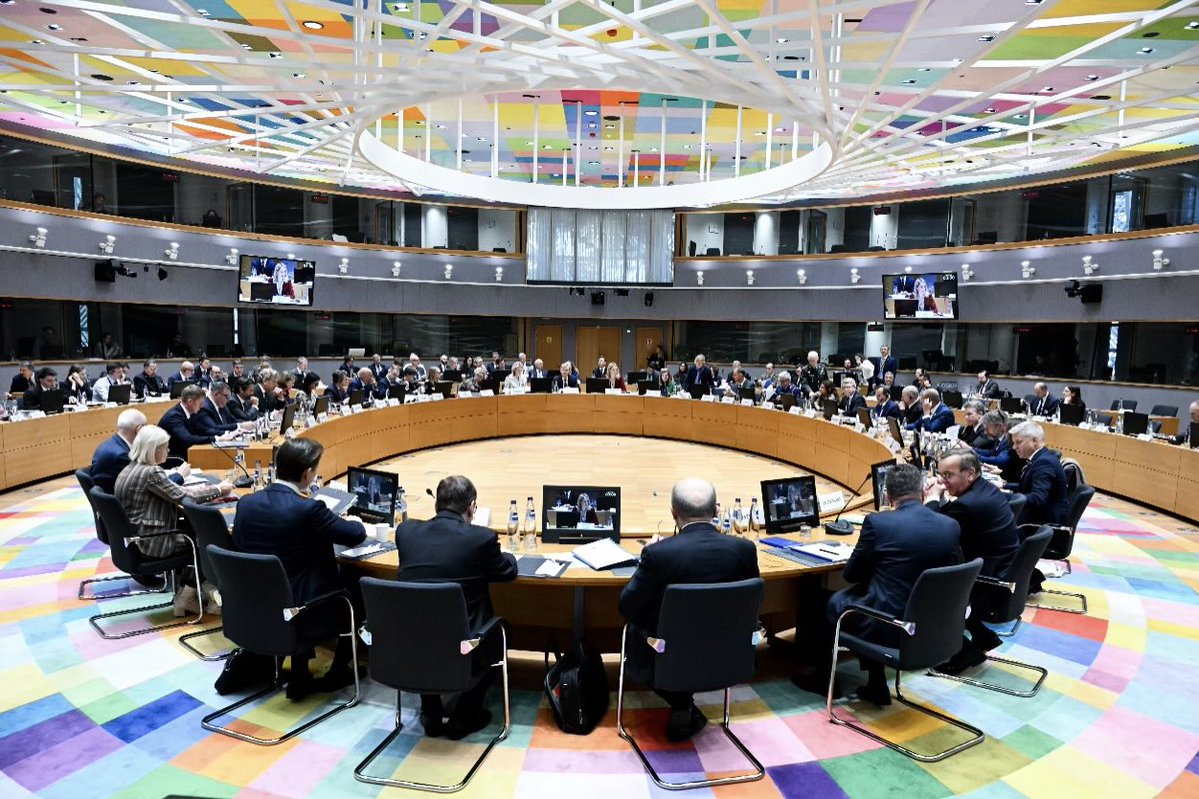
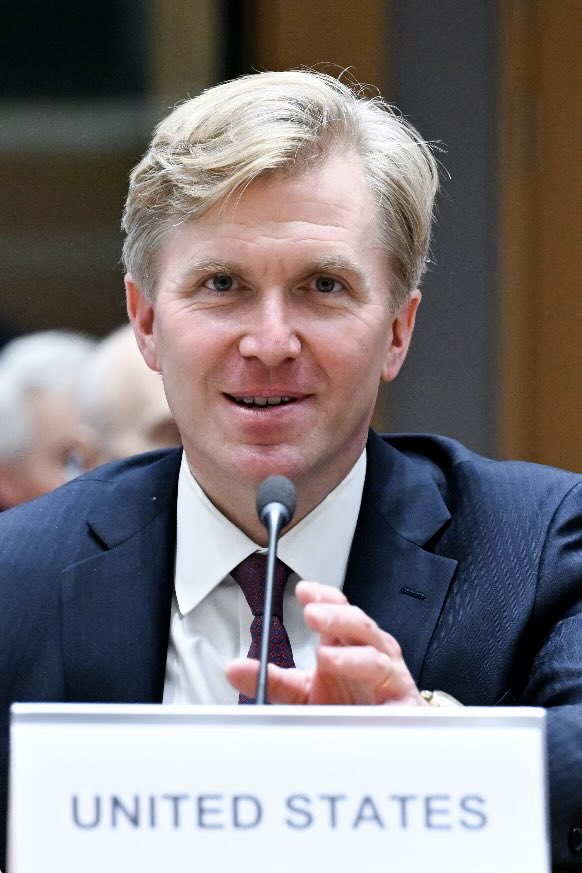
It was a pleasure to address EU Defense Ministers this week on the growing success of NATO 3.0 and how we are building a stronger, more self-reliant Europe and a more durable alliance. 1/23
green light from everyone, including 🇭🇺, to send the 🇲🇩🇺🇦screening letters for clusters 4&5. A bit late but the race to open all 🇪🇺 accession clusters/chapters by the end of 2026 is now on.
What President Ursula @vonderleyen and I discussed earlier could become a reality and GREATLY help Ukraine, our resilience, and our diplomacy. I thank her and the @EU_Commission for the proposal to establish the Instrument for Coordinated Support to Ukraine, under which the EU would provide up to €45 billion in financial assistance to Ukraine. This will complement the EU's existing commitments under the Ukraine Support Loan and will cover a significant part of the budget and defense needs for next year, 2027. We very much hope for the swift adoption of this decision by the European Parliament and the Council and count on the support of all EU member states.
I also thank Ursula for her initiative to bring in assistance from our other partners through new mechanisms to facilitate and coordinate additional support. The UK, Canada, Japan, and Norway have been helping tremendously in our defense of life, and establishing clear rules under which they can provide further aid in conjunction with the EU will help even more. Tomorrow, we will have a substantive discussion at the Coalition of the Willing meeting to put all of this on track as soon as possible.
Thank you to everyone who is helping! Strong support for Ukraine is the best signal to Russia that this war must end.
Last December, the EU agreed to a €90 billion loan for Ukraine over two years. Now, the Commission is proposing a further €45 billion, financed through fresh borrowing backed by the EU budget. Berlin is linking its support to a commitment from all 27 member states to contribute, including net beneficiaries of the EU budget. Get ready for it - it will get rough and dirty as the money question becomes harder to square.
https://t.co/OsrvDzhtJ8
Almost twelve years have passed since I last published an article under my own name. Today I am back in the press, and I am glad to do so alongside the great @Alessandro__Ma.
We write in @Parlimag about Meloni's balancing act on Ukraine.
Thread 1/
4/ The next battle will come by 31 December, when Parliament's authorisation to provide military aid to Ukraine expires.
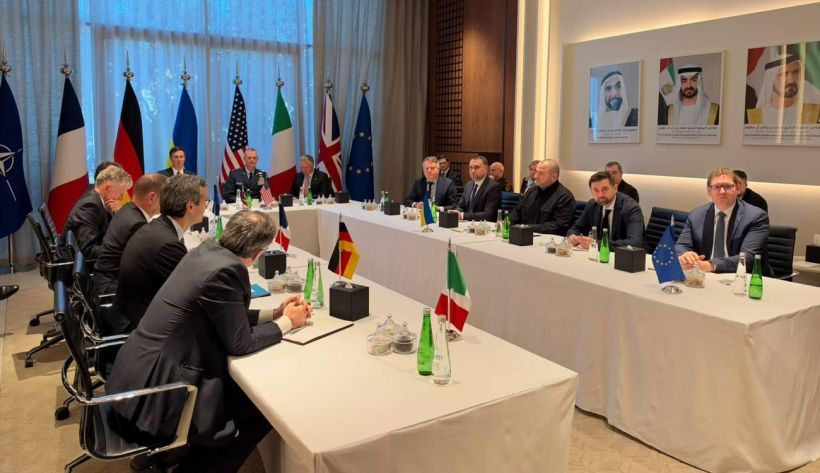
At stake is not only Meloni's standing ahead of the 2027 elections but also Italy's seat at the table of negotiations on Ukraine's future (literally, see pic)
Zelenskyy says there's now a "window of opportunity" between the US midterms and Europe's 2027 electoral cycle. "We're living through these massive attacks. Of course, we want to get results by the end of this year. And of course, we will be doing everything to make that happen."
Breaking news: Hundreds of schools across Italy, and some in Scotland and Ireland, received a wave of bomb threats on Wednesday, in what appeared to be the latest co-ordinated attack aimed at disrupting life in Europe https://t.co/aI9jAVzfWh
Budget 2027 just agreed! € 199.7 billion to keep Europe delivering on competitiveness, defence, energy transition and steadfast support for Ukraine.
A strong close of the 2021–2027 MFF alongside @Piotr_Serafin. Huge thanks to the fabulous @EU_Budget team! 💪🇪🇺
Who's at the Abu Dhabi talks?
🇺🇦 Rustem Umerov
🇷🇺 Vladimir Medinsky
🇺🇸 Steve Witkoff
🇺🇸 Jared Kushner
🇫🇷 Emmanuel Bonne
🇩🇪 Günter Sautter
🇬🇧 Jonathan Powell
🇮🇹 Fabrizio Saggio
🇪🇺 Bjoern Seibert
🇪🇺 Anna-Maria Boura
NATO: Geoffrey Van Leeuwen
Oggi l’attenzione sarà concentrata sull’analisi dei risultati delle midterm statunitensi, che delineano un quadro politico netto. Ma quali saranno le conseguenze del voto americano per la politica estera e di difesa degli Stati Uniti verso l’Europa?
Per approfondire il dibattito su questi temi, mercoledì 11 novembre ospiteremo presso il nostro Istituto l’evento “La sicurezza dell’Europa alla luce delle midterm americane”.
L’incontro sarà un’occasione per approfondire le implicazioni delle elezioni americane per le relazioni transatlantiche, il futuro della NATO e la sicurezza europea, in un contesto segnato dalla guerra in Ucraina e dalle trasformazioni degli equilibri strategici internazionali, anche in occasione del lancio del volume @routledgebooks-IAI “The War in Ukraine, NATO, and European Defence: Italian Perspectives”.
Dopo i saluti introduttivi del Presidente Michele Valensise, il volume sarà presentato da @Alessandro__Ma , Responsabile del Programma Difesa, Sicurezza e Spazio, e @AleChiriatti, Responsabile del Programma Formazione. Seguirà un dibattito con @dbcdan (@Corriere) e @GabrieleCarrer (@Linkiesta), moderato da @ragazzitahrir (Rai).
Registrati qui per partecipare: https://t.co/DcKxQT0PmR
@GillesGressani, gli scritti di Martini sull’Europa e Leone XIV: “A Metz, il Papa ha posto una domanda implicita: può nascere una repubblica europea neoguelfa? Nel senso di un’intesa tra laici e cattolici che difendono insieme la propria autonomia dalla stretta imperiale”
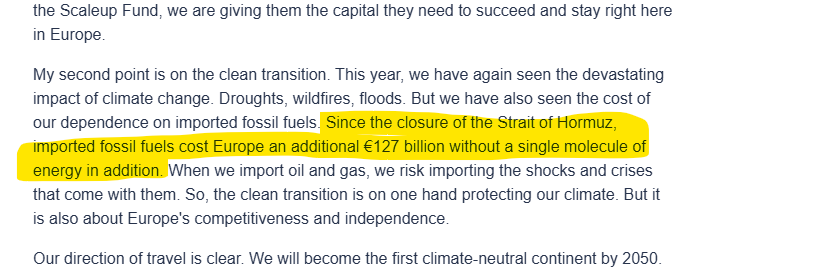
Startling figure from VDL speech today:
"Since the closure of the Strait of Hormuz, imported fossil fuels cost Europe an additional €127bn without a single molecule of energy in addition."
That works out about €281 per EU resident, 67% of the EU's entire annual budget
From the Strait of Hormuz to the rise of AI, the rules of risk are changing. Are companies and institutions prepared? What happens when risk is no longer an unintended consequence of progress, but a deliberate instrument of power?
In a new IAI paper, Cosimo Pacciani, Chief Economist at @PosteItaliane and former Chief Risk Officer of the European Stability Mechanism, and Laurence B. Mussio, financial historian, propose five new laws of risk to help institutions navigate a world of predators.
Read The New Laws of Risk: https://t.co/BsZC1xvmrz
And watch the authors explain their approach in the video below
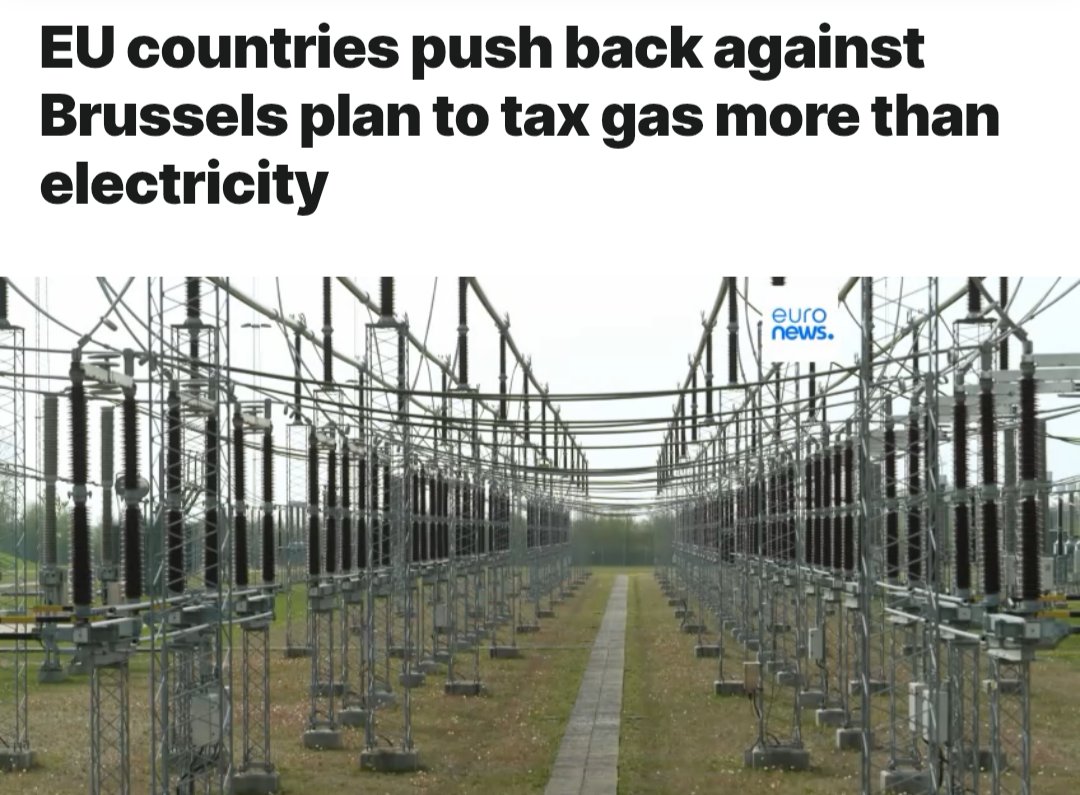
🇪🇺 Ieri a Lussemburgo l'Italia ha detto no a due pezzi del regolamento UE sulle tariffe di rete.
Il primo: la regola per cui l'accisa sull'elettricità non può superare quella sul gas. Roma è tra gli oltre 13 Paesi che chiedono di toglierla.
Il secondo: dare alla Commissione il potere di decidere come si calcolano le tariffe di rete in tutta l'UE.
Ieri non si è deciso niente, ma se ne riparla a dicembre.
A me interessa per un motivo. Con oltre 100 GW di richieste di connessione per data center su Terna, il modo in cui si calcolano le tariffe decide chi paga i cavi.
NEW: Pope Leo XIV is set to become the first sitting pontiff in the Catholic Church’s two-thousand-year history to vote in a secular election.
Leo requested an Illinois mail ballot on Oct. 3, and it was sent to his brother John’s home in New Lenox, Ill.
John Prevost visited the pope at the Vatican on Wednesday and may now be carrying the ballot back to the Will County clerk by hand. https://t.co/EV7qGIcZRt