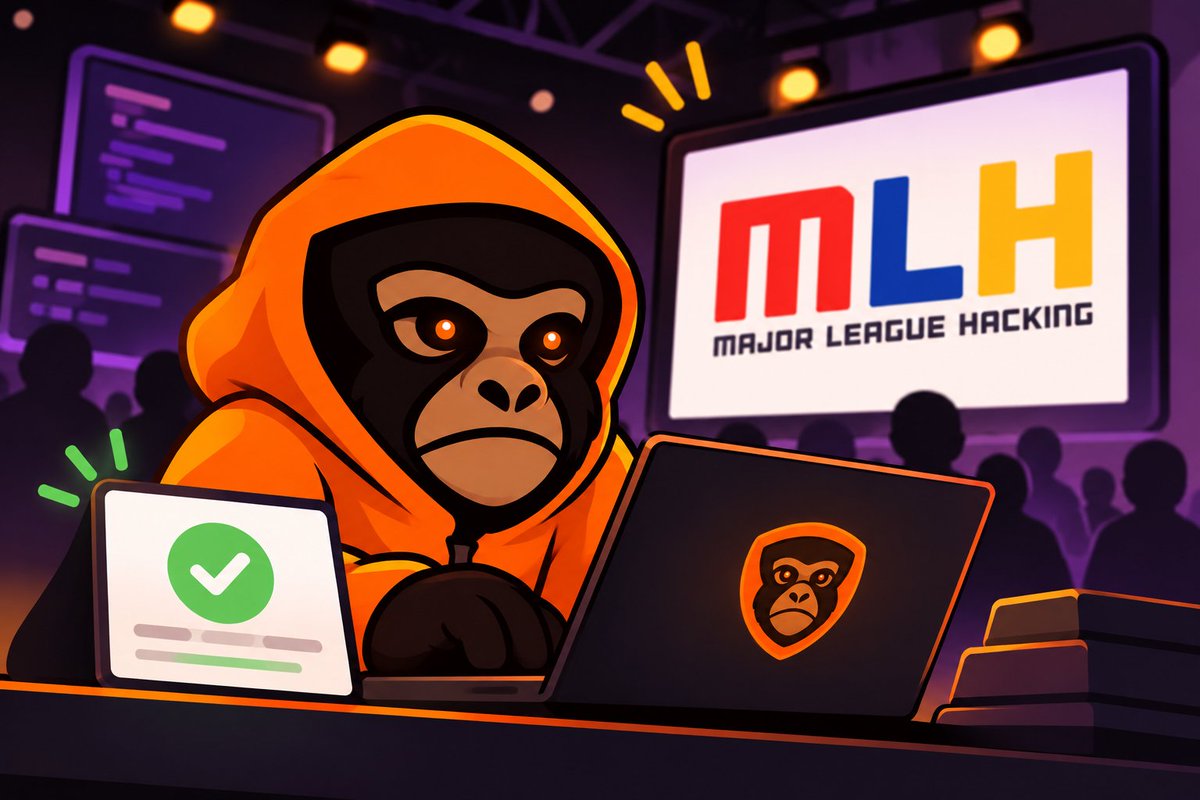
We submitted Bujius Checkout to the MLH Solana Hackathon. @MLHacks
It’s the open-source split engine for Bujius Pay: one payment, merchant and partners, in the same transaction — with rules on-chain and auditable.
https://t.co/fUmHBxzxCZ
it has now officially been 1,000 days since the last Solana outage
and this has happened with:
- the biggest upgrade in Solana history (30x faster finality and more robust consensus)
- blocktimes getting 2x faster
the devs are goated
trillions
🇧🇷 NEW: Brazil’s largest private bank, Itaú Unibanco, becomes the first bank to formalize crypto trading and custody under new central bank rules.
The bank offers 15 crypto assets:
• BTC
• ETH
• SOL
• XRP
• USDC
• LINK
• LTC
• AAVE
• AVAX
• POL
• BCH
• UNI
• OP
• ARB
• PAXG
When a sale hits Bujius Pay, the split has to be final — not “wait ~12s.”
Alpenglow brought Solana finality down to ~150ms. Our founder @lordcallydus just measured how validators actually order txs after the upgrade.
Fast settlement isn’t a vibe. It’s the counter.
@toly
5/ The regional bounty wasn't open to Brazil, so I'm open-sourcing the entire dataset, interactive block explorer, anti-pruning SHA-256 proofs for all 72 slots, and 1-command Docker verifier for the community:
🌐 Interactive Explorer: https://t.co/JpnDaFntmz
💻 Repo + Raw CSV/JSON: https://t.co/aJ9AKSdllr
Thought you might enjoy the data @aeyakovenko @0xMert_ @CantelopePeel@buffalu__@anza_xyz@Jump_Firedancer @jito_sol @heliuslabs @KumekaTeam@SuperteamEarn
3/ Does the scheduler rank by Total Fee or Fee-per-CU (CU_price)?
Every batch included an exact total-fee tiebreaker:
• p4: 10,000 CU × 400,000 µ-lamports/CU = 9,000 lamports total
• p5: 40,000 CU × 100,000 µ-lamports/CU = 9,000 lamports total (sent 2ms earlier!)
Result across 44 Mainnet batches:
p4 was scheduled ahead of p5 in 81.82% of blocks (36/44, Binomial p = 0.000013, Wilcoxon p = 0.0068). Every client prices compute density, not gross fee.
2/ Why do some validators look pure FIFO at a 2ms send stagger, yet reorder by priority fee on a 0ms burst?
By sweeping arrival stagger Δt across 0ms, 2ms, and 8ms, we can directly measure each client's scheduler buffering window:
• Firedancer fd_pack / AgaveBam: ~6–15ms lookahead (Spearman ρ = +0.49 to +0.70 even at 2ms)
• HarmonicAgave / Rakurai: ~2–5ms
• JitoLabs / Vanilla Agave: ~0.5–1.5ms (drains workers every <1.5ms, but hits ρ = +0.71 when all 6 packets land in the same micro-batch at Δt = 0ms!)
1/ Methodology matters:
If 6 probes share the same feePayer, the leader's AccountLocks serialize them before the scheduler even ranks priority.
So I built a deterministic 6-sub-wallet harness (ProbeFeePayer_0..5) and fired 53 live 6-tx batches (100% confirmed, 0.00344 SOL total cost) across:
• Full Firedancer (v0.1.1)
• Frankendancer, HarmonicFD & FireBAM (v26.10.4)
• Vanilla Agave, JitoLabs, AgaveBam, HarmonicAgave & Rakurai (v4.3.2)
How do Solana validators actually order transactions inside a block post-Alpenglow? 🧵
I saw a bounty asking this question. Turned out the bounty was region-locked to Ukraine — but the problem was too interesting to ignore, so I ran the full Mainnet experiment anyway.
318 live probes across 9 validators & 7 client forks. Here is what happens inside the leader scheduler 👇