These assholes drove right over the coating. It's not even a vehicular traffic coating (which is meant to be driven on), and they're wondering why it's pealing? Was it even cured? These people are fucking stupid and can't own up to their own mistakes.
Okay, I can't let this one go. These OPSEU workers came to Ford Fest after being denied meeting after meeting. They care for our most vulnerable, and they're owed wages Ford took under Bill 124. His response? He literally erased them from the picture to make them look like supporters.
Somebody's grandmother is out here making a pound cake with no recipe written down anywhere, and when she passes, that knowledge is just gone. We treat that like it's normal. It's not. Write it down. Record her. That recipe is an heirloom.
On a voulu les raser. Aujourd'hui, ces maisons de cheminots sont classées au même titre qu'un château.
Trappes, dans les Yvelines. Le long de l'avenue Marceau, quarante pavillons blancs. Mais posés de travers, en biais, à 45 degrés de la rue. Vus d'un bout, leurs angles dessinent une lame crantée. On les appelle les Dents de Scie.
En 1931, c'est une petite révolution. La gare de triage tourne jour et nuit. Pour loger ses ouvriers, deux architectes, le père et le fils, offrent l'impensable à des familles modestes : toit-terrasse, jardin privatif, buanderie, eau courante.
Le détail qu'on oublie : beaucoup travaillaient de nuit. Les maisons sont pensées pour qu'ils dorment le jour, au calme, chez eux.
Puis le temps passe. Fin des années 1980, on parle de tout démolir.
Ce sont les habitants qui se dressent. Locataires, mairie, ils se battent. En 1992, la cité entre aux Monuments historiques.
Un quartier ouvrier sauvé par ceux qui y vivaient.
Vous connaissiez ces drôles de maisons en biais ?
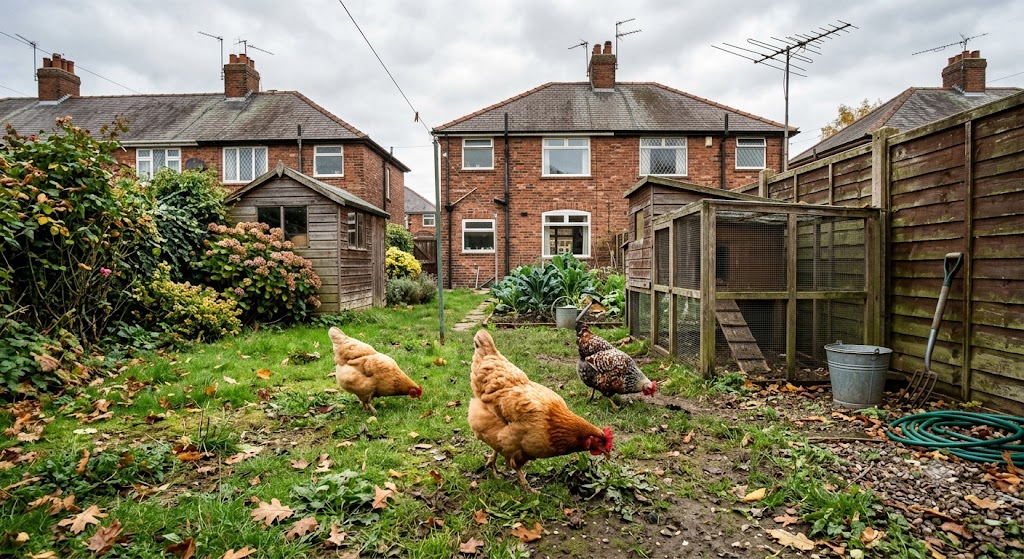
Not so long ago, a few hens at the bottom of the garden were as ordinary in Britain as a washing line, and remarked on about as much.
The run sat down past the vegetables, a patch of bare earth and a henhouse knocked together from offcuts and tarred felt. Four or five birds, a Rhode Island Red, a Light Sussex, a leghorn or two, and every one of them had a name. Brownie. Speckle. The one with the bad foot. A child's first job of the day was to go down with a basin and lift the eggs from the straw, still warm, sometimes still mucky, and carry them up to the kitchen cupped in both hands like something holy.
There was a bucket under the sink for them. In went the peelings, the crusts, the outer leaves of the cabbage, the cold porridge, the scrapings of every plate, and on a Saturday it was boiled up with a bit of bran into a grey mash that left the whole house smelling like the inside of a kettle. The hens turned that bucket of leavings back into breakfast. Nothing was wasted, because the hens ate what the bin gets now.
In the war it became a patriotic act. You could hand back your weekly egg ration for a sack of feed and keep your own birds, and people raised hen houses out of old oil drums and scrounged chicken wire and fed the country one back garden at a time. The cockerel woke the street. The broody hen sat in a tea chest in the shed. The spare eggs went over the fence to the woman three doors down, who sent back a twist of sugar.
Then the whole world of it quietly went. The garden was paved over for the car. The supermarket sold six eggs for less than the feed cost. The young family who moved in would not know where to begin, and the rules tightened until it became, of all things, illegal to feed a hen the kitchen scraps every household once saved for exactly that.
A few hundred thousand keep a few birds still, and bless them for it. But the ordinary garden hen, the one your nan had, the one that gave a child his first lesson in where food really comes from, is leaving the country quietly, coop by coop.
The egg in the shop will never be warm in your hand on a cold morning. That one you had to go down the garden and lift for yourself.
She wore blonde braids and a simple kerchief.
The Nazi officers at their desks barely glanced up. To them, she was just another Polish peasant girl—harmless, invisible, beneath notice.
That moment of disregard would cost them their lives.
Her name was Niuta Teitelbaum. She was 22 years old, a history student at Warsaw University—small, soft-spoken, the kind of young woman who looked like she belonged in a library, not a war.
But when Nazi tanks rolled into Poland in September 1939, Niuta made a choice that would echo through history. She walked into the Polish underground resistance headquarters and spoke words that would define her short, brilliant life:
"I am a Jew. My place is in the struggle against the Nazis—for the honor of my people and for a free Poland."
The seasoned fighters looked at this tiny blonde girl and wondered what she could possibly do.
She was about to show them something extraordinary.
Niuta realized what others had missed: her innocence was her greatest weapon. The Nazis expected resistance fighters to look dangerous—battle-hardened, military, male. Niuta looked like she was on her way to market.
So she used it. Ruthlessly. Brilliantly.
With her braids and her shy demeanor, Niuta walked through doors that armed fighters could never approach. She entered Nazi offices and apartments. She crossed checkpoints that would have arrested anyone else. And when she emerged, Nazi officers didn't.
For nearly three years, Niuta became the Gestapo's phantom. They gave her a name they whispered in fear:
"Little Wanda with the Braids."
They hunted her relentlessly. They put her on every wanted list in Warsaw. They offered bounties for her capture. And they couldn't find her—because they were searching for someone who looked dangerous.
She was transporting weapons. Smuggling families to safety. Moving intelligence between underground cells. Teaching other resistance fighters how to survive. And when the moment came, she acted as an assassin for freedom.
When the Warsaw Ghetto Uprising erupted in April 1943—a desperate last stand by people fighting not to win, but to die with dignity—Niuta was there. She moved through the chaos, helping others escape, refusing to abandon those who needed her.
Most who entered the ghetto in those weeks never came out.
Niuta survived.
But in July 1943, betrayed to the Gestapo, her hiding place was discovered. The Nazis arrested her before she could reach the cyanide pill—every resistance fighter's final choice.
They took her to headquarters. They interrogated her for weeks. They tortured her, demanding names, addresses, information that would destroy her network.
Niuta Teitelbaum told them nothing.
Not a single name. Not one address. Not a shred of information that could endanger anyone she had ever fought alongside.
She protected her people even as her body broke.
She was executed in September 1943. She was 25 years old.
The Polish underground called her "Heroine of Warsaw."
For decades, her story faded from history books. Perhaps because she was a woman in a man's war. Perhaps because she was a Communist in a nationalist narrative. Perhaps because the truth was too complicated: that the most effective resistance fighter in occupied Warsaw wore blonde braids and looked like someone's sister.
But Niuta's story is real.
And it carries a truth that history keeps trying to teach us across generations:
Courage doesn't always look the way you expect it to. Sometimes it walks in quietly—with braids, a gentle smile, and a fierce heart—and changes everything.
That was Niuta Teitelbaum.
Remember her name.
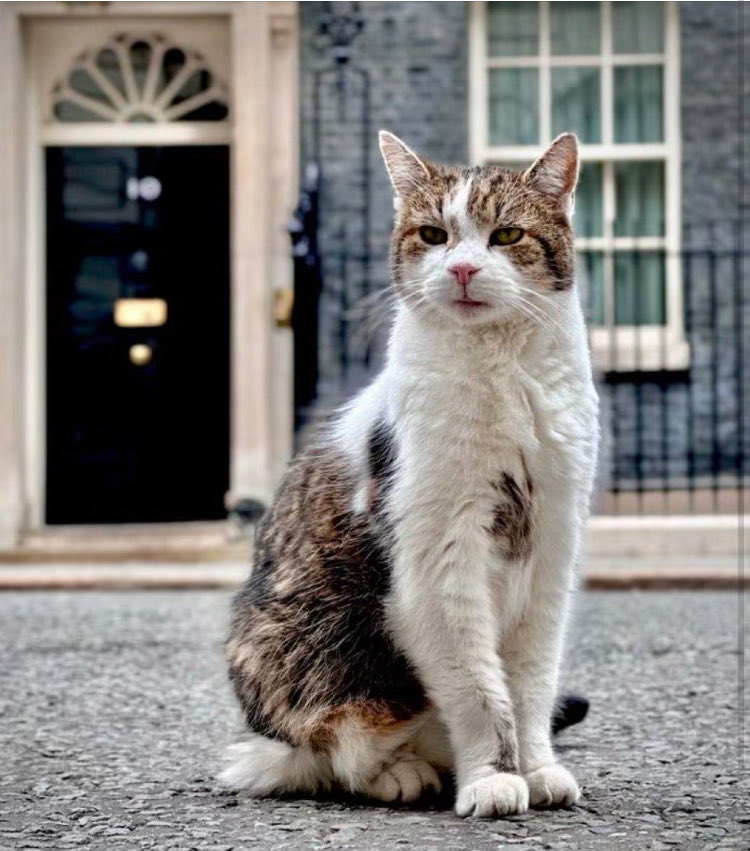
Candidates for UK PM should be lined up and Larry can choose according to which one he touches or sits by. At this point seems safest solution. #starmer#larrythecat#ukpolitics#uk
Cette tour gothique en plein Paris ne mène nulle part.
Pas de porte qui compte, pas d'église autour. Juste un clocher seul, planté au milieu d'un square, entre le Châtelet et la rue de Rivoli. Vous êtes passé devant cent fois.
C'est la tour Saint-Jacques. Et c'est une orpheline.
Au Moyen Âge, elle coiffait une église immense, financée par les puissants bouchers du quartier. Nicolas Flamel, le bourgeois que la légende dit alchimiste, y était enterré.
Puis vient la Révolution. L'église est vendue comme simple carrière de pierres, en 1797. On la démonte, on revend les murs.
Mais le contrat de vente pose une condition étrange. Le clocher, lui, doit rester debout.
Il survit donc, seul. Transformé en fonderie de plomb de chasse, puis racheté par la Ville en 1836.
Un détail scelle sa légende. À son sommet, Blaise Pascal aurait refait son expérience sur le poids de l'air. Un clocher devenu laboratoire.
Aujourd'hui, ses 300 marches mènent à une vue à 360 degrés sur tout Paris.
Une église entière a disparu. Son clocher, lui, veille encore.
"I have accepted Keir Starmer's resignation as my chief servant and have invited Andy Burnham to lay out details for how many meals a day he'll give me"