🧵Wendy Murphy is seeking a court order to evict her 37 year old son, Grant Smith Ellis, alleging he refuses to leave her home, pays no rent, causes property damage, creates unsanitary conditions, and disrupts her peaceful use of the house. I don't care how you feel about Wendy, what he has done to her and her home while freeloading is horrifying. His own mother. #legal #eviction
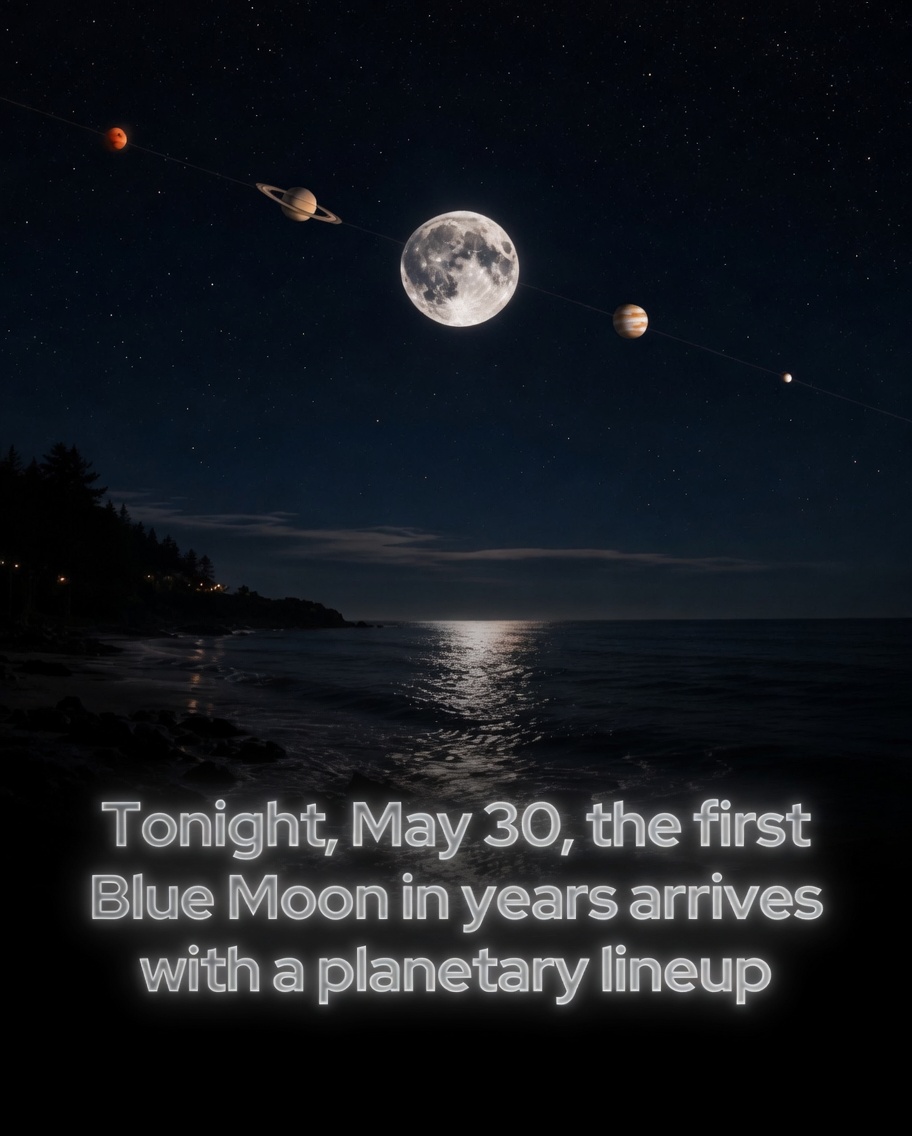
One of the rarest moons of the decade is rising over Earth tonight.
On May 30–31, the second full moon of the month will grace the sky, creating what is known as a Blue Moon. This uncommon event occurs only about once every two and a half years. After this weekend, the next monthly Blue Moon will not appear until December 2028.
This year’s Blue Moon is especially spectacular because it coincides with a beautiful planetary lineup. Before sunrise, Mars and Saturn will shine low in the eastern sky. After sunset, Venus and Jupiter will glow brightly in the west as the full moon dominates the night.
Despite its name, a Blue Moon is not actually blue. The term simply describes the second full moon to occur within a single calendar month. Since the Moon takes roughly 29.5 days to orbit Earth, squeezing two full moons into one month is unusual but not impossible.
The best time to view this Blue Moon may surprise you. Although it reaches peak fullness in the early hours of May 31, many skywatchers prefer to observe it rising on the evening of May 30. As it lifts above the horizon near sunset, the Moon often appears larger and takes on striking deep orange and golden hues.
This warm coloring is caused by the same atmospheric effect that creates colorful sunsets. Near the horizon, moonlight travels through more of Earth’s atmosphere, scattering shorter blue wavelengths and allowing longer red and orange wavelengths to reach our eyes.
The four bright planets sharing the sky with the Blue Moon are not actually close to one another. Jupiter, for example, is currently about 365 million miles (588 million km) from Earth. They only appear grouped together from our perspective here on the ground.
Reports of an explosion heard across the Boston area were likely caused by a large bolide (meteor) entering the atmosphere. A significant flash was detected by the GOES-19 satellite and does not appear to be associated with thunderstorm activity.
https://t.co/qWfq2yC80i
Cats "make biscuits" (or knead) for a variety of reasons, including expressing affection, showing contentment, and marking territory.
It's a natural behavior rooted in their kittenhood when they kneaded their mothers to stimulate milk production.
I took 1.7 million photos over 6 days to catch this photo of a commercial jet in front of the sun.
The moment it happened, TWO floating prominences were visible, making this not just my best aircraft transit photo, but one of the luckiest of my career! Videos of the transit 👇
Pink Floyd are honoured with their first official UK commemorative coin from The Royal Mint. Featuring the prism from The Dark Side of the Moon, the coin will be available from 9am on 14 May.
View the Music Legends Pink Floyd Range: https://t.co/0e3DOuNTfw
#PinkFloyd
@CrowsRoots I loved going to a Bonnie Raitt concert at Mohegan Sun. We got a room and had an even better time not having to drive home at night. There is a lot to do there other than gambling. I plan to go again!
My Daughter came over to tell me her daughter heard that I had brain cancer. 🙄 She took this photo and sent it to me to upload to prove I'm not ill. The people who are ill are those that are spreading these ridiculous stories. I'm fit as a fiddle. You don't have to worry.
BREAKING: Donald Trump meets privately with Kash Patel and Pete Hegseth to assure them their jobs are secure, amidst swirling rumors that they may be the next cabinet members to be fired.
We boomers truly have been there, done that, and still moving forward into the new future. I hate to see it going to hell in this country right now. I thought by now we would have learned to stop fighting wars and negotiate with words instead of bombs.
We are called "the elderly." But that quiet label hides something most people rarely stop to consider. We are the last living witnesses of a world that no longer exists.
Look at us and you might see gray hair, slower steps, and the patience that time teaches.
But listen to our story — really listen — and you'll realize something extraordinary.
We are the only generation in human history to have lived a fully analog childhood and a fully digital adulthood.
That's not a small thing. That's one of the most breathtaking journeys a human being has ever been asked to make.
We were born in the 1940s, 50s, and early 60s, into a world still rebuilding from the rubble of World War II.
Our toys were marbles and hopscotch and card games at kitchen tables. When the streetlights flickered on, that was it — childhood adventures were over, and it was time to go home. No smartphones. No streaming. No endless scroll.
We built our memories in the real world. With scraped knees and laughter echoing down streets and friendships formed face to face.
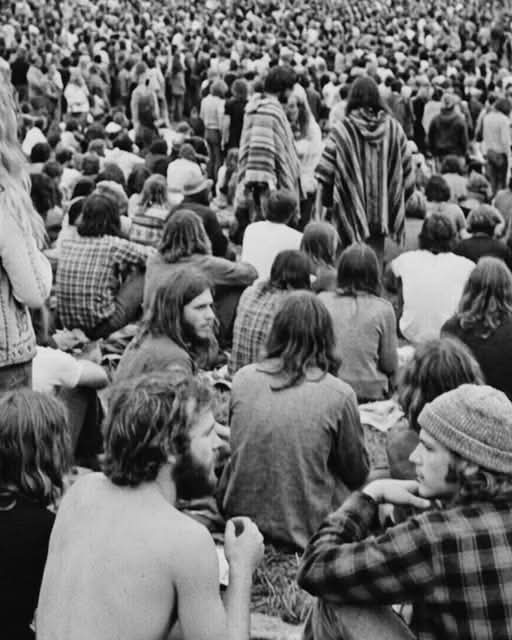
In 1969, we sat in living rooms staring at black-and-white televisions as Neil Armstrong took humanity's first steps on the Moon. Hundreds of thousands of us stood in muddy fields at Woodstock believing — really believing — that music and community could reshape the future.
We fell in love to vinyl records spinning on turntables. We waited days, sometimes weeks, for handwritten letters to arrive. We learned patience because information didn't come instantly. Mistakes were fixed with erasers — not a delete button.
Then the world transformed.
Machines that once filled entire rooms shrank to devices lighter than a paperback. We went from rotary phones and party lines to seeing the face of someone we love on the other side of the ocean — instantly, on something that fits in a pocket.
We watched the birth of the personal computer. The arrival of the internet. The smartphone. Artificial intelligence.
And through every single shift — we adapted.
Not because it was easy. Because that's what our generation does.
We also carry the weight of history in our bodies.
We grew up afraid of polio and tuberculosis. We watched science defeat them. We witnessed the discovery of the structure of DNA, the decoding of the human genome, the transformation of medicine itself. We survived pandemics across decades — and kept going.
Few generations have been asked to absorb so much change in a single lifetime.
And through all of it, certain things never changed.
We still know the joy of a cold glass of lemonade on a hot afternoon. The taste of vegetables picked straight from a garden. The value of a long conversation that unfolds slowly, without a screen interrupting it.
We have celebrated births and mourned losses. Carried the stories of friends who are gone. Watched the world become something our younger selves couldn't have imagined — and found ways to belong in it anyway.
We are not relics.
We are living bridges between two entirely different worlds.
Our memory carries something the modern world needs — proof that progress doesn't have to erase wisdom. That speed doesn't have to replace patience, kindness, or reflection.
So when someone calls us elderly, we can smile.
Because behind that word is something remarkable.
We crossed two centuries. Witnessed eight decades of transformation. Walked from handwritten letters to artificial intelligence — and never lost our sense of what actually matters.