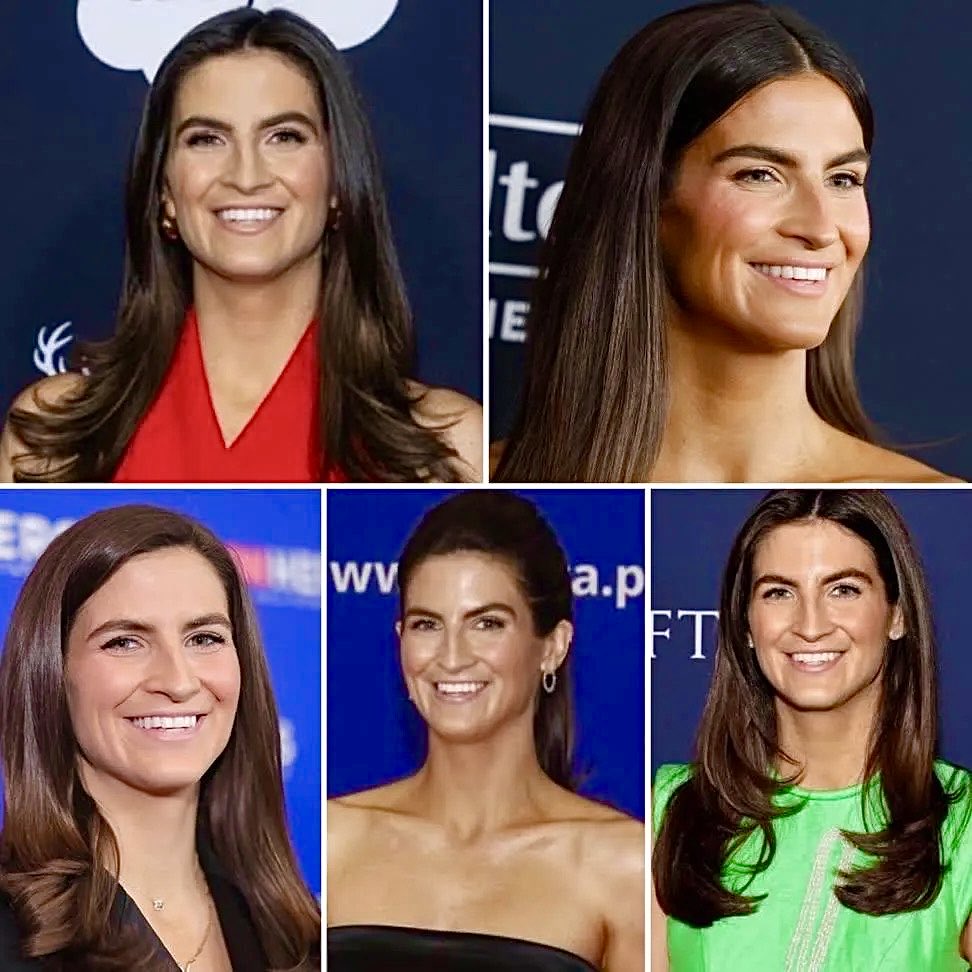
Make no mistake about it, Trump banned CNN from the White House because of this brave woman, her tenacious tenacity got under Trump’s thin skin.
Trump, the lifelong misogynistic coward, has always feared strong, opinionated women.
Kaitlan Collins, I see you — I celebrate you.
Yuval Abraham and Rachel Szor look drawn and solemn amid strong applause for Golden Lion Contender ‘NAZA’ exposing Israeli targeting of civilians in Gaza #VeniceFilmFestival
Breaking News: The Trump administration has proposed trading land just inside Yosemite’s western boundary to a Las Vegas developer. https://t.co/3scQY80BS3
It’s still Twitter.
It’s still the Kennedy Center.
It’s still Lake Ontario.
It’s still the Department of Defense.
It’s still the Gulf of Mexico.
And Donald Trump is still a pedophile.
At 33, Eleanor Roosevelt opened her husband’s suitcase and found a bundle of letters that would alter the course of her life.
They were love letters.
Written by Lucy Mercer—her own social secretary, a woman Eleanor trusted and had welcomed into her home.
The discovery shattered her.
Eleanor even offered Franklin Roosevelt a divorce. But the situation was far bigger than a broken marriage. Franklin’s family feared a divorce would ruin his political future, and intense pressure was placed on both of them to stay together.
So they remained married.
But the relationship they once had never truly returned.
Yet something unexpected happened.
Instead of allowing the betrayal to define her, Eleanor began to redefine herself.
Born in 1884, Eleanor had known heartbreak long before she found those letters. She lost both of her parents as a child. Her father, whom she deeply loved, struggled with alcoholism and died while she was still young. Her mother often criticized her appearance and nicknamed her “Granny,” believing she lacked beauty.
Orphaned before age ten, Eleanor grew up under the care of a strict grandmother in a home where affection was scarce.
Like many young women of her era, she believed marriage would provide the love, belonging, and security she had always searched for.
For years, she devoted herself to being a wife, mother, and partner in her husband's ambitions.
Then she found the letters.
And slowly, she realized a difficult truth:
Her worth could not depend on someone else’s love.
Not long afterward, another challenge emerged.
Franklin Roosevelt contracted polio and lost the ability to walk without assistance. Many assumed his public career was over.
Eleanor refused to accept that.
She traveled in his place, attended events he could no longer reach, met with citizens, listened to their concerns, and carried their stories back to him.
During those journeys, she discovered strengths she had never fully recognized in herself.
She learned she could stand independently.
When Franklin became President in 1933, Eleanor transformed the role of First Lady.
Rather than remaining behind ceremonial walls, she stepped directly into the lives of ordinary Americans.
She visited coal mines, factories, hospitals, military bases, migrant camps, and struggling communities across the country. She wanted to witness reality firsthand instead of hearing filtered reports.
She also held press conferences exclusively for female reporters, opening doors for women journalists who had long been excluded from important political access.
Then came one of the defining moments of her public life.
In 1939, acclaimed singer Marian Anderson was denied permission to perform at Constitution Hall because she was Black.
Eleanor responded by resigning from the Daughters of the American Revolution in protest.
She then helped support the effort that led to Anderson’s historic concert at the Lincoln Memorial.
On Easter Sunday, Anderson performed before roughly 75,000 people while millions more listened by radio.
What began as a personal stand became a powerful national statement.
Critics attacked Eleanor relentlessly.
She continued anyway.
When Franklin died in 1945, many believed her public career would fade with his.
Instead, a new chapter began.
President Harry Truman appointed her to serve as a delegate to the newly formed United Nations.
There, she chaired the Human Rights Commission and played a central role in shaping the Universal Declaration of Human Rights.
On December 10, 1948, the declaration was adopted.
The woman who had once questioned her own value helped create one of the most influential human rights documents in history.
Eleanor Roosevelt’s life was never defined by a husband’s betrayal.
Nor was it defined by childhood loss, insecurity, or the expectations society placed upon women.
Those experiences influenced her journey.
They did not determine her destination.
She never received the life she originally imagined.
Instead, she built a new one—turning pain into purpose, adversity into strength, and her voice into a force that expanded opportunity, dignity, and hope for millions around the world.
@EternallyJustMe Generally speaking, Garland is head and shoulders above the others, but what she gets in A Star is Born is very difficult to see, a brilliant musical performer giving life to a multidimensional character. Grace Kelly got the Oscar for her less interesting role.