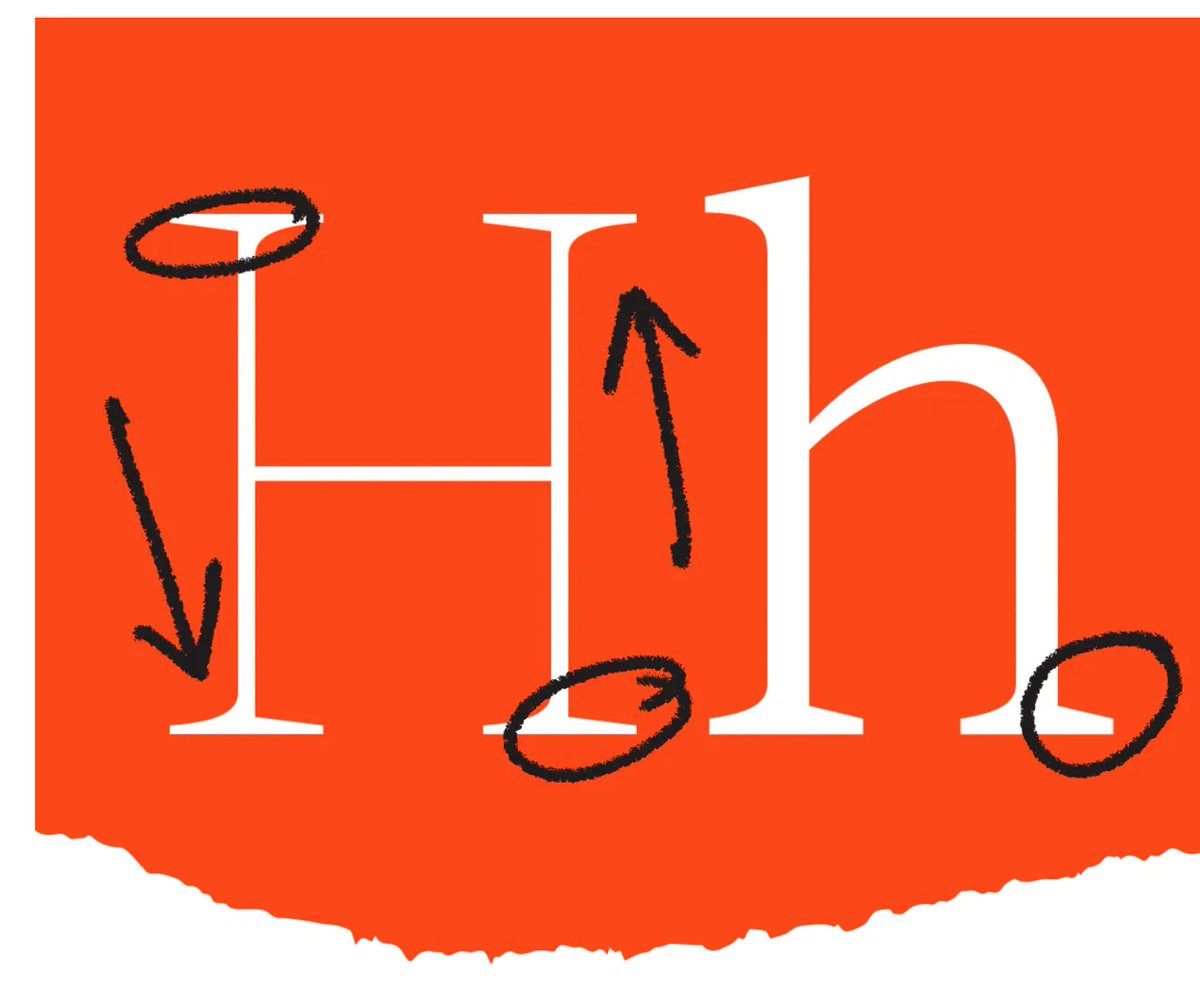
It turns out that this is one of those pesky optical illusions. Let’s abstract this to circles/squares for a moment. This circle looks much smaller than this square, right? And yet, they match exactly in height and width.
The same illusion happens with spacing. For instance, the squares and circles below have literally identical margins between them. But it appears that there is much more space surrounding the circles.
When you adjust ‘tracking’ (also called letter-spacing in CSS), you are modifying the amount of air in between the letters, by adding or subtracting from all margins equally. This is sometimes done for aesthetic reasons, for instance.
Just as there are counterforms within letters, we can also observe the shapes of the space in between letters. All of these negative shapes need to be balanced, and spacing is a huge part of how we achieve this.
Who thought bold fonts could be such a fascinating rabbit hole !
This the kind of stuff I’m on Twitter for: learn about a fascinating topic I never spent more than a minute thinking about from someone that dedicated hundreds of hours to it
At that extreme of weight, the extenders get a bit shorter, to emphasize the way the words set like a BRICK. The lowercase ‘i’ actually gets shorter just so that the ‘dot’ can fit comfortably in relation to the ascender height.
Weight also impacts spacing. The spacing of a given weight of a typeface is connected to the amount of space trapped inside the letters. So as the ‘air’ is removed from the counterforms, the amount of space between letters is similarly reduced to maintain balance and rhythm.
As letters get bolder, the differentiation between thick and thin (also called contrast) tends to increase. This is primarily to allow the counterforms to be as large as possible, despite the extra weight, because we rely so heavily on counterforms for reading.
Myself and my colleagues at Lettermatic designed custom fonts for @DoubleFine's #Psychonauts2, and I wrote 3000 words about the design process! 🕹🔤
https://t.co/VgqgEkT1lQ
One way to visualize the importance of counterforms is a 'blur test.' Adrian Frutiger did tests like this in the 1970s when designing his eponymous typeface (originally for a French airport). See how one set of drawings is easier to distinguish, in these harsh conditions of blur?
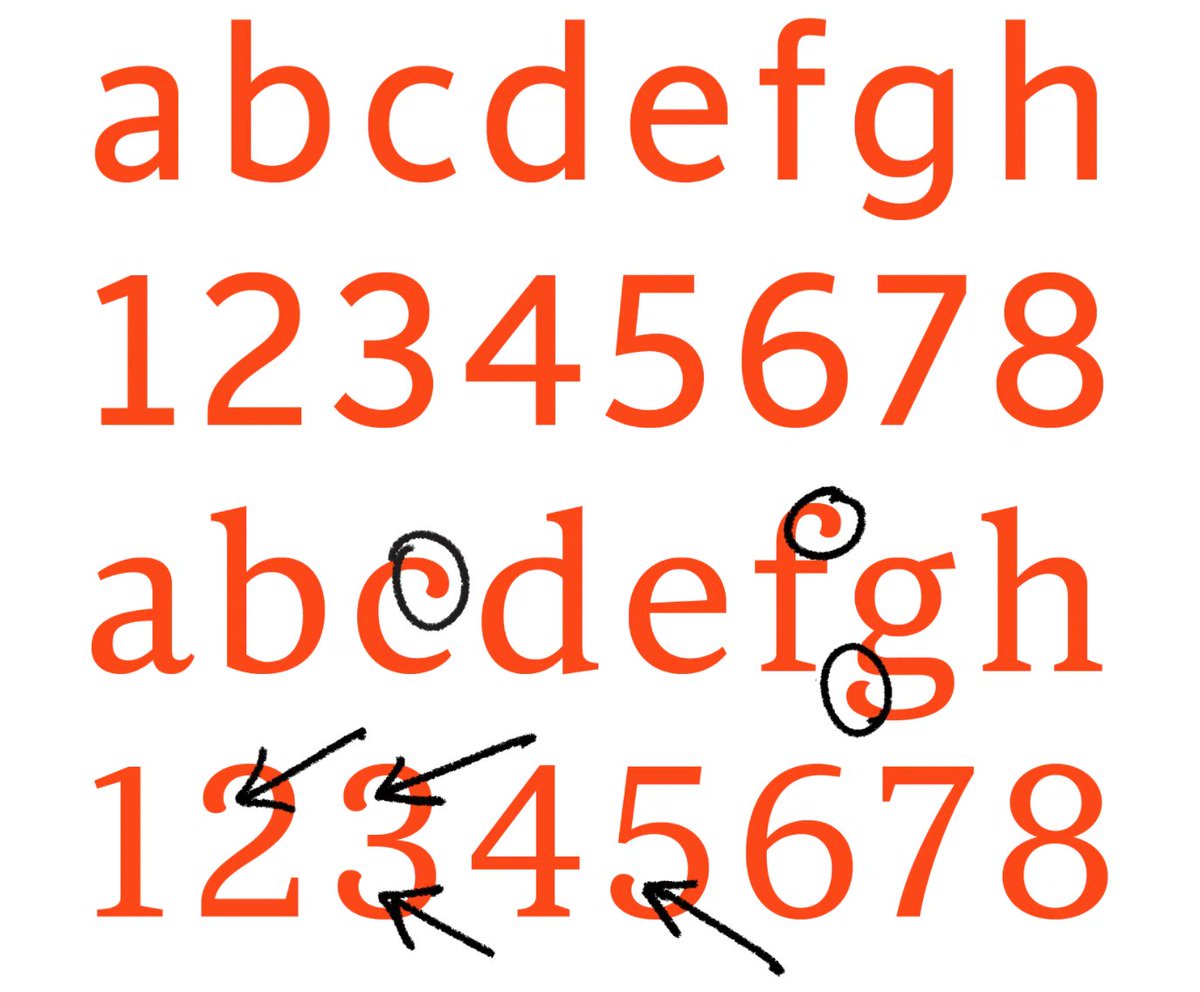
By drawing different counter shapes, I can make many letters appear without changing the positive shape at all. This is shown here to illustrate the importance of the counterforms, and how they impact our perception of letter shapes.
NEW 🧵: Did you know we only started mixing Sans and Serif typefaces in the last 200 years? One genre is much older than the other.
Let’s discuss the birth of sans serif typefaces.
I’ll use @lettermatic_abc fonts for some visuals: Parclo Sans & Serif.
https://t.co/B5qMa8lic6
I designed 56 fonts for @RootInsurance with my colleagues at @lettermatic_abc, and I wrote 3000 words about the design process here:
https://t.co/oF8pIvCJT7
I designed 92 fonts for Starbucks, with the team at @lettermatic_abc. If you're interested about the process, I wrote 2000 words about it here:
https://t.co/z6e86pDGG8
Today I would like to do a thread about 'counterforms.' They are a critical building block of typeface design... but what are they? How do they work?
I'll also talk about how I thought of the counterforms in Really Sans.