We're building @wabi, because we want a future where software isn’t owned, it’s shared.
Read the manifesto, and sign up here!
Site lead by the talented @joonasvirtanen
https://t.co/UpNV9JndQj
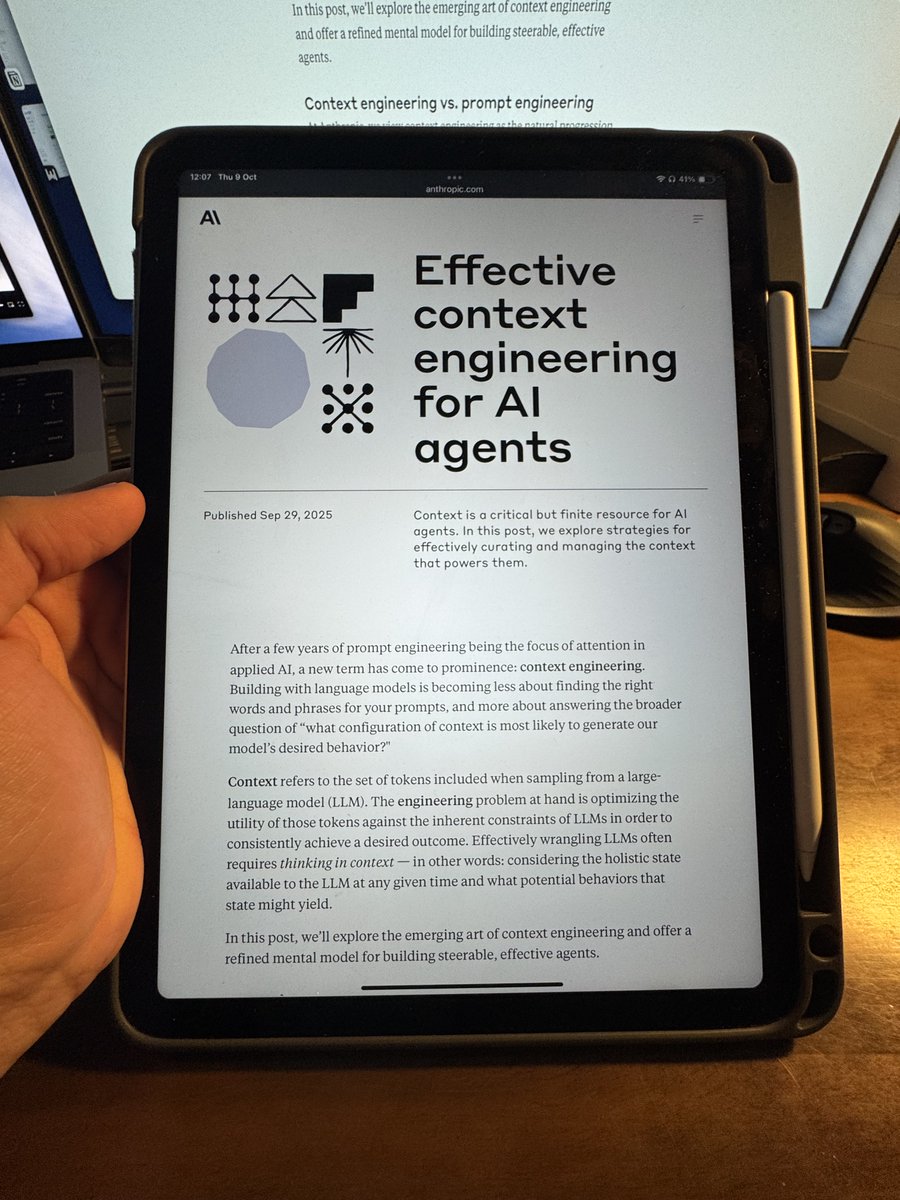
I just read Anthropic's guide on effective context engineering for AI agents.
It rewires how you think about context, with beautiful simple explanations.
📩 Bookmark this.
Here's what you need to know:
- Context Rot is real. As the number of tokens in the context window grows, the model’s ability to accurately recall info from that context drops. Happens with every LLM, even with a 1M context window.
- Prompt and Context engineering don’t contradict. They go hand in hand. Prompt engineering is about writing clear instructions to get the output you want. Context engineering is more programmatic, the art and science of filling the context window with just the right info.
- System prompts drive the whole performance of your model. A good system prompt balances it out: specific enough to guide behavior, but flexible enough to give the model strong heuristics. Don’t make it too vague or too restrictive.
- Tools must have clear names, separation of concerns, solid error handling, and return results without being too verbose. If a human engineer can’t say which tool to use in a situation, an AI agent won’t either.
- Providing examples in prompts and tool descriptions helps. But it has to be a set of diverse examples that add something. "Teams will often stuff a laundry list of edge cases into a prompt trying to cover every rule the LLM should follow for a task. We don’t recommend this."
- It pays off to spend time pre-processing to get the right info to the LLM. It’s fine. Otherwise, dumping info into context backfires. Without guidance, an agent wastes context by misusing tools, chasing dead ends, or missing key info.
Common context engineering techniques:
Compaction: have the agent summarize its message history when you’re near the context limit. The art is in which critical info you keep: unresolved issues, overall goal, execution steps, etc.
Structured note-taking: the agent can jot down notes outside the context window and pull them in when needed.
Sub-agent architectures: if your main agent needs to do a task that’s not critical to the main workflow, have it spawn sub-agents, return results, then dump their context. Your main agent might search for info -> call a sub-agent to search -> get the results. Keeps the main context clean.
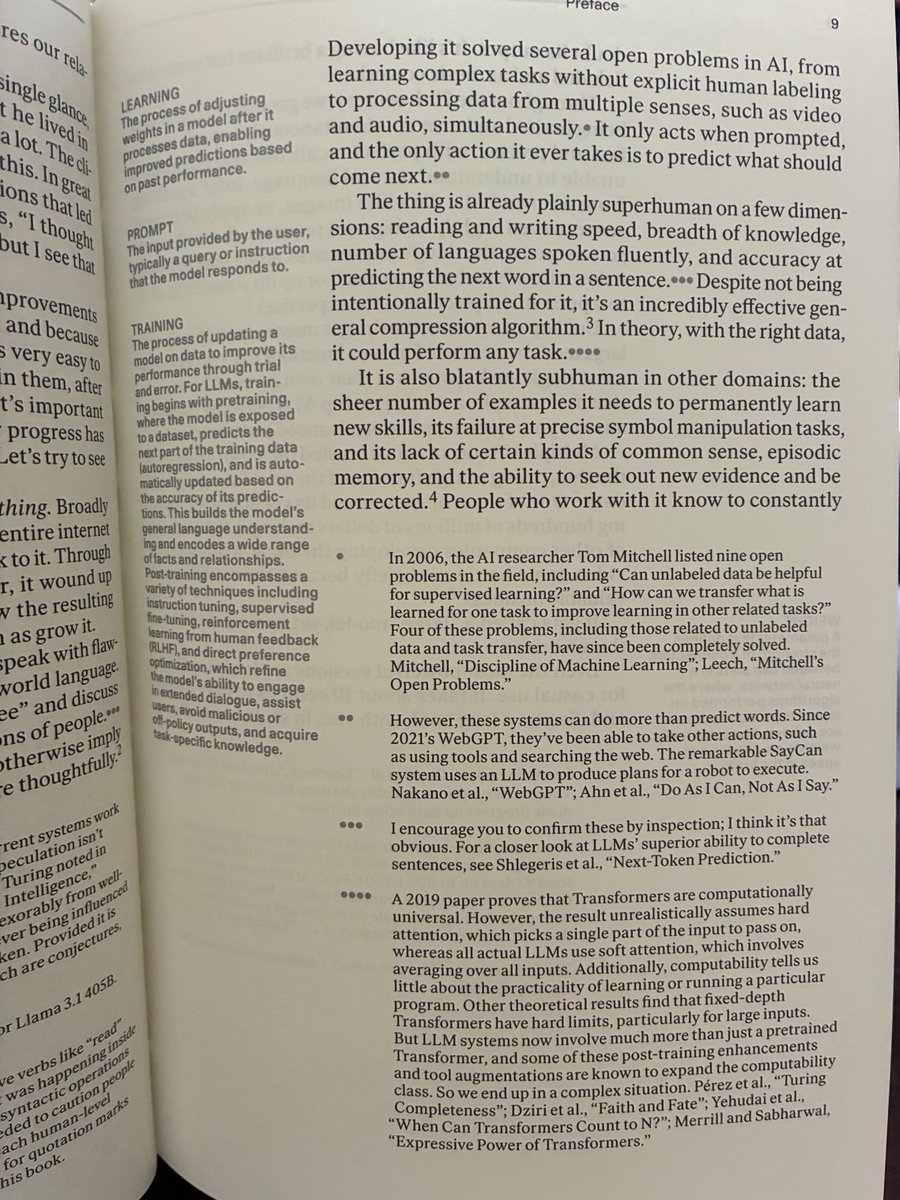
One of the reasons I like this book is because it is unapologetically written for the aspirational reader. It is dense with footnotes.
If you want to understand AI, but don't have a deep background in it, this book will give you as much back as you put in.
Highly recommend.
Google did it again!
First, they launched ADK, a fully open-source framework to build, orchestrate, evaluate, and deploy production-grade Agentic systems.
And now, they have made it even powerful!
Google ADK is now fully compatible with all three major AI protocols out there:
- MCP: To connect to external tools
- A2A: To connect to other agents
- AG-UI: To connect to users.
AG-UI is the newest addition, which is an open-source protocol that enables agents to collaborate with users.
They worked with the AG-UI team to build this.
It takes just two steps:
- Define the agent with ADK, with its tools, state, etc.
- Connect it to any React frontend using CopilotKit.
The AG-UI protocol gives you a bridge between a backend AI agent and a full-stack app.
And CopilotKit provides the building blocks you need to bring your agents into frontend applications.
Find the repo in the replies!
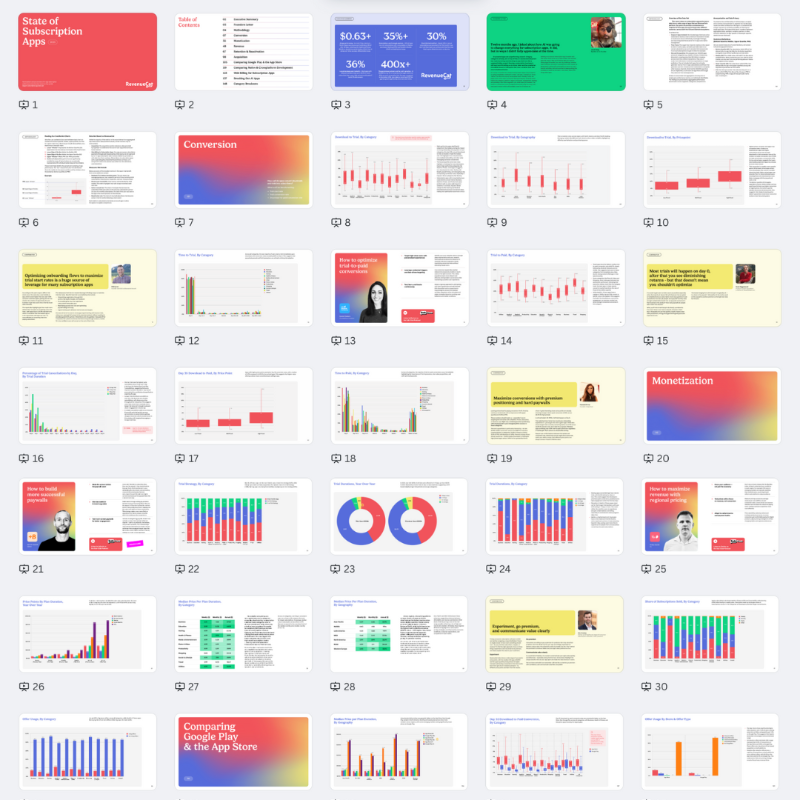
📊 The 2025 State of Subscription Apps is here.
260+ pages of insights.
Benchmarks from 75,000 apps
$10B+ in revenue analyzed
More than 25 expert contributors
Get the full report.
In the past, many vertical software companies were started by domain experts who added technical capacity later.
Now it’s the inverse. AI-native startups are led by technical founders who hire for context early.
AI delivers differentiation. Context drives defensibility.
"Vibe coding is NOT the same as using AI to write code that's reviewed, tested, and maintained."
Here's my new episode with @leerob (@cursor_ai's Head of AI Education) where he shows how to build AI apps properly using planning, test-driven development, agent workflows, and more.
Some tips from Lee:
1. Work with AI to create a detailed technical plan upfront including requirements, design preferences, and your preferred tech stack.
2. Ask AI to write tests so that it can check its own work. Add this to the plan: "Write unit tests for business logic, e2e tests for core user journeys."
3. Add "make descriptive commits" to your initial plan so that you can track what AI changed and why.
📌 Watch our beginner-friendly tutorial now: https://t.co/oHMQGMFWbD
Also available on:
Spotify:
https://t.co/bOwWD8TD8n
Apple:
https://t.co/OyRcBvAKRl
Newsletter:
https://t.co/MF9pA82r1i
Containerized versions of 450+ MCP servers!
MCP Containers bundles hundreds of Model Context Protocol servers into ready-to-run Docker images—no setup headaches, no version drift.
100% open-source, and secure.
MCP is now the de facto standard for LLM agents
200 developers came to NYC to compete for $10,000+ and prove what’s possible.
Here’s what we saw at the Build the Future MCP Hackathon (🧵):
About Mary Meeker 👩💼
Known as the ”Queen of the Internet”
Was part of the Morgan Stanley TMT team which led the Netscape IPO (which kicked off the dot com boom in 1996). Bill Gurley was her colleague!
She published the 1st edition of the “Internet Trends Report” in 1996 - a 322 page deep-dive into the web’s potential.
She published the ITR every year & called out several trends early:
(a) 1996 → Explosion of online population (X10 by ‘00)
(b) 2000 → Online ads > print ads (happened in ‘04)
(c) 2008 → Mobile dominance (took place in ‘14)
She joined Kleiner Perkins in 2010 to lead their Growth Fund → invested in Facebook, Spotify, Square , Twitter, and Snap
In 2018, KP Growth Fund spun out & re-branded as BOND Capital.
She paused writing the Internet Trends report in 2019 to focus on building BOND - but she’s back to long form & data driving writing w/ the AI Trends Report 2025
every single person working on a crypto product needs to watch this.
i dont care if you're a founder or intern, ops or marketing. any role and any place in the org chart.
watch and rewatch.
this is what crypto is missing.
im dreaming of:
- abstracted gas fees
- no popups
- one balance across every chain
- no bridges, no switching wallets
- apps that just work
- usernames instead of addresses
- fast recovery
- same experience on mobile and desktop
feels small, but would change everything