World Cup is starting today and all I had to do was break up with my girlfriend so I can concentrate and support Bruno Fernandes and Cristiano😅😅
Watch and enjoy
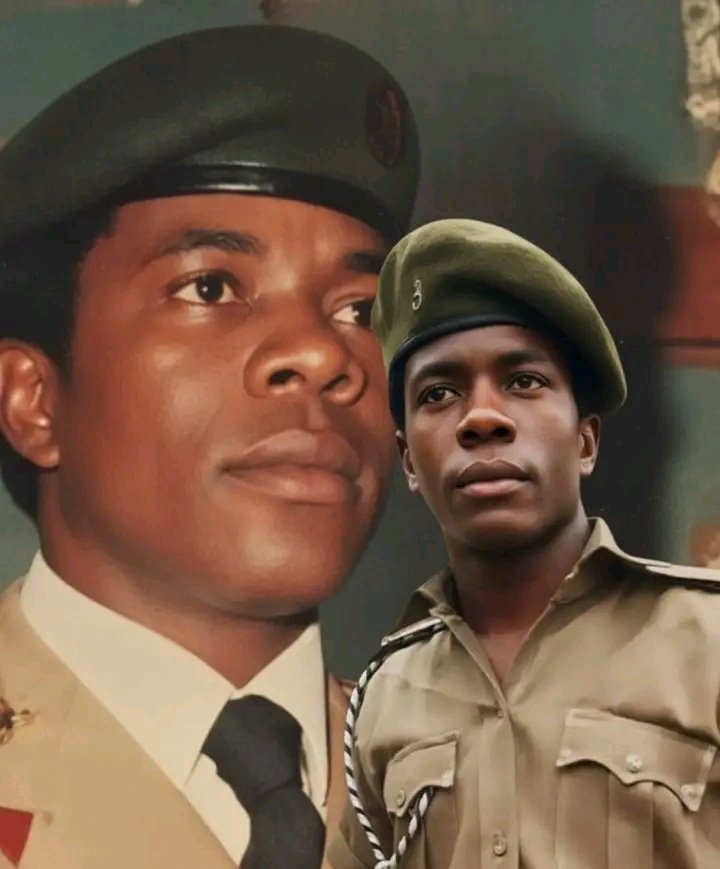
The Tragic history of major Daniel bamidele 😭
Major Daniel Idowu Bamidele was a Nigerian Army officer born in 1949. He joined the Nigerian Army in 1968 during the Nigerian Civil War and fought under Colonel Benjamin Adekunle and later Colonel Olusegun Obasanjo. Bamidele was commissioned as an officer on July 29, 1970, after training at the Nigerian Defence Academy.¹ ² ³
He had a distinguished military career, attending the US Army Infantry School at Fort Benning, Georgia, and graduating with outstanding results. He also completed the junior division course at the Ghana Armed Forces Staff College in Teshie and the Command and Staff College in Jaji.⁴
Bamidele's troubles began in October 1983 when he reported a planned coup against President Shehu Shagari to his General Officer Commanding, Major General Muhammadu Buhari. Instead of being commended, he was detained for two weeks in Lagos. In 1985, he was implicated in the "Vatsa Coup" against General Ibrahim Babangida and executed by firing squad on March 5, 1986, for failing to report the alleged conspiracy. #nigerianhistory
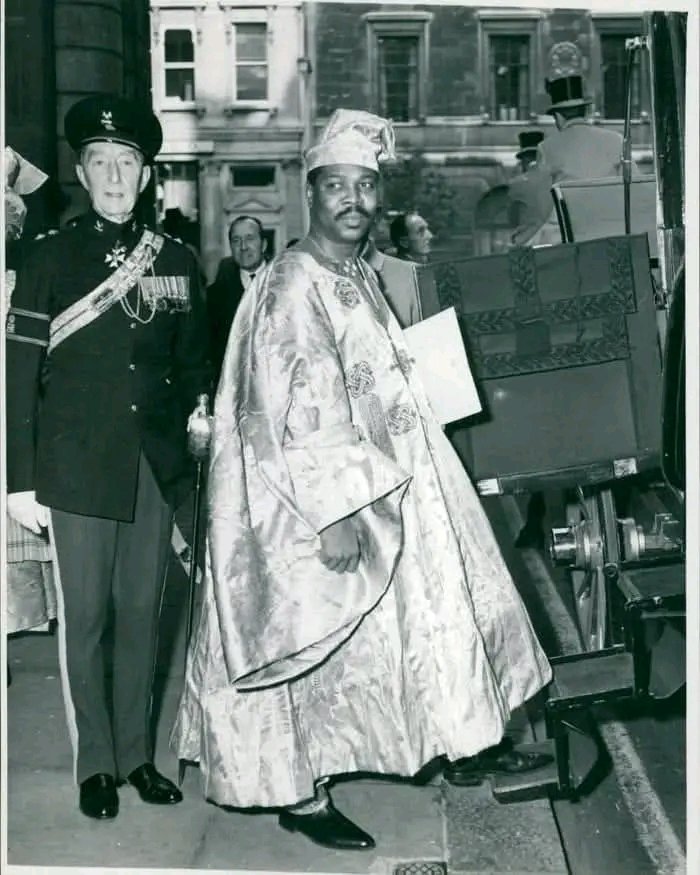
On 4th November 1966,
THE newly appointed Nîgèrîáñ High Cømmissi0nēr, Brig@dier Babafemi.O Ogundipe, set out from his residence to Buckingham Pal@ce to present his credentials.
Babafemi Ogundipe, born on 6th September 1924 to Yoruba parents from Ago-Iwoye, in modern-day Ogun State, held significant roles in Nigeria's milit@ry Gøvernmēñt.
He served as the de facto Vîce PRĒ$IDENT under Johnson Aguiyi-Ironsi's administration in 1966.
With a distinguished milit@ry career, including service in Burma during WØRLD W@r II, Ogundipe achieved the rank of Brig@dier in May 1964.
Tr@gically, he p@ssed awãy in London on 20th November 1971.
#nigerianhistory
The 1953 Kano Riot When Nigeria Almost Exploded Before Independence
Before Nigeria became one country in 1960, the path to unity wasn’t smooth and in 1953, it almost turned violent. In Kano one of Northern Nigeria’s biggest cities a riot broke out that lasted four days, shook the foundations of regional politics, and revealed how fragile the idea of a united Nigeria really was. 
The riot erupted because of heated disagreements between Northern and Southern political leaders about when Nigeria should become self-governing and what powers each region would have after independence. 
- Many leaders in the North felt that their region was not ready for immediate independence and feared Southerners would dominate the new government.
- Southern politicians especially Yorubas and Igbos were pushing for earlier self-government and a faster transition to independence. 
The disagreement boiled over in Kano, where ethnic tensions flared and everyday citizens were pulled into the conflict. The clashes caused heavy casualties and dozens of deaths, with hundreds injured. 
This wasn’t just a local riot it represented a deeper truth: Nigeria’s regional and ethnic divisions were already dangerously strong before independence.
The idea that the country would simply come together peacefully after colonial rule was more fragile than many people think.
Northern leaders felt threatened by immediate self-government. Southern leaders were frustrated by what they saw as delays and power politics. The crisis in Kano showed how close Nigeria was at times to splintering even before it became a nation. 
The 1953 Kano Riot is a shocking reminder that: Independence wasn’t just about removing colonial rule it was about fighting for identity, power, and future control. Many early conflicts in Nigeria weren’t random they were strategic struggles over who Nigeria would be after the British left.
In a way, the riot predicted later tensions including the coups of the 1960s and the civil war that followed.#nigerianhistory