@DanielDumbrill In China, police videos focus on positive images, while criticism is censored, protests are suppressed, and negative footage is blocked; in the U.S., police misconduct is more openly recorded and shared.
@WarrenVsCCP In China, police videos focus on positive images, while criticism is censored, protests are suppressed, and negative footage is blocked; in the U.S., police misconduct is more openly recorded and shared.
@TomcatJunkie In China, police videos highlight service and assistance, while violent incidents are rarely allowed to circulate; in the U.S., videos of police violence spread more freely.
@maryann_3040 In China, police videos highlight service and assistance, while violent incidents are rarely allowed to circulate; in the U.S., videos of police violence spread more freely.
@SilentlySirs In China, police videos highlight service and assistance, while violent incidents are rarely allowed to circulate; in the U.S., videos of police violence spread more freely.
@Orlando71156528 In China, police videos highlight service and assistance, while violent incidents are rarely allowed to circulate; in the U.S., videos of police violence spread more freely.
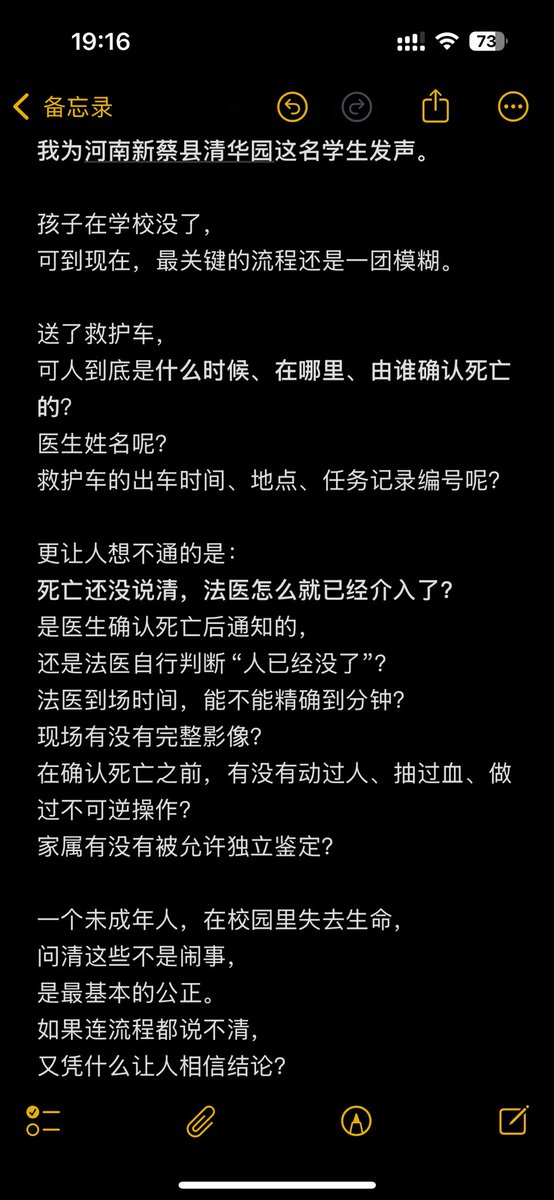
I speak out for a student who died at Qinghuayuan School in Xincai County, Henan, China.
A child died at school,
yet the most basic procedures are still unclear.
If even the procedure cannot be clearly explained,
how can the conclusion be trusted?