hi! it’s been a while
we’re working on relaunching — with more in-depth coverage of how cities work — and some other exciting content, too
stay tuned 👀
@GRTCTransit Importantly, Richmond launched their successful @GRTCPulse bus rapid transit service a half-decade ago. Their long-range plan includes a large expansion of the Pulse network, and supplementary improvements to local transit.
For most transit agencies, riders' fares usually bring in a notable portion of revenue.
Recently, some have eliminated fares entirely — deciding community-defined social, economic and environment-based goals outweigh the hassle.
https://t.co/POeiE90I3j
@intercitytransi "We said free fares for all," says Joe Dillard, Director of Equitable Innovation & Legislative Policy at @GRTCTransit. "It doesn’t matter if you make $75K, or $0, but the impacts for the lower-impact community are second-to-none.”
https://t.co/POeiE9iRhr
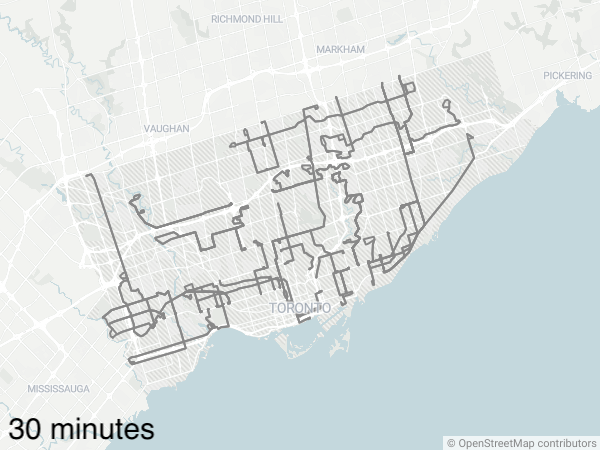
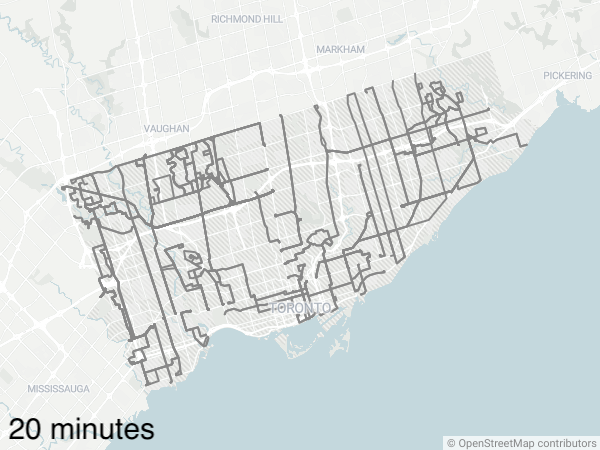
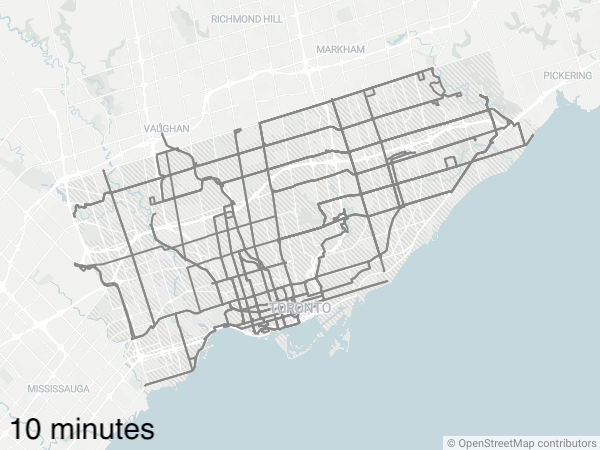
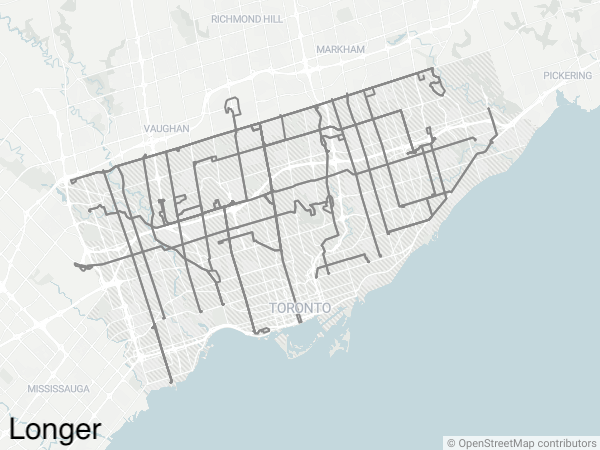
Using a range between 7 a.m. and 11 p.m., we've been exploring how to visualize cities' frequent networks — or lack of them.
Look at Toronto's network: a high number of routes with 10-minutes-or-better service, but oddly less than the number in the "10 Minute Network".
You've probably heard the phrase "Frequency is Freedom" — except, this standard ranges widely between cities.
In Toronto, it means a vehicle coming every 10 minutes or better. In Philadelphia, it's 15 minutes. And in many other cities, frequent transit doesn't even exist.
Fare-free transit has been gaining attention in American cities — but some would understandably argue funding should be used to improve service, instead
Now, some agencies are choosing both
https://t.co/POeiE9iRhr
They primarily connect people with knowledge, but also assist with food security, job searching, healthcare access and so much more
https://t.co/hcYlBFp4Ru
This is happening across the board, with the East Side Access in New York, Metrolink's SCORE program in the wider Los Angeles region and the GO Transit network in the Greater Toronto Area https://t.co/Bo3OgRmMyL
The North-South Link will provide more frequent service by eliminating the need to terminate trains at North or South stations
Worcester, Providence, Lowell and Brockton currently receive hourly service and could see a big jump in ridership, if the MBTA electrifies the network
just thinking about how Boston could convert its little-used commuter rail network into a massive second subway express system if they just electrified it and built a mile of tunnels connecting north and south station
Toronto has become the latest city to remove minimum parking requirements in some capacity — helping improve affordability, and incentivizing developers to build more housing https://t.co/tOdZDTnxz7
For this piece, I got to speak to two brilliant minds in the field of public transportation and still can't believe it.
I spent two days re-writing it and it still doesn't do justice.
https://t.co/AeGf5ztbuF
This is particularly evident in cities with a commuter rail network, which have experienced the biggest drops in ridership
Turning these into a frequently-run, all-day service enables better access for residents across the whole city
https://t.co/Bo3OgRmMyL
The quickest (and usually, cheapest) method to improve mobility is to improve existing service — like how cities are currently re-configuring their service plans to provide adequate coverage, all day long
The fastest alternative to implement is just running more frequent service, often with infrastructure already in place (like buses and trains that are idle outside rush hour).