Though financial prudence is not in vogue with either party these days, the effects of Washington’s spending and debt tilted ways won’t be confined to Washington. Accordingly, we thought you might like to see the article below. (2/2)
https://t.co/gmhjKIgWz3
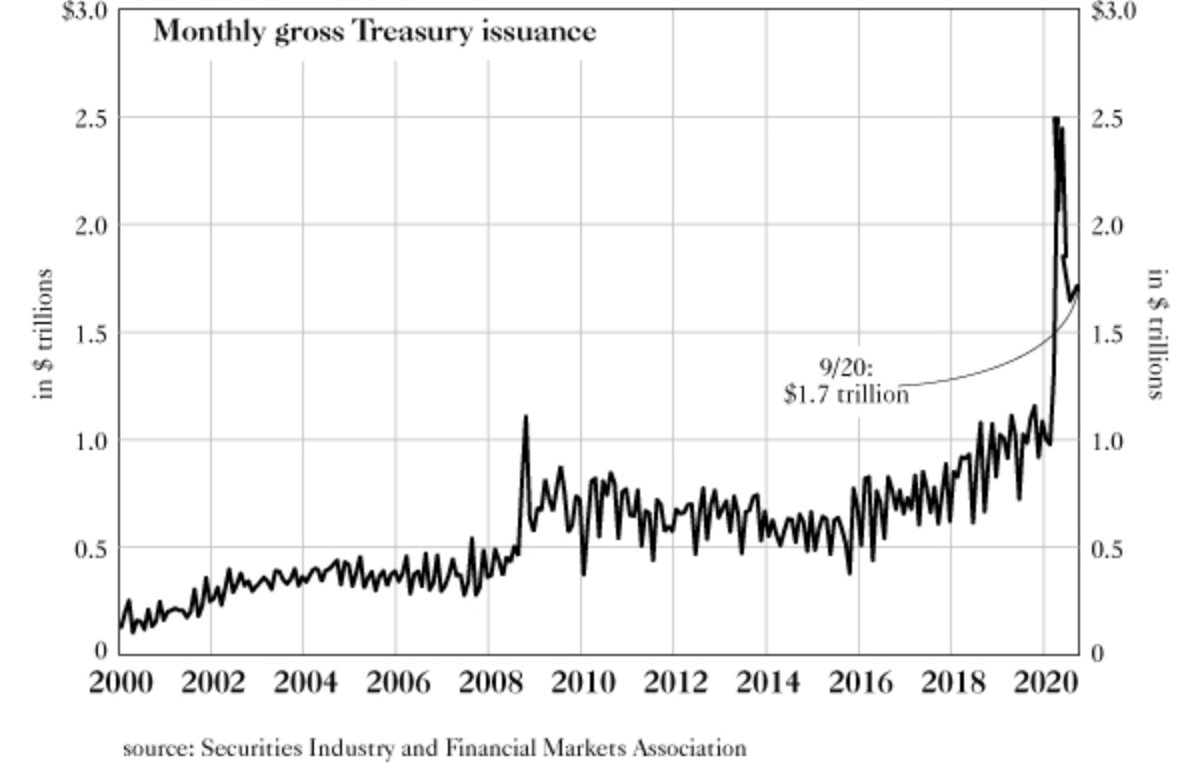
The numbers are astounding. The national debt rose by $7.8 Trillion over the four years of the Trump Presidency. Now President-elect Biden is proposing a $1.9 trillion stimulus with “more to come.” (1/2)
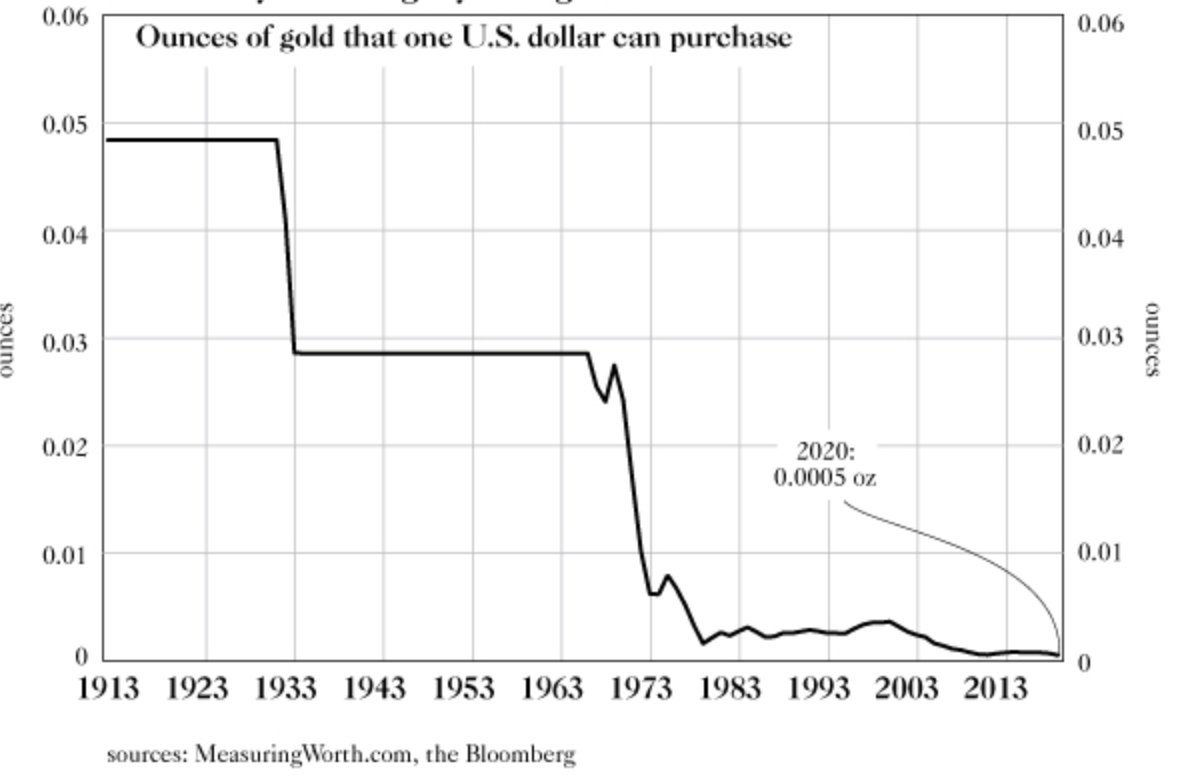
The dollar has given up 86% of its value against gold over the last 20 years, and since the founding of the Federal Reserve, it has lost 99% of its value relative to gold.
There are no free lunches, and as we have printed more currency, its relative value has fallen.
To see the flip side of what's occurring in the value of a dollar, look at the degree to which the printing presses are rolling. It's unprecedented in American history.
The article below is a reminder that there are no free lunches. Trees don't grow to the sky and economic lines are never straight.
https://t.co/qjgl3Aew85
For a little perspective, and year to year history, on the national debt take a look. This storm has been growing for a long time, but now we are indeed at a tipping point.
https://t.co/BiPQlrnbgv
"In October 2020 alone, the U.S. piled on an additional $284.1 billion to its federal deficit, which is a new monthly record..."
https://t.co/mROyVDGm1S
As we await election returns, this Barron's article from January 20th, 2003 is as timely as ever regarding the financial concerns they described 17 years ago. In many cases, the numbers that caused concern then are now multiples of what they were.
https://t.co/3HTRL3S7nH
Our Executive Director, Mark Sanford, participated in a symposium on Article 1 Powers of Congress hosted by @FreedomWorks. It led into a conversation on debt and deficit reduction and we thought you might find it of interest.
https://t.co/eaE45bf6Vb
Unfortunately, it appears this election spells "lose-lose" as it relates to government spending and our debt. We would love to get your thoughts on the article below.
https://t.co/hqDQqp0DOE
Mark had the chance to visit on-air yesterday with Patti and Lucas on "Palmetto Morning's" on WRHI in Rock Hill, South Carolina. They talked about debt and its impact on all of us...and that's something we all can be doing.
https://t.co/eGwT2Z53Hv
The @USCBO released their long-term outlook yesterday that projected federal debt held by the public will rise from 98 percent of GDP by the end of the year to 195 percent by 2050.
The 2019 World Bank Study showed when the debt-to-GDP ratio of a country exceeds 77% for an extended period, it slows economic growth.
Every percentage point of debt above this level costs the country 1.7% in economic growth.
https://t.co/umOxmIsx8z
If you are up for a little detail on the history of our national debt, the link below will prove helpful.
Take a look, share with a friend...and we would love your thoughts on debt and our history.
https://t.co/3wmWIlhiIg
Per @USCBO: America's national debt will nearly match the size of the nation's economy for the first time since the end of WWII at the end of September.
108 percent of the size of the economy by 2030.
Drew Desilver of @pewresearch recently described the debt and deficit as the collateral damage that's come with Covid-19. He’s right, and it makes it that much more important that each one of us educate ourselves and friends as to what's occurring here.
https://t.co/di8fsWOBm9
The U.S. government spends as much on interest on our national debt as the combined budgets of Commerce, Education, Energy, DHS, HUD, Interior, Justice & State.
Three, this is de facto state sponsored income inequality...to the tune of trillions of $. Those trillions of $ bid up the price of things like stocks & real estate, but does less for people who don't own these things. That can create political instability for all of us. (4/4)
The @federalreserve balance sheet is exploding. They have added about three times what they did in the 2008 financial crisis, and this has a few implications. (1/4)
Two, they are creating a financial bubble. Bubbles always work well - until they pop.
The money that the @federalreserve has put into our financial system, has much to do with the concurrent rise in stocks, real estate and more. (3/4)