🚨NEW: Britain needs a new kind of housing.
Our cities are unaffordable and locking young professionals out.
@ukonward’s new report, Towering Ambitions, makes the case for Purpose Built Young Professional Accommodation (PBYPA).
A deregulated, market-led fix. 🏙️
https://t.co/agaQORMdjW
To generate more growth, there is one great national cheat code staring us in the face: building an absolute ton of homes in the place that wants them most, needs them most and yet is somehow building the least: London. Me for @thetimes
https://t.co/6l8js9y87R
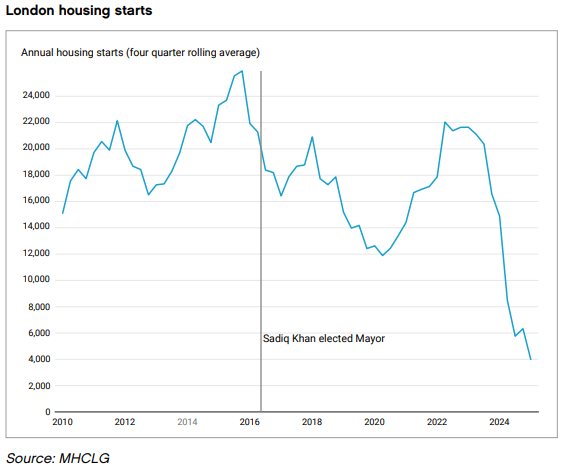
Housebuilding in London faces its strongest headwinds since the Second World War.
Starts are down to just 4,170 a year, while nearly 100,000 people moved to London last year.
London has not got close to the Labour Government's target of 88,000 new homes a year since the 1930s.
As a result, only the richest households can even afford the cheapest homes and the median household cannot afford any house, without a hefty inheritance.
London residents are also the most supportive of building new homes in their local area (59% in favour versus 14% against).
And if we got London building homes again, the UK economy would grow by tens of billions a year.
For all these reasons and more, we desperately need to build more homes in London. My new report, jointly written with @LRFredricks and with forewords from @JamesCleverly and @policylaila lays out how a future Mayor and Housing Secretary can build the homes London needs. We just need to:🧵
🚨 Out this morning - the joint @ukonward and @CPSThinkTank report on how to turbocharge housebuilding in London.
A brilliant report by @LRFredricks and @Ben_A_Hopkinson that is REQUIRED reading for those serious about growth, fairness and the London Mayoral election…
Read it HERE: https://t.co/C3cVwuBRm9
There's been a lot of talk about Manchester. But the great big thing that Burnham could do for growth is to fix London. A landmark new report by @CPSThinkTank and @ukonward shows why we desperately need to focus housebuilding on the capital - and how we can do so. (1/?)
Onward is delighted to announce that Ed Hezlet is joining us as Head of Energy. Ed will be leading on our energy abundance work, bringing policy expertise and insight that has made him one of the foremost analysts of Britain’s energy issues.
Follow Ed on X here @watt_direction
Last week, a Centre for London report, presented at the London Housing Summit, argued that the main cause of London’s home ownership crisis is ‘affordability, not shortage’. The BBC lapped it up.
There is clearly a housing crisis in London, especially in home ownership. But it’s a crisis of supply.
Last year, work started on only 5,547 private-sector homes, down 84 per cent in a decade, and on around 4,500 affordable homes. Between 2001 and 2021, the proportion of homes that were owner-occupied fell from 57 per cent to 47 per cent, while the proportion that were privately rented almost doubled to 30 per cent.
Greater London’s population has also increased by around 2.7 million. To suggest this has little to do with supply is misguided.
✍️ Sam McPhail
Article | https://t.co/3JxQHpW57G
This sounds totally mad. *Every* single new development, regardless of size? Needing a dedicated new surgery of its own? With no discretion as to other local infrastructure that might be needed more?
What modelling have they done, if any, about the impact on housebuilding, already at a record, devastating low?
2 tables ➕ 4 chairs 🟰 £££ a year 🤯
Councils call it a 'pavement licence'.
Hospitality businesses call it a rip off.
We call it a Table Tax.
The government should scrap it.
If you agree, sign our petition 🔗👇
#ScrapTheTableTax
🚨@ukonward is recruiting!
We are seeking a new Head of Energy
Task: to lead on designing a detailed plan for UK energy policy for a centre-right government in a post Net Zero world, capable of day one implementation👇
https://t.co/LhELnVLlrj
For the benefit of more abundant, better housing, it is clear we need rapid reform for more projects like this to begin, and to deliver more homes more quickly.
More on how to get this done in London specifically v soon!!
The Aylesbury Estate casts a brutalist shadow over my London neighbourhood.
Delays are a waste of potential: its regeneration will deliver an additional 1500 homes and replace existing stock with better, safer homes.
The planning system must expedite these projects for impact.
Southwark councillors rubber-stamp agreement for NHG to pull out of later phases of 4,200-home regeneration: Southwark Council wants to speed up Aylesbury Estate project amid reports of anti-social behaviour in vacant blocks https://t.co/6YFUtXWa5d #ukhousing#housing
Yet as pointed out in the article, delivery remains slow.
Legal challenges and layer after layer of planning including national planning policy guidance, the London Plan, and Southwark’s local plan all pull in different and the same directions simultaneously.
Small groups with something to lose are very effective at stopping change. That's one reason why getting necessary homes and infrastructure built can be so difficult. In our new paper, Onward sets out a proposal to introduce land readjustment to the UK, a land assembly mechanism that gives the people most likely to oppose a development, the landowners themselves, excellent reasons to support it. But how does it work?
Working with a developer, land readjustment allows landowners to pool their plots into a single scheme so the area can be redeveloped as a whole. After the development, the landowners receive back a piece of land in the area, significantly more valuable than the plot they had before.
The scheme can *only* go ahead if a supermajority of landowners who own a supermajority of the land in question support the scheme. This prevents any single or small group of landowners from vetoing a development while also motivating the developer to draw up a scheme that can win the support of most of the landowners, and to return to the drawing board if it doesn't.
This democratic element makes land readjustment less fragile than assembling land by negotiating with each landowner, when any single party can refuse to engage or demand an extortionate price. It is also far more democratic than compulsory purchase.
To learn more about land readjustment, and its use in other parts of the world, read our paper below.
https://t.co/rHNGnyJlLy
The government spends over *£10 billion* a year on welfare benefits outside of Universal Credit.
Come to our event on 17th March with @FraserNelson, @Helen_Whately, @LanaHempsall and @CarolineElsom to join us in discussing how this sprawling and complicated system developed and what should be done about it.
Sign up on the link in the threaded tweet.
The crisis in Iran & Middle East is causing the beginnings of a gas spike.
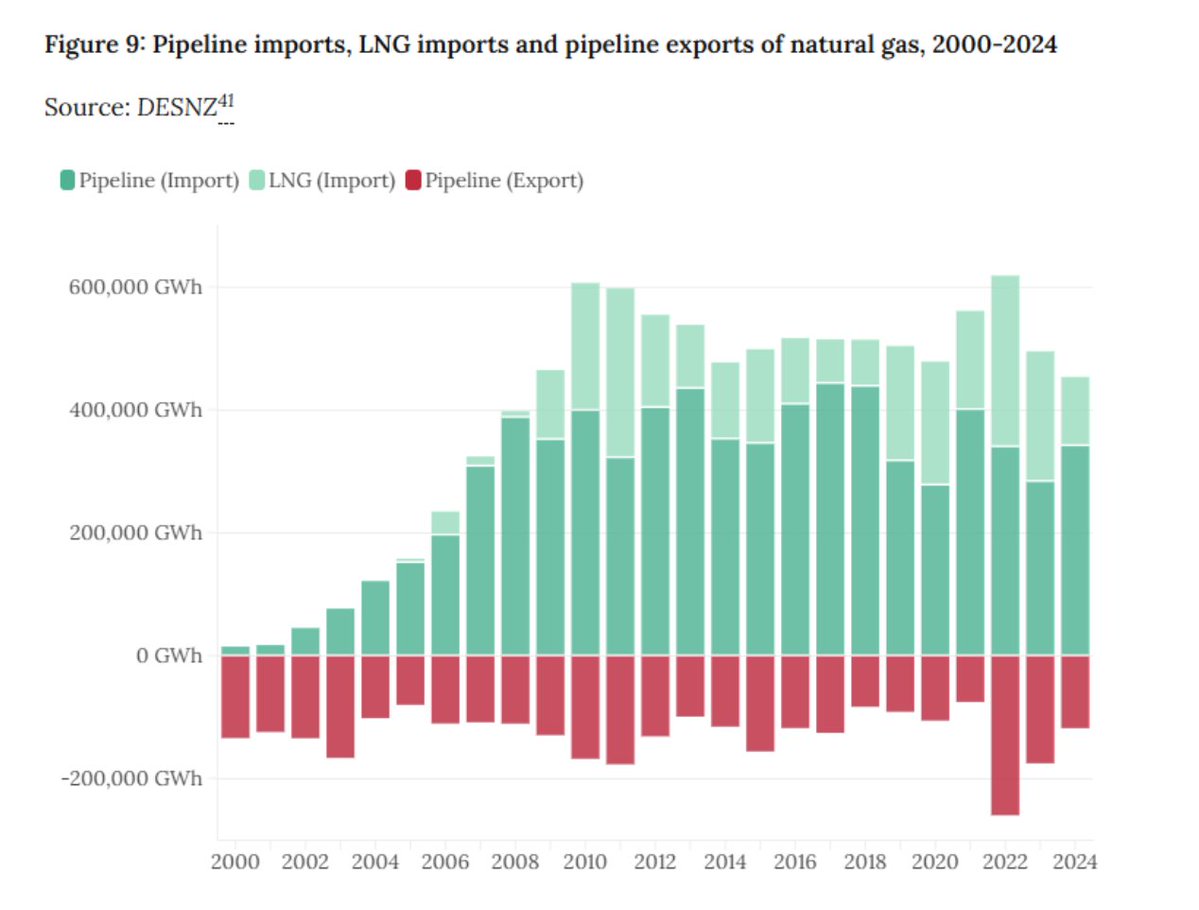
This is because Britain is highly reliant on imports of liquid natural gas (LNG).
This is - in part- because we don’t have sufficient domestic supply to meet our needs. 1/