Fifty years ago, Britain was in crisis. The music was good, but the economy was a mess. We were forced to go to the International Monetary Fund for a deeply-damaging bailout.
The UK needed a new direction - that's why Margaret Thatcher and Keith Joseph founded the Centre for Policy Studies. A full half century on, our new Director, the economist and journalist @LiamHalligan, is arguing for another policy revolution now: lower taxes, cheaper energy, affordable welfare, an economy that rewards work and enterprise.
Britain’s problems are urgent – we're on the brink of another bailout. But we changed course fifty years ago - and with the right ideas, we can do so again.
The Centre for Policy Studies - where the fightback begins.
Not properly recognising liabilities is one of the two pathologies of every financial scandal. (The other is recognising revenue which never turns into cash flow).
When Rachel Reeves changed the headline debt target in October 2024, she did more than tweak an accounting rule.
By switching from measuring public sector net debt (PSND ex BoE) to public sector net financial liabilities (PSNFL), ministers created a channel to spend the same taxpayer money through Public Financial Institutions, or “PuFins”.
Debt is still debt but under Labour’s fiddled measure, spending via a PuFin barely registers against the fiscal rules.
As this excellent report from the Centre for Policy Studies shows, had the old target been kept, the October 2024 Budget would have broken the debt rule by £6 billion. Under the new one, it passed with £16 billion to spare.
Expect next week’s budget to include more examples of this dodge.
https://t.co/kmMocIgpLp
🧵The Government has finally bowed to common sense and given the green light to the Jackdaw gas field in the North Sea.
It’s the sensible move and a good start, although a decision on Rosebank is not yet forthcoming.
✍️@the_sean_ridley
For this paper, @CPSThinkTank & @createstreets carried out the most detailed survey of England’s green belts in years. We trawled the data. We flew drones. And we found there is an awful lot of beautiful, valuable land. But there is an awful lot that isn't.
100 years ago, England embarked on one of the most successful urban expansion projects in history: the creation of Metroland, beautiful suburbs and towns, strung along the railway lines out of London. Today, @SCP_Hughes, @createstreets and I set out how we can do it again. (1/?)
100 years ago, England embarked on one of the most successful urban expansion projects in history: the creation of Metroland, beautiful suburbs and towns, strung along the railway lines out of London. Today, @SCP_Hughes, @createstreets and I set out how we can do it again. (1/?)
A bigger state or a smaller state focused on growth?
CPS Director @LiamHalligan explains the battle of ideas between Andy Burnham and Kemi Badenoch - and what their competing visions mean for Britain’s future.
Britain ranks 30th out of 38 OECD countries for tax competitiveness.
In a new report, Daniel Herring at the Centre for Policy Studies warns that a wealth tax and higher capital gains tax would make Britain even less competitive - making the UK the least tax-efficient place in the OECD to own property.
https://t.co/CYZTcMOyFe
🧵Today the Tax Foundation updates its annual International Tax Competitiveness Index. It’s not great reading for the UK, which comes 30th out of 38 countries.
✍️Daniel Herring @CPSThinkTank
Britain ranks 30th out of 38 OECD countries for tax competitiveness.
In a new report, Daniel Herring at the Centre for Policy Studies warns that a wealth tax and higher capital gains tax would make Britain even less competitive - making the UK the least tax-efficient place in the OECD to own property.
https://t.co/CYZTcMOyFe
'If the UK were to introduce a Wealth Tax, it would come last in the Property Tax category, making it the worst place in the OECD to own property or assets,' warns @CPSThinkTank ahead of Chancellor John Healey's first Budget https://t.co/wcEOOoan1B
Timely findings from @TaxFoundation and @CPSThinkTank today given the headlines about taxing family businesses - we are steadily becoming a worse and worse place to create and pass on wealth https://t.co/8UA8a4RKq4
Editor's Pick of the Week:
The IMF says Britain is leading the G7 in cutting its deficit. But there's a catch: Labour's spending cuts exist largely on paper.
Fiscal rules reward promises, not delivery.
Daniel Herring of @CPSThinkTank explains why the numbers don't add up.
https://t.co/s2coZjjvlx
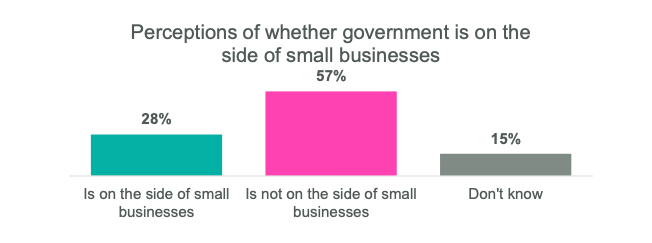
John Healey reportedly wants to help small businesses at the Budget. New polling by @OpiniumResearch for @CPSThinkTank shows they definitely need it!
Opinium polled 500 SMEs bosses across the UK. Overwhelmingly, they felt govt wasn't on their side. But help do they need? (1/?)
John Healey reportedly wants to help small businesses at the Budget. New polling by @OpiniumResearch for @CPSThinkTank shows they definitely need it!
Opinium polled 500 SMEs bosses across the UK. Overwhelmingly, they felt govt wasn't on their side. But help do they need? (1/?)
Help shape the future of @CPSThinkTank, CapX and The Capitalist podcast🎙️as their new Head of Digital!
If you know how to make policy relevant and engaging...
Apply here: https://t.co/sleamDU14z
“The trains didn’t improve. The money was spent on some repaint jobs so Labour ministers could have their photos taken.”
Andrew Griffith, Shadow Chancellor, speaks to CPS Director @liamhalligan at Conservative Party Conference about Labour’s renationalisations and misguided expansion of the state.
The IMF says that Britain “stands out” as the only major advanced economy set to reduce government borrowing over the coming years.But, based on previous behaviour, the fiscal constraints written into Labour’s spending plans are highly unlikely to materialise.
"One thing we know about this Labour Party is that it hates cutting spending," says Daniel Herring, Head of Economic and Fiscal Policy at The Centre of Policy Studies.
Previous attempts to remove the winter fuel allowance or trim welfare spending were reversed after a backbench rebellion.
And that was straight after, rather than in the run-up to, a general election. So you have to have somewhat heroic levels of trust to believe that Labour ministers will stick to these spending plans.
“The fact is,” says Herring, “no chancellor for a long time, of whatever party, has stuck to their fiscal rules …. That’s why we are in danger – a major shock will blow up these plans and expose the UK to the wrath of international lenders, who will demand radical cuts to public spending, which will hurt the people Labour are trying to help”
Read the full @CapX piece here: https://t.co/c57NMKddwM