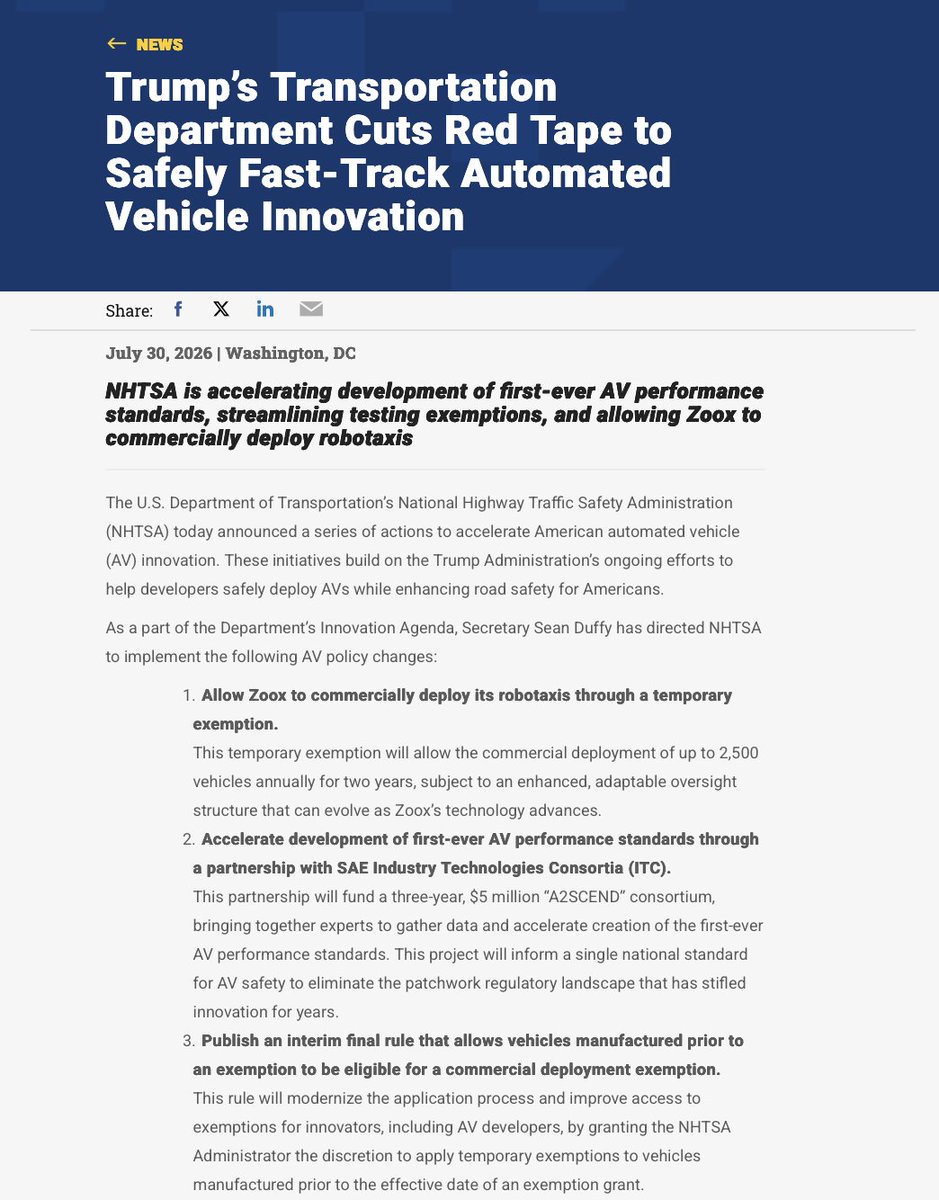
The Trump Administration today announced a series of actions to "cut red tape and accelerate American automated vehicle innovation."
Secretary Sean Duffy has directed NHTSA to implement the following AV policy changes:
1) Accelerate development of first-ever AV performance standards through a partnership with SAE Industry Technologies Consortia (ITC): This partnership will fund a three-year, $5 million “A2SCEND” consortium, bringing together experts to gather data and accelerate creation of the first-ever AV performance standards. This project will inform a single national standard for AV safety to eliminate the patchwork regulatory landscape that has stifled innovation for years.
2) Allow Zoox to commercially deploy its robotaxis through a temporary exemption: This temporary exemption will allow the commercial deployment of up to 2,500 vehicles annually for two years, subject to an enhanced, adaptable oversight structure that can evolve as Zoox’s technology advances.
3) Publish an interim final rule that allows vehicles manufactured prior to an exemption to be eligible for a commercial deployment exemption:
This rule will modernize the application process and improve access to exemptions for innovators, including AV developers, by granting the NHTSA Administrator the discretion to apply temporary exemptions to vehicles manufactured prior to the effective date of an exemption grant.
4) Establish a new Federal Docket for public feedback on NHTSA’s updated safe AV development and deployment guidance:
NHTSA is updating its technical guidance for AVs for the first time since 2017—focusing on key safety areas like emergency responder interactions, safety management systems, remote assistance, and post-crash behavior to help the industry scale up driverless deployments safely.
5) Streamline the application process for Part 555 exemptions by updating guidance and soliciting feedback from the public:
By updating the Part 555 exemption process—which allows automakers to temporarily sell a limited number of non-compliant vehicles, primarily to test new technologies—NHTSA is aiming to create a more flexible oversight structure for exemptions and summarize recent AV framework activities, including expanded exemption pathways, streamlined crash reporting, and ongoing efforts to modernize Federal Motor Vehicle Safety Standards (FMVSS).
The U.S. economy grew at an annualized rate of 1.5% in the second quarter (April through June) of 2026, according to the advance estimate released by the U.S. Bureau of Economic Analysis.
This follows a 2.1% growth rate recorded in the first quarter of 2026.
GOOD NEWS 🇦🇺 Tesla’s Megablock architecture will be used for the massive Goyder Battery in South Australia, making it one of the first utility-scale projects in the country to deploy this next-generation technology.
This flagship facility marks the twelfth joint venture between Tesla and clean energy developer Neoen, continuing to expand their massive footprint across the nation's grid. With the launch of the project's second stage, the combined energy storage capacity between the two companies has officially surpassed an incredible 2 GW milestone.
Designed for rapid deployment, this pre-engineered setup clusters four Megapack 3 units together to create a single 20 MWh block. By utilizing this advanced hardware across the first two stages, Tesla is supplying a massive 454 MW / 1,814 MWh of total capacity.
To achieve the 907 MWh required for the newly launched Stage 2, the site will need approximately 45 Megablocks, translating to roughly 180 individual Megapack 3 units.
Backed by 15-year capacity contracts under the state's Firm Energy Reliability Mechanism, site preparations are scheduled to kick off in August 2026. Connecting directly to the Bundey substation, the asset is slated to begin commercial operations by 2028.
By rolling out this high-density storage technology at scale, Tesla continues to play a foundational role in fast-tracking South Australia's transition to renewables and securing long-term grid reliability.
BREAKING: 𝕏 has officially launched the X Chat API and Chat XDK for developers.
• Send and receive end-to-end encrypted DMs with the X Chat API
• Messages are encrypted on-device, so X cannot read them
• Build customer-support bots, AI agents and more inside X Chat
• Supports groups, media and real-time events
• Available in Python, JavaScript, Rust, Go, C# and Java
• Free for pay-per-use developers for a limited time, up to 500 messages per day
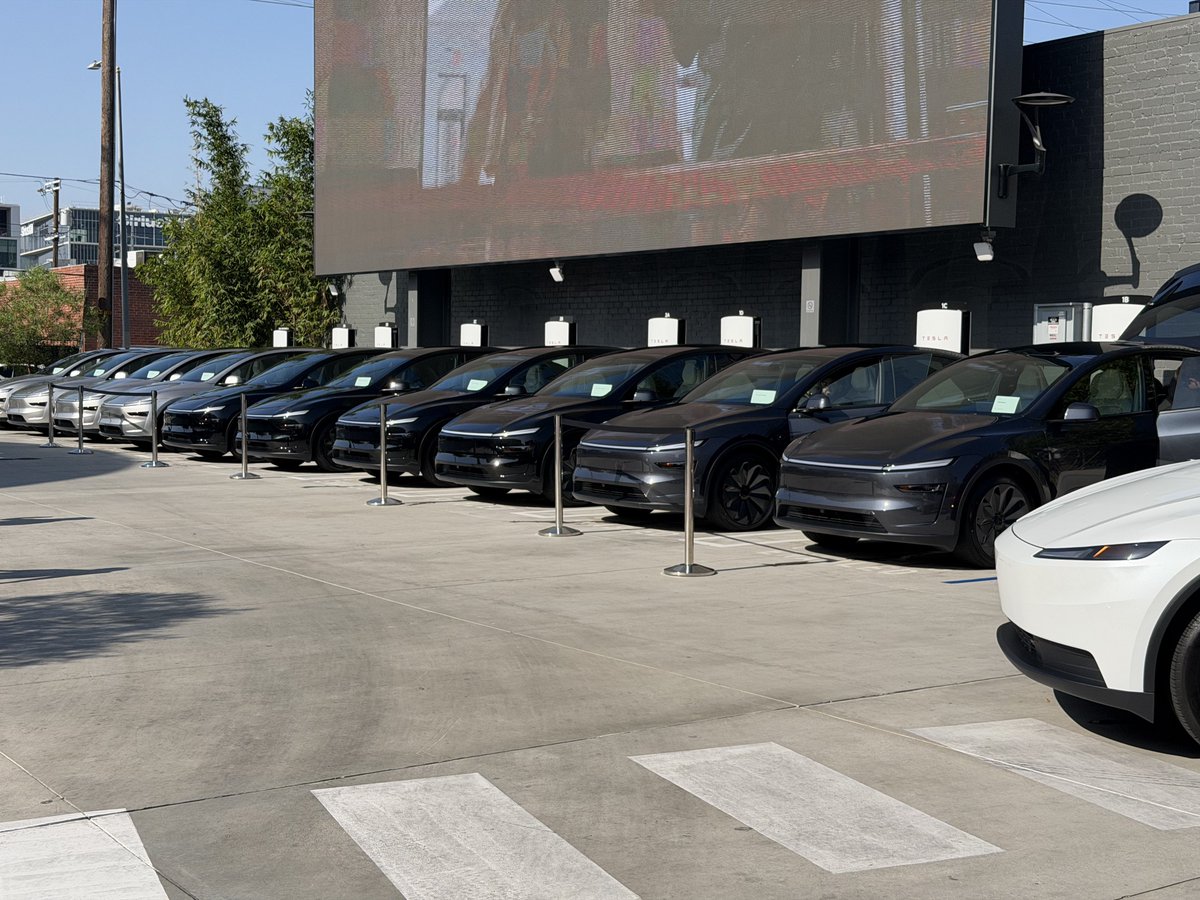
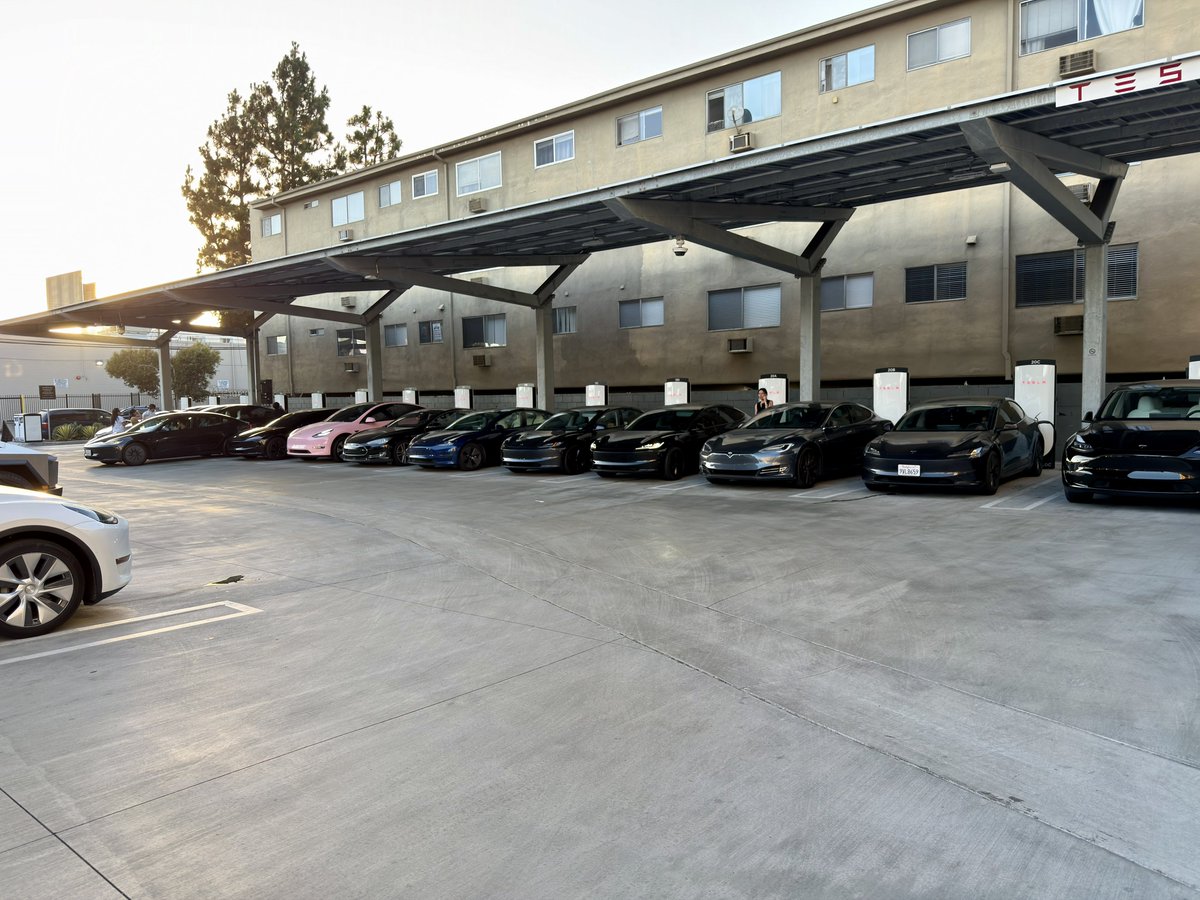
The @Tesla Diner averages 1,600 charging sessions per day. Yes, PER DAY.
I just showed up tonight on a random Wednesday evening, and literally every one of the 80 charging stalls was occupied. This place is not “dead” as some claim.
Inside a reactor, a chemical storm is being engineered.
Metallic powder plunges into a churning bath. Its surface is attacked on purpose; atoms break loose, collide, and rebuild themselves as microscopic spheres—the unfinished skeleton of a battery cathode.
But every batch casts a shadow. In the old process, once the valuable solids are filtered out, the remaining water is condemned: loaded with salts, forced through treatment and evaporation, then pushed toward disposal. Scale the factory, and that chemical river rises with it.
Then the flow reverses.
Inside Tesla’s closed-loop design, the liquid has no final destination. The new particles are captured. Unreacted metal is hunted down and rescued. The same chemical bath turns back toward the reactor—and the transformation begins again.
How can a factory keep this controlled storm alive without letting yesterday’s chemistry choke the next cycle?
If you only have a minute, follow the powder into the loop where waste loses its exit:
⚙️ The old sulfate detour is cut away.
Instead of first turning battery metals into dissolved sulfates, the process drives nickel, cobalt, and manganese powders directly into an agitated alkaline bath.
🌩️ The bath is balanced on a chemical knife-edge.
Its acidity, electrical conductivity, dissolved salts, and ammonia-based binding agents are controlled so the metals remain reactive without ruining the particles growing around them.
🧪 Corrosion becomes construction.
Oxygen and nitric acid attack the metallic powders deliberately. As metal ions break free, they immediately join and precipitate into the unlithiated building blocks of a cathode—all inside the same reactor.
🧬 The storm learns how to sculpt spheres.
Dissolved acetate changes how the particles assemble. In one comparison, it transformed coarse, spiky material with only 3.3 square meters of surface area per gram into smooth spherical structures reaching 17 square meters per gram.
🧲 Magnets hunt down the survivors.
Any metallic powder that escapes the reaction is pulled from the slurry before it can contaminate the finished precursor. Instead of being discarded, it is driven back toward the reactor.
⚡ Dormant metal is dragged back into the storm.
If recycled powder develops a passive surface and stops reacting, milling or a chemical wash can awaken it. In one test, an inactive powder returned to an active state within just 10 minutes.
💨 The byproduct abandons the liquid.
Under the nitrate-and-nitric-acid chemistry, ammonia emerges as the reaction byproduct and leaves as a gas rather than accumulating in the bath. It can then be captured for another industrial use.
💧 The wastewater turns back.
Once the solid precursor is filtered out, at least 75%—and potentially up to 100%—of the remaining liquid can return directly to the reaction without significant treatment. The stream that once headed toward disposal becomes raw material for the next cycle.
🔥 Lithium and fire seal the transformation.
The recovered precursor is mixed with a lithium source and baked at extreme temperature. The heat locks the elements into the mixed-metal oxide structure needed to store energy inside a battery cell.
The metal that entered as loose powder leaves as an engineered precursor. What refuses to react is caught, reawakened, and thrown back into the storm. The liquid that once carried a waste problem becomes the factory’s returning bloodstream.
Now pull the camera back.
One closed loop becomes a line of reactors, each recirculating its own chemical bath while sulfate detours, wastewater-treatment trains, and evaporation systems begin to vanish from the factory floor. Metal enters. Cathode material moves onward.
The chemical river stays inside, circling toward the next batch instead of flooding out into the world.
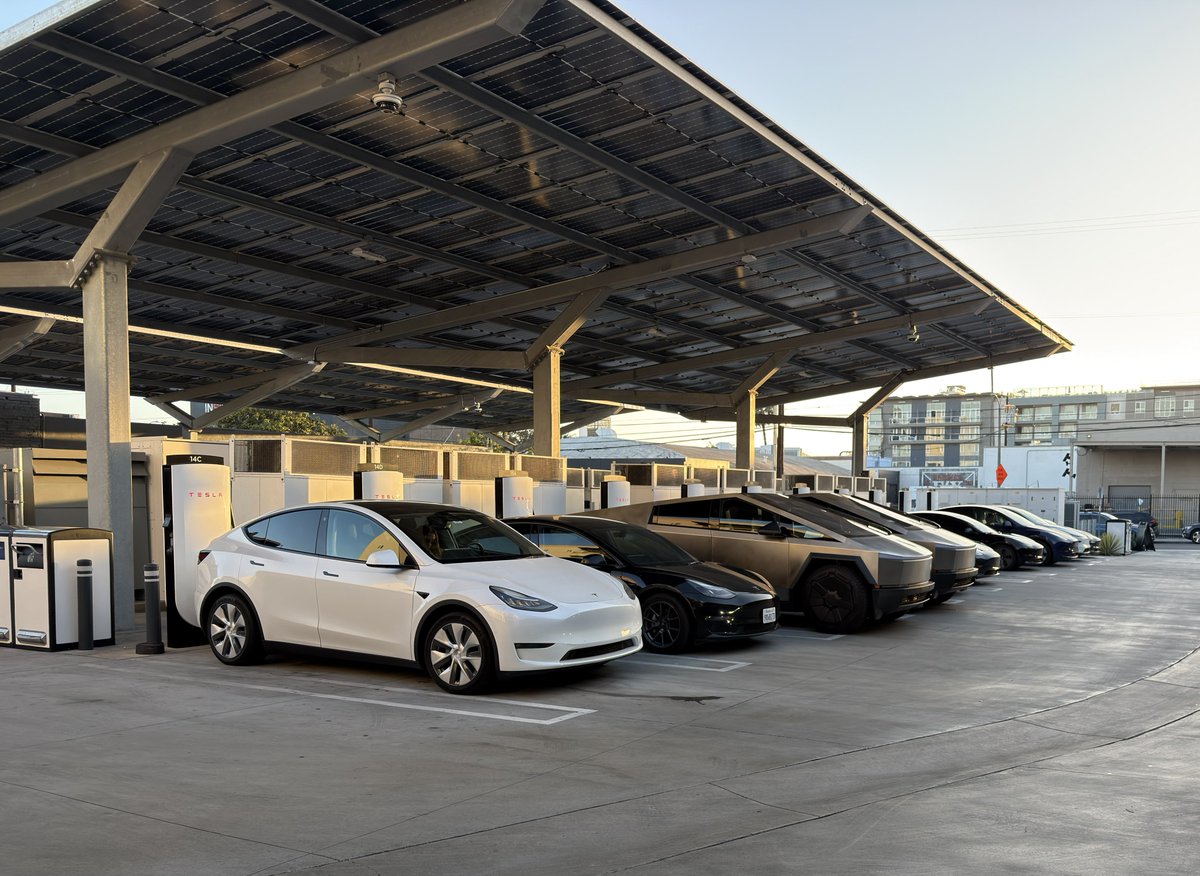
Tesla has signed a long-term deal to buy electricity from a big solar and battery project in Arizona to supply their Supercharger network with additional renewable energy.
Tesla will be buying about 458 MW (or 90%) of the peak solar generation at the facility.