A hundred years ago, if your kid got diabetes, the doctor's plan was to starve them. 400 calories a day. Some weeks, nothing at all.
It sounds insane but there was a grim logic behind it. Type 1 diabetes killed children within months back then, and less food meant less sugar in the blood, which slowed the dying. Kids on the diet stopped dying of diabetes and died of starvation instead, just slower. Parents signed up anyway because one extra year with their child was the best medicine could offer.
Elizabeth Hughes was the daughter of the US Secretary of State, so she got the best care money could buy. That care took her from 75 pounds at diagnosis down to 45 pounds by age 14. When her mother brought her to Toronto in August 1922, she could barely walk.
The treatment waiting there almost never got made. Frederick Banting was a small-town surgeon whose practice was failing so badly he was nearly broke. He talked a university into lending him a lab for one summer, and with a 21-year-old student assisting, isolated the pancreatic hormone researchers had chased for 30 years.
Five weeks after her first shot, Elizabeth was eating 2,500 calories a day with a pint of cream poured on top. She gained 60 pounds in four and a half months. She went to Barnard, raised a family, lived to 73, and kept the diabetes secret from almost everyone she knew.
Banting refused to put his name on the patent. He'd sworn the Hippocratic oath and believed a doctor had no business profiting from something like this. His co-discoverers sold it to the University of Toronto for a dollar. "Insulin does not belong to me, it belongs to the world."
24 months from first injection to the Nobel Prize, and every diabetic kid on earth went from a death sentence to a normal life for the price of one dollar.
Despite suffering from stomach cancer, Raul Julia agreed to play M. Bison in the 1994 Street Fighter movie.
His two sons were huge fans of the games, and he wanted them to see their father play the villain.
He pushed through filming while seriously ill and reportedly studied real dictators to help build the character.
He died at age 54 in 1994, two months before the film reached theaters. Universal honored him in the closing credits with one final message, “For Raul. Vaya con Dios.”
Baobab, a prehistoric species which predates both mankind and splitting of continents over 200 million years ago. Baobabs (Adansonia) are distinctive trees with incredibly large trunks. They can store tremendous amounts of water, as their trunks noticeably swell during the rainy season.
Tree is native to African savannah, where climate is extremely dry and arid, it is a symbol of life and positivity in a landscape where little else can thrive. African baobab (A. digitata) has a vast range throughout the arid parts of Africa; six additional species are native to the Indian Ocean island of Madagascar, off south-east Africa; and an eighth species is native to north-west Australia. The largest known living baobab is the Sagole Big Tree, a specimen of A. digitata located in Masisi, Vhembe, South Africa, near the border with Zimbabwe. Based on its most recent measurements, Sagole has an extremely large base that covers 60.6m², a height of 19.8m and a total wood and bark volume of 414m³. Its aboveground dry mass is estimated to be 54 tonnes.
Baobab trees grow in 32 African countries. Tree known for its longevity and some specimens in Africa have been dated to between 1100-2500 years old and reach up to 30m high and up to an enormous 50m in circumference. Baobab trees can provide shelter, food and water for animals and humans, many savannah communities made their homes near Baobab trees. Baobab also looms among ancient mounds and remains scattered around them are invariably early medieval or Portuguese.
Until 2018, the largest living baobab was sacred Tsitakakoike Baobab, a specimen of the endangered species Adansonia grandidieri, which grew near Andombiro in the Ambiky Forest of south-west Madagascar. The incredibly stout and compact tree had a cylindrical trunk with a base that covered 59.6 m², a height of 14.6m and a total volume of 455 m³ - 380 m³ of which was trunk and 75 m³ of which was canopy. It partially broke and collapsed in February 2018 leaving about 40% of the tree still standing, but this was expected to also collapse soon after.
An even larger African baobab tree (A. digitata) alive during 21st Century was the Platland/Sunland Tree of Modjadjiskloof, South Africa, with a base of 67.9 m², height of 18.9m and a total wood and bark volume of 448 m³. Unfortunately, a large portion of the Platland Tree collapsed and died in 2016, leaving the Sagole Big Tree to claim the top spot.
Baobabs have among the lightest wood for any tree. Balsa wood is well known to model aeroplane makers as one of the lightest and softest woods, with a wood density that averages around 0.15 g/cm³, yet baobab wood is even lighter, averaging 0.13 g/cm³. As a result, the aboveground dry mass of the Platland baobab was estimated at only 58 tonnes and about 59 tonnes for Tsitakakoike. In terms of mass, giant gum trees (Eucalyptus) of Australia are the largest hardwood trees.
#archaeohistories
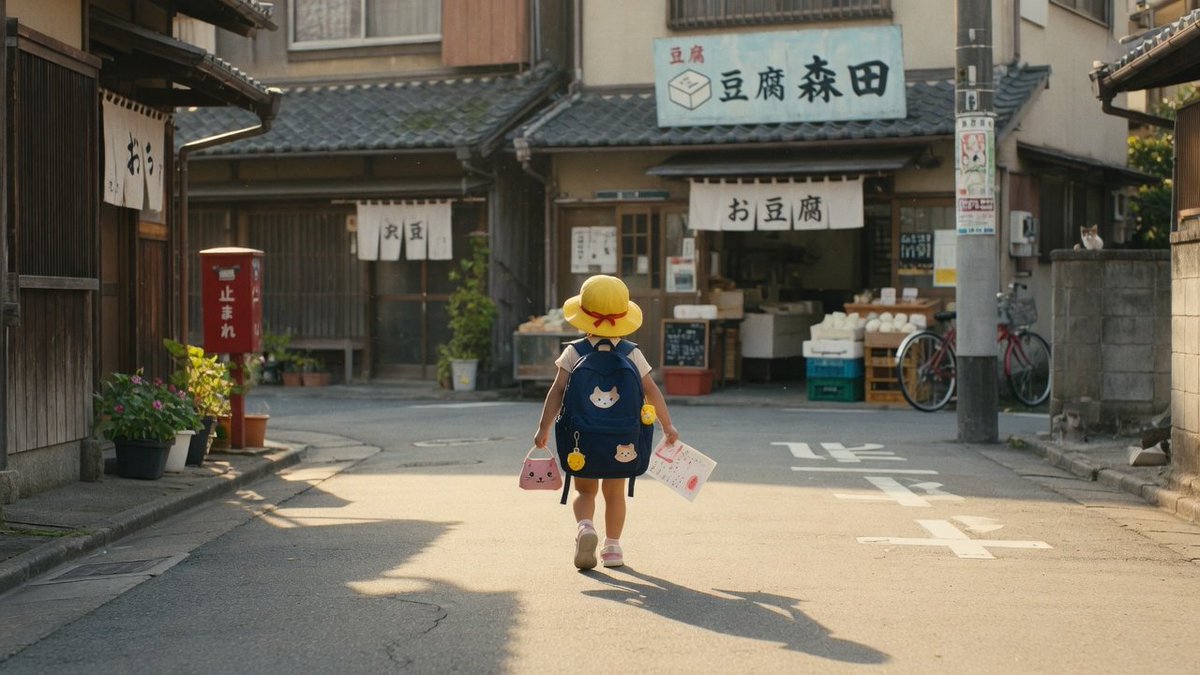
There's a TV show in Japan
that has run for over 30 years.
The premise: a parent sends
their two or three-year-old child
on an errand. Alone.
To the store. To buy tofu.
Across actual streets.
A camera crew follows secretly,
hidden, never helping,
as a tiny human in a backpack
completes a task most countries
wouldn't let a child attempt.
The kid cries. The kid forgets.
The kid gets distracted by a dog.
And then the kid comes home,
holding the tofu, glowing.
It's the most-watched thing
of its kind in the country.
Americans who discover it
cannot believe it's legal.
In Japan, we cannot believe
it's remarkable.
The only thing an old man can tell a young man is that it goes fast, real fast, and if you're not careful it's too late. Of course, the young man will never understand this truth.
- Norm Macdonald