Watch several important windows in the months ahead:
📅 June 21, 2026 (10:24 AM CET)
The Sun enters Cancer — themes of family, nation, security, belonging, and emotional attachment become more prominent. Defensive actions may increase as individuals and nations focus on protecting what they consider “home.”
Cancer symbolizes home, close communities, and the people we care about.
📅 June 30, 2026
Jupiter enters Leo — individual willpower, leadership, national identity, and the desire for recognition are amplified on the world stage.
📅 Around July 19, 2026
Jupiter in Leo opposes Pluto in Aquarius — tensions between personal authority, national ambitions, alliance structures, and collective power may reach a peak.
📅 August 12, 2026
Solar Eclipse in Leo — a symbolic beginning of a new cycle and a potentially important turning point involving leadership, power, and the expression of individual strength.
Leo is ruled by the Sun and is associated with personal glory, pride, and king-like authority. A total solar eclipse occurring in Leo invites reflection on how individual power is exercised and perceived.
At the same time, Pluto — a symbol of power, transformation, and control — remains on the Aquarius side, representing networks, institutions, alliances, and collective systems.
📅 August 28, 2026
Lunar Eclipse — accumulated tensions, emotions, and resource-allocation issues may enter a period of adjustment and rebalancing.
📅 April 13, 2028
Saturn enters Taurus — the focus gradually shifts from willpower and action toward stability, construction, resource management, productivity, and long-term prosperity.
Wars, at their core, often disrupt existing balances and attempt to establish new forms of order.
The current 60-day window deserves close attention, but the real test may not be limited to these two months. The coming years could become an extended examination of willpower, resources, endurance, and strategic objectives among major actors.
For market participants, the key is not predicting outcomes, but observing:
• How resources are reallocated
• How risk is repriced
• How market sentiment evolves
• How old and new systems seek equilibrium
The months ahead may provide an important opportunity to observe shifts in global capital flows, energy markets, and geopolitical dynamics.
#Geopolitics
#FinancialMarkets
#Energy
#JupiterPluto
#SolarEclipse
#RiskManagement
Most of the conversation around the Iran war has moved on to who won and who lost.
But Mohamed El-Erian gave me a sobering warning: the economic damage from this war is the kind that SCARS, not the kind that heals.
His core point reframed it for me.
Economists usually expect mean reversion, the rubber band snapping back.
El-Erian says this is the opposite, what he calls multiple equilibrium.
Disrupt the status quo this violently and you don't return, you drift further away. A ping pong ball knocked off a cup doesn't roll back on.
The mechanism is an inflation shock that starts in energy and spreads. Gas, then the cost of moving food, then food itself.
And because Hormuz chokes fertilizer too, he says the worst of the food price hit lands six to nine months out. But the real danger is the precedent.
Iran just showed the world that weaponizing a single choke point delivers enormous leverage.
Now the Red Sea, the Taiwan strait, the Malacca strait are all fair game.
Welcome to geo-economics, where strangling a choke point is cheaper than missiles.
The word he kept returning to was SCARRING...
Geopolitical scarring, economic scarring.
This one is going to haunt the global economy for YEARS.
@elerianm
Pluto in Aquarius: The Reorganization of Power and Resources Within Alliances (The European Union’s Entry Point)
For the European Union, the alliance, organizational networks, institutional cooperation, and shared governance symbolized by Aquarius are not external choices—they are the very foundation of the EU’s existence.
Therefore, Pluto’s transit through Aquarius means that the European Union is not observing the restructuring of alliance systems from the outside. Rather, it is itself undergoing this profound transformation.
Pluto symbolizes the redistribution of power, resources, control, and deep institutional structures.
For the European Union, therefore, the central question is not simply how to preserve the alliance, but what kind of power structure will allow the alliance to continue to exist.
It must reconsider fundamental questions:
Which powers should remain with the member states, and which should be transferred to the EU level?
How should common resources be raised, allocated, and controlled?
Should security, foreign policy, energy, and industrial policy become more deeply integrated?
And how should the asymmetrical interests and burdens among member states be coordinated?
From this perspective, Pluto in Aquarius does not simply signify the expansion of alliances. Rather, it points to a profound restructuring of internal power relationships, systems of resource control, and institutional governance within the alliance itself.
The European Union is not merely observing this transformation—it is both one of its primary participants and one of its principal subjects.
The United States’ Entry Point: Balancing Power and Reason
From the United States’ own strategic perspective, this astrological configuration—Saturn and Neptune in Aries, with Jupiter in Leo opposing Pluto in Aquarius—suggests that its entry point into the emerging era lies in balancing Leo and Aquarius.
Leo represents national leadership, influence, and strategic initiative. It also corresponds to the will to uphold the international order, assume a leadership role, and exercise national power.
Aquarius, by contrast, emphasizes reason, objectivity, technology, organization, alliances, and institutional cooperation. It is more inclined to address problems through knowledge, diplomacy, political coordination, and international collaboration rather than relying solely on power itself.
The question raised by this configuration, therefore, is not whether the United States possesses power, but how it chooses to use that power.
Will it continue to expand its influence through the national leadership and will to power represented by Leo? Or will it make greater use of the rational judgment, alliance coordination, and institutional cooperation represented by Aquarius, seeking a new balance between power and reason?
This balance will not determine any single policy. Rather, it may become an important theme in American strategic debate over the coming period.
The Same Astrological Configuration, Different Entry Points for Different Countries
Neptune and Saturn are both in Aries. On the one hand, this symbolizes faith, ideals, and collective will; on the other hand, it also represents practical constraints, long-term costs, and the testing of outcomes. Any objective must prove its sustainability under real-world conditions.
Jupiter is in Leo, symbolizing leadership, cohesion, national projection, and the expansion of strategic ambitions. Pluto in Aquarius, meanwhile, corresponds to the deep restructuring of technology, organizational networks, alliance systems, and power structures.
Under the same astrological configuration, different countries may enter through different points:
Iran’s entry point is Aries: I must survive.
The United States’ entry point may be Leo: I must maintain my leadership position.
Europe’s entry point may be Aquarius: I must restructure alliances and security arrangements.
Iran’s Entry Point: Survival and Sustainability
From Iran’s own strategic perspective, its principal entry point into this conflict is the survival instinct represented by Aries.
Iran has been subject to sanctions for a long time, while the regional security environment has remained highly tense. Previous short-term military confrontations may be viewed as phases of escalation, while the current situation reflects the further emergence of long-accumulated pressures involving security, sovereignty, and institutional continuity.
For Iran, therefore, the conflict is not merely about the distribution of interests. It also concerns national security, the continuity of the political system, and strategic autonomy.
Aries appears here as a direct awareness of survival: action is necessary, a response is necessary, and national existence must be preserved.
Neptune gives this action a narrative of faith, ideals, and mission. Saturn, however, requires the country to bear the economic, social, and military costs of maintaining that commitment over the long term.
Jupiter in Leo may strengthen leadership, national cohesion, and strategic mobilization. Pluto in Aquarius may encourage adjustments in Iran’s security structure and methods of action through technology, organizational networks, regional cooperation, and asymmetric warfare.
This astrological configuration cannot directly determine the outcome of a war. It can, however, help explain why a country that regards a conflict as a matter of survival may adopt strategic choices, levels of endurance, and patterns of action that differ from those of a country primarily concerned with influence, order, or the preservation of power.
It is also worth noting that this configuration highlights the different priorities of the fire and air elements.
Aries and Leo are both fire signs. They place greater emphasis on willpower, action, leadership, cohesion, and the capacity to push objectives forward.
Aquarius is an air sign. It places greater emphasis on cognition, information, technology, organization, networked connections, and alliance coordination. It also includes diplomacy and political coordination—methods of achieving objectives by connecting different actors.
Within the current configuration, the fire element can therefore be understood as representing national will and the capacity for action, while the air element represents cognitive, organizational, and connective capacity.
The two do not replace one another. Together, they form essential components of national strategy.
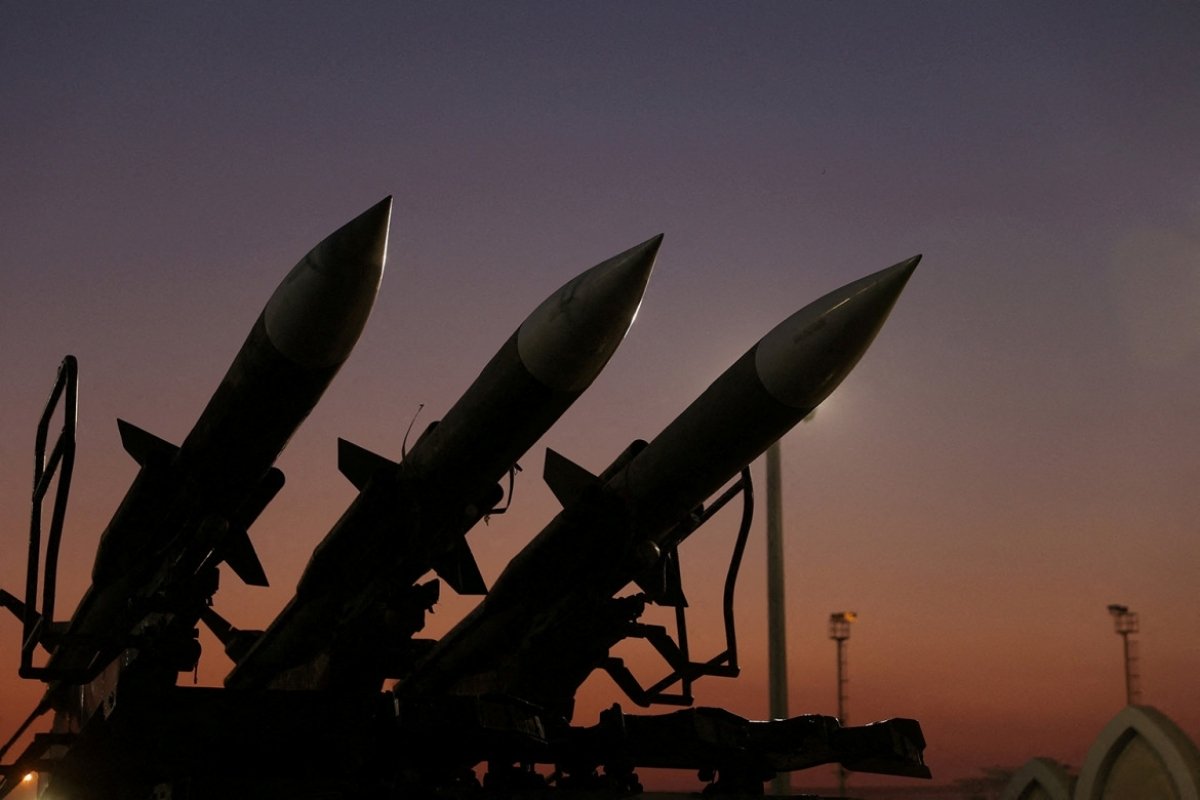
🇮🇷 Iran’s missile program is proving far more resilient than expected
Months of U.S. and Israeli strikes were designed to cripple Tehran’s ballistic missile infrastructure.
Yet recent attacks, including the strike that killed 3 U.S. service members at a base in Jordan, show Iran still retains a meaningful ability to launch advanced systems such as the Kheibar Shekan.
Military analysts, citing satellite imagery and operational patterns, report that Iran has:
* Restored access to key underground missile facilities pounded earlier this year
* Repaired damaged launch sites and tunnel entrances with relative speed
* Preserved sizable stockpiles
* Continued fielding precision medium-range systems
This stands in sharp contrast to repeated U.S. official assessments that Iran’s missile capabilities have been “substantially degraded.”
The gap between those two pictures raises the central strategic question facing planners right now: Did the campaign reduce Iran’s long-term missile threat… or merely delay it?
If the analyst view is correct, the real challenge is no longer how much damage was inflicted.
It is how quickly Iran can regenerate, disperse, and sustain its strategic deterrent under continued pressure.
That distinction will shape every calculation about escalation, deterrence, and the future of the conflict.
Source: Wall Street Journal, @clashreport / Writer: Val
🇨🇳🇺🇸Watch what China just showed off at their AI conference.
Meanwhile American schools are still arguing over whether students should be allowed to touch AI at all.
One country is teaching kids to build with the technology, the other is teaching them to hide it.
Which approach do you think produces the better engineers in ten years?
🇰🇷 South Korea has given esports legend Lee “Faker” Sang-hyeok a new title: Honorary Police Officer.
The League of Legends icon has been appointed an honorary police officer with the rank of sergeant and named ambassador for a youth cyber gambling prevention campaign.
While he won't have law enforcement powers, he'll use his influence to educate young people about the dangers of illegal online gambling and encourage them to seek help or report it.
Source: @PolymarketLoL / Writer: Monica
🇺🇸 Tucker: The oil market is clearly manipulated
"There was a time this month, with the Strait basically still closed, when oil, as priced in the Brent crude market, was cheaper by a few cents per barrel than it was before the war started."
Referring to the Iran war and repeated threats to the Strait of Hormuz, he argued oil prices should have surged far higher if they truly reflected supply and demand.
Instead, financial markets are being driven by speculation, insider trading, and powerful interests.
Source: @TuckerCarlson / Writer: Monica
🇺🇸🇮🇷 America is firing Patriot interceptors more than 100 times faster than it can build them, and Iran keeps launching anyway
Eleven straight nights of American strikes, and Iranian missiles and drones still reach Kuwait, Bahrain and Jordan.
A US intelligence assessment reported by the Washington Post concludes the bombing is unlikely to move Tehran at all.
The numbers underneath explain why that matters.
During the first four days of this war, coalition forces expended Patriot rounds at roughly 225 per day while Lockheed's Camden facility produced 1.7, a consumption ratio near 132 to 1.
At least 1,700 were fired in five weeks.
Annual PAC-3 MSE output sits around 600, and the plan to reach 2,000 does not arrive until 2030.
The exchange rate is worse than the count.
Spending a $4 million interceptor to down a $35,000 Iranian drone is a trade Tehran can sustain far longer than Washington can.
This war now measures endurance rather than technology.
Source: Washington Post / Writer: Daniel
Burkina Faso’s transitional leader, Captain Ibrahim Traore, has escalated his confrontation with influential Muslim scholars, saying that “the battle has begun”. Traore also recently received Israel’s new ambassador to Burkina Faso, Simon Seroussi https://t.co/rZvWa9enFK
🇺🇸 🇮🇷 The only thing standing between the U.S. and another forever war is a narrow strip of water.
Alex Christoforou breaks down what makes Iran different from every other conflict America has walked into, and it comes down to leverage Tehran may not fully grasp yet:
"Sometimes I wonder if Iran even realized what an incredible amount of leverage they have over the world with Hormuz."
If Iran hasn't fully understood that power yet, the moment it does changes everything.
@AXChristoforou
Alphabet projected full-year capital expenditures will be $195 billion to $205 billion in 2026, increasing its already sky-high spending estimate for the year as it works to secure an edge in the AI race https://t.co/kUQs5jgavr
🇺🇸 AOC says Republicans are using the word "communism" to scare voters away from policies like universal health care, higher wages, and stronger unions.
She argues that labels don't matter and says she won't be pushed away from ideas she believes are popular with voters.
"Call it whatever you want, I'm not backing down."
DSA-backed candidates keep winning primaries and pulling the Dem Party left. The socialist shift inside Dems is real and accelerating.
Writer: Lucas
Affordability doesn't come from just decreasing costs, but increasing opportunity for working people. The city's Economic Development Corporation is at the heart of this work.
Today, I proudly appointed Tony Shorris as President and CEO and Lina Khan as Chair of the EDC.
From delivering paid parental leave to creating one of the most ambitious housing plans in city history, Tony knows what it means to fight for economic justice and economic development in the same breath.
Meanwhile, Lina Khan has been a leader in the movement for an economy built by all, in service of all. From courtrooms to classrooms to the federal government, she has taught millions that dignity for working people is not only possible, it's demanded of us.
These two leaders will steer the EDC's efforts to enact our affordability agenda — from city-owned grocery stores to thousands of units of affordable housing — all while making sure New York City remains a hub for excellence in business and innovation.
🚨🇮🇷 🇮🇶 Two people are reported dead in the U.S. strike on the Shalamcheh border crossing, per Khuzestan's deputy governor.
-Khuzestan Province's deputy governor reportedly confirms two deaths so far from the U.S. attack on the Shalamcheh border crossing in southwestern Iran
-It revises Iran's initial account, which reported the strike near the passenger terminal with NO casualties and pilgrim movement uninterrupted
-Shalamcheh is a major land route for Iranian pilgrims crossing to the Shiite holy sites in Iraq, near Basra
-The crossing sits in Khuzestan alongside Ahvaz, Behbahan, and Mahshahr, all struck in the campaign's push into Iran's oil-rich southwest
-It follows the interdiction logic behind the bridge campaign: severing the routes between Iran and Iraq, where Tehran's militia network operates
Source: @TabzLIVE / Writer: Daniel
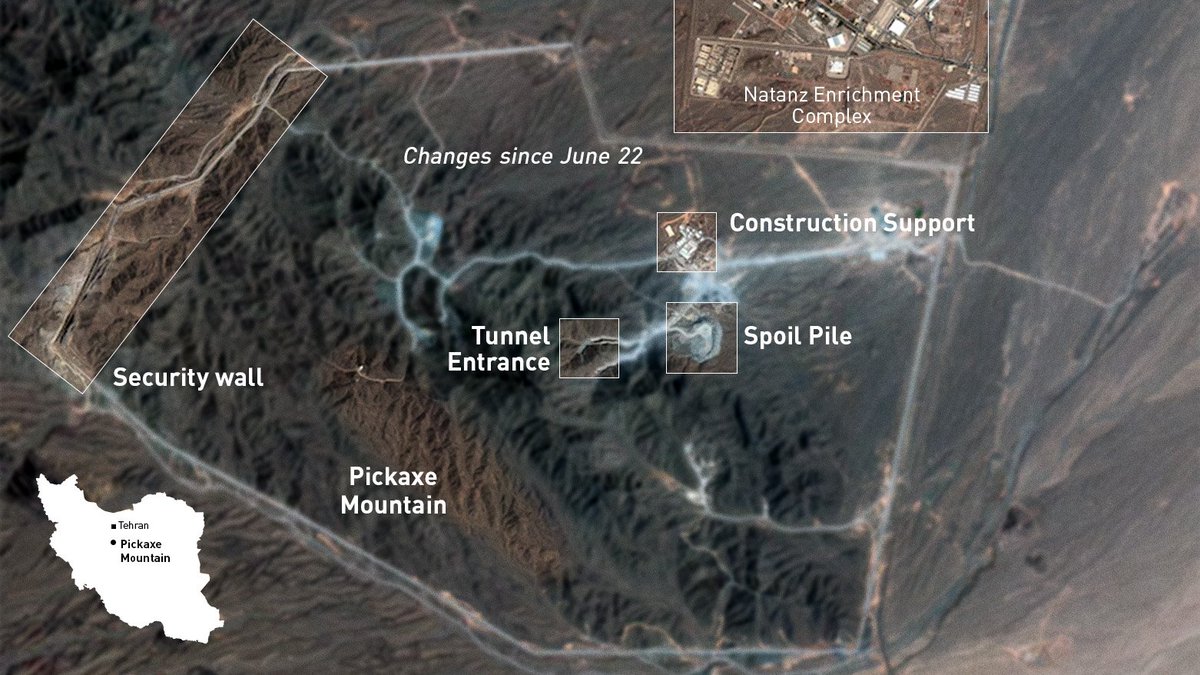
🇮🇷🇺🇸 Iran has accused the U.S. of fabricating claims about the Pickaxe Mountain underground facility to justify further attacks.
Foreign Ministry spokesman Baghaei called Washington’s focus on the site “a fabricated pretext for aggression, destruction, and sabotage,” insisting no nuclear activity is taking place there.
The heavily fortified facility, located south of Natanz and buried deep under a mountain, is considered a difficult target.
Trump had threatened to strike it “pretty soon,” saying Iran could do nothing to stop it.
Source: CNN / Writer: Samuel
🇺🇸🇮🇷 Iran just escalated its rhetoric in response to Trump’s latest threat, telling state media that if the U.S. strikes any bridge or power plant inside Iran, Tehran will hit back.
The target of retaliation? Infrastructure and bridges across the region, specifically targeting energy facilities where the U.S. has interests.
They also made it crystal clear they’re not backing down on the Strait of Hormuz...
Iran says ships can pass safely ONLY if they coordinate with Tehran and follow Iranian arrangements.
Otherwise, they claim full sovereignty and “steely will” to control the strait for their long-term security.
Trump says “hit one Iranian target = we bomb one of yours.” Iran is replying “hit one of ours = we hit multiple of yours in the region.”
Trump is applying maximum pressure and deterrence...
But Iran is signaling they won’t be intimidated, and will respond asymmetrically throughout the region.
Source: CNN / Writer: Claudio
🚨🇯🇴🇮🇷 Jordan's Armed Forces issued a statement saying they detected 6 missiles which derived from Iranian territory this morning.
They claim to have shot down 4 of them, while the other 2 fell in remote, uninhabited areas.
No casualties or material damage.
Jordan just keeps getting targeted in this new phase of the war, with key U.S. positions in the country.
Will their "neutrality" hold no matter how many missiles Iran fires at them?
Source: @NCSCMJordan / Writer: Michael