@ArmandDAngour@robinsaikia Possibly, but impugnare una spada = to take it up, wield it (from ‘fist’ rather than ‘battle’) so it seems more likely the sword is referring to itself in both cases (don’t unsheath me… don’t wield me…)?
@yakabikaj @saladinthekurd1 (And, at the risk of stating the obvious, and insofar as the distinction is even meaningful given the very different format of the two works, this is Kurdish lexicography in Arabic, whereas Ahmed Hani’s work is Arabic lexicography in Kurdish…)
@yakabikaj Also I distinctly remember learning the Turkish reciprocal morpheme -(I)ş and thinking how cool it was that you didn’t have to use a word for ‘each other’ but have literally just realised Italian and Spanish (which I grew up speaking) both have this neat way of doing it. 🤦♂️
@yakabikaj I'd never noticed that! Though NB 'caer bien' with reflexive pronouns (as opposed to indirect object pronouns) is reciprocal ('se caen bien' = they like each other, 'le caen bien' = s/he likes them).
@mihalyfy@cristi_n_gaspar@yvanspijk@matt_boot_ Prego! I was curious too, and I found the examples in the thesis really interesting bc they vary considerably in how acceptable they sound outside of journalistic syntax - from the equivalent of extreme BBC headlinese (https://t.co/fPVfbmTC6p) to absolutely standard in speech.
@cristi_n_gaspar@mihalyfy@yvanspijk@matt_boot_ I think this example falls into the category at 7.1.6 ("Nomi che indicano fatti, eventi, circostanze, condizioni e complessi di condizioni e circostanze") with examples like "'emergenza immigrazione".
@cristi_n_gaspar@mihalyfy@yvanspijk@matt_boot_ That's exactly right re newspaper style, though I think the compound/phrase categorisation is a grey area: this excellent thesis with lots of examples (https://t.co/aNPBf0prZc) calls them "sintagmi" in the title but concludes that most of them have become "composti".
@BornaIz Amazing! Did these types travel much? Presumably this Muhammad Baqir al-Tiflisi isn't the Muhammad Baqir Tabrizi who printed the 1826 Ma'asir-i sultani?
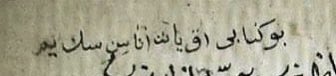
Is this... a Turkish book printed in Baghdad by a printer from Tbilisi with Iranian type? @BornaIz isn’t this one of your Tabrizi types? (As in the ones you discuss in your amazing chapter in Arabic Typography, not your beautiful new typeface!)
@kadagxwaday @matt_boot_ cf. nere-n ağrıyor? (same)
Also neyim "what-of me" (e.g. neyimi seviyorsun? "What do you like about me?")
nece "what language?"
neli "what flavour (food)?"
neci "(person doing) what job?"
(or, depending on context, any of the other senses of -ce, -li, -ci)
@Petraima @DevinFitzger 14th-century Venetian! There's a transcription of, as it happens, the text in the second and third of these images here: https://t.co/yoL21d4RnE (top of the page with the ships reads "... e va nde in dì 40. Adomandote, partandosse intrame a un'ora...")
"Asino chi legge"/"Burro el que lo lea" ("Whoever reads this is an ass") are staples of Italian/Spanish schoolrooms. This Turkish version is rather punchier and displays the characteristic preoccupation with other people's mothers: "Bu kitabı okuyanın anasın s**eyim" 😅