Introducing Apptokens: infinitely programmable token smart contracts for next-generation digital economies
The apptokens release is the culmination of Limit Break’s work designing novel token smart contracts to unlock an array of critical features for web3 game developers.
We’re excited to announce the release of Wrapped Native (WNATIVE), a tech refresh to WETH that streamlines EVM-compatible multi-chain operations for a seamless experience.
For years, WETH has been a necessary tool enabling protocols to interact with ETH. However, as EVM-compatible chains have proliferated, each chain or ecosystem has deployed WETH at a unique address, adding complexity and costs for users and developers alike. With WNATIVE, Limit Break offers a more convenient and efficient alternative.
With WNATIVE, any wallet can deploy to a consistent address, simplifying integration across EVM-compatible networks. Enhanced functions like combined deposits/approvals/transfers and gasless permits add flexibility and streamline the user experience. These optimizations mean lower gas fees, making WNATIVE a more cost-effective option. Had WNATIVE been used instead of WETH, users would have saved a collective $8.8M in gas fees since the Ethereum Merge.
This release is just the beginning. WNATIVE marks Limit Break's first step towards permissionless deployments, allowing any wallet to deploy Limit Break tech on any chain. Make sure to follow @LimitBreak and stay tuned in the coming weeks as we share more updates on our infrastructure for cross-chain development.
To learn more about WNATIVE, read our blog post: https://t.co/ffbvQ3o3Nc
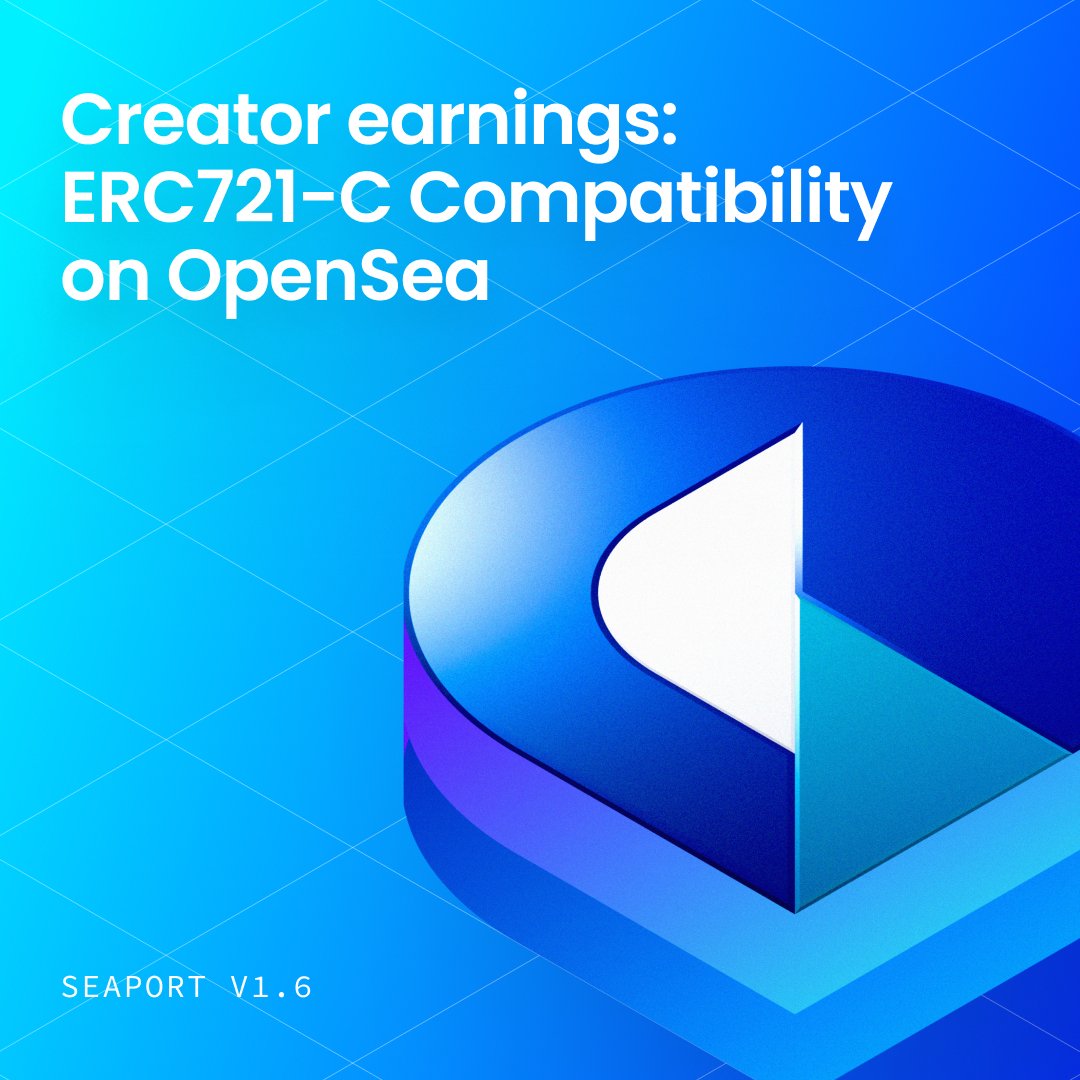
We're excited to announce that creators can now use ERC721-C from @limitbreak to set and enforce their own creator earnings on OpenSea.
What is ERC721-C? ERC721-C is a standard that enables creators to implement programmable and enforceable creator earnings on-chain. It also allows creators to implement custom logic within their collections, opening up new avenues to engage their communities in innovative ways.
How does it work? Two weeks ago, we launched a new version of the OpenSea marketplace protocol, Seaport v1.6, and introduced a concept called Seaport Hooks. Simply put, Seaport Hooks allow creators to set conditions that need to be fulfilled before NFTs in their collections can be transferred. This new functionality enables creators to do a lot of cool things, including “adapting” Seaport to be compatible with the creator fee enforcement mechanism of the ERC721-C standard.
What do I have to do? It’s simple! If you’ve already deployed an ERC721-C contract, we’ve built a tool for configuring creator earning enforcement in OpenSea with one click. You can find it in the OpenSea Creator Studio under Edit Collection > Earnings. You can also configure NFTs you deploy starting today through the OpenSea Creator Studio to be 721-C compatible in the same manner. For more information for creators, see here: https://t.co/3DSUM5qCqn
For more dev-centric technical information, see here: https://t.co/oZNgOYHhHI
Who is eligible? In order to leverage the 721-C compatibility hook, an NFT smart contract must already adhere to the 721-C standard or be upgradeable to one. The owner of that smart contract must then configure 721-C compatibility in the OpenSea Creator Studio — 721-C contracts, by default, will not be purchasable on OpenSea (with or without creator earnings) otherwise.
Why now? The “hook” capabilities unlocked by Seaport 1.6, such as ERC721-C compatibility, are uniquely enabled by the recent March 13th Dencun upgrade to the Ethereum network.
Anything else to know? The spirit of Seaport 1.6 is to allow creators to explore different models of NFT monetization. With that being said, OpenSea’s “earnings matching” policy will help ensure collectors are not unfairly disadvantaged on our site if creator earnings are set at different levels across other NFT marketplaces. This policy won’t impact you if your earnings are configured at the same percentage on OpenSea as other marketplaces. Learn more in the FAQ in our help center article: https://t.co/3DSUM5qCqn
We’d like to thank the Limit Break team for their work and collaboration in supporting ERC721-C compatibility with Seaport 1.6.
To learn more, check out our blog: https://t.co/ps8AqtMAu6
🚨ATTENTION CREATORS 🚨
Protocols like ERC721 and 1155 lack built-in defense mechanisms, putting you at risk of covert protocol abuse of web2 exchanges that's been robbing you of your royalty revenue and hindering you from innovation.
Genuinely one of the most supportive, generous and altruistic partners we have worked with!
Nothing but respect for @FreeNFT / @limitbreak for not only what they are doing but HOW they are doing it 💚
We @LimitBreak are excited to share our recent development, PermitC, designed to elevate on-chain security for all major token standards. By default, ERC20/721/1155 token transfer approvals lack time-based controls and have poor UX, requiring multiple transactions to transfer your tokens. The need for manual cancellations of long standing on-chain approvals leads to negligence, resulting in hundreds of millions of dollars in losses and exploitation. We believe safety is paramount for all blockchain users and that the general approval system for NFT token standards needs an upgrade. Our solution, PermitC, is an upgraded version of Permit2 developed by Uniswap Labs, offering a suite of advanced security features such as time-bound approvals, signature based approvals, and more to protect users' web3 assets.
PermitC can be integrated into newly developed and old protocols. With old protocols, just note that you'll need to develop a router that acts as a middleware between the protocol and PermitC with defined code paths and permissions. We have made PermitC to be an immutable and unowned contract to prevent any exploitation or misuse that could compromise security or fairness. Furthermore, we have also provided a keyless deployment script for anyone who wishes to use it on any EVM compatible chain.
To read more about PermitC and its features, visit the article here:
https://t.co/WYPHndG6th
We're open sourcing this development while it goes through the auditing process. The code can be found here:
https://t.co/B9XpoAQDlk.
The base contract of PermitC will be a public good - built for use with all ERC20/721/1155 tokens, specifically those without any transfer validation logic. In the future, an @ERC_721C compatible version will be released with the same security guarantees and enforcement of the Creator Token Standard validation system. If your tokens / protocol does rely on the @LimitBreak validation logic we've released with the Creator Token Standard, you should wait for this official release, as the base PermitC will be a vector to avoid creator-defined protections.
🚨The time has come & the single largest opportunity to get on our ANCIENT SEED allowlist is coming to a close TOMORROW🌱
It's YOUR LAST CHANCE to win via our wonderful partners @FreeNFT 👀
To ENTER:
✅SHARE TO BOOST your ODDS
✅SIGN UP👇
https://t.co/tz9WiDyd7B
Notis on=🧠
Anybody making a web3 games NEEDS to be looking at what @ValeriaStudios is doing right now. They are the true cutting edge.
- ERC1155C and ERC721C
- Private market place using @Snag_Solutions and @limitbreak payment processor
- Enforced trading of NFTs in their own ERC20 token $VAL
They did ~$50k in trading volume on their own private market place in the last 24 hours. ~$200k of Sales with a ERC1155C collection in 23 seconds yesterday! 💥
@gabrielleydon If multiple people read the 4 part 5300 word Payment Processor blog I will be one of them. If one person reads it, that will be me. If no one reads it, then I am no longer with us.