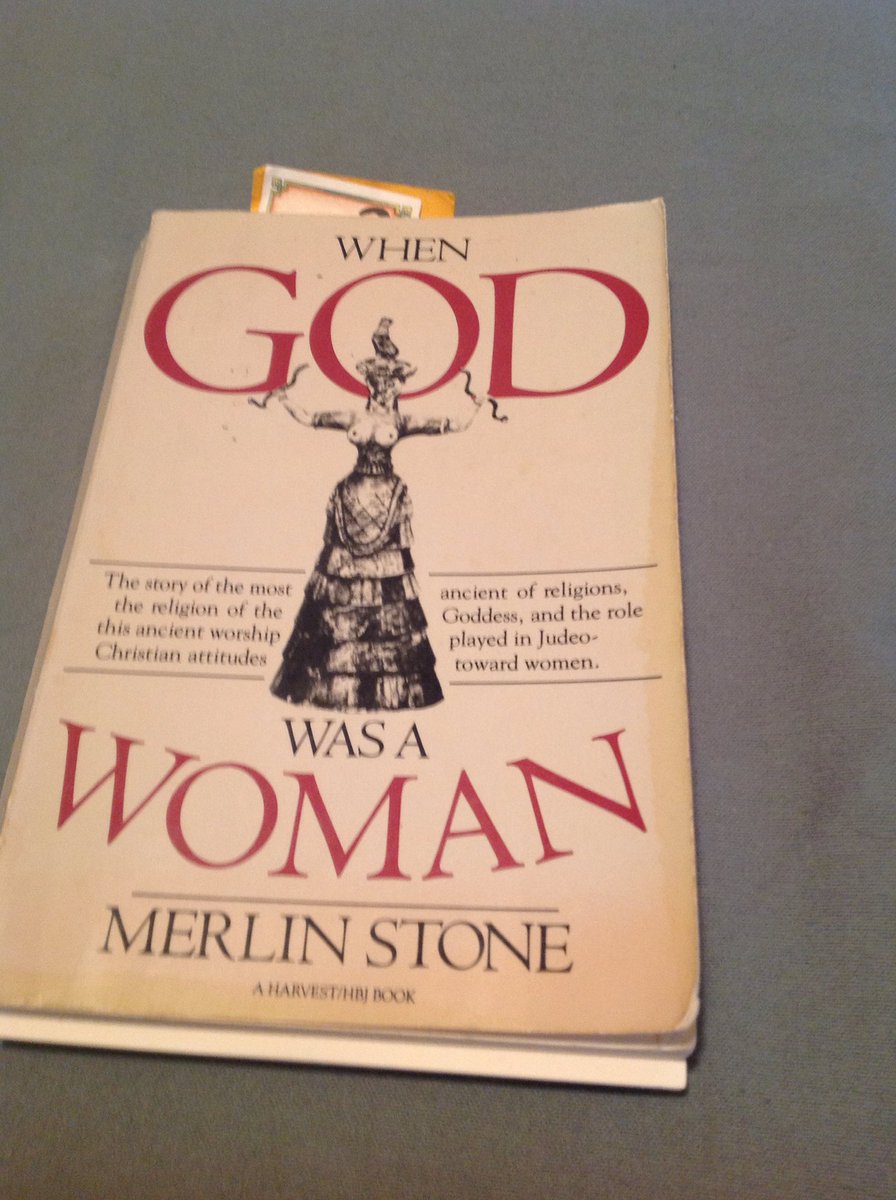
Inspired by @ProfKRichardson, here's a thread of my early studies in #WomensHistory for International Women's month. These are mostly in chronological order, starting with:
Merlin Stone, When God Was a Woman, 1976/
@Acyn I am so sorry to hear about the loss of Nicholas Dale, a Canadian firefighter who crossed the border to help with the fire in Aspen, Colorado. May he rest in peace.
I’m really crying cause this is the funniest and cutest thing I have seen all year! I can’t wait for this stage of life! Put your babies in sports!!!❤️🥰
@JeanHatchet Well done to those men that stepped in and removed him. Those poor children, what have they witnessed in their young lives to stand in front of their mum like that.
Abusive relationships are complicated. Too complicated. We need to educate-first bit of abuse is the time to leave.
🇳🇴
In manchen Regionen Norwegens ist eine schöne Geste gelebter Alltag:
Tragen Apfelbäume mehr Früchte, als eine Familie selbst verbrauchen kann, werden die schönsten Äpfel in Beuteln an den Zaun gehängt – zum Mitnehmen für andere.
Gerade in Jahren mit einer guten Ernte ist das ein wertvoller Gedanke.
Überschüsse sollten nicht verderben, sondern dort genutzt werden, wo sie anfallen.
Vielleicht hat jemand keinen Garten, kocht aber köstliche Marmelade oder bereitet Vorräte für den Winter zu.
So bleiben gute Lebensmittel erhalten, Ressourcen werden geschont und Nachbarschaft wird ganz selbstverständlich gelebt.
So lange die Leute ihre eigenen Früchte nicht vollständig verarbeiten können, ist das Teilen das Sinnvollste, was man tun kann. Da kommt bestimmt so manch Leckeres zurück - Marmeladen, Säfte, Kuchen usw.
Also, WIN-WIN für alle 🤝
I was having a conversation with someone I know recently and they said something to me and I'd love to get other opinions on this. They argued that women who are conventionally attractive or who fit dominant beauty standards often have an easier time publicly embracing the
The woman in this painting is not touching the man she loves. She is tracing his shadow on the wall. And according to legend, this exact gesture is how the art of drawing was born...
The painting is The Shadow, made in 1909 by the English artist Edmund Blair Leighton, who built his career on richly detailed scenes of the medieval world.
A knight in chain mail stands in profile against a castle wall. Below, in the harbor, his ship is waiting. He is leaving for war, and both of them know he may not return. In the fading light, the woman who loves him carefully draws the outline of the shadow he casts on the stone.
Leighton took the idea from an ancient Greek story recorded by the Roman writer Pliny the Elder. In it, a young woman of Corinth, the daughter of a potter named Butades, was about to be parted from the man she loved as he left for war. By lamplight, she traced the outline of his shadow on the wall, so that she would still have something of him while he was gone. Pliny tells this story as the origin of art itself: the first drawing ever made, born from a woman's fear of losing someone.
And that is what makes this painting painfully beautiful: a shadow is the most fragile thing in the world, it cannot be held, it cannot be kept, and the moment the light or the man moves, it is gone. She knows this, and she traces it anyway, trying to preserve something that is already in the act of disappearing.
Because the hardest moment is often not the goodbye itself, but the instant just before it, when the person is still there, still warm, still casting a shadow on the wall, and you realize you have already begun to lose them. Sometimes love becomes a memory even while the person you love is still standing in front of you...
I started this newsletter because the art our ancestors left us is extraordinary, and fewer and fewer people are showing us how to truly see it. Every week I try to. If that is something you would like to be part of, you can join at the link below, and if you'd like to support my work, a paid subscription is what makes it possible:
https://t.co/hgJUdR0Rb5
Thanks for reading.