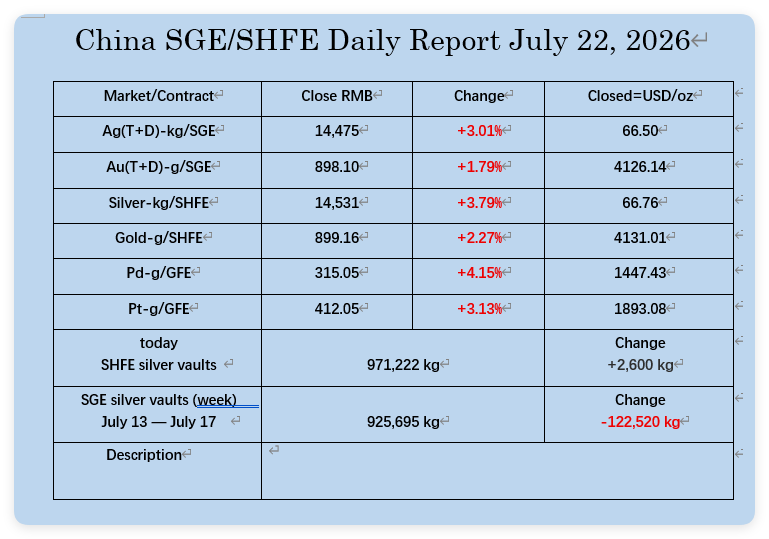
My thoughts on what we've seen over the last few days in the Global Daily is below.
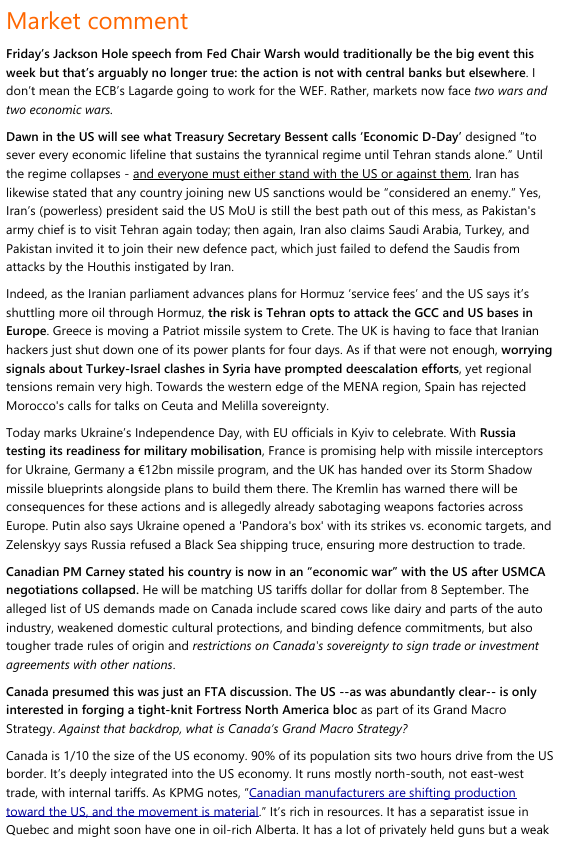
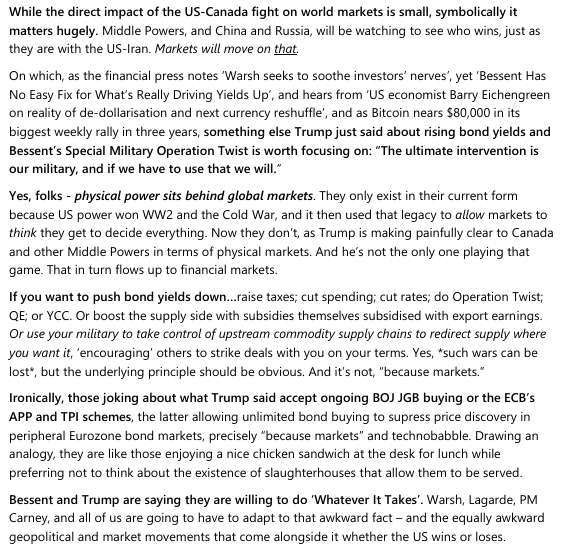
In short, with a confluence of wars and “economic wars”, the US is clearly saying it will do "Whatever It Takes" in a very different way to Draghi back in the days when central banks ruled the roost.
Nowadays it’s about the application of physical power to markets as well as the financial.
You can print money. You can’t print atoms. But, for a while at least, you can print money to get the stuff to get you atoms.
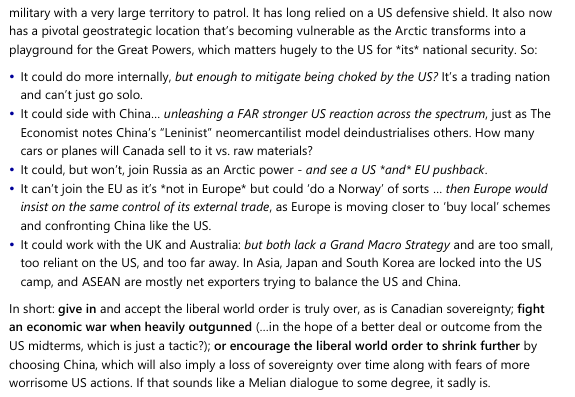
While the direct impact of the US-Canada "economic war" now being discussed is very small for world markets, symbolically it matters hugely.
All so-called Middle Powers, and China and Russia, will be watching to see who wins, just as they are with the US vs. Iran.
Markets will certainly move on *that* dynamic, meaning both the Middle East and the emergence, or failure, of a U.S. Grand Macroeconomic Strategy balancing bloc vs. China.
Wake up, folks. Commodities are telling you something, and yesterday the Treasury confirmed it.
Scarcity in the physical world. Repression in the financial one.
Scarcity pushes prices up. Repression holds yields down. The gap between them is the debasement.
Commodities are the only asset class that wins on both sides.
The structural case for commodities has been turbo charged. Underinvestment, deglobalization and electrification all pushing markets like diesel cracks and copper to new highs.
Meanwhile the chokepoints are increasing, from Hormuz to the Red Sea, the Rhine, the Panama Canal, the Black Sea grain corridor and Russian refining capacity. It is becoming increasingly apparent that not a single one of those is reachable by anything in Washington's toolkit whether it be caused by war or weather.
The illusion of abundance is likely behind us. I said as much on CNBC this Monday, and I got long gold, silver and agriculture last week.
Ten points for you to consider. (1/11)
From the decision today:
"Now, courts learn a great deal about a matter in the course of judicial review proceedings, and judges may be tempted to comment on matters of policy. The temptation to do so may be great; judges may suppose that they have much to offer to public policy debate. But the temptation must be resisted. It is not just that courts have no expertise in policy making – no expertise in making the sorts of polycentric decisions that legislatures make routinely. It is illegitimate for courts to involve themselves in matters of legislative policy. Policy is for politics. Whether courts think legislation is wise or unwise, is irrelevant so far as its constitutionality is concerned, and constitutionality is the only question with which courts are legitimately concerned"
US biofuel policy is entering a tighter phase — but that doesn't necessarily mean RIN prices have to break loose in 2H.
Our latest work sees several pressure points building beneath a relatively controlled near-term setup.
A 🧵 on what we're watching:
Why is silver heading to $1,000? I break down the indicators that really matter. Data from COMEX, Shanghai, Lease Rates, ETF holdings and swap rates prove that the physical silver shortage is not a future threat. It is already here. https://t.co/2h4kNEWE5R
Just to be transparent I came to this conclusion using Vietnam as the test case. It definitely applies there. And as far as I can see the trend holds elsewhere too especially with respect to corporate, project finance or supply chain or trade finance.
So I’m not talking about retail loans. I’m also not talking about lending in China itself.
I have a grander thesis that one has to stop looking at trade activity and loan book activity in China as a singular entity.
The way I see it is that there are two chinas.
There is the China that sits embedded within the grander globalised value chain system, serving western multinational interests as well as its own. That China is a mid-stream or low-stream operator. It does not own the brands it services. It has historically provided value to the chain because of its capacity to leverage extremely cheap labour and or poor regulatory standards (ie you can do dodgy things in China that western states would not tolerate at home). China gains from this relationship only via job creation and cashflows that flow to a handful of elites. They represent those who got lucky early on when JVs were created with western companies. Or those who responded to the presence of
multinational operations in their market by developing industries that service their needs locally where they can. But by and large China does not capture the full potential of the economic activity in its jurisdiction. That is absorbed by western corporate PNLs that upsell goods made in China in western markets. The structure has been immensely profitable for Megacorps. Even after extracting a healthy margin from the arrangement for themselves, they can still out compete domestic competitors in the west that don’t use global value chains (aka serf labour).
But then there is the China that is trying to break out from the GVC system and set up its own fully owned supply chain. This China is moving UP the value chain and is trying to stop depending on cheap labour as its competitive advantage. In so doing it is competing with the China that sits in the mid-section of the value chain, and all the entrenched Chinese interests that benefit from this system. (I call this China’s plantation model vs its emancipation model). But like with domestic western companies that try to compete with the globalised system, it is finding that trying to do compete in this way significantly raises its cost of capital and requires strategic support from government. It represents China’s own thirst for strategic autonomy.
Unfortunately, strategic autonomy is expensive (as Europe too is discovering). Thus all such attempts require more financial repression not less. Alternatively it requires imperialism, aka ensuring that other economies that haven’t yet moved up the value chain serve your value chain not that of the GVC system.
That is what belt and road was all about. But the strategy didn’t work because the value in those regions wasn’t enough to compensate for the value Chinese repression generated. One reason for this is the ongoing dollar dependency many of these countries still have (aka positioning in the US denominated global value chain).
Bringing it back to my Japan tweet, for China to win from deglobalisation it needs to set up China exclusive supply chains in these regions, which is harder said than done. Hormuz shows that being able to do so requires guaranteeing the full stack of inputs including commodities which China simply cannot guarantee for regional client states. Or it needs to outcompete GVC challengers in their own markets and force them to deglobalise too.
But that will involve competing with a GVC that is now making strides to reestablish itself for a new age by way of extremely cheap Japanese financing. That will be hard to do.
Japanese banks are now the financing conduit for the restructuring of those GVCs. Aka they are providing the finance to allow the GVC to restructure itself without a dependence on China.
"Seguimos avanzando en la reducción del Estado."
Never in my life did I expect to hear a President bragging about a Reduction of the State.
I am impressed by Paz's work to date.
Un Estado que exige esfuerzo a sus ciudadanos también debe ser capaz de transformarse.
Por eso seguimos avanzando en la reducción del Estado. A la integración del Ministerio de Planificación del Desarrollo se suma la transformación del Ministerio de Turismo en la Agencia Nacional de Turismo, con mayor autonomía de gestión, menos burocracia y más capacidad para captar recursos, promover a Bolivia y responder con rapidez a las oportunidades que el país necesita aprovechar.
Reducir el Estado no significa un Estado ausente; significa un Estado más eficiente, más ágil y al servicio de los bolivianos.
Great commentary on a fascinating book I will likely never read.
I also appreciate out of date books. The Raven of Zurich comes to mind, which marked me deeply.
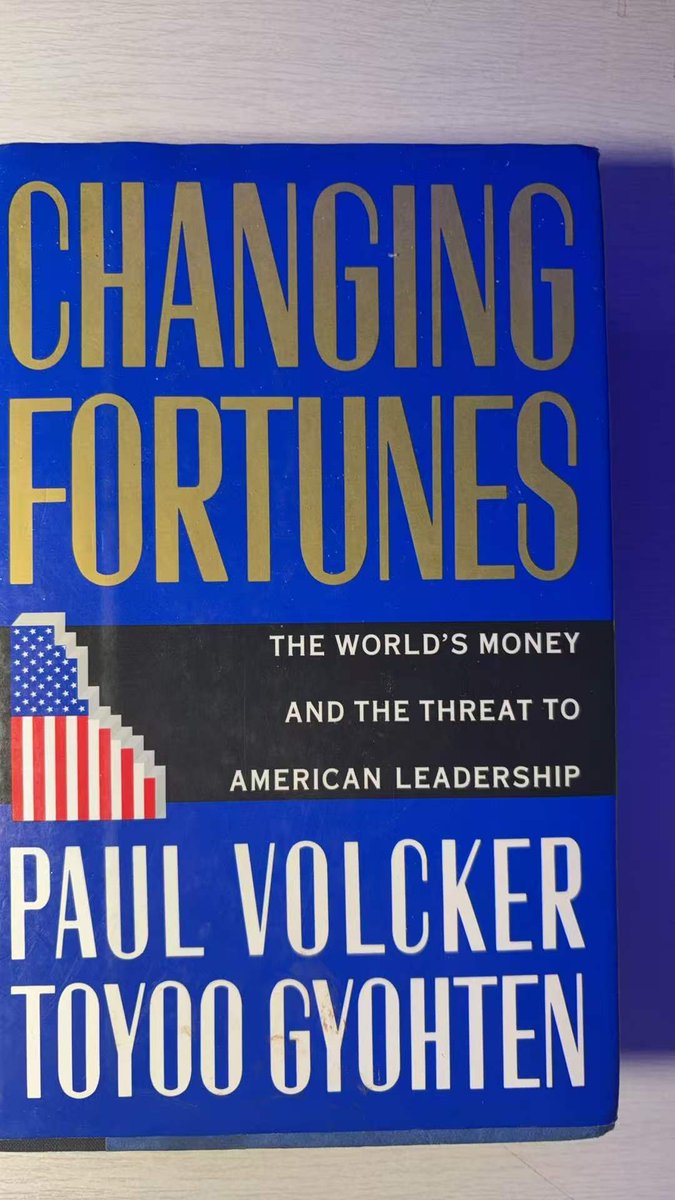
I just finished re-reading Paul Volcker and Toyoo Gyohten's book, published in 1992, on the management of the global financial system during three previous turbulent decades. This account, by two of its main actors, may be a bit specialized for most readers, but financial history junkies like me will greatly enjoy it.
There were for me at least three points especially relevant today that came out of this re-reading. First, both authors made very clear that external economic policies are always subordinated to domestic economic and political needs. This makes real international coordination of financial, monetary and economic policies impossible because there is almost no way to prevent domestic imbalances from spilling over into and distorting the global economy.
Volcker seems to think (although Gyohten came across as a little more skeptical) that the best way to address this problem is for major economies to find better ways to strengthen international coordination.
I would argue, however, that we've never found a way to do this successfully, and that perhaps a more realistic response might be to restructure global trade and capital regimes in ways that more formally limit spillovers, perhaps along the lines Keynes proposed at Bretton Woods. This might include limiting unfettered financial flows.
The second interesting point is that the different concerns expressed by Volcker and Gyohten showed how much difference there is between a finance-oriented view of the economy and a production-oriented view. Volcker, for example, seemed always to worry about conditions that might lead to excessive depreciation of the dollar, whereas Gyohten seemed to worry far more about conditions that might lead to excessive appreciation of the yen. Volcker cared more, it seems, about the stability of the US financial system while Gyohten cared more about the strength of the Japanese manufacturing sector.
Finally, and this has almost become a cliche, Volcker was very American in that he tended to see the global economy mainly as an expression of US behavior and actions, both for good and bad, whereas Gyohten tended more than Volcker to place events in the context not just of American policies and conditions, but also of Germany, British, French, Japanese, and global conditions and policies.
As a rule I always recommend reading "out of date" books by very wise practitioners because it is useful to see just how wrong we often are about future events. For example both Volcker and Gyohten thought that USD/JPY coordination would be among the most important issues in the first decades of the 21st Century, and they were both interested in the implications of a Japanese economy overtaking that of the US. It is hard to convince millennials that these concerns weren't as dumb then as they might seem today.
“The data suggest that the most effective answer to socialism is not a defence of capitalism as Canadians have come to experience it. It is a defence of genuinely free markets: open competition, equal rules, and rewards based on contribution rather than political access. People want fairness, and markets can deliver it better than socialism ever has—but only if politicians, including Conservative ones, let them.”