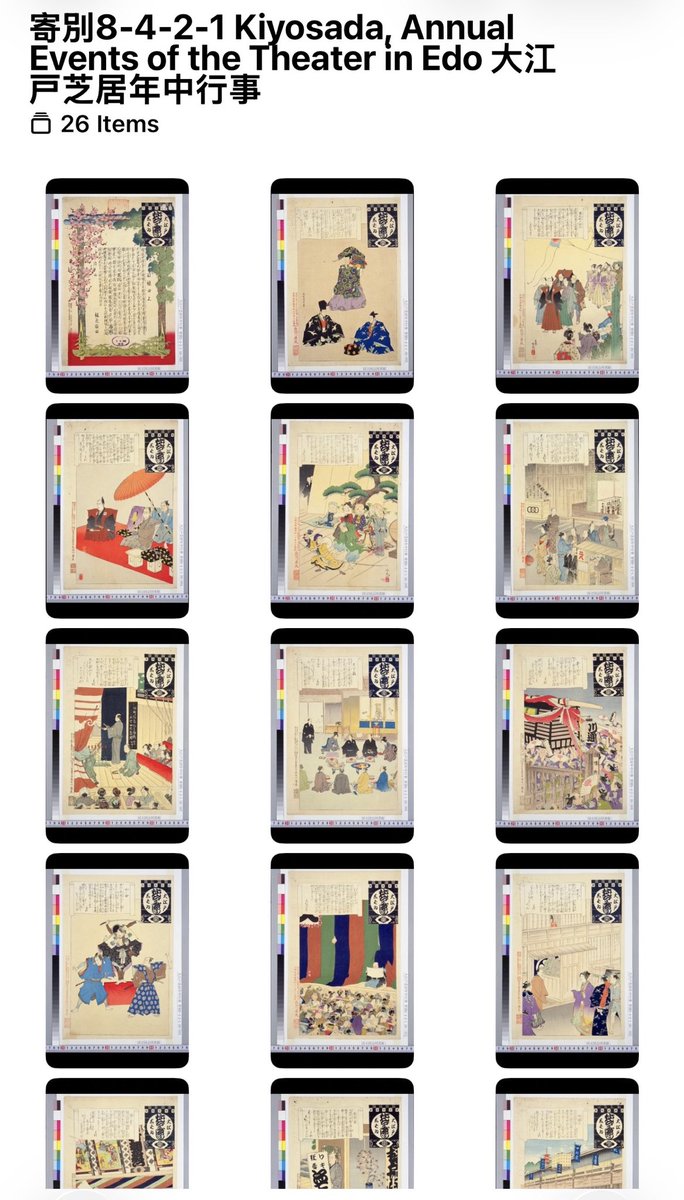
The Treasures of Saruwaka (Saruwaka no Hōmotsu, 猿若の宝物) from the series Annual Events of the Theater in Edo (Ōedo Shibai Nenchū Gyōji, 大江戸しばゐねんぢうぎやうじ), Adachi Ginkō (安達吟光), Meiji 30 (1897).
https://t.co/XK4GiegEJ4
Image depicts the presentation and explanation of the golden military baton (kin no sai) traditionally associated with the Nakamura (Saruwaka) lineage. The scene recalls the historical gift of the baton to the first Saruwaka Kanzaburō by the Tokugawa shogunate after he led the ceremonial kiyari work song for the warship Atake-maru. The print records one of the foundational legends of Edo Kabuki.
by Grok
The Treasures of Saruwaka (Saruwaka no Hōmotsu, 猿若の宝物) from the series Annual Events of the Theater in Edo (Ōedo Shibai Nenchū Gyōji, 大江戸しばゐねんぢうぎやうじ), Adachi Ginkō (安達吟光), Meiji 30 (1897).
https://t.co/XK4GiegEJ4
New Year in the Theater District (Shibai-machi no Hatsuharu, 芝居町の初春) from the series Annual Events of the Theater in Edo (Ōedo Shibai Nenchū Gyōji, 大江戸しばゐねんぢうぎやうじ), Adachi Ginkō (安達吟光), Meiji 30 (1897).
https://t.co/xiIqjWxxeh
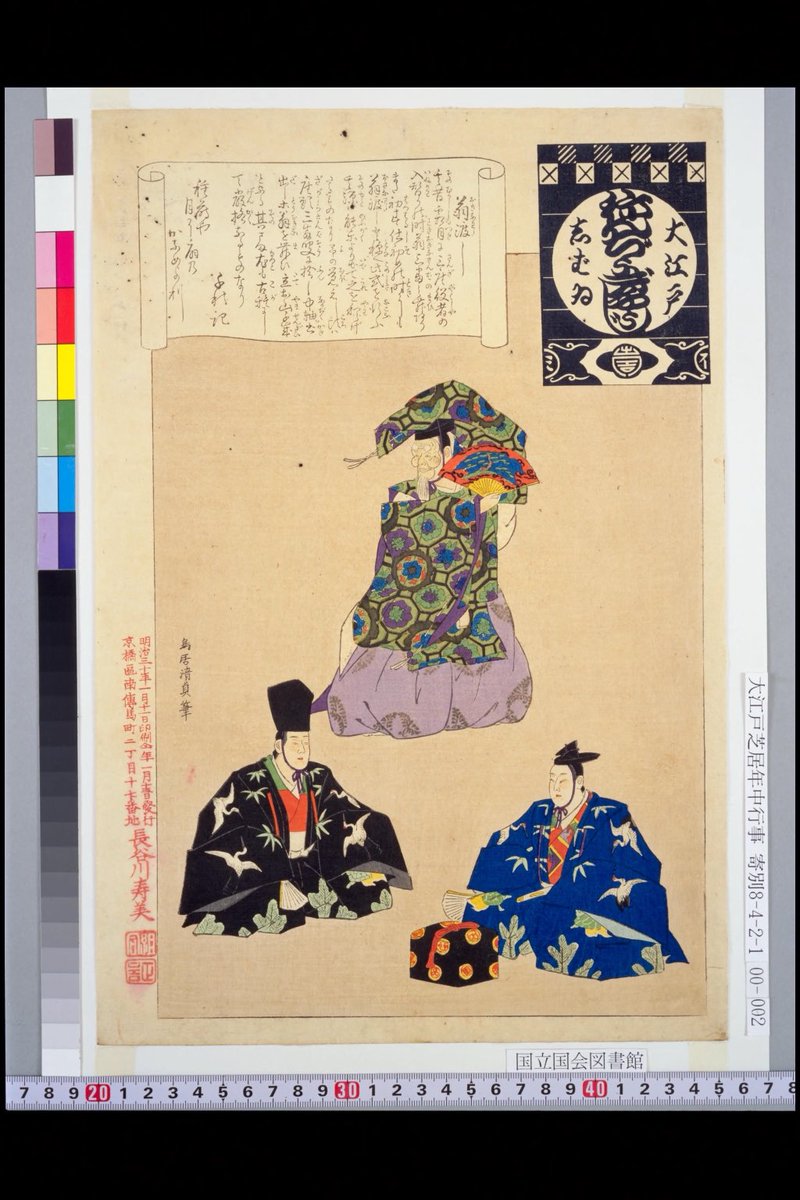
The Passing of Okina (Okina-watashi, 翁渡し) from the series Annual Events of the Theater in Edo (Ōedo Shibai Nenchū Gyōji, 大江戸しばゐねんぢうぎやうじ), Torii Kiyosada (鳥居清貞), Meiji 30 (1897).
https://t.co/kdGt1rSRxQ
This is a Meiji-period nishiki-e (multicolor woodblock print) serving as the catalog preface (“目録口上”) for the series Ōedo Shibai Nenchū Gyōji (大江戸しばゐねんぢうぎやうじ / “Annual Events of the Theater in Edo” or “Great Edo Kabuki Year-Round Events”).
Published in Meiji 30 (1897) in Tokyo by the publisher 長谷川寿美 (Hasegawa Toshimi / Sumi), it is a large-format (ōban) print from the National Diet Library collection (NDL pid/1309607). The series as a whole consists of 25 prints illustrating the traditional annual customs, ceremonies, and backstage practices of Edo-period Kabuki theaters (especially the three theaters of Saruwaka-chō), produced with a nostalgic tone for the pre-Meiji theatrical world.
Visual composition
•Left side: A tall flowering plum (ume) tree with delicate pink blossoms and red buds, trained against a blue lattice or bamboo-style fence. The blossoms cascade gracefully, creating a soft vertical frame.
•Right side: A sturdy green pine tree with dense needle clusters, balancing the composition and adding a sense of permanence.
•Bottom: Clusters of young bamboo or bamboo grass (sasa) growing from a low green platform edged in red, resting on a solid red base that suggests a stage or formal stand. Together these plants form the classic auspicious trio shōchikubai (pine–bamboo–plum), symbols of longevity, resilience, and seasonal beauty.
•Top right: A bold black rectangular cartouche with white and gold lettering containing the series title and related text, decorated with geometric patterns.
•Center: Dense columns of classical Japanese text written in vertical kuzushiji-style script—the formal “kōjō” (announcement/preface) itself.
•Additional marks include red collector or ownership seals near the top, a blue oval stamp reading “大正 5.6.30 購求” (purchased on Taishō 5.6.30 / 1916), publisher information at lower left, and the NDL library label and color/scale bars visible in the photograph of the original.
The overall design is elegant and balanced: the natural elements elegantly frame the text while conveying seasonal and auspicious overtones appropriate to a theatrical catalog introduction. The print has the soft, slightly aged paper tone typical of late-19th-century impressions, with clear registration of the colors (pinks, greens, blues, reds, and black).
In short, it is both a practical title/preface page for a series documenting Kabuki customs and a decorative woodblock print that uses traditional floral and tree motifs to create a refined, nostalgic atmosphere.
Torii Kiyosada (鳥居清貞, 1844–1901)
Catalog Preface (“目録口上”) for the series Ōedo Shibai Nenchū Gyōji (大江戸しばゐねんぢうぎやうじ / “Annual Events of the Theater in Edo).
1897
https://t.co/syk5zLAYqV
Torii Kiyosada (鳥居清貞, 1844–1901)
Catalog Preface (“目録口上”) for the series Ōedo Shibai Nenchū Gyōji (大江戸しばゐねんぢうぎやうじ / “Annual Events of the Theater in Edo).
1897
https://t.co/syk5zLAYqV
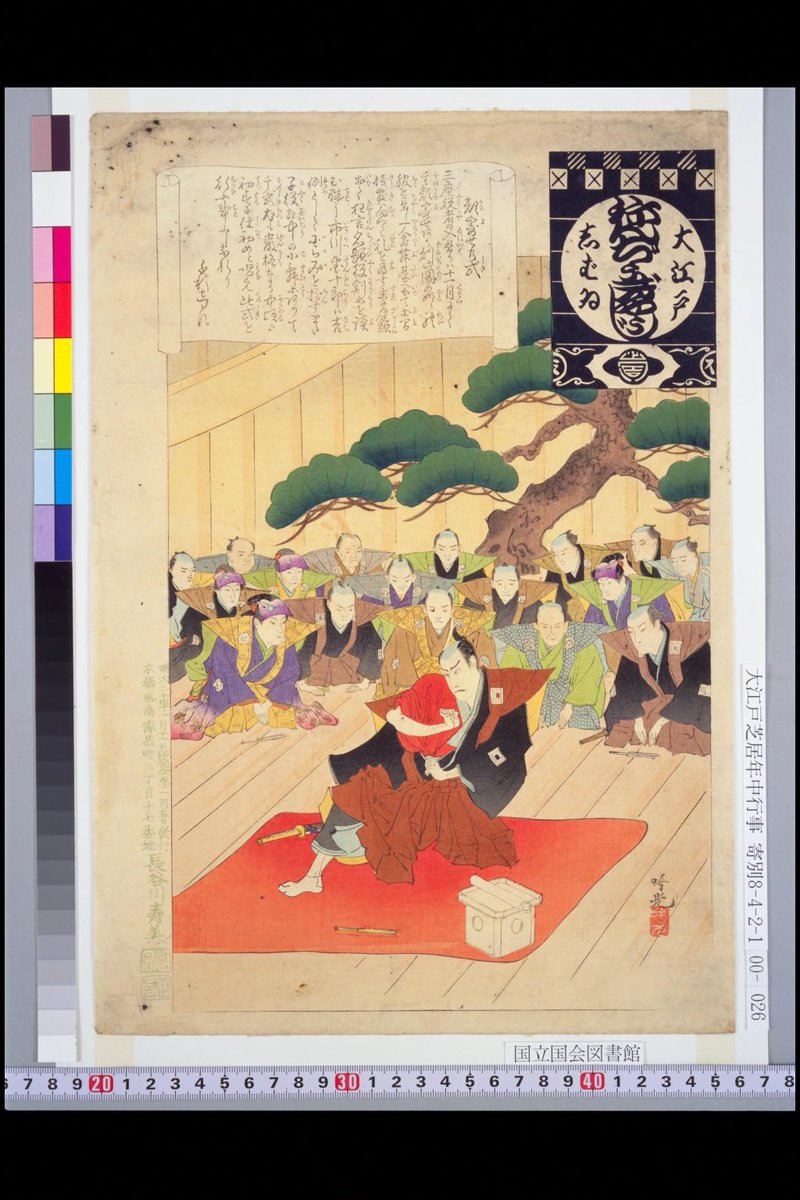
Image depicts the formal kaoyose ceremony held when the new year’s company of actors was assembled. Actors in formal attire appear one by one to bow to the audience; the lead actor then announces the program and casting. When Ichikawa Danjūrō was the zagashira, he performed the famous auspicious nirami (glare). The print captures this important seasonal ritual of the Kabuki calendar.
by Grok
Ceremony of Assembling the Faces (Kaoyose no Shiki, 顔寄せの式) from the series Annual Events of the Theater in Edo (Ōedott Shibai Nenchū Gyōji, 大江戸しばゐねんぢうぎやうじ), Adachi Ginkō (安達吟光), Meiji 30 (1897).
https://t.co/Vzf24aDMS3
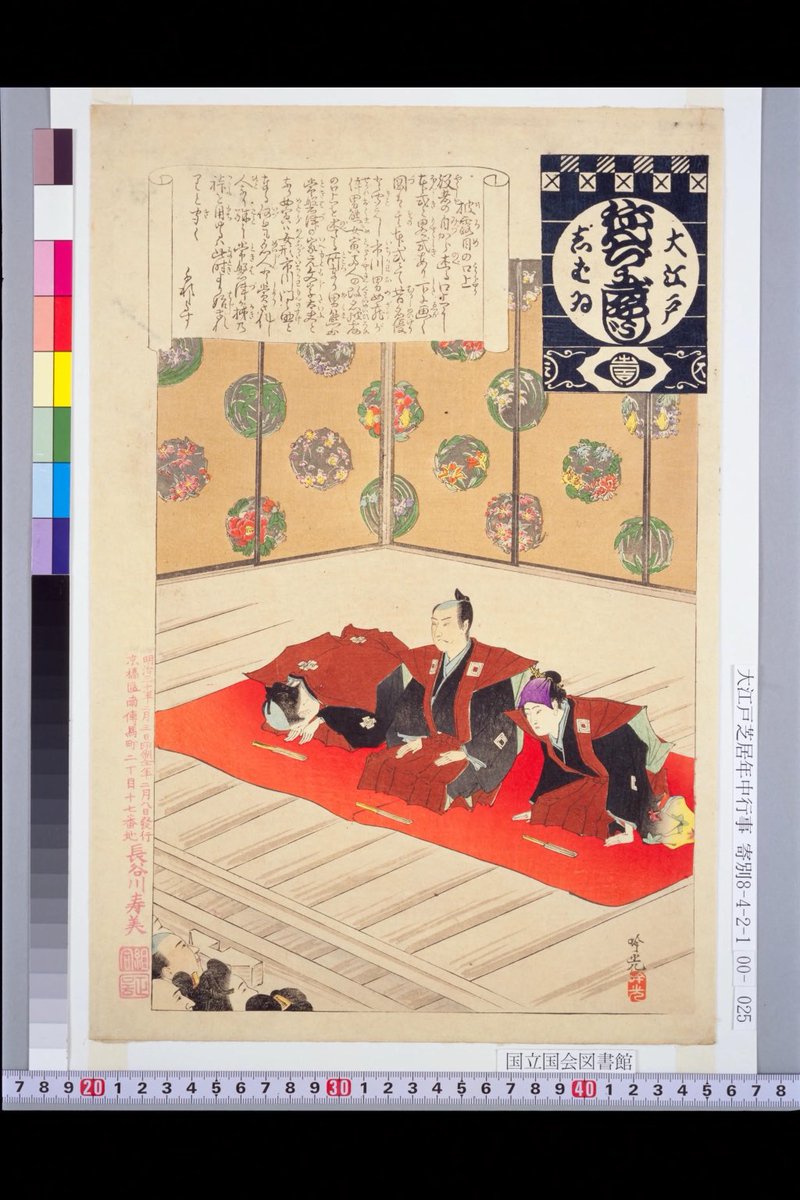
Image depicts actors in formal kamishimo seated on a red carpet delivering a ceremonial announcement to the audience. Two figures prostrate themselves while a central actor sits upright, introducing a new colleague or marking a debut. The print records one of the important formal rituals of the Kabuki world.
by Grok
Formal Introduction Speech (Hirome no Kōjō, 披露目の口上) from the series Annual Events of the Theater in Edo (Ōedo Shibai Nenchū Gyōji, 大江戸しばゐねんぢうぎやうじ), Adachi Ginkō (安達吟光), Meiji 30 (1897).
https://t.co/hdq5jQfO2w
Image depicts the early-morning curtain-raiser that began the main program of the day. A junior actor performs energetically with a fan while other actors and attendants watch from the sides of the stage. The print records the traditional structure of the Kabuki day’s opening sequence.
by Grok
Opening Performance (Jo-biraki, 序開) from the series Annual Events of the Theater in Edo (Ōedo Shibai Nenchū Gyōji, 大江戸しばゐねんぢうぎやうじ), Adachi Ginkō (安達吟光), Meiji 30 (1897).
https://t.co/Wfj2KlZkfv
Image depicts traditional stage lighting methods used before electric lights. An onnagata in elaborate red costume performs a dance (shown as a scene from Musume Dōjōji) while attendants hold long-handled candle holders (sashidashi) to illuminate the actor’s face, and candlesticks (kantera) stand at the front of the stage. The print records an important technical aspect of Edo Kabuki performance.
by Grok
Spotlight Lanterns (Sashidashi Kantera, さし出しかんてら) from the series Annual Events of the Theater in Edo (Ōedo Shibai Nenchū Gyōji, 大江戸しばゐねんぢうぎやうじ), Adachi Ginkō (安達吟光), Meiji 30 (1897).
https://t.co/tDXfqERM2I
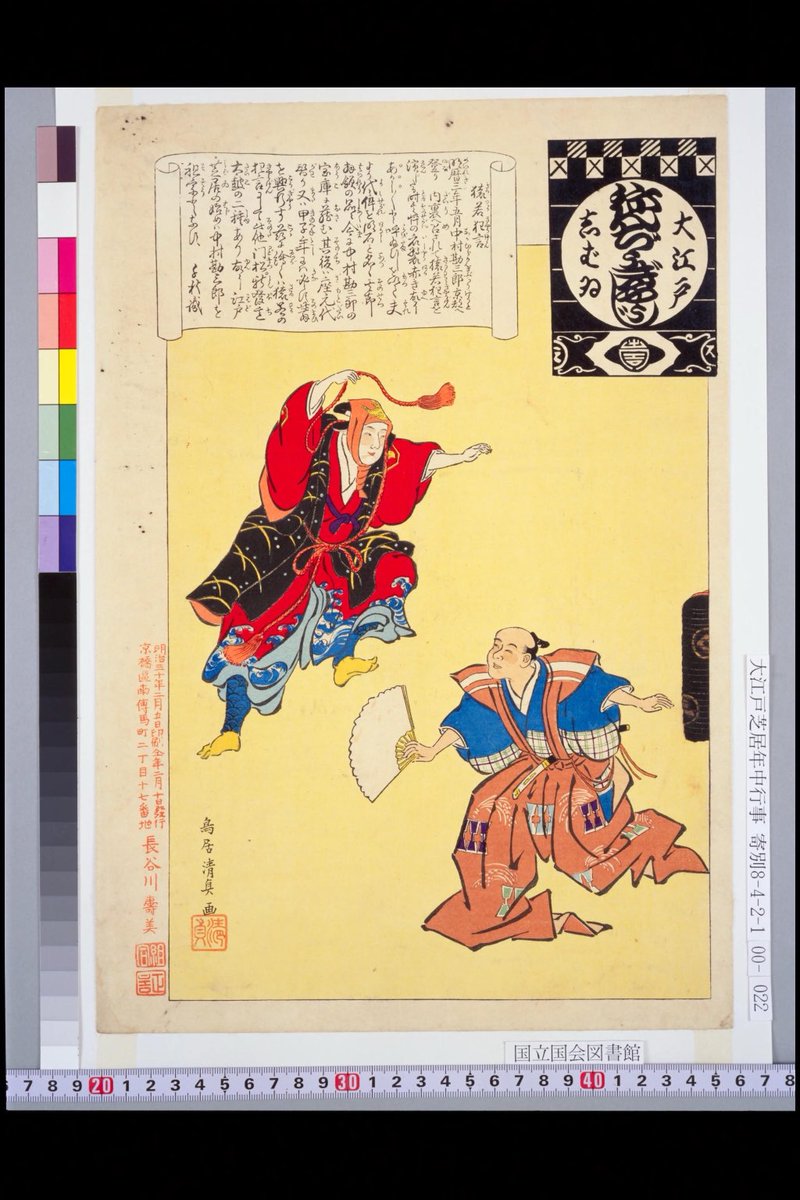
Image depicts the traditional comic dance associated with the founder of Edo Kabuki, Nakamura (Saruwaka) Kanzaburō. A dynamic figure in red and black costume leaps with a long tasseled prop while a second figure in blue and red holds a fan and looks upward. The print records one of the foundational performance traditions of the Nakamura-za line.
by Grok
Saruwaka Kyōgen (Saruwaka Kyōgen, 猿若狂言) from the series Annual Events of the Theater in Edo (Ōedo Shibai Nenchū Gyōji, 大江戸しばゐねんぢうぎやうじ), Torii Kiyosada (鳥居清貞), Meiji 30 (1897).
https://t.co/0ju2k80huZ
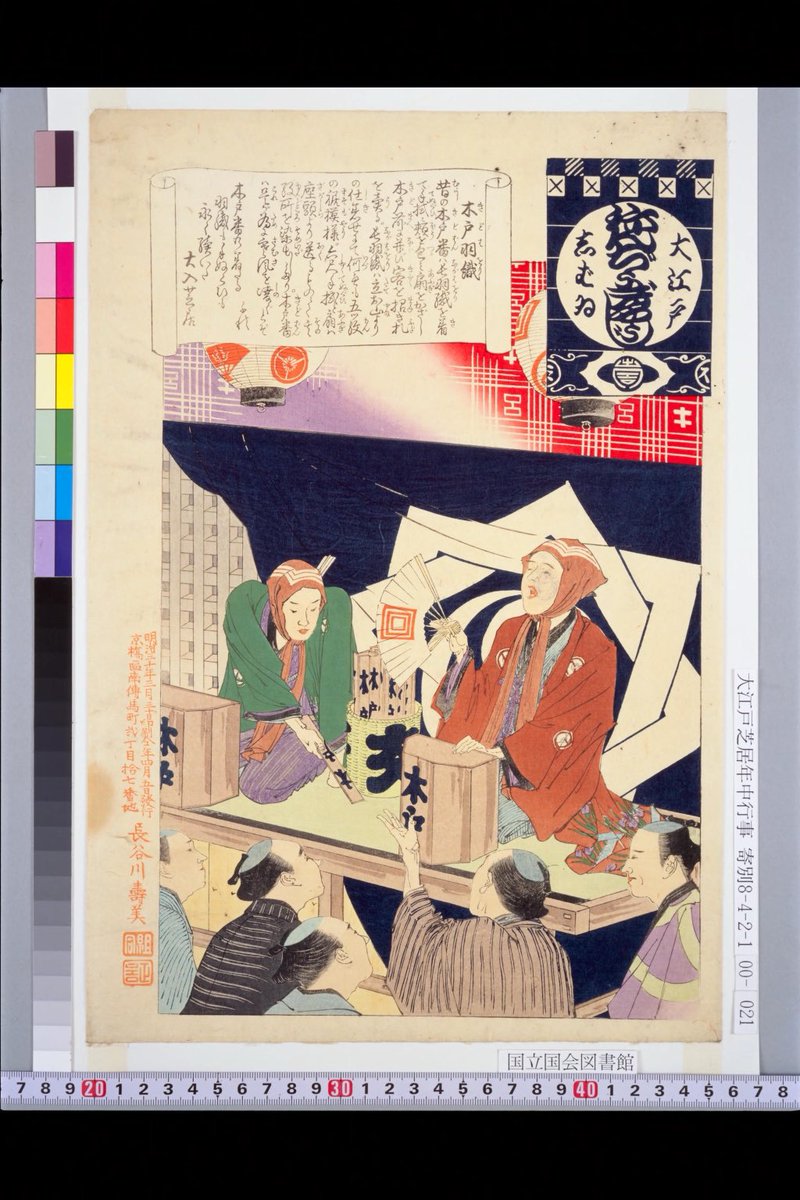
Image depicts the kidoban (entrance attendants) at the theater front. Dressed in long haori jackets and with towels wrapped around their heads, they stand behind a counter, calling out to attract customers and selling tickets. The print records the distinctive uniform and lively presence of these staff members who managed the theater entrance.
by Grok
Entrance Attendants’ Haori (Kido Haori, 木戸羽織) from the series Annual Events of the Theater in Edo (Ōedo Shibai Nenchū Gyōji, 大江戸しばゐねんぢうぎやうじ), Adachi Ginkō (安達吟光), Meiji 30 (1897).
https://t.co/DdYl8jGqZd
Image depicts the debut performance of a visiting actor from the Kamigata (Kyoto-Osaka) region on the Edo stage. The scene shows a dramatic danmari (silent fight in the dark) with actors in elaborate costumes rising from the stage elevator (seri) amid a rocky, torch-lit setting. The print records the customary way a new actor formally presented himself to the Edo audience.
by Grok
First Appearance (Omemie, お目見得) from the series Annual Events of the Theater in Edo (Ōedo Shibai Nenchū Gyōji, 大江戸しばゐねんぢうぎやうじ), Adachi Ginkō (安達吟光), Meiji 30 (1897).
https://t.co/wOlgWKwzYJ