100 years ago the Vickers Vimy landed in Northern Australia. We wrote about the policy that enabled it and unleashed the aviation industry in Australia.
Thank you, @apoliticalco for publishing it in your platform.
In celebration of the 100 year anniversary of The Great Air Race, @AIUS_SA Board Members @luislafosse & @JenStJack explore the policy that inspired the Race. Could this policy approach also solve the problems of our time? https://t.co/4xN59N1Ysg @apoliticalco@AdelaideAirport
BREAKING: Anthropic just released a study showing which jobs its own AI is already replacing—right now.
And the workers most at risk aren’t who anyone expected: they’re older, more educated, and higher paid. They earn 47% more than average—and they’re nearly four times more likely to hold a graduate degree than workers AI isn’t touching.
The case is simple. Anthropic built a new metric called “observed exposure”—not what AI might do in theory, but what it’s actually doing today on the job—measured across millions of real Claude conversations from enterprise users.
For computer and math workers, AI could theoretically handle 94% of their tasks. Today, it’s doing 33%. In office and administrative roles, the ceiling is 90%, and current usage is 40%. The gap between what AI can do and what it’s actually doing is massive—and the researchers don’t mince words about what happens next: as capability improves and adoption spreads, the red area expands until it swallows the blue.
What makes the paper unsettling is the demographic twist. The most AI-exposed workers earn 47% more, on average, than the least exposed. They’re more likely to be women. More likely to be college educated. This isn’t a story about warehouse floors or long-haul routes. It’s about lawyers, financial analysts, market researchers, and software developers—the very people who were told their education would protect them.
Computer programmers show the highest measured AI exposure: 74.5%. Customer service reps: 70.1%. Data entry: 67.1%. Medical records: 66.7%. Marketing and market research: 64.8%. These aren’t forecasts. They’re measurements of work already being done on AI platforms today.
Then there’s the pipeline problem—still not getting nearly enough attention.
Anthropic researchers found a 14% drop in the job‑finding rate for 22–25‑year‑olds in highly exposed occupations since ChatGPT launched. No comparable effect for workers over 25. Entry-level roles were never “just jobs.” They were the apprenticeship layer: where junior analysts became senior analysts, where junior lawyers learned how arguments actually
PDF: https://t.co/tnk5Ri7CoP
Here's the clip of @bariweiss on @RealTimers with @billmaher saying what more and more people, many of whom have been compliant COVIDIANS, are now starting to feel. The tide is turning.
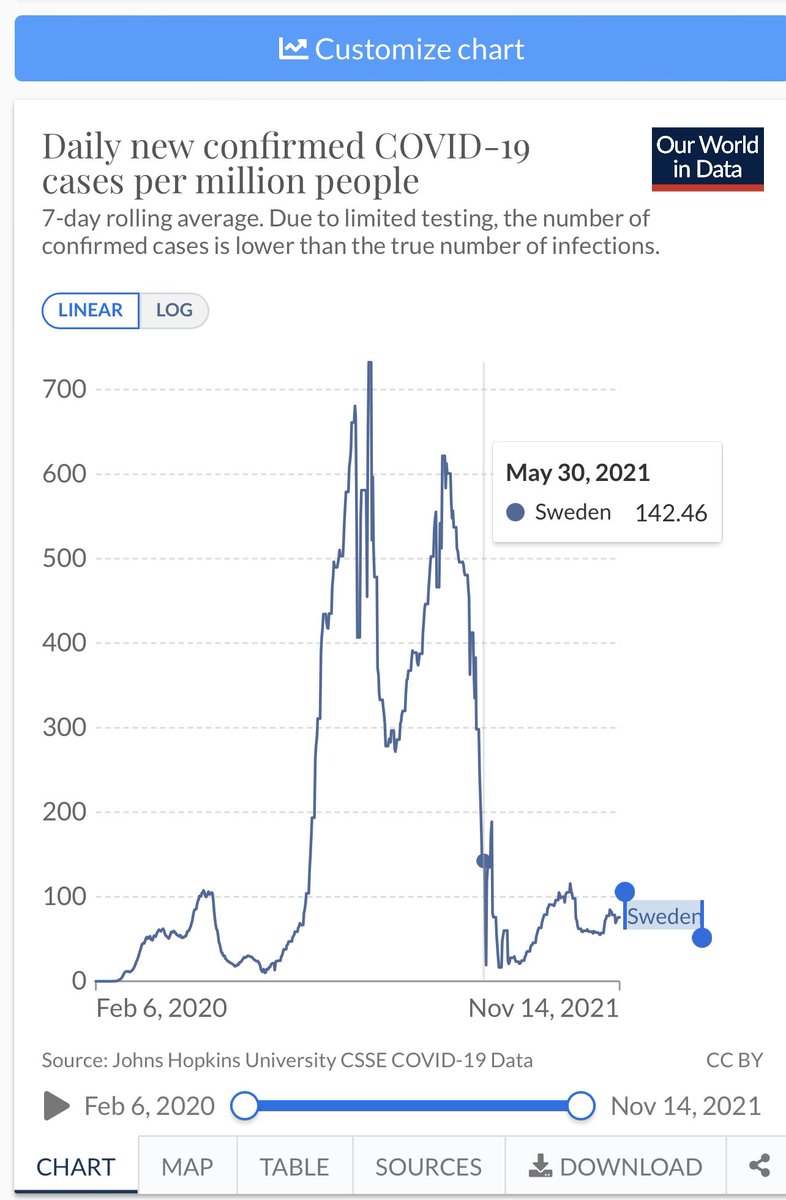
Who could imagine two years ago that our modern world blessed by computer power, AI, the Internet, molecular biology & space travel would resort to the medieval method of lockdown.
Only brave Sweden stood against the fear & panic.
Her reward: no delta cases & no excess death.
Hi @AndersRydell
I'm reading The Book Thieves and I loved Richard Kobrak's story.
Is there any chance you can share a picture/s of Recht, Staat und Gesellschaft book? I can't find it on the Internet and I'd like to draw it.
Cheers.
We're taking the opportunity of #NationalLamingtonDay to highlight that our digital collections are full text searchable and quite a bit more comes up for lamingtons in Tharunka than you might think! Including this student council candidate 'making lamingtons for the revolution'
¡Abiertas las inscripciones al segundo Mundial de Escritura!
Jurado: Javier Cercas, Mariana Enriquez, Jonathan Lethem.
Hay premio especial para equipos y participantes de hasta 18 años.
Y se suma al Mundial este equipazo:
The REGENERATE series by Urban Mind Studios comprises 6 x 1 hour sessions each comprising a 20-minute briefing presentation and 30-minute Q&A with the leading expert Practitioner. https://t.co/7slP3TWpPo
The coronavirus is creating opportunities to experiment and re-look at our cities and regions in different ways – and hopefully create many positive changes and long lasting benefits for years to come. https://t.co/m5aLTGkYnl #southaustralia#adelaide#urbanplanning#planning
In the landline phone Era we used to be wired through a single cable to which we connected the device of your preference.
Welcome to the Zoom-Teams-Slack-Instagram-Meet-YouNameIt Age in which we work for technology rather than the other way around.